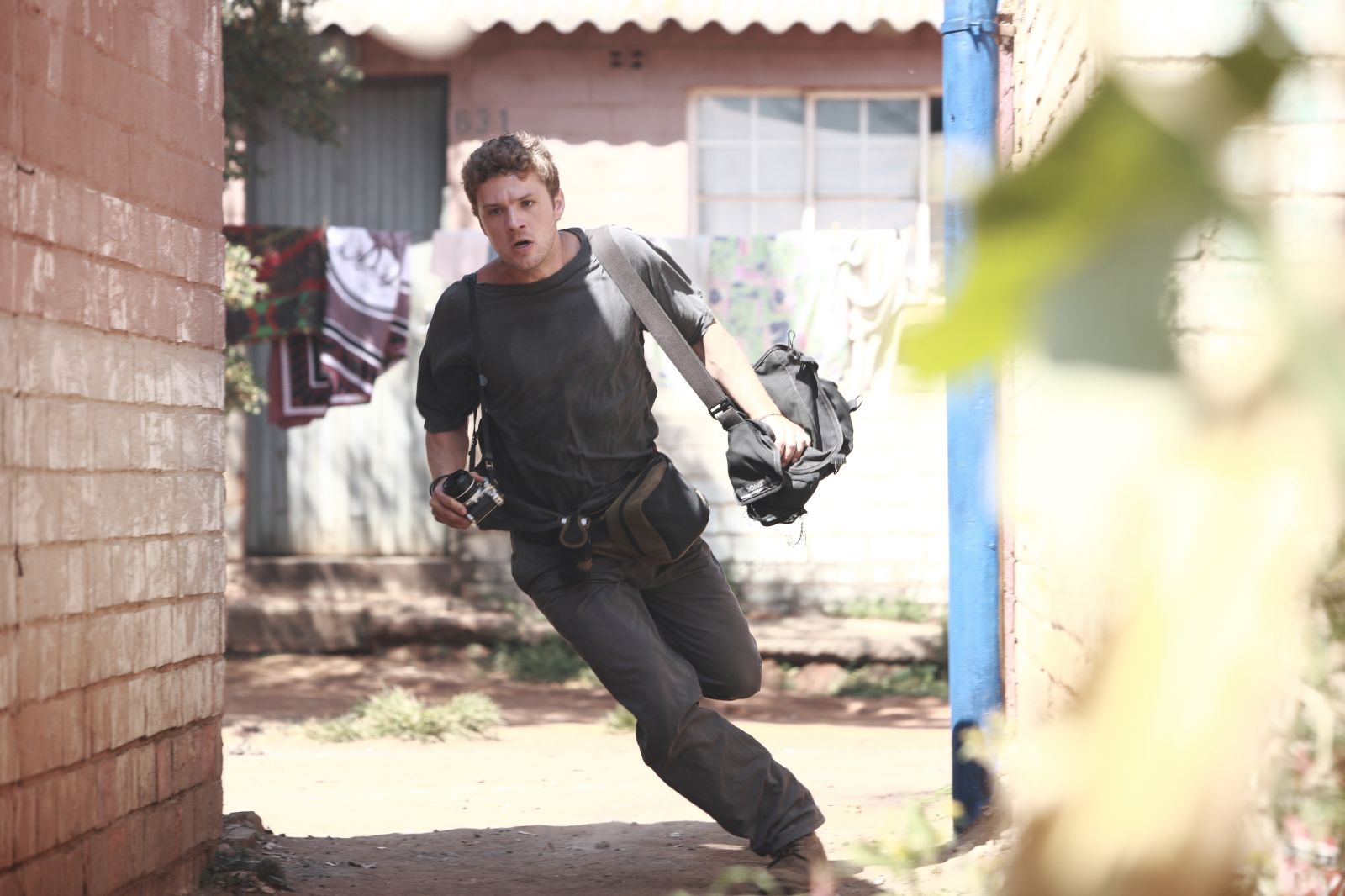
 “THE BANG-BANG CLUB” (Now available)
The movies love war correspondents.
For one thing, it’s an inherently dramatic profession. And then there’s the compelling ambivalence of civil wars without clear-cut rules of combat, of conflicts where it’s hard to differentiate between soldier and civilian.
Two classics of the genre are “Under Fire” (1983) with Nick Nolte and Gene Hackman and Oliver Stone’s “Salvador” (1986).
More recently the upheaval in the Balkans has generated several memorable combat correspondent flicks, like “Welcome to Sarajevo” (1997) and “The Hunting Party” (2007).
These movies always pivot on questions of ethics and mortality.
First, should a journalist (writer, photographer, broadcaster) ever take sides, even if genocide is involved? Second, what are the chances of said journalist getting his/her head blown off?
The latest entry to the genre is “The Bang-Bang Club,” a mostly factual recreation of life in South Africa in the early 1990s when the white-dominated apartheid government was staggering toward obsolescence.
Staggering, but still powerful enough to drive a wedge into the black population between the powerful Zulu tribe and Nelson Mandela’s African National Congress.
Covering this civil strife was a group of photographers known as the Bang-Bang Club for their hair-raising shots taken in clearly dangerous situations.
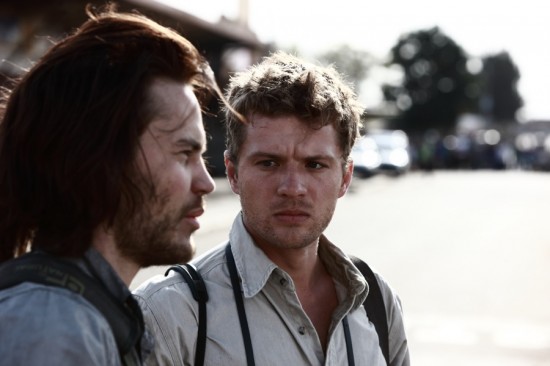
Taylor Kitsch and Ryan Phillippe in "The Bang-Bang Club"
Steven Silver‘s film, based on the memoir by two of the Bang Bangers, centers on Greg Marinovich (Ryan Phillippe), a young photographer who risks his life to record images of life in a violent Zulu enclave and is rewarded with a freelance gig at a major newspaper.
Among his new colleagues are the hippy-ish, easygoing Kevin Carter (Taylor Kitsch of TV’s “Friday Night Lights” and the upcoming “John Carter”) and seasoned, hard-driving journalists like Ken Oosterbroek (Frank Rautenbach) and Joao Silva (Neels Van Jaarsveld).
Oh, yeah, there’s also the paper’s photo editor (“Watchmen’s” Malin Akerman), with whom our hero has a romance.
Many of the photos taken by the Bang Bang Club members became iconic (especially in South Africa), and the film painstakingly recreates the situations in which they were snapped.
In fact, that’s the film’s great strength — it feels absolutely authentic in delivering a sense of place and time.
When they’re not risking their necks for a bloody (and bloody good) photograph, the Bang Bangers are party animals. The film effectively contrasts their off-hours cavorting with the dangers they face on the job.
But are these young men truly objective about the horrors they witness? Are they content to merely record incidents, or are they compelled to pick a side and get involved? And what sort of havoc do these questions wreak on their psyches?
In the case of Kitsch’s Carter, his objectivity leads to tragedy. Carter won a Pulitzer for his photo of a vulture stalking a starving child in the Sudan. And he was roundly criticized when it was revealed that after taking the photo, he left the little girl to her fate.
But wasn’t he just being objective?
The performances here are naturalistic and unforced, and it’s particularly satisfying to see Kitsch in a role that requires an accent and angst (the guy’s just so beautiful to look at he could easily get pigeonholed in beefcake roles).
But while there are scenes in “The Bang-Bang Club” that are absolutely riveting, the film feels dramatically undernourished. It really hasn’t got a center, not one character or incident around which everything else coalesces.
Nice try, though.
| Robert W. Butler
 Butler's Cinema Scene
Leave a comment