 “EAMES: THE ARCHITECT & THE PAINTER” My rating: B
83 minutes | No MPAA rating
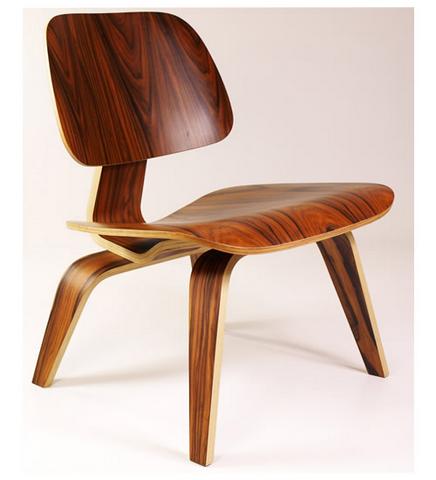
Charles Eames will forever be associated with the chair that bears his name — sturdy, lightweight and cheap while somehow embodying the essence of post-war modernism.
But as “Eames: The Architect & the Painter” makes abundantly clear, that was only the tip of the man’s iceberg.
Directed by Jason Cohn and Bill Jersery for PBS’ American Masters series, this documentary (narrated by James Franco) makes the case that Eames (1907-1978) may have been the 20th century’s most important designer.
Working for 40 years out of an office/studio in Venice CA (visitors described it not so much as a place of business as a never-ending circus), Eames cast a wide net. Though he made his initial mark with furniture, he was also a photographer, a moviemaker, a creator of elaborate exhibits and installations. One of his most loyal clients was computer giant IBM, which found in Eames the perfect conduit to explain to a puzzled public what this new technology was all about.
But the film is also noteworthy for finally giving Eames’ wife, Ray, the credit due her. Testimony from their employees, friends and clients
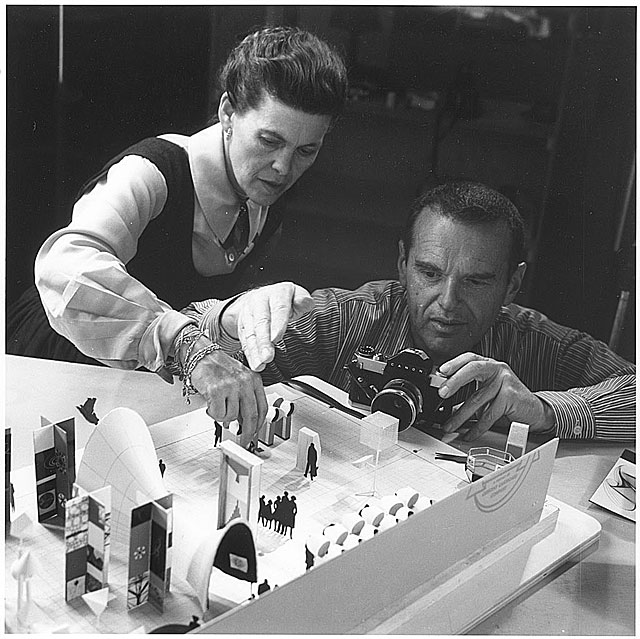
Ray and Charles Eames at work
confirm that theirs was a creative partnership. Ray tended to hang back, letting her loquacious (though often incoherently so) husband take most of the credit, but it is now obvious that her contributions were immense.
Like her husband (he was trained as an architect), Ray pushed aside her initial interests (she was “the painter” of the film’s title) to become immersed in the possibilities of design on the grandest scale possible. Together they forged what one observer terms an entirely new approach to art and living.
The partnership was not without a few blips, especially Charles’ late-in-life love affair with a young student. But it endured.
As informative as it is, “Eames: The Architect & the Painter” barely scrapes the surface of the couple’s astounding output. The more you learn about these creators of iconic designs, the richer and more inescapable their heritage.
| Robert W. Butler
 Butler's Cinema Scene
Leave a comment