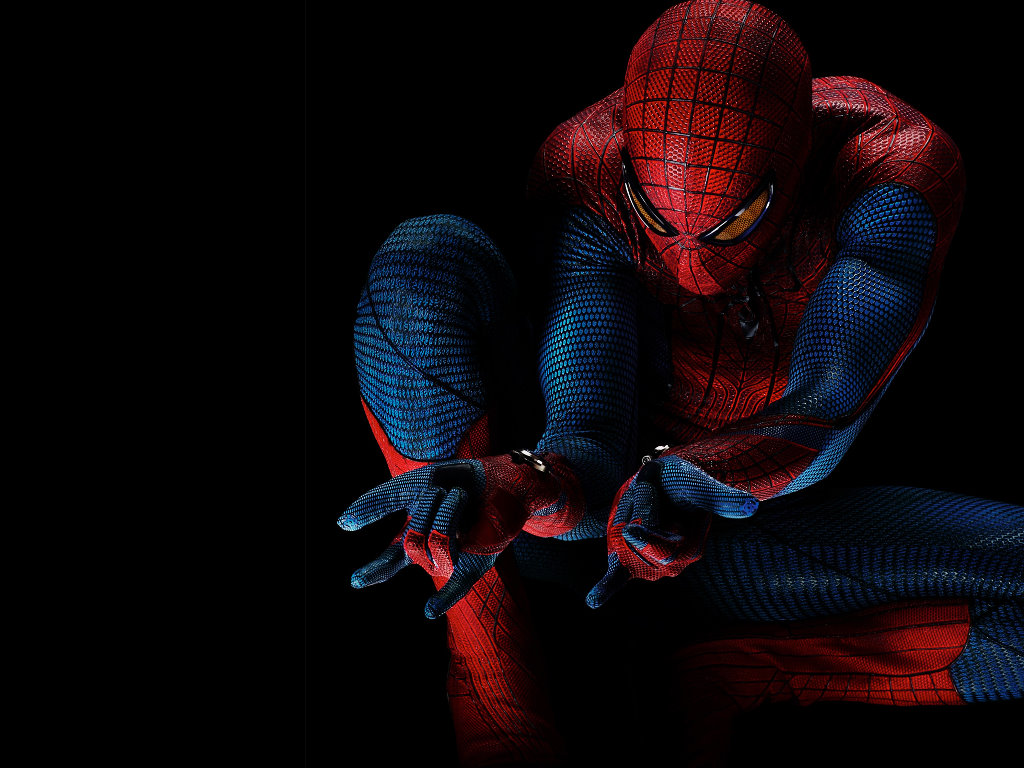
 I’m not much feeling the need to see “The Amazing Spider-Man,” the latest movie (it opens July 3) based on a Marvel Comics character.
Been there. Done that.
And unless this version offers a new twist on what has come to be a very familiar story (early reports from my fellow critics suggest it doesn’t), I believe I’ll pass.
Yeah, the grumpy old man is drifting ever further from the mainstream of American movie going.
But the latest Spidey movie has crystallized my thinking about Hollywood’s superhero obsession. It’s become pretty obvious that we’ve settled into a cycle in which every decade or so major Marvel or D.C. characters will be rebooted for the screen.
It’s sort of like the model Disney had for decades, where every seven years the studio would re-release its animated classics, introducing them to an entirely new audience of youngsters. As long as Americans were having kids, the process could go on indefinitely.
(Of course that tried-and-true methodology was undermined the by the rise of home video. Now every kid can have his own copy of “Finding Nemo” or “The Little Mermaid” and watch it until every line of dialogue and sight gag has been committed to memory. Parents, you know what I’m talking about.)
In the case of comic book superheroes, this recycling is fueled by Hollywood’s general lack of imagination and desperate yearning to make a movie that cannot fail at the box office.
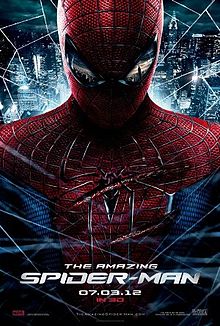 Remember, it was but a decade ago, in 2002, that the first Sam Raimi-directed “Spider-Man” with Tobey Maguire opened. If it seems only yesterday, that may be because of the two sequels that came out in 2004 and 2007 and kept Peter Parker and his spider sense fresh in our memories.
Did we really need a reboot of the franchise? After all, it’s the same origin story we’ve already seen. A few details are different this time around. The special effects keep getting better… but is that enough reason to spend north of $215 million?
Of course, I’m not part of Hollywood’s target demographic. Today’s teenagers may very well regard the Maguire “Spider-Man” as the quaint relic of an earlier generation. They can claim the new “Amazing Spider-Man” (Brit actor Andrew Garfield takes over the role) as their very own.
If the movie is a huge hit, the gamble will have paid off. If not…
But even if “The Amazing Spider-Man” flops, I don’t see it changing anything. Because recycling superheroes is as close to a sure thing as Tinsel Town has.
Just look at Batman. The 1989 Tim Burton “Batman” and its diminishing-returns sequels (“Batman Returns,” “Batman Forever,” “Batman & Robin”) seem utterly forgettable when compared the hyper-dramatic approach of director Christopher Nolan, whose third (and final) contribution to the franchise, “The Dark Knight Rises,” opens in July.
Of course, sometimes there are setbacks, like “Superman Returns” (2006), which was meant to make us forget the Christopher Reeve “Superman” films of the late ‘70s and early ‘80s but mostly showed just how enjoyable those older movies were. Word is that D.C. will try again with yet another Superman title.
Marvel seems to have come up with the best and safest approach by bundling several of its superhero characters under the umbrellas of the X-Men, Avengers and Fantastic Four.
Some superheroes can hold their own movie. Others need to be part of an ensemble. The Incredible Hulk is a perfect example. In recent years he’s been played by both Eric Bana and Edward Norton. Neither of those movies was anything to write home about. The character just wasn’t strong enough to anchor a feature film.
But as part of the Avengers (he’s now played by Mark Ruffalo), Bruce Banner/The Hulk has a new lease on life.
And of course there’s always the happy surprise of a third-tier superhero like “Iron Man” who, thanks to a smart director and a charismatic star, breaks away to create an entirely new franchise.
And so, for the forseeable future, get used to it. We may be seeing an era when each new generation of actors has to tackle Clark Kent or Peter Parker or Bruce Banner, much in the same way that an earlier generation of actors felt compelled to portray Hamlet on stage before they hit 30.
I guess you could say that comic book superheroes represent the new classicism. But that’s a topic for another day.
| Robert W. Butler
 Butler's Cinema Scene
Leave a comment