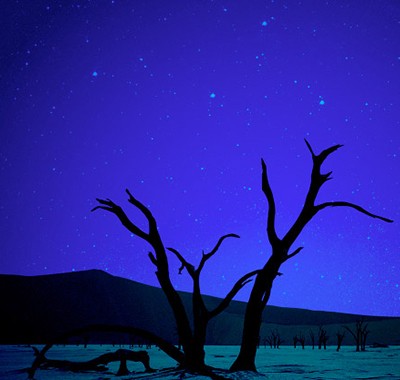
 “SAMSARA” My rating: B (Now at the Tivoli)
102 minutes | MPAA rating: PG-13
Technically “Samsara” is a documentary. By which I mean it’s a visual record of real places and people. But narratively it’s an example of the niche filmmaking I first encountered with “Koyaanisqatsi” lo these 30 years ago. Every so often the New Age movement comes up with one of these visual mind-blowers.
“Samsara” was directed by Ron Fricke and producer Mark Magidson, whose previous efforts in this vein include “Baraka” and “Chronos.”
They spent five years in two-dozen countries lugging around a 70mm camera to capture these intoxicating images, which have been set to music by, among others, Michael Stearns, Marcello DeFrancisci and Lisa Gerrard (of the band Dead Can Dance). The soundtrack is more meditative than melodic (lots of exotic third-world instruments).
Describing “Samsara” isn’t easy. There’s no narration, no on-screen credits to tell us what we’re looking at. It helps to know that in Sanskrit “Samsara” translates as “the ever-turning wheel of life.”
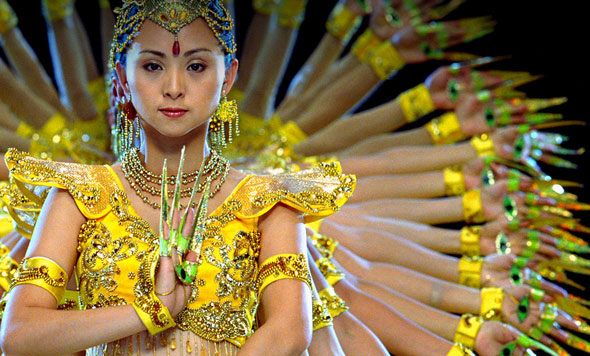 Our first images are of what I assume to be Balinese dancers. Then there’s footage of an erupting volcanoes.
There are close-ups of the perfectly-preserved corpses of Bronze Age men (from the blackened skin I assume they were pulled from a peat bog) and details of an elaborate ancient Egyptian sarcophagus.
There are lots of natural landscapes, sometimes with just a hint of human habitation (Cambodian temples rising from thick jungle). Yosemite Valley. Dunes in the Sahara. Night skies filmed in such a way that the stars seem to be sweeping overhead in glorious arcs.
 There are Medieval cathedrals (I think I saw LaChappelle in Paris, the private chapel of the French kings), a Tibetan monastery, the holy cities of Jerusalem and Mecca, third world slums, an abandoned town (Chernobyl? California’s Salton Sea?) from which humans seem to have vanished overnight, leaving everything behind to gather dust.
We do see people. Babies being baptized, paint-daubed African tribesmen, even a performance artist who sits at a desk and smears his face with gray clay, turning himself into a sort of monster out of Bosch.
Hundreds of Japanese perfecting their golf swings at a multilevel driving range.
There are scenes set in a theater where an opera is underway, in the neon-lit streets of Tokyo, in a factory, even in a Costco store.
Through it all Fricke’s camera floats and drifts like Dickens’ Spirit of Christmas Present, determined to be everywhere all at once.
And while there’s no narration, “Samsara” isn’t free of editorializing. A lineup of life-size plastic female torsos (sex toys, I’m guessing) segues into a sequence with dozens of slo-mo go-go dancers in bikinis going through their gyrations. Their faces are as dead as those of the sex dolls.
And a sequence set in several slaughterhouses is enough to make you eat your veggies.
There’s a passage in a munitions factory where guns are assembled and bullets roll off the assembly line in a cataract of brass and lead. Pretty, maybe, but deadly.
“Samsara” is not for short attention spans. But if you can get on its wavelength, this visual tone poem will get in your head and take up residence.
| Robert W. Butler
 Butler's Cinema Scene
Leave a comment