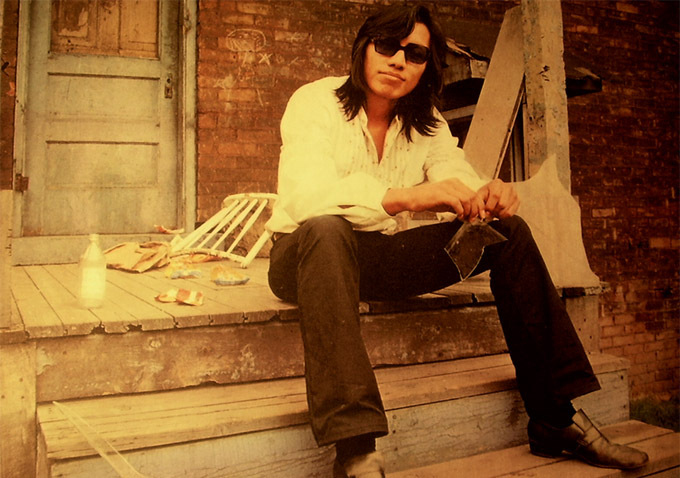
Rodriguez
“SEARCHING FOR SUGAR MAN” My rating: A- (Opens Oct. 12 at the Tivoli and Glenwood at Red Bridge)
86 minutes | MPAA rating: PG-13
“Searching for Sugar Man” plays less like a documentary than like a decade-spanning, continent-jumping whodunnit about a legendary “lost” musician.
It is both specific and mythic, and the film is such a perfect series of ever-expanding revelations that I’m afraid to say too much about it, lest the pleasure of discovery be ruined for those who have so far managed to avoid the publicity blitz surrounding the movie.
So I’m going to assume, dear reader, that you know next to nothing about the obscure musician known as Rodriguez, and that you missed last Sunday’s “60 Minutes” segment about him and this movie.
This effort from Swedish filmmaker Malik Bendjelloul begins in Detroit, where in the late ‘60s a musician named Rodriguez recorded two albums that vanished without a commercial ripple. He was known only as Rodriguez, a singer/songwriter described by his producers – one a seasoned veteran of the Motown label – as an egoless drifter and a musical wordsmith whose songs rivaled those of Bob Dylan.
He wasn’t just a musician, they say. “He was a wise man and a prophet.”
No one seems to know what happened to Rodriguez. He just vanished.
But meanwhile in South Africa, a strange, wonderful thing was happening. One of Rodriguez’s LPs, “Cold Fact” (I describe it as Jose Feliciano meets Tim Buckley) was discovered by young whites frustrated with their government’s support of apartheid and eager for their country to join the modern world. Rodriguez’s songs – part protest, part observations of gritty streetsmart city life – became the soundtrack to the lives of an entire generation of South Africans.
“Cold Fact” was transferred to cassette tapes and these bootlegs were passed around Samidzat-style, like banned literature in a Communist dictatorship. Later the LP was reissued on vinyl (though by whom, exactly, remains a question for the financial forensics) and sold hundreds of thousands of copies.
“Cold Fact” was bigger in South Africa than the Beatles’ “Abby Road” or Simon & Garfunkel’s “Bridge Over Troubled Waters.”
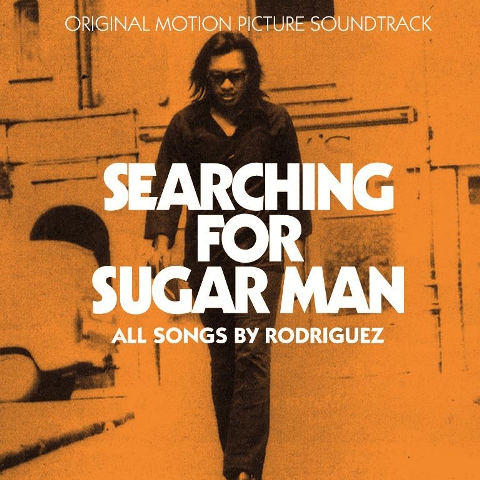 Still, nobody knew anything about him. There was no biographical info on the albums, only a couple of photos that suggested a thin, dark-haired man of Hispanic descent. The writing credits on the disc revealed his first name, Sixto.
This mystery man became the source of wild speculation. There was a rumor that Rodriguez had committed suicide by setting himself on fire during a concert. Another version has the musician blowing out his own brains…on stage, of course.
Steve Segerman, a huge Rodriguez fan and the co-owner of Cape Town’s hippest music store, took it upon himself (with his friend Craig Bartholomew) to find out what had happened to Rodriguez. He found a clue in a lyric that referred to Dearborn, and so he concentrated his search on the Detroit area.
Their search for Rodriguez takes up the first half of “Searching for Sugar Man” (the title references “Sugar Man,” a Rodriguez tune about a drug dealer). Director Bendjelloul shot his low-budget effort on (believe it or not) a smart phone and personally crafted the evocative animation sequences that pepper the production.
And then comes the big reveal, about which I’m going to keep you in the dark. I will say this: Rodriguez is still alive.
But you won’t believe what he’s been doing for the last 50 or so years, the life he has carved out for himself, the family he has raised, and above all his approach to life, which seems practically saint-like.
Thus “Searching for Sugar Man” goes from a detective story to a uplifting, hugely satisfying emotional experience capable of restoring your faith in people and rock ‘n’ roll.
| Robert W. Butler
 Butler's Cinema Scene
Leave a comment