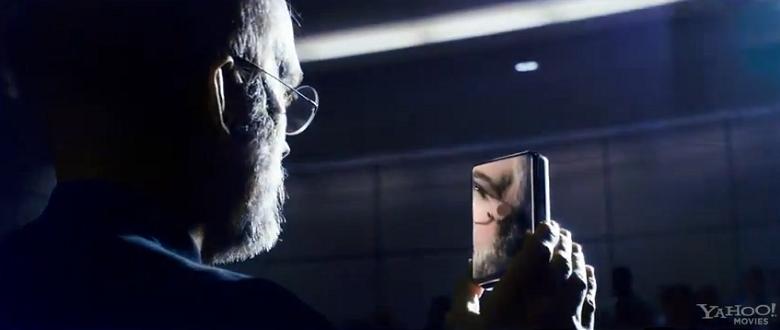
 “JOBS” My rating: C+ (Opening wide on Aug. 16)
122 minutes | MPAA rating: PG-13
“You’re good. Damn good,” a colleague tells young computer visionary Steve Jobs early in the new bio-pic “Jobs.”
“But you’re an asshole.”
Yup.
“Jobs” isn’t a bad movie. And if you’re looking for an affectionate recreation of the early days of the personal computer industry – when things we now take for granted (like a writing program with changeable fonts) were hailed as major breakthroughs – it’s geekily engaging.
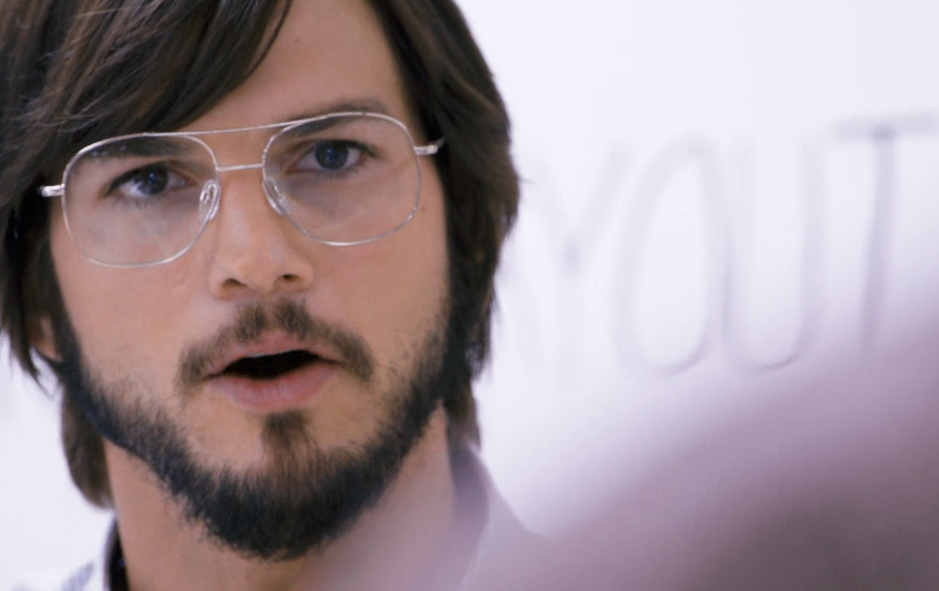 But Joshua Michael Stern’s film is painted in broad strokes and rarely gets behind the mysterious and mercurial surface of its central character. The late Apple Computer founder Steve Jobs comes off as an arrogant, self-centered visionary who touched millions of lives through his products but alienated many of his nearest and dearest.
That the movie never really connects on an emotional level is not the fault of Ashton Kutcher, who gives a perfectly acceptable performance and who eerily recreates Jobs’ skinny, turtlenecked frame and loosey-goosey slouch walk. The problem is that Matt Whiteley’s screenplay never quite decides what it thinks of this polarizing figure.
“Jobs” begins in the mid-70s with our protagonist a barefoot dropout hanging around the Reed College campus, follows him through the creation and rise of Apple, through his being fired by the board of directors in 1985, and his eventual return to the failing company in 1996 to retake the reins and spearhead Apple’s resurgence, one of the greatest turnarounds in business history.
Actually, the movie ends in the late ‘90s…there’s no mention of iconic products like the iPhone or the iPad or of the long fight with cancer that left Jobs dead in 2010 at age 56.
But, then, “Jobs” leaves out so much. It’s almost as if it were written with the assumption that we already know most of the important details of Jobs’ life and work. The results feel superficial, unformed.
 What we take away is a sense of Jobs’ brilliance, but also of his arrogance, his insistence that things be done his way, and of his cruelty and vengeful nature.
Particularly dismaying is his refusal to acknowledge the daughter born to his college girlfriend…he angrily behaves as if this unplanned pregnancy were a conspiracy devised to derail his career before it gets started. Late in the film we see that he has reconciled with and accepted the daughter…but we’re never shown how that came to be, even though it would be one of the more emotionally satisfying moments of this largely impersonal saga.
There’s no shortage of talent on display. Among the supporting players are Lukas Haas, Matthew Modine, J.K. Simmons, Dermot Mulroney and Ron Eldard.
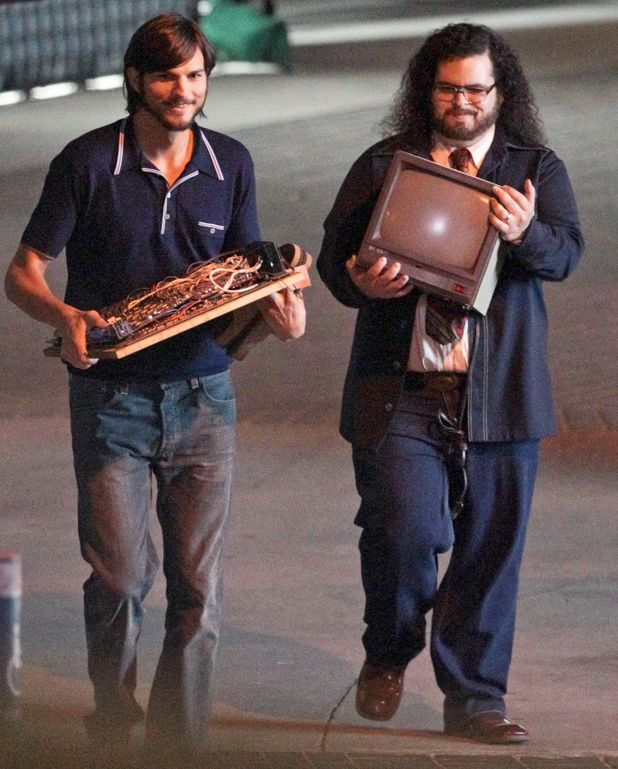
But special mention must be made of Josh Gad who plays Apple co-founder Steve Wozniak. The roly poly Gad, who landed a Tony nomination for his work in the musical “Book of Mormon,” spends much of the film hunched over a circuit board with a soldering iron in his hand. He’s your classic computer geek — fat, bearded, long-haired, uneasy in social situations.
But late in the film, when Wozniak decides to leave Apple, Gad delivers the film’s best bit of dialogue, a soliloquy in which he tells his old colleague his reasons for departing and of his fears that Jobs is alienating everyone he needs.
It’s an unexpectedly moving and heartfelt moment. “Jobs” badly needs more of them.
| Robert W. Butler
 Butler's Cinema Scene
Leave a comment