
Bette Davis, George Brent
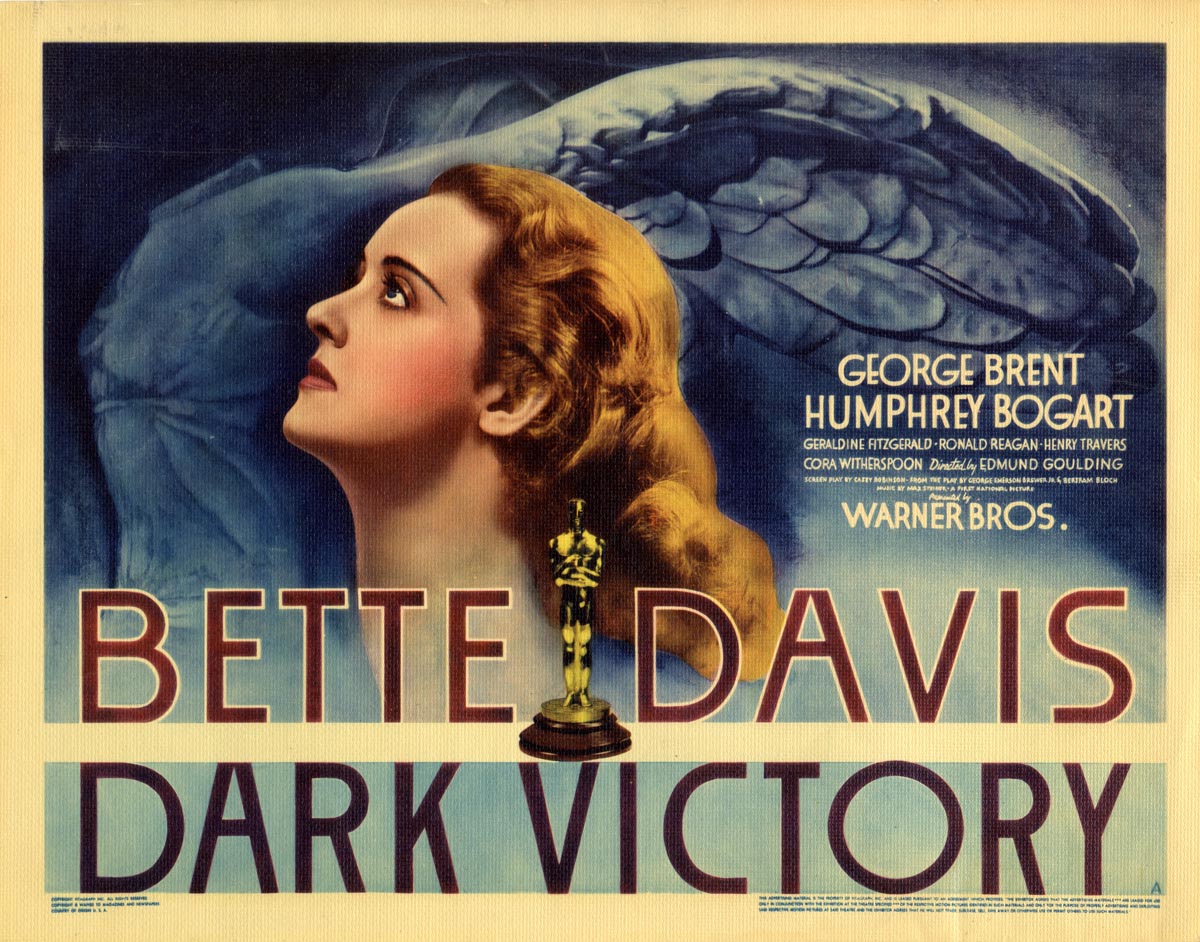
“Dark Victory” screens at 1:30 p.m. Saturday, April 19, 2014 in the Durwood Film Vault of the Kansas City Central Library, 14W. 10th St. Admission is free. It’s part of the year-long film series Hollywood’s Greatest Year, featuring movies released in 1939.
“Dark Victory” is one of those old-fashioned weepies that sophisticated film goers hate to love.
But then, ever since its release in 1939 this Bette Davis classic has left audiences torn between helpless sobbing and a slow-burning resentment over the picture’s emotional manipulation.
Davis, who was nominated for a best actress Oscar (she lost to Vivien Leigh in “Gone With the Wind”), plays spoiled, vivacious heiress Judith Traherne, who is diagnosed with a brain tumor and falls in love with the surgeon who goes poking around in her noggin.
Problem is, after the surgery the M.D. realizes the tumor will come back with fatal results. But he doesn’t tell his patient of the grim diagnosis (a choice that today would get his license yanked), allowing her to go along with her flighty life. Judith will feel perfectly fine until the day ten months hence when she goes suddenly blind and drops dead.
 Yep, it’s plenty melodramatic.
“A completely cynical appraisal would dismiss it all as emotional flimflam, a heartless play upon tender hearts by a playwright and company well versed in the dramatic uses of going blind and improvising on ‘Camille,’ ” observed critic Frank S. Nugent in The New York Times.
“But it is impossible to be that cynical about it. The mood is too poignant, the performances too honest, the craftsmanship too expert… This once we must run the risk of being called a softy. We won’t dismiss ‘Dark Victory’ with a self-defensive sneer.”
“Dark Victory” got its start as a stage play (Tallulah Bankhead played Judith on Broadway). Producer David O. Selznick originally hoped to cast Greta Garbo in the film, but the Swedish star opted to make Anna Karenina instead.
Eventually the role fell to Davis, but initially it was rough going. Davis had recently ended affairs with director William Wyler and industrialist Howard Hughes, and was being sued for divorce by her husband, Ham Nelson. After a few days of filming she asked to drop out of the project, claiming she was too sick to continue.
“I’ve seen the rushes,” responded producer Hal Wallis. “Stay sick!”
Davis found comfort in the arms of her co-star, George Brent, who played the doctor and her on-screen love interest. Davis and Brent already had made seven films together, and he was going through his own divorce. Their affair lasted for a year after completion of filming.
“Dark Victory” was one of 10 movies nominated for best picture of 1939 (again, it lost to GWTW).
Behind the camera was Edmund Goulding, a British-born actor-turned-director who is largely forgotten today. But back then Goulding was viewed as highly adaptable and effective with just about any sort of material. He did romances (“The Constant Nymph”), big-budget literary adaptations (“The Razor’s Edge”), comedy (“Everybody Does It,” “We’re Not Married!”), ensemble dramas (“Grand Hotel”), war stories (“The Dawn Patrol,” “We Are Not Alone”). His subject matter ranged from psychiatry (“The Flame Within”) to show business (“Blondie of the Follies”) to male-female relationships (“The Devil’s Holiday,” “Riptide”).
Goulding’s adaptability probably hurt him with posterity. Unlike such auteurs as Alfred Hitchcock, there was no easily identifiable “Goulding style.”
But he was particularly good with so-called “women’s pictures.” “Dark Victory” was one of two films he released in 1939 starring Davis. The other was “The Old Maid.”
“Dark Victory” also benefitted greatly from a strong supporting cast. Humphrey Bogart (employing a not-entirely-convincing Irish accent) plays Judith’s horse trainer, who is secretly in love with his employer. Geraldine Fitzgerald is solid as Judith’s supportive best friend. And Ronald Reagan provides badly-needed comic relief as a playboy member of Judith’s high society crowd.
| Robert W. Butler
 Butler's Cinema Scene
That was an Irish accent Bogie was attempting to do? Hmm…. I knew there was something not quite right about his voice in this movie, but I couldn’t put my finger on what it was.
I don’t watch this movie a lot, but I like it. Yeah, there are a lot of things in it that are incredibly eye-rolling today, which you pointed out my two biggest eye rolls (doctor not telling Judith about the fact that she is going to die, and the amazing contrivance that she’s going to die the same day she goes blind! Wow!
But, once you get past those eye-rolling things and just go along with it, it’s really kind of a beautiful movie. Definitely sincere performances from everyone.