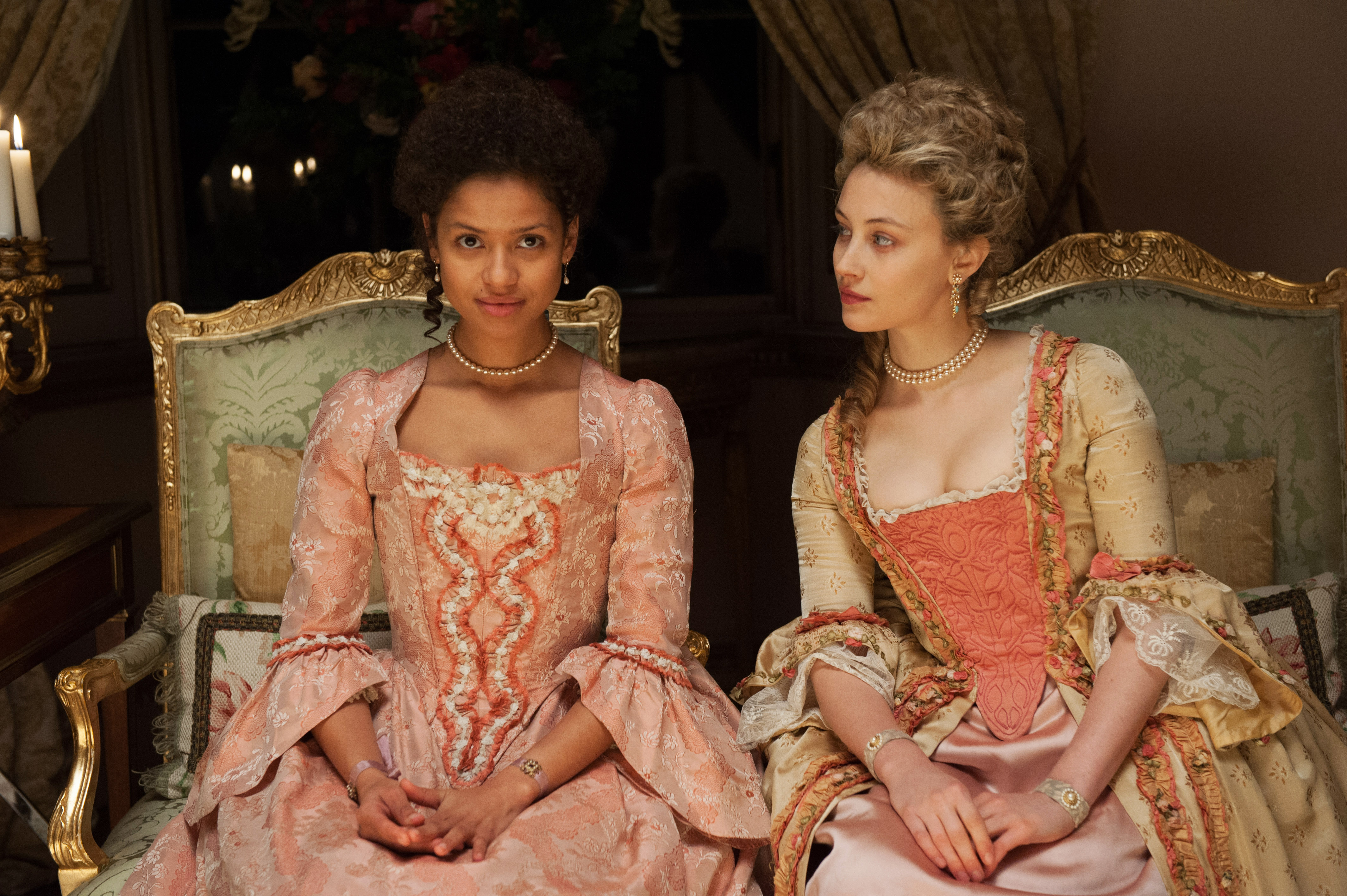
Gugu Mbatha-Raw and Sarah Gadon in “Belle”
“BELLE” My rating: C+ (Now showing at the Tivoli)
104 minutes | MPAA rating: PG
“Belle” would seem to have everything going for it – except passion.
It’s the fact-based tale of a mulatto girl in 18th century England who was raised by her father’s titled family, negotiated the tricky waters of racism and custom to find an appropriate mate, and played a role in turning the tide against the British slave trade.
What’s more, it’s got a cast that includes respected actors likeTom Wilkinson, Miranda Richardson, Emily Watson, Matthew Goode and Penelope Wilton.
In other words, Jane Austen with a social conscience.
Why, then, did “Belle” leave me cold? I’ve got to blame screenwriter Misan Sagay and director Amma Asante, who took a tale overflowing with dramatic and emotional potential and mummified it. It’s good looking, raises some interesting issues…but never engaged my emotions.
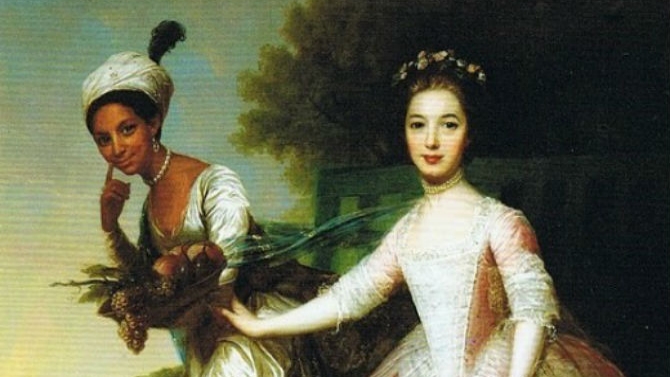
Cousins Dido and Elizabeth in an 18th-century portrait
Dido Belle is only a child when her mother, a former slave, dies. She briefly meets her father (Goode), a naval officer who deposits her with his uncle on the family estate in rural England.
This would be Lord Mansfield (Wilkinson), Britain’s highest jurist. With his wife (Watson) and spinster sister (Wilton), he overcomes his initial racism to raise Dido as his own daughter.
The girl grows up (she’s played as an adult by Gugu Mbatha-Raw) with her cousin Elizabeth (Sarah Gadon). They are the same age and, inasmuch as the family more or less hides Dido from the rest of the world, the two girls create their own idyllic environment.
Alas, that can’t last. Upon her father’s death at sea, Dido inherits a small fortune. Her cousin, though, lacks such financing and must seek a wealthy husband.
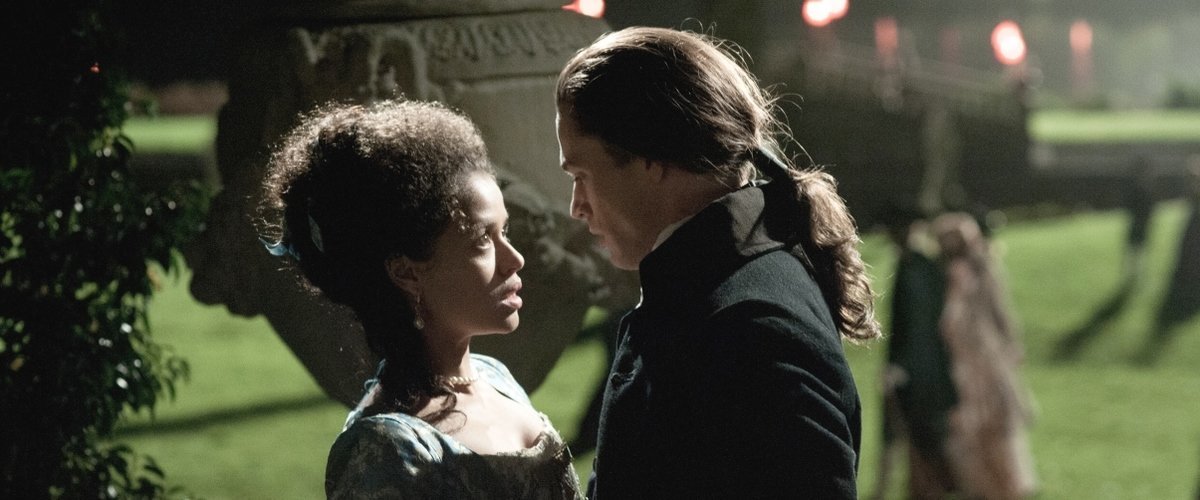
Gugu Mbatha-Raw and Sam Reid
Enter the Ashford brothers and their shrewish mother (Richardson). The oldest, the sour-tempered James (played by Tom Fenton, best known as Draco Malfoy in the “Harry Potter” series) woos Elizabeth. The younger, Oliver (James Norton), is taken with Dido. Though the boys’ mother harbors the prevailing racial prejudices, she knows that as the second son Oliver will inherit nothing and could use Dido’s income.
But there’s another man in Dido’s life. John Davinier (Sam Reid) is the son of the local vicar and an ardent abolitionist. He is interested not only in our heroine but in her “papa,” the chief high justice, who is preparing to rule on a case that could either cripple or perpetuate the slave trade.
At its best, “Belle” provides insights into the rigid social rules that dominated British society and gave everyone a sense of where he or she belonged. Of course, in Dido’s case the rules are complicated. For example, she is not allowed to dine with her white family members on formal occasions. One initially suspects it’s because she’s black; we later learn it’s because she’s illegitimate.
And of course there’s plenty of casual racism among the British upper crust. Dido may dress, act, and speak like one of the nobility, but her skin betrays her.
Mbatha-Raw, the daughter of a black South African physician and a white English nurse, is a beautiful young woman and, apparently, an adequate actress. But in “Belle” she seems in an emotional straightjacket.
Things aren’t helped any by the film’s overall humorlessness…it’s a smotheringly solemn affair that desperately needs a Maggie Smith-ish character to relieve the sensation that we’re being taught a very serious lesson.
| Robert W. Butler
 Butler's Cinema Scene
Leave a comment