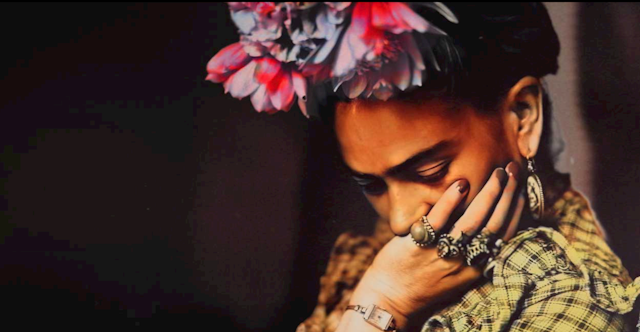
“FRIDA” My rating: A (Prime)
87 minutes | MPAA rating: R
I figured I’d pretty much been Kahlo-ed out.
Couldn’t have been more mistaken.
“Frida,” the new doc from Ron Howard’s production company, is an eye-enchanting and soul-stirring experience. It is among the best documentaries about an artist I’ve ever seen.
Here’s what makes it so special…director Carla Gutierrez completely blows off the usual art history approach. There are no critics discussing Frida Kahlo’s work or her impact on contemporary culture.
Instead this is an intimate bio told in Kahlo’s own words (and those of her closest friends and family). As Frida (voiced by an actress reading from the artist’s own diaries) relates events from a colorful life, the screen lights up with arresting images.
Half the film consists of archival footage and still photos of Frida and her world, often colorized to create a dreamlike effect. The other half is made up of brilliant animation sequences in which her paintings come to sinuous life (these sections were overseen by animation creative director Sofia Inés Cázares).
The results are seductive and haunting.
If her painting style would eventually be categorized as surrealism, Frida’s writing is brutally realistic about her personal life.
Even so, at times her prose achieves the beauty of minimalist poetry. Describing her early yearnings for a physical relationship with a classmate, she begins by stating “I think everything that gives pleasure is good,” and then follows up that thought with a string of seductive words: “breath,” “scent,” “armpit,” “love,” “abyss.”
(By the way, most of the film’s dialogue is in Spanish with English subtitles. This only reinforces the illusion that we’re being confronted by Frida herself.)
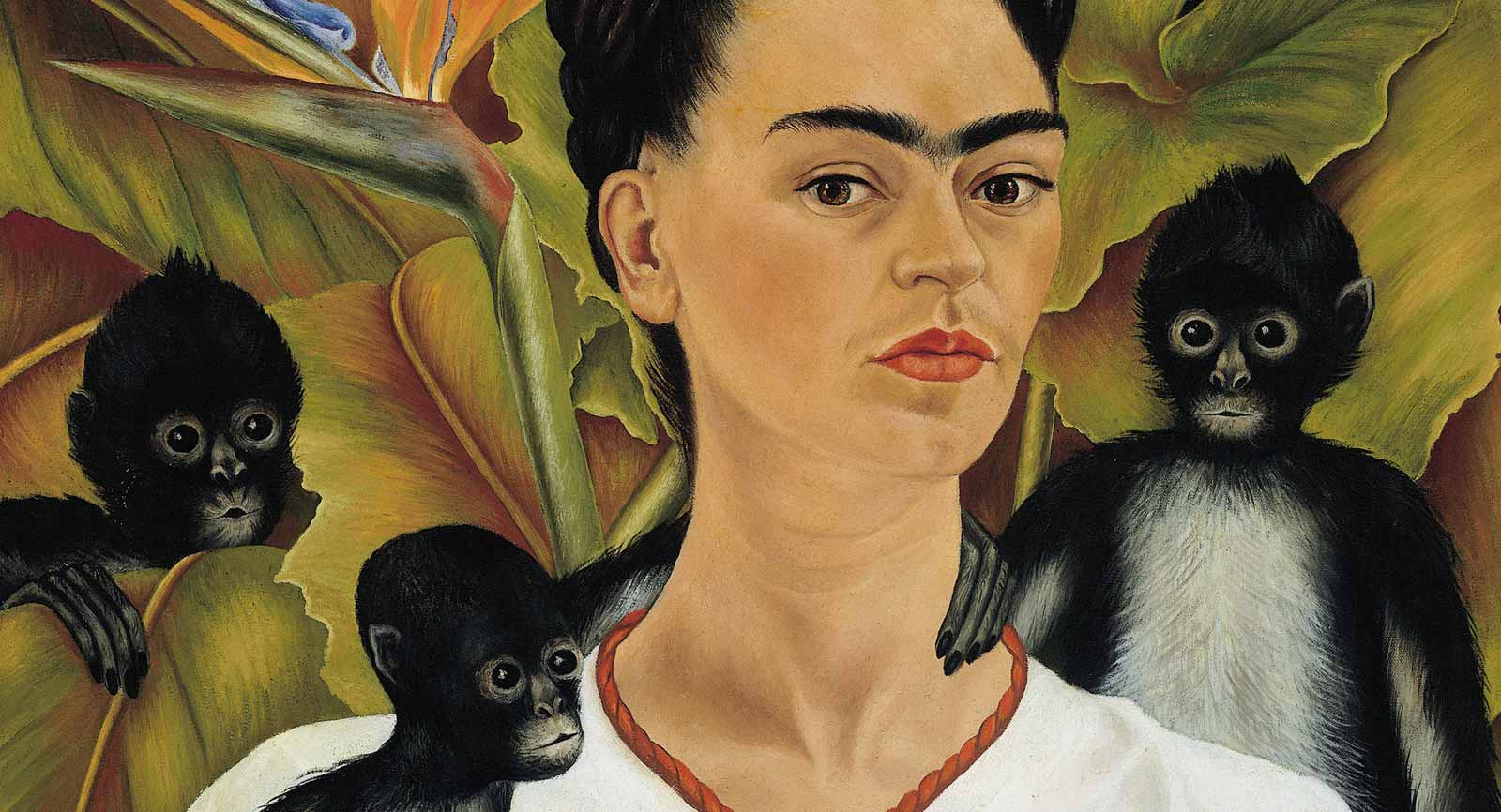
As a teen she was involved in a Mexico city bus accident that left her in pain for the rest of her life. The incident was also responsible for her becoming an artist… laying for months on her back in a body cast, the girl was going mad with boredom. Frida’s mother created an overhead easel the patient could reach and hung beside it a mirror, The teen began doing self portraits…and never stopped.
Frida’s two marriages to Mexican muralist Diego Rivera comprise one of the 20th century’s great love stories. Rivera (again voiced by an actor, reading from the artist’s memoir) admits to being a selfish womanizer. Frida was an intensely sexual person who enjoyed relations with both women and men (Rivera, a font of machismo, was turned on by the former, infuriated by the latter).
To a large extent this doc is the story of how Frida emerged from the shadow of her world-famous spouse and found her own visual voice.
Much of this transpired in the early 1930s when the couple were living in New York City and Frida had little to do while Rivera worked on mural commissions.
If her stay in the U.S.A. honed Frida’s art, it only solidified her leftist inclinations…she was absolutely dismissive in her rejection of American capitalism, which she found soulless, and the shallow affectations of the ruling class. For all its poverty and unrest, she much preferred her native Mexico.
The cumulative effect of ”Frida” is overwhelming. Staring for almost 90 minutes at photos and films of the woman and her self-portraits, listening to her voice thoughts that most of us keep to ourselves, one gets the uncanny feeling of having actually met her.
But it’s more than that. By film’s end you may find yourself in love with this woman.
| Robert W. Butler
 Butler's Cinema Scene
Leave a comment