Feeds:
Posts
Comments

Archive for April, 2024

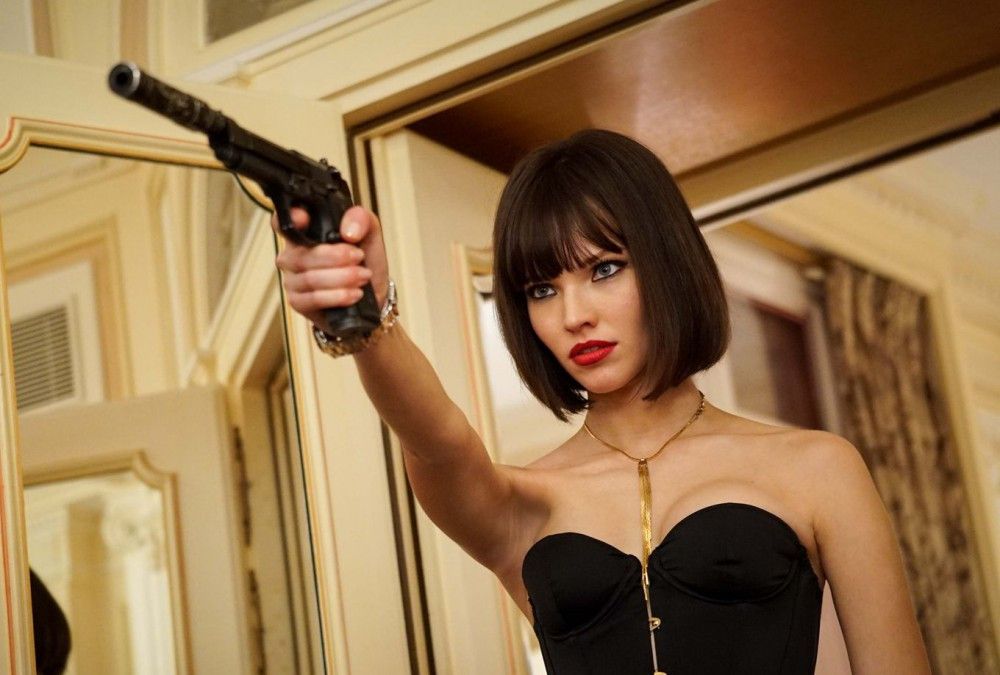
Sasha Luss

“ANNA” My rating: B- (Netflix)

118 minutes | MPAA rating: R

“Anna” is a guilty pleasure, delivering just enough cheese/sleaze to satisfy a viewer’s baser instincts but wrapping it all up in a clever storytelling style that keeps us on our toes and guessing.

I didn’t realize until watching the final credits that this spy thriller was written and directed by French icon Luc Besson…but I should have guessed.  “Anna” is basically a remix of Besson’s 1990 hit “La Femme Nikita.”

Both films center on a young woman recruited by a spy agency and trained as a ruthless assassin specializing in seduction and mayhem.

This time around our heroine is the Russian orphan Anna (Sasha Luss), a loner who becomes one of the KGB’s most relentless killers while working as a fashion model in Paris. Besson’s plot finds her undertaking a host of dangerous missions, often disguised by wigs.

What’s intriguing is the film’s structure.  After each kill the film flashes back to reveal that what we assumed about the mission was in fact wrong, that there were hidden intentions and meanings that shot right by us. With this setup what might otherwise be just a series of violent encounters instead triggers jaw-dropping revelations.

The supporting cast ain’t bad, either.  “Anna” counts two Oscar winners on its roster:  Helen Mirren is a delight as the chain-smoking cynical Russian spymaster who controls Anna’s life; Cillian Murphy is a CIA agent who tries to turn our girl to America’s interests.  And Luke Evans is just fine as the Anna’s field handler.

I was initially unimpressed by Luss’s turn as Anna…pretty but vacant.  Over time, though, one realizes that Anna is playing a long con on everyone…the Russians, the Americans and especially the audience. She’s revealing to each of these demographics only enough about herself to keep her plans in play.

Smart girl.
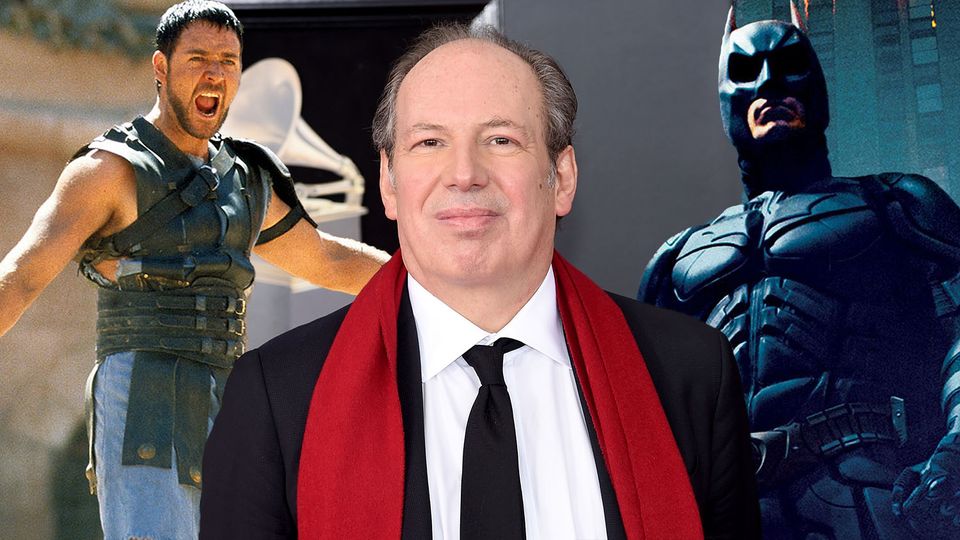
Hans Zimmer

“HANS ZIMMER: HOLLYWOOD REBEL”My rating: B (Netflix)

60 minutes | No MPAA rating

Checking out composer Hans Zimmer’s IMDB page is pretty mind-boggling.  The two-time Oscar winner has scored some of the seminal films of the last 40 years: 

“Gladiator,” “Dune,” virtually all of Christopher Nolan’s movies, “Thelma & Louise,” “A League of Their Own,” “The Lion King,” “Muppet Treasure Island,” “The Thin Red Line,” the “Mission: Impossible” franchise, “Black Hawk Down,” “The Last Samurai,” “The Da Vinci Code,” “The Pirates of the Caribbean” franchise, “Kung Fu Panda,” “12 Years a Slave,” “Hidden Figures,” “Blade Runner 2049,” “Dune,” “Top Gun: Maverick.”

Not to mention a ton of documentaries and a little TV show called “The Simpsons.” 

Francis Hanly’s “Hans Zimmer: Hollywood Rebel” can’t really explain Zimmer’s astonishing productivity and creativity (“superhuman” doesn’t seem too hyperbolic), but it does provide in a neat, one-hour session an intriguing overview of the man’s life and career.

What struck me most about the German-born Zimmer’s work is his reliance on atmosphere and rhythm over melody.  Some of my favorite movie scores (Jerry Fielding’s work on “The Wild Bunch,” for example) are less about delivering tunes than creating a sonic background reflecting the emotional tenor of the scene. 

This is what Zimmer does so well, often working alone at a keyboard/synthesizer to create sonic landscapes that only later are performed by a full orchestra (or not…Zimmer excels at mimimalist arrangements as well).  

The man appears to be unflaggingly good natured, if dangerously obsessive about his work.  His grown children describe him as an absentee father, though in recent years he’s been working to make up for lost time.

His coworkers and the directors he’s composed for — James L. Brooks, Stephen Frears, Ron Howard, Barry Levinson, Steve McQueen, Christopher Nolan, Denis Villeneuve, etc. — can’t wait to team up with him again and again.

Kingsley Ben-Adir

“BOB MARLEY: ONE LOVE” *My rating: B (Apple+)

107 minutes | MPAA rating: PG-13

I never saw “Bob Marley: One Love” in the theater. This may have been an OK thing, since I would have missed half the dialogue, which is delivered in a thick Jamaican/Rasta patois.

So let’s hear a round of applause for streaming service captioning.

Reinald Marcus Green’s film (it was written by  Terence Winter, Frank E. Flowers and Zach Baylin) is essentially hagiographic, but still compelling. 

We get the essentials on Marley’s brief but impactful life…his conflicts over the white father he never knew, his Jamaican nationalism (during the violent 1976 national election he was the target of an assassination attempt), his embracing of Rastafarianism (if you’re going to go whole hog into religious silliness, that’s the coolest option), his prodigious ganga consumption.

Marley is played by Brit actor Kingsley Ben-Adir, who doesn’t resemble Marley all that much but who nails his body language and stage presence.  Lashanda Lynch is fine as his wife and backup singer Rita Marley (and she has a terrific third-act eruption confronting her husband over his infidelities). 

But the real star of the show is the music itself.  It’s just one damn great song after another; Marley was reggae’s greatest tunesmith and lyricist, laying down spectacularly produced tracks that are yet to be equalled.  

| Robert W. Butler

Read Full Post »

Tobias Menzies

“MANHUNT” (Apple +): A largely overlooked but crucial moment of American history gets an almost microscopic examination in “Manhunt,” a gripping and immersive dive into the assassination of Abraham Lincoln and its aftermath.

Created by Monica Beletsky (“Fargo,” “Friday Night Lights”), this seven-episode series focuses on Edwin Stanton (Tobias Menzies), Lincoln’s Secretary of War who, as the show begins is celebrating the defeat of the Confederacy and looking forward to implementing his boss’s reconstruction program in the South.

When Lincoln is assassinated near the end of Episode One, it becomes Stanton’s obsession to find the killer and uncover a conspiracy that might lead directly to Jefferson Davis, the former Confederate President now in federal custody.

The assassin, actor John Wilkes Booth (Anthony Boyle, doing a 180 from the selfless bomber navigator he played in the recent “Masters of the Air”), spends nearly two weeks on the run, determined to reach Richmond VA where, he is sure, he will find shelter and a hero’s welcome. Aside from his rampant racism, Booth’s salient characteristic is his ego…he’s a matinee idol despite lacking the acting chops of his more famous brother Edwin. Killing a President seems to him a pretty good way of achieving immortality.

As a history lesson “Manhunt” will be, for most viewers, a revelation.  

Killing Old Abe  was just one facet of a plan to bump off the major figures in the Lincoln administration. The killers missed most of their targets; eventually several individuals were convicted and hanged.

Though battlefield hostilities had ceased, a Confederate government in exile in Canada continued its attempts to manipulate events in the U.S.

Lincoln’s Veep, Andrew Johnson (Glenn Morshower), won a place on the ticket because his conservative credentials might draw voters dubious about Lincoln.  It worked and Lincoln won re-election;  with the President’s death, though, Johnson took over and jettisoned the former administration’s ambitious plans to bring hundreds of thousands of former slaves into American society.

The dismayed Stanton prophetically protests that the result will be a permanent underclass. 

Menzies, perhaps best known as the sneeringly vile villain of “Outlander,”  is spectacularly good as Stanton, creating a character whose conscience pushes him to act even when his body is breaking down (an asthmatic, he outlived Lincoln by only two years). When Johnson attempted to replace him on the cabinet, Stanton barricaded himself in his office for nearly three months to prevent the transfer of power.

Lincoln (Hamish Linklater) is prominently featured only in the first episode,  but is seen in flashbacks throughout the production. Getting more screen time is Lili Taylor as his widow, Mary Todd Lincoln.

The series revels in some of its minor characters, like Oswell Swann (Roger Payano), a freed black man who for a price guided Booth through a swamp;  Mary Simms (Lovie Simone), an enslaved woman who became a key witness in the trial of the conspirators, and Boston Corbett (William Mark McCullough), a former drunk turned Union soldier and religious fanatic who fired the shot that killed Booth.

Indeed, the series has been extremely well cast, the one big mistake being Patton Oswalt as a self-serving “detective” helping track down the killers.  Despite a luxurious beard, I kept expecting him to crack wise.

Matthias Schoenaerts, Kate Winslet

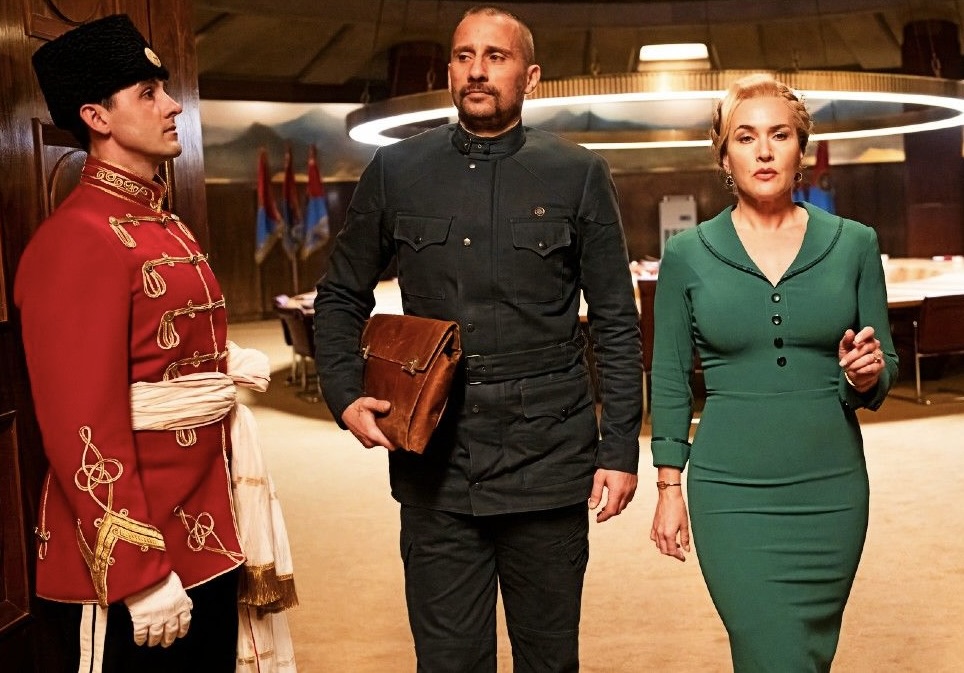
“THE REGIME” (Max):  As a black comedy about fascistic populism “The Regime” could hardly be more timely.

Yet it nevertheless wore out its welcome well before reaching its eighth and final episode.

First, the good stuff:  Kate Winslet is at the top of her game as Elena Vernham, the chancellor of a small Eastern European country whose outward charisma covers a host of insecurities (mold in the palace…eek!!!) and a casual brutality inherited from her late father, a former chancellor whose ghastly corpse resides in a glass coffin.

In the first episode we are introduced to Corporal Herbert Zubak (Matthias Schoenaerts). a thug who eagerly butchered a group of striking workers and now finds himself promoted to the position of Chancellor Verhnam’s body guard.  It doesn’t take all that long for the dead-eyed Zubak to find his way into the boss’s bed and a position of real power.

We’re given a handful of nervous advisers whose main job is to keep the Chancellor from doing anything too ruinous while trying to ensure their own survival (sounds  lot like the Trump White House), and a chief of household (Andrea Riseborough, looking even more androgynous than usual) whose young son the childless Verhnam insists on raising as her own.

At its best, “The Regime” (it was created by Will Tracy) bears a close kinship to the savage political satires of  Armando Iannucci (“The Death of Stalin,” “Veep,” “In the Loop”).

Problem is, once having set up its premise, the show seems stuck in a loop, hitting the same notes over and over with few variations. Thank heaven for Hugh Grant, who shows up midway as a sardonic former chancellor now residing in one of Verhnam’s prisons. 

Production values are high, and the acting solid enough that I stuck with it. Still, I hoped for more. 

| Robert W. Butler

Read Full Post »

“SASQUATCH SUNSET” My rating: B (At the Screenland Armor)

89 minutes | MPAA rating: R

“Sasquatch Sunset” arrives with a reputation: Apparently at early screenings it set near-records for audience walk-outs,

Well, screw those guys.  

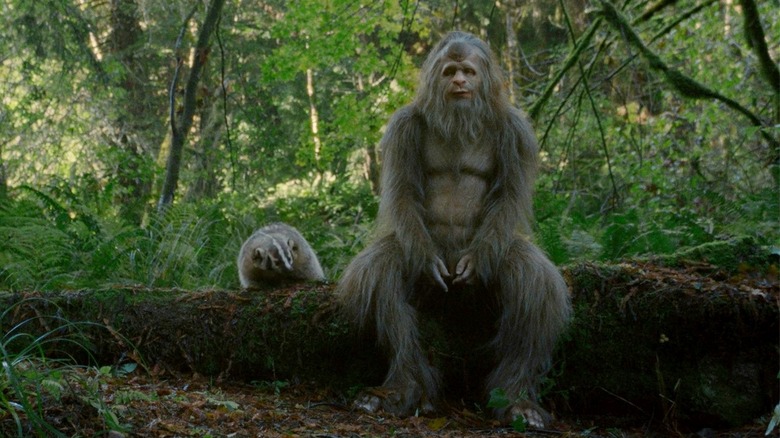
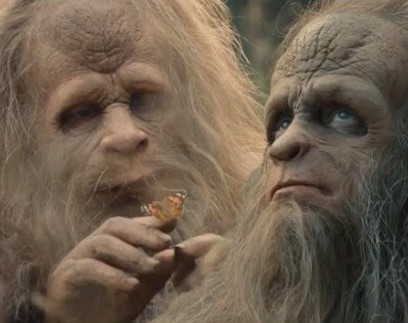
I found this bizarro fantasy from sibling filmmakers David and Nathan Zellner to be pretty damn wonderful, a sort of comic tragedy with no dialogue, a jaw-dropping matter-of-factness when it comes to bodily functions, and a cast of players so hidden behind fake hair and prosthetics that they are unrecognizable.

Unfolding in the what appears to be the forests of the Pacific Northwest (the luscious cinematography is by Mike Gioulakis), this is the story of a family struggling to survive.

Our protagonists are Papa Sasquatch (Nathan Zellner) and Momma Sasquatch (Riley Keough) and their two boys (Jessie Eisenberg and Christopher Zajac-Denek). They live a nomadic life, always in search of food.

Initially “Sasquatch Sunset” mimics nature films (or perhaps it’s more accurate to say that it’s like the “Dawn of Man” sequence of “2001: A Space Odyssey” blown up to feature length).  The camera captures these shaggy hominids foraging, interacting with other wildlife (elk, skunk, badger, cougar), and employing branches to construct temporary lean-tos for sleeping. They also horse around. Recreational play is part of their daily existence.

They don’t talk, exactly, but they do communicate through grunts, moans and shrieks. 

Periodically they will use heavy logs to pound in unison on tree trunks.  This is their version of jungle drumming; they hope to make contact with others bigfoot clans.   Alas, their messages elicit no response. Perhaps they’re the last of their kind.

The National Geographic aspects of the film are often in counterpoint to a thick current of humor running throughout.

There’s a slapstick encounter with a turtle, and much emphasis on bodily functions. (Like the great apes, the sasquatch throw their own feces at interlopers.) 

Papa Sasquatch is particularly amusing. He’s a hirsute Homer Simpson with a taste for fermented berries and psychedelic ‘shrooms. When his amorous advances are angrily rejected by Momma Sasquatch, he becomes fascinated by a log featuring a seductive-looking hole. (Thus cementing his genetic kinship with human males.)

About halfway through, though, the mood darkens.  We discover that the Sasquatch bury their dead, leaving little abstract sculptures of bent twigs on the grave in tribute.

And it comes as something of a shock when our hairy heroes encounter a tree marked by a huge red X in spray paint.  Later they will angrily tear up a human campsite (but not before gorging themselves on Cheetos).  And their minds are completely blown when they stumble across a roadway winding its way through the woods.

There’s no plot to speak of, just a series of episodes.  But over “Sasquatch Sunset’s” brief running time we come not only to recognize these animals as individuals with their own personalities, but as  representatives of a much larger struggle between survival and extinction. There might just be a lesson there for the rest of us.

| Robert W. Butler

Read Full Post »

Andrew Scott

“RIPLEY” (Netflix):   

Patricia Highsmith’s charming/creepy con man Tom Ripley has been a favorite of filmmakers ever since the character first saw the light of print in 1955.

Over the years he’s been portrayed by Matt Damon, Barry Pepper, John Malkovich, Alain Delon and Dennis Hopper, among others. 

So I approached writer/director Steve Zaillian’s new adaption on Netflix with a few misgivings. What could this 8-part series possibly bring to the table that I hadn’t already encountered in all those other movies?

Silly me. 

This is now officially my favorite Ripley of all.  Andrew “Hot Priest” Scott is both seductive and repellant in the title role, deftly sliding between charm and creepiness, between superficial warmth and a near-reptilian indifference.

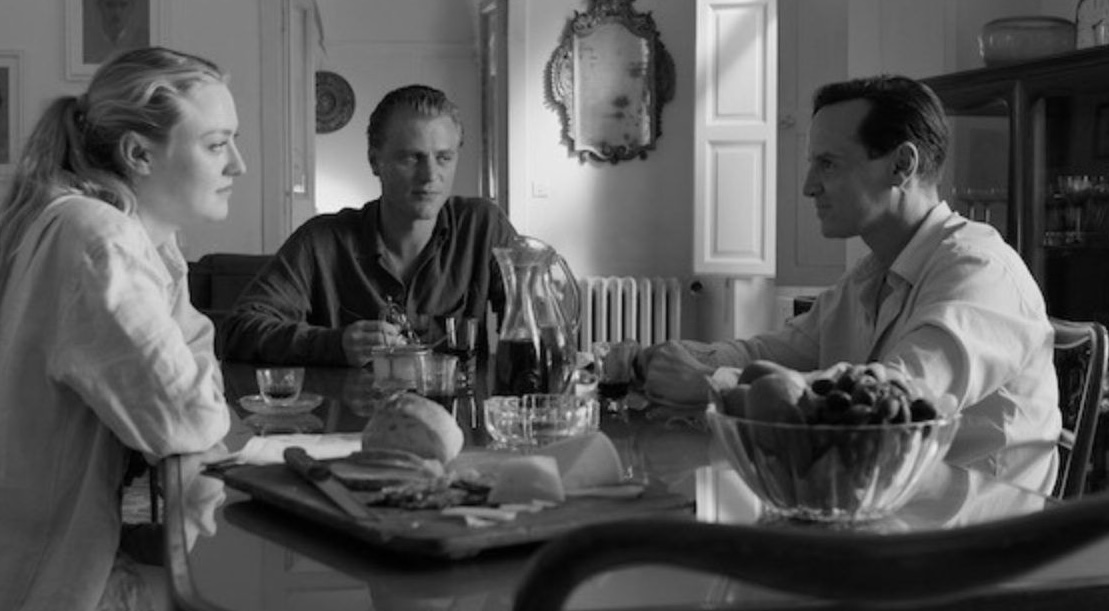
But sharing star billing is the series’ use of Italian backdrops, captured in black-and-white footage so jaw-droopingly rich that you want to linger on every frame, soaking up the unerringly “right” compositions and mesmerizing interplay between light and dark.

In fact, cinematographer Robert Elswit just might singlehandedly make b&w a thing again.  The format has the almost mystical ability to capture and magnify textures ranging from worn marble to fabrics. This “Ripley” is more than a crime story or a personality study…it’s a freakin’ sensory adventure.

(Elswit uses only a brief moment of color…it’s at the end of Episode 6. Look for it.)

The plot is pretty much as you remember it.  In the late 1950s New York scammer Tom Ripley is recruited by a rich man to seek out the  wayward son who has decamped to Italy.

Ripley barely knows the young fellow he’s supposed to bring back to the States, but at the very least he can spend a couple of months living high on the old man’s money.

His target, Dickie Greenleaf (Johnny Flynn), is a wannabe writer and painter who has a taste for the expensive things — like the  original Picasso on his villa wall — that a plebe like Ripley can only dream of. 

In fact, our man soon realizes he isn’t satisfied with being Dickie’s drinking buddy and traveling companion…Ripley wants to take over Dickie’s life, to actually become Dickie.  Which will of course necessitate the real Dickie disappearing.

Dakota Fanning, Johnny Flynn, Andrew Scott

Two of the series’ episodes are devoted to depicting separate murders and Ripley’s coverup efforts. Zaillian has filmed these with virtually no dialogue, studying Ripley’s efforts to clean his messes and hide the evidence in practically microscopic detail.

Along the way he ratchets up the tension to painful levels…time after time it looks as though Ripley is going to be found out…and like a cat he somehow always lands on his feet. Whether by luck or strategic thinking, he always turns the odds in his favor.

“Ripley” is pretty much a one-man show, and Scott is nothing short of hypnotic.  You find yourself rooting for Ripley against your good judgment; there’s perverse pleasure (and in several instances sardonic humor) in watching him run circles around everybody…including us viewers.

It’s not entirely a one-man show. Dakota Fanning is effective as Dickie’s girlfriend, whose almost instant dislike of Ripley may put her in his cross hairs. Eliot Sumner has some fine moments as Freddie, Dickie’s fey friend, and Maurizio Lombardi is quite wonderful as the Roman police inspector wrapped up in Ripley’s wild goose chase.

| Robert W. Butler

Read Full Post »

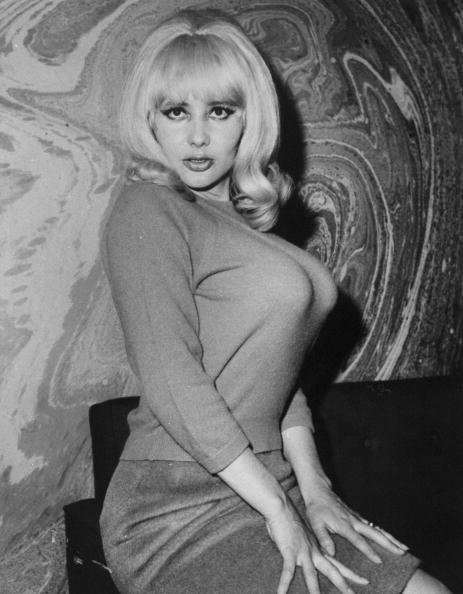
Carol Doda

“CAROL DODA TOPLESS AT THE CONDOR”  My rating: B- (At the Glenwood Arts)

100 minutes | MPAA rating: R

One of the more obscure outliers of modern American social history gets examined in “Carol Doda Topless at the Condor,” a documentary that succeeds more in recreating a bygone era than in coming to any definitive conclusions about its central figure.

Carol Doda (she died in 2015 at age 78) was, for a decade or so beginning in the mid-1960s.  a household name. She was famous/notorious for dancing topless at the Condor Club in San Francisco’s North Beach neighborhood.

Doda was not a stripper. Or even an exotic dancer.  She did a standard go-go routine with the difference that she was nude from the waist up.

This was in an era when even burlesque stars wore pasties; by freeing the nipple one might claim that Doda opened the door to a whole new approach to public nudity.

Whether she intended to do so or was just in the right place at the right time is one of many questions Marlo McKenzie and Jonathan Parker’s film leave unanswered.

The film does a nice job of establishing how San Francisco became “the off-season Vegas,” a nightlife center offering tourists a plethora of jazz and comedy clubs that earned the town the nickname “Baghdad by the Bay.”

Carol Doda was a waitress at the Condor Club.  But she delivered drinks with a wiggle and exuberant dance movies while wearing a white leotard.  Eventually the club’s owners suggested that she might do her dance from atop the grand piano on the bandstand.

At the same time fashion designer Rudy Gernreich was introducing his topless swimsuit (or monokini);  Doda and her bosses decided to up the ante by having her dance in the breast-baring outfit. Result: standing-room crowds and queues around the block.

Ere long Doda was making her entrance on a specially rigged piano that lowered from a hole in the ceiling with the star performer already on top and gyrating.  And she began beefing up her modest bosom with silicon injections.

Overnight virtually every club in town went topless.  The cops responded with a city-wide raid; Doda and her fellow topless dancers prevailed in court and as a result San Francisco became the  first city to recognize the legality of topless performance.

“Carol Doda Topless…” eschews narration and instead relies on dozens of talking-head snippets featuring Doda’s old bosses, fellow dancers, even bartenders at clubs where she worked.  

There are also a handful of female scholars attempting to establish Doda’s place in the feminist continuum, and they are wildly contradictory.  Was Doda exploited or was she a canny exploiter?  Was she a photo-feminist?  And if so, deliberately or accidentally?  

The film employs lots of footage of Doda being interviewed, but it’s just about impossible to pin down her personality. For a woman who nightly bared it all, she was remarkably shy.

“I want to be in show business and I don’t know any other way than showing my bosoms,” she says at one point.  In another interview she calls her act “another form of art, like a nude painting or statue.”

So who was this woman?  There are hints that she came to San Francisco after a failed marriage, leaving behind one or two children.  The movie raises the idea that Doda developed serious health problems as the result of her regular use of silicon  injections to maintain her breasts, but never comes to any conclusions.

In interviews she could be self-effacing, but there’s no evidence that irony played a role in her act.  She was a naked lady dancing. Period.

Doda never discussed her personal life; even women who worked with her for years knew little about her.  She is alleged to have had a liaison with Frank Sinatra; thereafter she preferred young men…one commentator suggests that guys barely out of their teens were more malleable and less troublesome.

In later life, when the topless bookings dropped off, Doda sang with a heavy metal band, did  phone porn, developed her own  line of face creams  and opened a boutique specializing in  intimate wear (apparently she would look at a female customer and know immediately what design and size of bra would be appropriate).

Ultimately we’re left with the sense that Carol Doda wanted desperately to be a star despite her lack of conventional talent, and had the insight or blind luck to find the one way to get there.

| Robert W. Butler

Read Full Post »