This collection of Oscar-Nominated Live-Action shorts opens Feb. 10 at the Tivoli
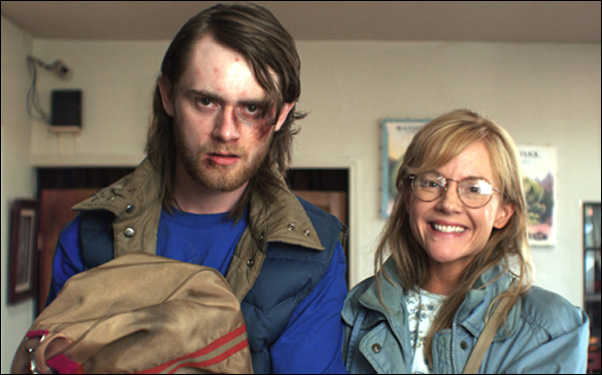
Ciaran Hinds, Kerry Condon
“THE SHORE” My rating: A-
29 minutes
Warm, funny and a bit heartbreaking, “The Shore” is about the return of a sixtysomething Joe (Ciaran Hinds) to the seaside village in Northern Ireland he fled during the troubles in the 1970s.
Accompanying him is his American-born daughter (Kerry Condon), whose search for answers for why her father has stayed away all these years becomes our journey as well. It all has something to do with the girl (Maggie Cronin) and the best friend (Conleth Hill) Joe left behind.
Writer/director Terry George has a nifty gift for mixing the melancholy with the boistrously hilarious. Hill’s character is one of a trio of locals who illegally supplement their government welfare checks by collecting shellfish when the tide is out and selling them to vendors. There’s a priceless scene of them spotting Joe from afar and, assuming he’s a government man come to bust them, trying to make a break for it. Alas, they’re all too fat and middle-aged to get far.
A hugely appealing film about returning to your roots and making amends. (more…)
This program of Oscar-nominated shorts opens Feb. 10 at the Tivoli
“A MORNING STROLL” My rating: B
7 minutes
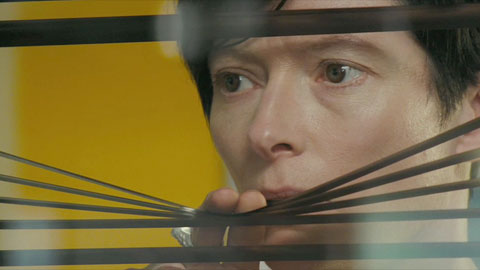
This short from the UK is a triptych, with each “panel” set in a different time and rendered in a different artistic style. The subject matter, though, remains more or less the same.
In a segment set in 1959, stick figures in a black-and-white urban environment respond to a chicken that clucks down a sidewalk on its morning walk.
In the present, a young hip-hop lad encounters the same chicken in a brightly colored environment…but he’s too wrapped up in his handheld zombie video game to pay much attention to anything else.
And 50 years in the future, the same chicken is out taking his morning stroll…although there apparently has been a zombie apocalypse, for the street is littered with wrecked cars and our perambulating fowl must avoid a voracious example of the undead. This segment employs very realistic computer animation.
I can’t deduce any important meaning in “A Morning Stroll,” but it’s divertingly goofy. (more…)
“A DANGEROUS METHOD” My rating: B-(Opening on Jan. 20)
99 minutes | MPAA rating: R
There’s no overt violence in “A Dangerous Method.” The characters wear top hats or long pastel dresses and talk in a highly civilized manner while sipping coffee and puffing stogies.
But for all the gentility of its Merchant-Ivory trappings, the latest from filmmaker David Cronenberg (“A History of Violence,” “Eastern Promises”) is right at home with his longstanding preoccupation with “abnormal” psychology.
More than just a case history, “A Dangerous Method” is about psychology with a capital P. It goes right to the source.
Michael Fassbender (who also stars in the just-opened “Shame”) staras as psychiatric giant Carl Jung. It’s the turn of the last century in picturesque Zurich, where Jung works at a mental hospital, attempting to cure his patients through psychotherapy instead of the often violent methods that in the past made such clinics a living hell.
Those were the two words that came immediately to mind after viewing “Cotnraband,” the latest from the hugely productive actor/producer Mark Wahlberg.
This crime drama generates a couple of generic thrills, but that’s about it.
Well, one supposes that not everything Wahlberg touches can be gold. Every movie can’t be “The Fighter.” But, sheesh, he’s not even trying here.
The premise finds former international smuggler Chris Farraday (Wahlberg) living the straight life in New Orleans with his wife (Kate Beckinsale) and their kids. He long ago quit the criminal trade and now installs homes security systems.(more…)
Giancarlo Esposito...his last moments on "Breaking Bad"
Kansas City visual effecs wiz Bruce Branit (of BranitFX) has been nomined for an award by the Visual Effects Society.
Branit and associates Werner Hahnlein, Gregory Nicotero and William Powloski got the nod for their work on the season finale of AMC’s “Breaking Bad.” They are nomninated in the Outstanding Supporting Visual Effects in a Broadcast Program category.
If you saw that episode – “Face Off” – you haven’t forgotten it.
Branit and gang worked on the shot where drug kingpin Gustavo “Gus” Fring (Giancarlo Esposito), targeted for assassination by bomb, walks away from the blast straightening his tie and apparently unharmed.
Then the camera moves from a side shot to a full-on shot and we realize that one half of Gus’ face has been blown off.
He promptly collapses and dies.
Others shows nominated in same category include “Boardwalk Empire,” “Bones,” “Game of Thrones” and “Pan Am.”
In announcing this year’s nominees, VES chairman Jeffrey Okum said: “The standard of the creative work that is being considered this year is unbelievably high across all categories. The judges faced a huge challenge because all of the work was so far above the norm. We’re honored to hage the opportunity to focus the spotlight on the outstanding work that has contributed to some of the highest grossing films and broadcast projects of all time.”
The SIV will honor comic book legend Stan Lee with a lifetime achievement award and f/x guru Douglas Trumbull (“2001: A Space Odyssey”) with the Georges Melies Award during ceremonies Feb. 7 at the Beverly Hilton Hotel. The event will be carried on the Reelz cable channel.
“TINKER TAILOR SOLDIER SPY” My rating: B+ (Opening January 6 at the Glenwood Arts)
127 minutes | MPAA rating: R
Gary Oldman is often described as an actor’s actor…which in his case apparently means an incurable ham.
Oldman’s career is heavily weighted toward over-the-top, push-too-far performances. Sometimes this is forgivable, particularly when he’s in a bad movie and his fierce scenery gnawing is the only remotely entertaining thing in sight.
Too often over the years, though, I’ve found him to be a jarring pothole in a movie’s narrative highway.
Now I can happily report that in “Tinker, Tailor, Soldier, Spy” Oldman gives a marvelously restrained, subtle and carefully modulated performance.
He plays British spymaster George Smiley, the owlish Cold War protagonis of several John LeCarre novels — a role essayed by Alec Guinness in the 1979 PBS adaptation of “TTSS.” And he is quietly wonderful.
“HYDE PARK ON HUDSON” My rating: B(Opens wide on Jan. 4)
94 minutes | MPAA rating: R
The natural reaction upon learning that comedy legend Bill Murray is portraying Franklin Roosevelt is to expect some sort of farce, perhaps a feature-length version of a “Saturday Night Live” skit.
Nope. Murray’s carefully-contained performance in “Hyde Park on Hudson” is the real deal, an attempt to present an historically plausible FDR. This does not mean that Murray and the film are solemn and humorless; merely that they story they tell is bigger than one star turn.
Actually, this piece of history from director Roger Michell (“Notting Hill,” “Changing Lanes”) is several stories mashed together (not unpleasantly).
It begins with Daisy Suckley (the ever-superb Laura Linney), spinsterish sixth cousin of the President, receiving an invitation – a plea, actually – to leave her wooded rural home in upstate New York and visit the summer Presidential compound in nearby Hyde Park.
Franklin, she is told, is restless (actually he’s driving his staff nuts) and could use some fresh companionship.
Through Daisy’s eyes we are introduced to the President’s near and dear. Most of them are very strong women: The First Lady, Eleanor (Olivia Williams, looking very horsey with a mouthful of prosthetic teeth), who spends most of her time at a sort of all-woman commune. Also FDR’s assistant Missy LeHand (Elizabeth Marvel), who knows her boss so well she can anticipate his whims. And the President’s mother (Elizabeth Wilson), whose main job is to serve as official hostess (Eleanor’s rarely around) and nag her son about drinking and his health.
Though surrounded by women devoted to him, Franklin makes Daisy feel like a co-conspirator in defying their dictates. He proudly shows off his stamp collection (he has found it useful in repelling blowhards). He engages Daisy in long conversations. He takes her racing down country roads in an open-air touring car equipped with hand controls (the president was paralyzed from the waist down after a bout with polio).
And, on one such ride, after ditching his Secret Service escort, Franklin parks in a flower-dappled meadow and places Daisy’s hand on his crotch. Evidently he’s not entirely paralyzed.
From this introduction (all of this takes place in the first 20 minutes) you expect “Hyde Park on Hudson” to be the Franklin-and-Daisy story.
But that is merely the first chapter in playwright Richard Nelson’s screenplay.
The bulk of the story concerns the 1939 visit to America of King George VI (the stammering protagonist of “The King’s Speech”) and his wife, Queen Elizabeth. Not only was this the first time a British monarch had set foot in America, it was a desperate time in George’s reign. War with Germany seemed inevitable and His Majesty badly needed American aid to prepare for the conflict. But most Yanks were isolationists unwilling to get involved in a European war.
Nelson does a terrific job of presenting the two sides in this historic encounter. Being Yanks, the White House regulars are bowled over by the very idea of meeting royalty, but at the same time are astonishingly plebeian in their tastes (they plan a picnic for Their Majesties featuring hot dogs and Native American tribal dances).
For their part, the King (Samuel West) and Queen (Olivia Coleman) are nursing badly frayed nerves. Away from the comforts of home they feel insecure and clownish. They’re determined to make a good impression, but are sadly out of practice when it comes to being “just folks.” Nelson has written for them a wonderful marital spat that’s doubly tense because it takes place in a bedroom at FDR’s Hyde Park home, a structure with paper-thin walls.
And in the film’s best passage Nelson delivers an astonishingly satisfying late-night exchange between FDR and George. Murray’s Franklin is at his charming best here, recognizing the younger man’s acute discomfort and loosening things up with alcohol, humor, and a fatherly demeanor.
It’s funny, inspiring and unexpectedly touching, not in the least because of Franklin’s willingness to show his own vulnerability by pulling himself out of his wheelchair and painfully making his way around the room supported only by his arms.
Just two world leaders, trying to get on like drinking buddies.
Eventually (and somewhat abruptly) the movie returns to the long-ignored Daisy, who is about to learn a disheartening lesson in Presidential romantic politics.
A diverting bit of history with some soap on the side, “Hyde Park on Hudson” is lightweight but satisfying. And while I can’t claim to have ever forgotten that this was Bill Murray (this isn’t a total immersion on the level of Daniel Day-Lewis’ Lincoln), the comic actor does a credible and occasionally exemplary job.
“THE GIRL WITH THE DRAGON TATTOO” My rating: B(Opens wide Dec. 21)
158 minutes | MPAA rating: R
Like a lot of movie fans, I greeted with a big dose of cynicism the news that Hollywood was remaking the Swedish thriller “The Girl With the Dragon Tattoo.”
That film, which introduced to the world actress Nomi Rapace as the gloriously twisted investigator/hacker Lisbeth Salander, was more than adequate. Why remake it for a bunch of ignoramuses too thick to read subtitles?
Well, I was wrong. The American “Girl…” is the equal of the Swedish version in most regards, and in its technical production vastly superior. That’s because it was directed by David Fincher (“Fight Club,” “The Social Network,” “Zodiac”), an exacting filmmaker who composes and lights every scene for maximum visual impact. (Don’t forget, the three Swedish films based on Stieg Larsson’s MillenniumTrilogy were made for television and suffered somewhat from limited production values.)
The tale remains essentially the same (with some minor variations) and the overall effect — a queasy blend of serial killer thriller, unrepentant male piggishness and offbeat relationship flick — very similar to the original. (more…)
Few things are as compelling as righteous indignation.
That’s one reason why Chris Paine’s 2008 documentary “Who Killed the Electric Car?” became something of a sleeper hit.
That film dissected the rise and fall of GM’s all-electric EV1, which was leased to hugely satisfied customers (mostly in California), then withdrawn and scrapped when company bigwigs concluded there was no profit in electric vehicles.
“Who Killed…” was ideal for getting people riled up about electric vehicles, fossil fuel pollution, corporate malfeasance and especially the idea of a petroleum-based conspiracy to suppress electric car technology.
“The Skin I Live In” is one spectacularly sick movie.
I kinda loved it.
This heady mashup of “Frankenstein”/mad scientist horror story, sexual fantasy, revenge yarn and existential escape caper shows Spanish writer/director Pedro Almodovar indulging numerous of his well-chronicled obsessions.
The resulting film is simultaneously creepy and beautiful. Think of it as a less offensive (but equally disturbing) “Human Centipede” for the art house crowd.
Vera (Elena Anaya) is the only patient in a private clinic in the home of brilliant plastic surgeon Robert Ledgard (Almodovar stalwart Antonio Banderas).
Vera lives in a hermetically sealed, sterile-looking room. She wears a form-clinging body stocking outfitted with various flaps and zippers so that Robert can examine his handiwork. Clearly, Vera has undergone some major skin grafts.
What tragedy — accident, disease or birth defect — required such extensive surgery? (more…)