Feeds:
Posts
Comments
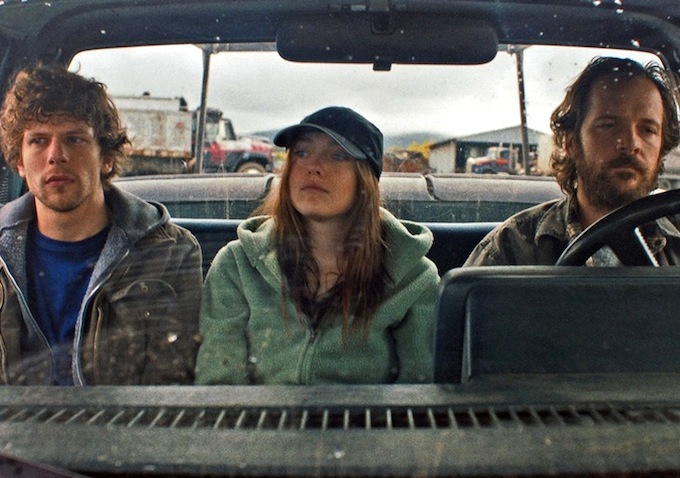
Jesse Eisenberg, Dakota Fanning, and Peter Sarsgard...eco-terrorists

Jesse Eisenberg, Dakota Fanning, and Peter Sarsgaard…eco-terrorists

“NIGHT MOVES” My rating: B+ (Opening June 13 at the Cinetopia and AMC Studio)

112 minutes | MPAA rating: R

For want of a better description, Kelly Reichardt’s films are often called “minimalist.” They are made simply, without a lot of technical razzle dazzle, and they concentrate on characters, not big effects.

But just because Reichardt eschews the big melodramatic moment doesn’t mean her films are emotionally barren. Her “Old Joy” was an aching study of two men on the brink of middle age who have outgrown their friendship. “Wendy and Lucy” will resonate with anyone who has loved a pet. And her Western “Meek’s Cutoff” was a harrowing tale of settlers lost on their journey through the Great American Desert.

“Night Moves” may be her most conventional film to date.  It’s a thriller, a genre with whose tropes we’re all familiar. And yet the gentle Reichardt touch is evident everywhere, with an emphasis on atmosphere and slowly building tension rather than big action set pieces.

In fact, the film’s biggest moment takes place off screen.
Continue Reading »

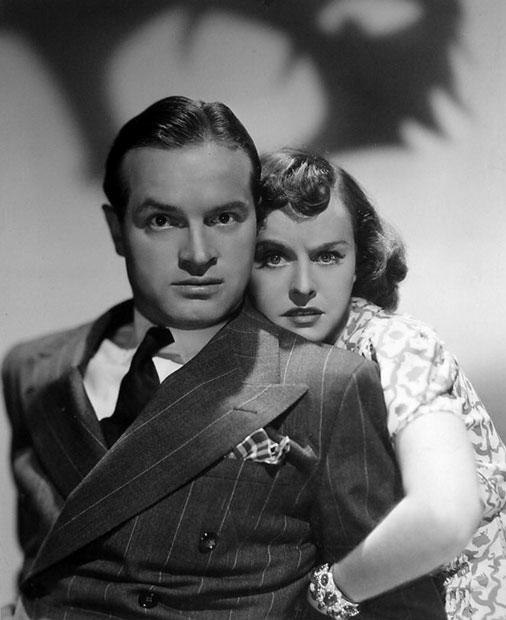
Bob Hope and Paulette Goddard

Bob Hope and Paulette Goddard

“The Cat and the Canary” screens at 1:30 p.m. Saturday, June 14, 2014 in the Durwood Film Vault of the Kansas City Central Library, 14W. 10th St.  Admission is free. It’s part of the year-long film series Hollywood’s Greatest Year, featuring movies released in 1939.


Baby boomers who grew up watching Bob Hope (1903-2003) on television – on his many U.S.O. specials, hosting the Oscar telecast, and appearing as a guest on various variety shows – may not realize that Hope was a major movie star as well.

Granted, Hope’s heyday on the silver screen had pretty well petered out by the mid-1950s, when most boomers were in elementary or junior high school. But by that time this British-born funnyman – who showed uncanny wisdom in his financial and career choices (he was among the biggest landowners in Los Angeles) – had established himself as a regular presence on the boob tube.

Born in London in 1903, Hope was only five when his family emigrated to the U.S. (which explains his lack of an English accent). He spent a few years in Cleveland, Ohio, before moving to Los Angeles, where he devoted much of his adolescence to earning money as a street performer. He spent five years on the vaudeville circuit, but the movies proved a hard sell. When Hope failed a 1930 screen test, he made one of his smart moves, turning to radio, where he won fans for his quick wit.

Finally, in 1934, Hope began appearing on the big screen in a series of shorts for Warner Bros. These audience pleasers allowed him to hone his self-deprecating screen persona, that of a wise-cracking coward who was full of bravado until push came to shove, at which point his instinct was to run away.

In his first few feature films he shared the screen with other comic performers like W.C. Fields, Martha Raye, and George Burns and Gracie Allen. As part of large comic ensembles, Hope was able to put his “brand” in front of moviegoers without taking the risk of being a star who could be blamed for a film’s failure.

Which brings us to 1939’s ” The Cat and the Canary.” It’s an ensemble effort as well, but here Bob Hope clearly emerges as the star, the most interesting thing on the screen.

Continue Reading »

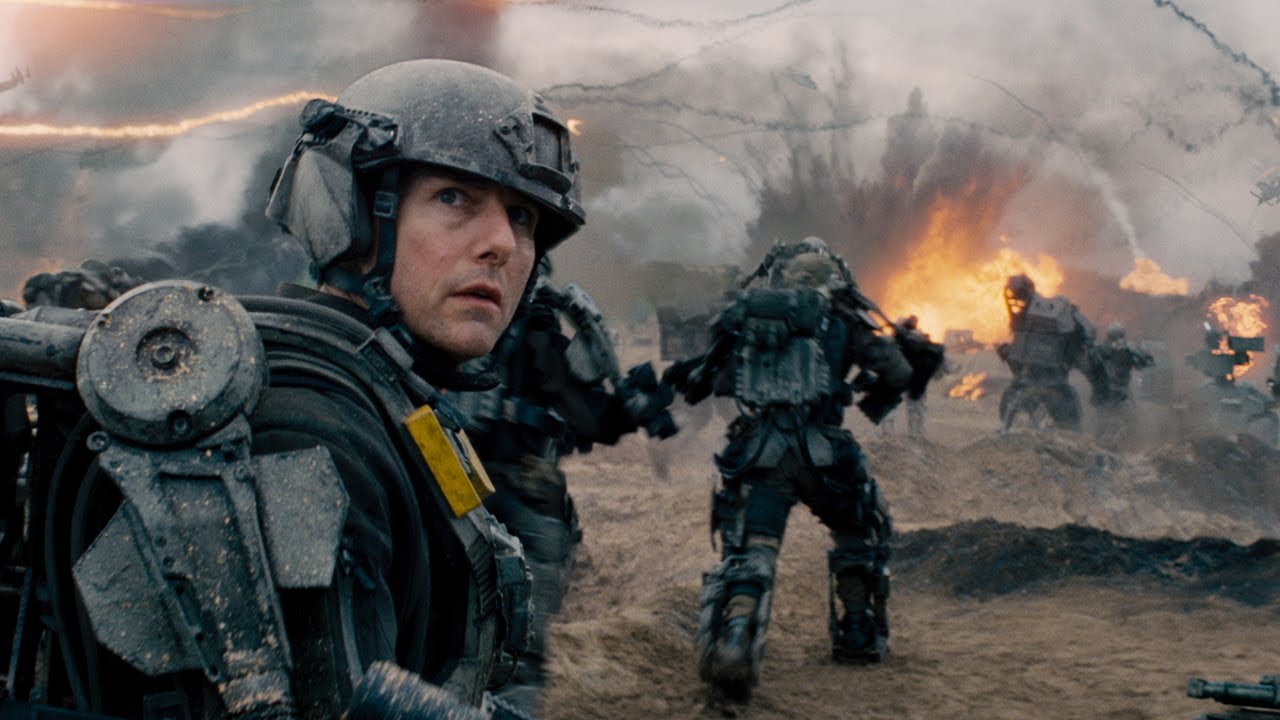
edge“THE EDGE OF TOMORROW” My rating: B- (Opening wide on June 6)

113 minutes | MPAA rating: PG-13


“The Edge of Tomorrow,” a big-budget sci-fi action epic that melds elements of “Starship Troopers” with “Groundhog Day,” has been earning the sort of reviews usually reserved for Shakespeare adaptations.

This says less about “The Edge of Tomorrow” than about the generally dismal state of the action movie.

Still, the film does have a few things going for it, starting out with Tom Cruise as we’ve never before seen him (playing a physical coward), and extending through the dry humor with which director Doug Liman (“The Bourne Identity,” “Mr. and Mrs. Smith”) approaches his offbeat tale.

But for all that, it’s still a big-budget action movie in which crashbangboom trumps all other considerations.

In the near future, Earth is under attack by an alien species we humans have nicknamed the Mimics. These are tentacled creatures (they look a bit like the Sentinels from the “Matrix” flicks) that roll around like tumbleweeds, shooting off sparks and tearing up those unfortunate enough to stand in their path.

The Mimics pretty much own Europe, having plowed across the continent. Now they are preparing to jump the English Channel to overrun Britain.

Major William Cage (Cruise) is a U.S. Army public relations specialist stunned to learn that he’s been ordered to shoot combat footage of the first wave of troops to storm the beaches at Normandy. Cage protests that he’s a word man, not a gun guy, that he’s never been trained for combat, that he’ll only get in the way, that he faints at the sight of blood.  In fact, like any sane individual, he’s terrified of the horrors that await him.

Continue Reading »

Agata Kulesza, Agata Trzebuchowska in "Ida"

Agata Kulesza, Agata Trzebuchowska in “Ida”

“IDA”  My rating: A (Opening June 6 at the Tivoli)

80 minutes | MPAA rating: PG-13

The simple description of “Ida” is that it’s about two women on a road trip.

Yeah, and “Citizen Kane” is about sledding.

Pawel Pawlikowski‘s film – the first feature he has made in his native Poland, having at age 14 fled the country’s Communist regime for a life in the West — is a low-keyed masterpiece.

“Ida”  succeeds brilliantly as the personal story of two very different but inescapably linked women. But it also provides an examination/indictment of Poland’s troubled past, from the endemic anti-Semetism that found many Poles happily helping out with Hitler’s “final solution” to the drab amorality of the post-war Communist years.

And while it’s doing all that, “Ida” does something even more astounding. It achieves a sort of meditative state, thanks to languid pacing, some of the most beautiful black-and-white cinematography you’ve ever seen, and a performance by newcomer Agata Trzebuchowska that is so saint-like it seems to have been plucked from the canons of Dryer and Bresson.

In 1961 young Anna (Trzebuchowska) is about to take her vows as a Roman Catholic nun when she’s called into the Mother Superior’s office and told that before joining the order she must spend time with her only living relative – an aunt that Anna didn’t know existed.

Wanda (Agata Kulesza) is a fortysomething atheist and alcoholic.  When Anna shows up at her doorstep, Wanda is sucking on a cigarette and waiting for her one-night stand to clear out of her bedroom. This cynic seems to take pleasure in informing Anna that her name is actually Ida Lebenstein.  What’s more, Anna/Ida – an orphan whose entire life has been spent in the convent — is a Jew.

“A Jewish nun,” Wanda snorts.

Continue Reading »

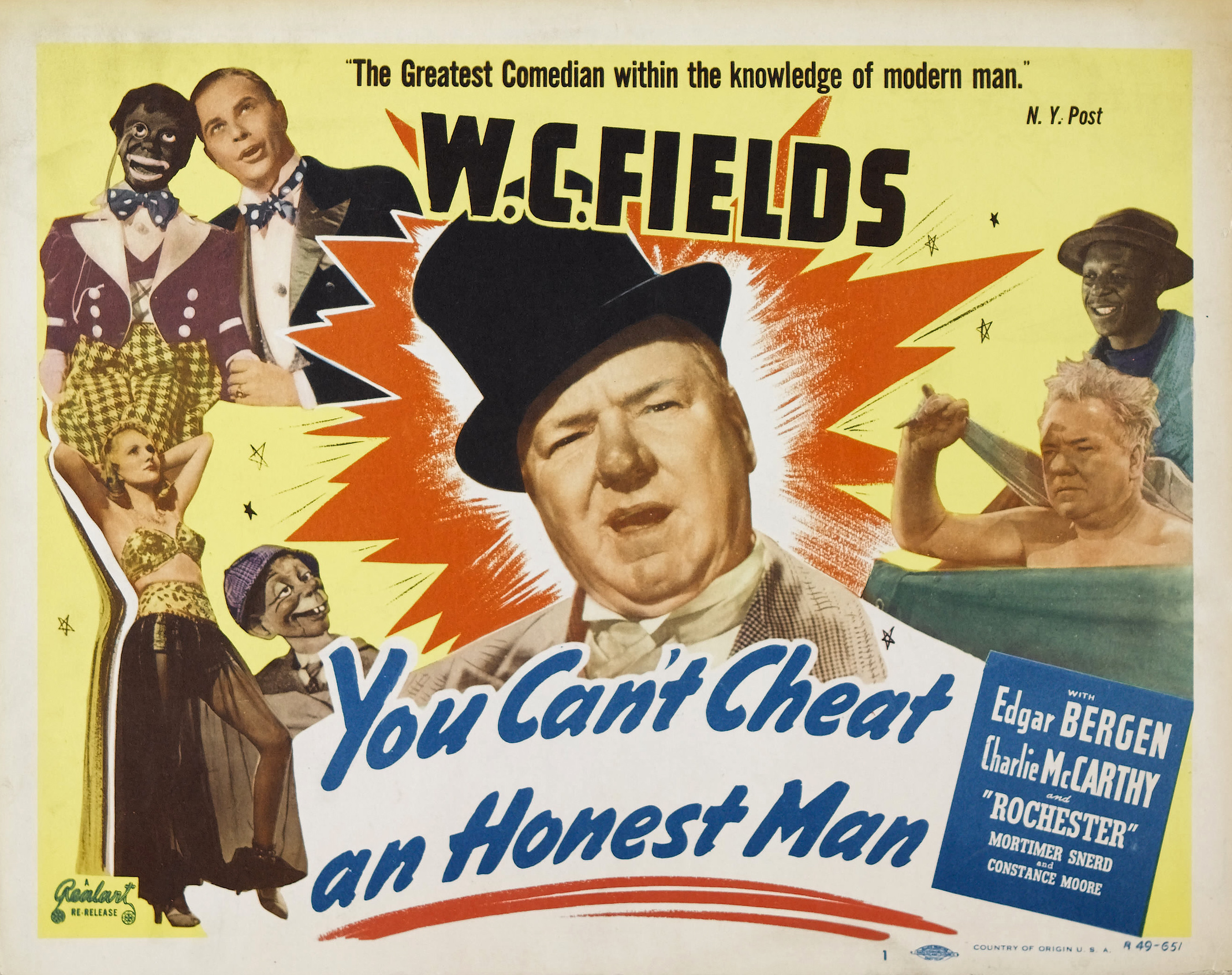
cheat“You Can’t Cheat an Honest Man” screens at 1:30 p.m. Saturday, June 7, 2014 in the Durwood Film Vault of the Kansas City Central Library, 14W. 10th St.  Admission is free. It’s part of the year-long film series Hollywood’s Greatest Year, featuring movies released in 1939.


W.C. Fields didn’t make movies so much as he made extended comedy routines strung together on the flimsiest of narrative threads.

He was a product of vaudeville, after all, not the repertory theater. He was only any good at playing one character: himself, a cranky, often hen-pecked misanthrope and con artist who looked more like a cartoon than a real human being.

Fields’ hair was thinning, his red nose bulbous (in real life as in his films, he was a prodigious consumer of alcohol), his body pear-shaped, his legs skinny. He often wore an out-of-fashion top hat or straw boater, long-tailed coats, and spats.

Yet despite his ridiculous physique, his training as a variety hall juggler allowed him to move with remarkable grace and made him a natural for physical comedy.

(Check out his 1932 short The Dentist on YouTube…the bit where he tries to pull a female patient’s tooth suggests that beneath his pudgy form there lurked considerable strength.)

Especially there was Fields’ voice, a snide snarl that remains immediately identifiable more than 70 years after his death.

Continue Reading »

 Seth MacFarlane


Seth MacFarlane

“A MILLION WAYS TO DIE IN THE WEST” My rating: C (Opens wide on March 30)

116 minutes | MPAA rating: R

Mel Brooks needn’t lose any sleep.

The spirit of 1974’s “Blazing Saddles” hovers tauntingly over “A Million Ways to Die in the West,” Seth MacFarlane’s (he produced it, directed it, co-wrote it and stars in it) new comic Western.

“Saddles” is, of course, the blue chip standard for rude cowboy comedy, as hilarious now as the day it was released.

By comparison “A Million Ways…” is a slog. It’s got a couple of wildly comic moments – but only a couple.

The main problem is not that its humor is overwhelmingly puerile (graphic jokes about sex and bodily functions) but that it isn’t much of a movie. Oh, it looks great, with lots of gorgeous wide-screen cinematography of Monument Valley (John Ford/John Wayne country) and a visual style dishing lots of rising crane shots (MacFarlane must have been studying Sergio Leone’s “Once Upon a Time in the West”).

But there’s no there there. And as storytelling it’s a meandering, shapeless affair. It’s not even a particularly good satire of Western movie conventions.

MacFarlane – an astonishingly productive comic force (TV’s “The Family Guy,” “American Dad!” and “The Cleveland Show,” not to mention the 2012 feature “Ted” and hosting the Oscars) – seems most at home in the half-hour (which is to say 22-minute) animated TV format. He struggles to fill this 2-hour film with jokes, and a few hit home. But they’re not in service of a story – or characters – we care about.

And let’s get out in the open MacFarlane’s biggest mistake: Casting himself as the lead character, Albert, a miserable/angry sheep farmer in 1882 Arizona.

MacFarlane has no range. He sports a half-hearted smirk and…and that’s about it. I don’t much like watching him. So there.

Continue Reading »

Gugu Mbatha-Raw and Sarah Gadon in "Belle"

Gugu Mbatha-Raw and Sarah Gadon in “Belle”

“BELLE” My rating: C+ (Now showing at the Tivoli)

104 minutes | MPAA rating: PG

“Belle” would seem to have everything going for it – except passion.

It’s the fact-based tale of a mulatto girl in 18th century England who was raised by her father’s titled family, negotiated the tricky waters of racism and custom to find an appropriate mate, and played a role in turning the tide against the British slave trade.

What’s more, it’s got a cast that includes respected actors likeTom Wilkinson, Miranda Richardson, Emily Watson, Matthew Goode and Penelope Wilton.

In other words, Jane Austen with a social conscience.

Why, then, did “Belle” leave me cold? I’ve got to blame screenwriter Misan Sagay and director Amma Asante, who took a tale overflowing with dramatic and emotional potential and mummified it. It’s good looking, raises some interesting issues…but never engaged my emotions.

Continue Reading »

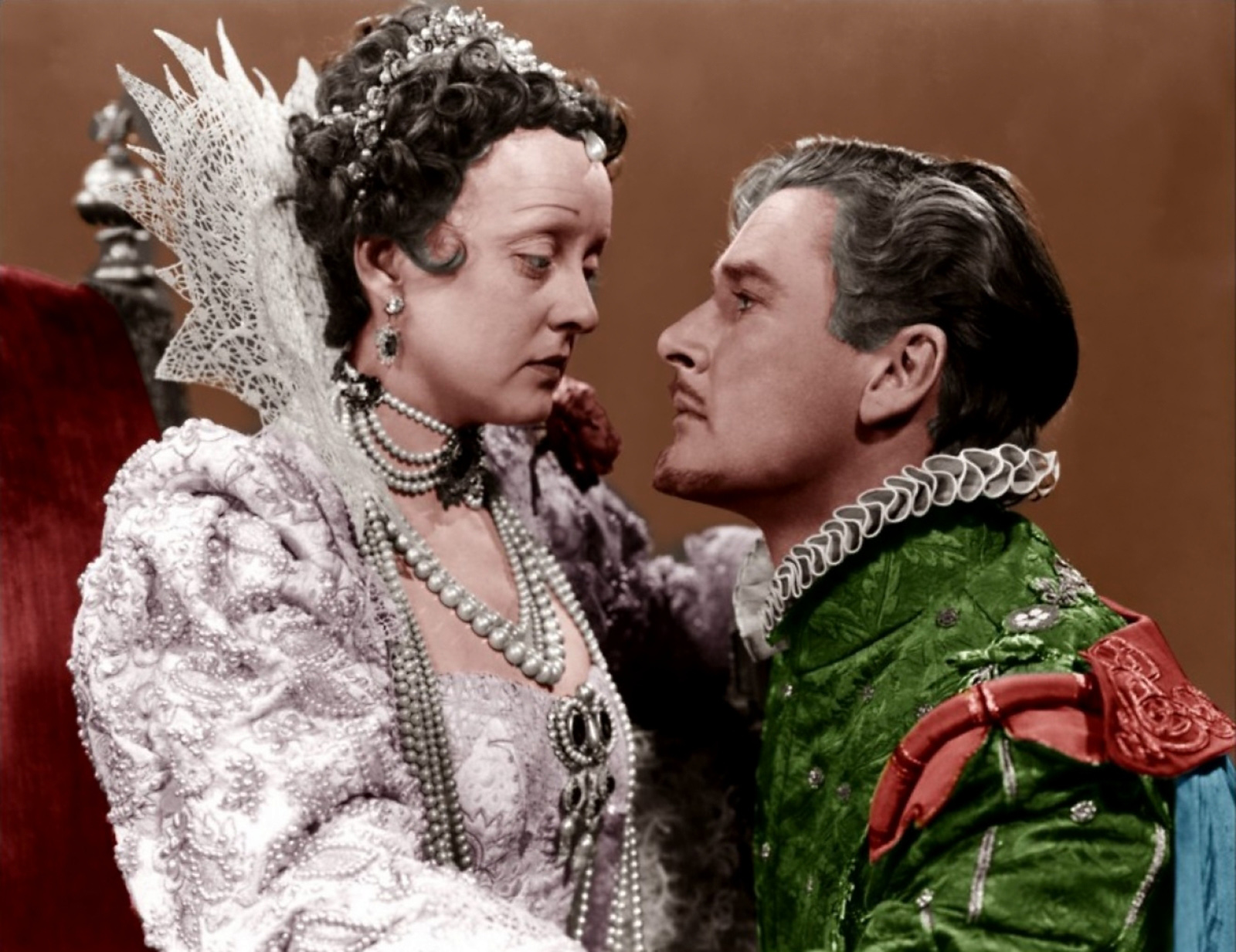
Bette Davis, Errol Flynn

Bette Davis, Errol Flynn

“The Private Lives of Elizabeth and Essex” screens at 1:30 p.m. Saturday, May 31, 2014 in the Durwood Film Vault of the Kansas City Central Library, 14W. 10th St.  Admission is free. It’s part of the year-long film series Hollywood’s Greatest Year, featuring movies released in 1939.


The year 1939 was a very good one for actress Bette Davis.

She had four films released in that 12-month period, all of them now regarded as classics.  She was the high-society deb dying of a brain tumor in “Dark Victory,” the wife of a Mexican statesman in “Juarez,” a spinster who allows her illegitimate daughter to be raised by her cousin in “The Old Maid.”

Davis was nominated for a best actress Oscar for “Dark Victory,” but in my humble opinion she should have received that honor for her work that year as England’s “virgin queen” in “The Private Lives of Elizabeth and Essex.”

For here is Bette Davis at her most magnificent, playing a monarch torn between the hubris of ruling a nation and her almost girlish infatuation with a handsome man several years her junior. It’s a monumental, horrifying, and very human performance.

Whether this is an accurate depiction is beside the point. As history “The Private Lives of Elizabeth and Essex” leaves much to be desired. As a gaudy slice of colorful melodrama, it’s pretty great.

In particular, the film does a terrific job of re-creating the relationship between Elizabeth I (Davis) and Robert, Earl of Essex (Errol Flynn). Whether factual or not, the on-screen psychology of these two achieves a subtlety and sophistication that is remarkable.

Of course we expect that sort of creativity from Davis, one of the great actresses of her generation.

Flynn, on the other hand, was not what you’d call a “thinking” actor, being more accustomed to flourishing a saber and swinging from ropes than mining the finer points of human motivation.

Continue Reading »


** and Jon Favreau in  "Chef"

Emjay Anthony and Jon Favreau in “Chef”

“CHEF” My rating: B (Opening wide on May 22)

115 minutes | MPAA rating: R

The title character of “Chef” works in a hugely lucrative but artistically stifling high-end L.A. restaurant. He has a meltdown and goes off looking to regain his muse of cooking.

Interestingly enough, “Chef “ was written, directed by, and stars Jon Favreau, who first burst onto the scene as an indie auteur (“Swingers,” “Made”) before finding mucho money and Tinseltown clout cranking out superhero movies for the Marvel folk (“Iron Man”).

“Chef” can be seen as Favreau’s return to down-home cooking/filmmaking. Despite its impressively deep cast, it’s a relatively simple, modestly budgeted affair, less a banquet than a delicate palate cleanser.

Nothing earthshaking happens here. No deep emotions are plumbed or existential dilemmas explored.

But if  the film is superficial, it is often slyly funny, has a real handle on the restaurant biz and its denizens, genuinely likes its characters, and tries to look on the sunny side. In short,  a pleasant couple of hours at the movies.

Carl Casper (Favreau) is top chef at one of Hollywood’s most in-demand eateries. But he’s hit a creative dead end. The joint’s owner (Dustin Hoffman) doesn’t want to tinker with success and consistently nixes Carl’s attempts at an edgier menu.

When a powerful food blogger (Oliver Platt) pans the place as old hat and unimaginative, Carl has a very public meltdown that is recorded by dozens of customers, making him an Internet sensation.  But while being the raving chef raises Carl’s profile, it gets him fired and makes him unemployable.

He’s got no choice but to start over. Continue Reading »

110331-A-1728B-285“THE HORNET’S NEST”  My rating: A- (Opens May 23 at the Cinemark Merriam)

93 minutes | MPAA rating: R

Let’s not mince words. Mike and Carlos Boettcher’s “The Hornet’s Nest” is on the short list of the greatest combat documentaries of all time.

It’s an experience that will scare you, inspire you and quite likely leave you in tears. And no matter what your views on the origins, prosecution or morality of the War on Terror, it will leave you awed by the dedication and bravery of our fighting men.

TV journalist Mike Boettcher has spent nearly three decades shooting and reporting on wars around the world. His dedication to the job led to the breakup of his marriage and long separations from his children.

As “The Hornet’s Nest” begins, Mike and his now-grown son Carlos team up to record the U.S. military effort in Afghanistan for ABC News. Mike tells us he is both gratified and wary…it will serve as an opportunity to bond with the son whose childhood he missed, but it will also put that son in harm’s way.

That parent/child dynamic, which percolates just below the film’s surface, gives a bit of personal urgency to “The Hornet’s Nest” – particularly when Mike believes that Carlos has been killed or wounded by Taliban snipers. But it really isn’t the documentary’s driving force.

The real subjects are the uniformed men (some seem mere boys) who go about their dirty jobs in front of the Boettchers’ cameras.

A few soldiers appear in talking-head interviews, but “The Hornet’s Nest” is less about individuals than about how a military unit goes about its job.

The men with whom the Boettchers are embedded are consummate professionals – well trained, motivated, and dedicated to the job. Even in horrifyingly scary situations, they maintain an almost superhuman calm. They may swear, but they don’t panic.

Why do they do it? Mike Boettcher tells us that once in the field, questions of politics and policy are irrelevant. These men fight for each other, he says.  It’s Shakespeare’s “band of brothers” in desert camouflage.

Continue Reading »