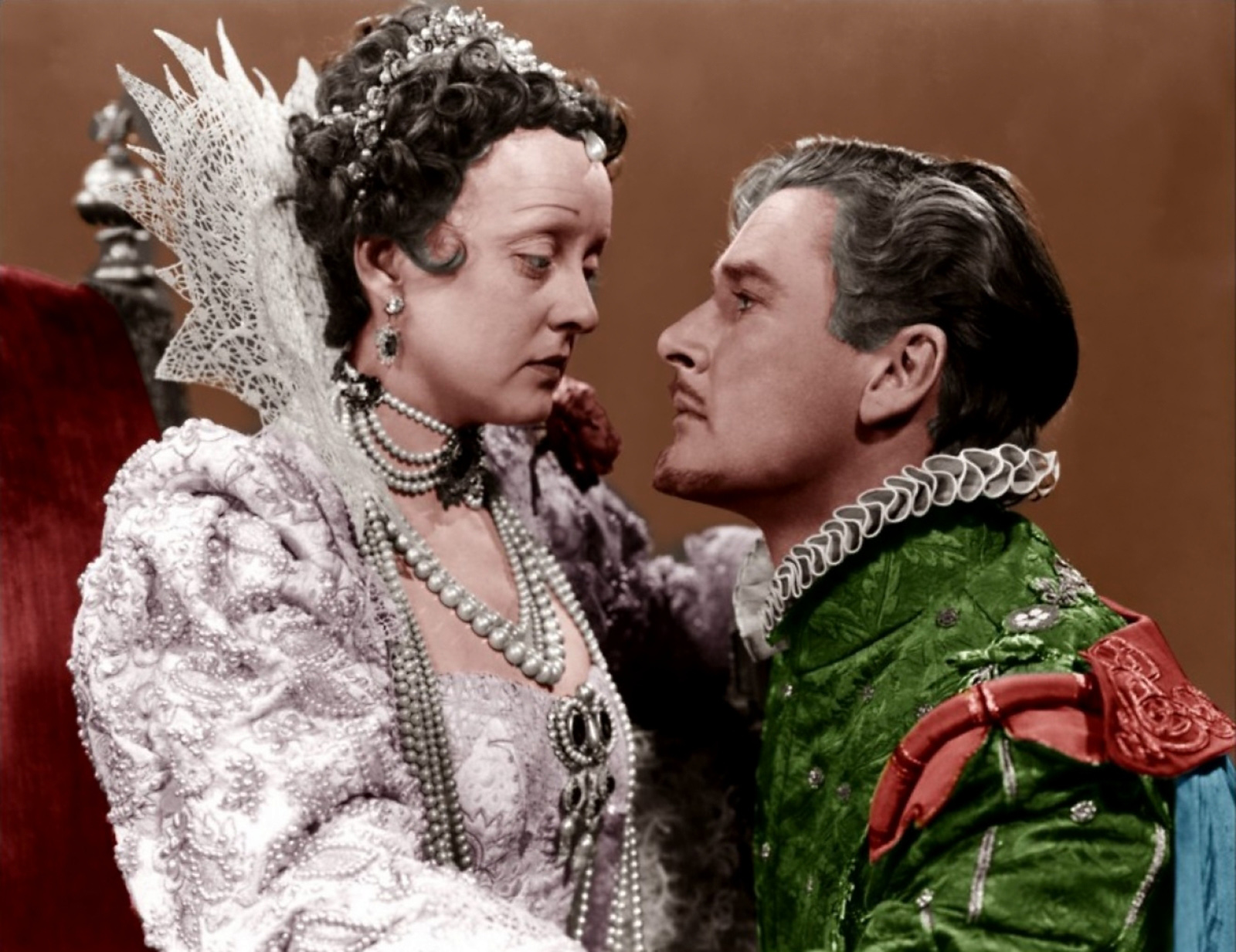
Bette Davis, Errol Flynn
“The Private Lives of Elizabeth and Essex” screens at 1:30 p.m. Saturday, May 31, 2014 in the Durwood Film Vault of the Kansas City Central Library, 14W. 10th St. Admission is free. It’s part of the year-long film series Hollywood’s Greatest Year, featuring movies released in 1939.
The year 1939 was a very good one for actress Bette Davis.
She had four films released in that 12-month period, all of them now regarded as classics. She was the high-society deb dying of a brain tumor in “Dark Victory,” the wife of a Mexican statesman in “Juarez,” a spinster who allows her illegitimate daughter to be raised by her cousin in “The Old Maid.”
Davis was nominated for a best actress Oscar for “Dark Victory,” but in my humble opinion she should have received that honor for her work that year as England’s “virgin queen” in “The Private Lives of Elizabeth and Essex.”
For here is Bette Davis at her most magnificent, playing a monarch torn between the hubris of ruling a nation and her almost girlish infatuation with a handsome man several years her junior. It’s a monumental, horrifying, and very human performance.
Whether this is an accurate depiction is beside the point. As history “The Private Lives of Elizabeth and Essex” leaves much to be desired. As a gaudy slice of colorful melodrama, it’s pretty great.
In particular, the film does a terrific job of re-creating the relationship between Elizabeth I (Davis) and Robert, Earl of Essex (Errol Flynn). Whether factual or not, the on-screen psychology of these two achieves a subtlety and sophistication that is remarkable.
Of course we expect that sort of creativity from Davis, one of the great actresses of her generation.
Flynn, on the other hand, was not what you’d call a “thinking” actor, being more accustomed to flourishing a saber and swinging from ropes than mining the finer points of human motivation.





 Butler's Cinema Scene