“Fingernails” unfolds in an alternate reality that looks a lot like America in the 1980s. No ubiquitous cell phones or laptops. Most of the cars are sedans, not SUVs. The TV sets are modestly proportioned.
Except that in this reality the films “Titanic” (1997) and “Notting Hill” (1999) are already classics (the latter a key title in the Hugh Grant Romance film festival).
And a special feature of this alternate universe is a process (allegedly scientific) that allows couples to test for romantic compatability. Ideally you want a score of 50%, indicating that a couple love each other equally. More often though, those tested discover that they’ve absolutely no future with their current squeeze.
And what do you have to sacrifice for this life-changing information? Well, in addition to paying a steep fee you must have one of your fingernails pulled out with pliers (sans anesthesia) so that it can be microwaved along with one yanked from your significant other. Apparently fingernails are terrific indicators of one’s emotional state.
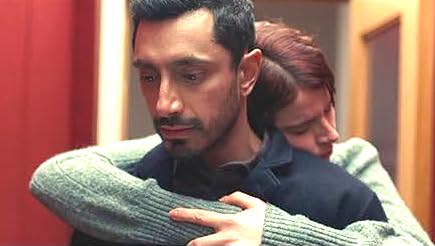
Anna (Jessie Buckley) is the latest employee of the Love Institute, which not only conducts the fingernail tests but holds seminars and workshops and issues reports on what its researchers have discovered about romance.
Anna and her beau Ryan (Jeremy Allen White) did the fingernail test several years earlier and were told that they were a perfect match. Except that Anna is starting to get bored with the relationship (possibly Ryan is too nice and predictable). Anna hopes that by working as a counselor at the Institute she can gain insights into her own romantic sensibilities.
Her work partner is Amir (Riz Ahmed), and it doesn’t take a fingernail test to determine that Anna’s affections soon will be directed his way.
As written by Christos Nikou, Sam Steiner and Davros Raptis and directed by Nikou, “Fingernails” scores more points for quirkiness than for emotional heft.
And even the quirkiness is of the low-caliber variety. There are a couple of amusing moments but the film never quite jells as either comedy or romance. I was ready for it to wrap things up a good half hour before the end.
That said, I’m a big fan of Buckley (even with a ‘do that looks like it was styled with a weed whacker). Ahmed and White are solid as Anna’s romantic options, and Luke Wilson very nearly steals the film as the science-nerd chief of the Love Institute.
Forget about the fingernail test. When it comes to human emotions there are no absolutes.
Remember how dislocated and awed you felt after seeing the original “Terminator”?
How you started asking yourself questions about the immutability of time, about the possibility of changing the past or, even freakier, our own present?
That same sort of brow-furrowing mind massage is at work in the deep-diving Brit series “Bodies.”
Episode One sets up the tantalizing premise. In present-day London the corpse of a naked man is found in an all-but-abandoned alleyway. A police detective (Amaka Okafor) is stumped as to how he got there.
The scene then jumps to 1890s London where — WTF? — the same body is found in the same alley by a bearded and bowler-hatted police inspector (Kyle Soller).
But there’s more. In 1941, with German bombers paying nightly visits, yet another copper (Jacob Fortune-Lloyd) stumbles into the same scenario.
And then, just when you think you’re getting a handle on it, the episode wraps up with the revelation that 30 years into the future another officer (Shira Haas) is dealing with the same body in the same crumbling alleyway.
Series creator Paul Tomalin (adapting Si Spencer’s graphic novel) takes his time setting up his reveals…before any big answers are dangled he explores societal conflicts like contemporary racism, anti-Semitism during the Blitz or the Victorian-era inspector’s desperately closeted homosexuality.
Along the way there are all sorts of tantalizing hints at a monstrously massive conspiracy, members of which invariably sign off with the superficially comforting/existentially disturbing line: “Remember, you are loved.”
Eventually the film focuses on Mannix (Stephen Graham), who exists in all of these time frames, though not always as an adult (in our present he’s a troubled adolescent). Basically he’s playing God with time…and thus with everyone on Earth.
There are several big holes here. The methodology of time travel isn’t explored..there’s this machine, but good luck figuring out how it got made and tested. And in one possible past/future the city of London is hit by a nuclear blast…it levels everything except that darned red-brick alleyway where the bodies keep dropping. Unlikely.
But the series’ slow-build momentum is such that you don’t dwell on these shortcomings, preferring to take in the big picture.
And that big picture will leave you juggling a score of metaphysical conundrums.
“THE FALL OF THE HOUSE OF USHER” (Netflix)
With “Midnight Mass” and “The Haunting of Hill House” writer/directorMike Flanagan shot to the top of the horror world, delivering slowly-unfolding creepfests that served as anguished meditations on the human condition while delivering multiple opportunities for great acting.
His latest, the 8-part “The Fall of the House of Usher,” is a step back, in part because just about everyone on screen is a truly horrible individual. Good luck looking for someone to empathize with.
Also, horror is much less scary when those threatened are evil bastards to begin with.
That said, the series is wildly successful in cannibalizing the Poe oeuvre, not just …Usher but most of his famous poems and short stories. No doubt as you read this some grad student is working on a thesis picking apart the series’ plethora of Edgar Allan Easter eggs.
The Usher family has become fabulously wealthy after developing an opiate pain killer that has addicted a good chunk of the population. (Yeah, they’re a thinly-disguised version of the Sacklers.)
At the top is Roderick Usher (Bruce Greenwood), now in his early 70s and, thanks to several marriages, the father of six very spoiled, desperately corrupted offspring.
The series is so jammed with flashbacks, subplots and digressions that a flow chart might come in handy. Basically, in just a month’s time all of Usher’s despicable heirs will die in bizarre ways. The common thread is a mysterious woman (Carla Gugino) who serves as a sort of Angel of Death (if you gotta go, doing so at Gugino’s hands seems preferable).
The whole thing is a huge flashback, as the doomed Roderick relates his clan’s twisted history to the prosecutor (Carl Lumbly) who has been trying for years to bring down the Usher empire.
The “Dynasty”-sized cast is filled with familiar faces from the Flanagan repertory company, as well as newcomers like Mary McDonnell as Usher’s scheming sister and Mark Hamill as the Ushers’ creepy legal fixer.
Unlike “…Hill House” and “…Mass,” I never experienced fright watching “The Fall of the House of Usher,” and that lack of emotional connection percolates throughout the enterprise. There’s a certain intellectual attraction in observing how Flanagan structures his story and, as previously stated, you can spend the whole thing picking out Poe references.
“KILLERS OF THE FLOWER MOON”My rating: B (In theaters)
306 minutes | MPAA rating: R
More than any film I’ve seen in a decade, Martin Scorsese’s “Killer of the Flower Moon” has left me at a loss for words.
Sometimes that’s a good thing, suggesting a cinematic experience so overwhelming that it defies easy summation.
In this case it means I left the film with mixed reactions. It’s taken days to sort them out and I’m still struggling to come to a neatly encapsulated conclusion.
The setup:
“Killers…” is a lightly fictionalized version of David Grann’s superb nonfiction study of the notorious Osage murders of the 1920s. With the discovery of oil in Oklahoma, members of the Osage tribe who had been settled on this presumably worthless land became overnight millionaires.
This made them targets for predatory whites who often married Osage women. Frequently those women— and other members of their clans — died under mysterious or outright murderous circumstances, with the oil rights reverting to their white husbands. It took a major investigation by the fledgling FBI to uncover a cabal of conspirators behind the murders of at least 30 tribal members.
Scorsese’s film (co-written with Eric Roth) is noteworthy in that it isn’t really about solving a crime (the first federal agent doesn’t show up until more than two hours into the 3 1/2-hour film, and the audience knows who the bad guys are almost from the get-go). Its focus is split between one particular marriage. and a study of unapologetic corruption.
After serving in the Great War Ernest Burkhart (Leonardo DiCaprio) arrives in Oklahoma to work for his uncle, William Hale (Robert De Niro), the most powerful white man living in the Osage Nation.
Robert DeNiro, Leonardo DiCaprio
Hale is a mover and shaker who has been among the Osage for so long he speaks their language fluently. He advises tribal leaders and maintains that the Osage are the finest people on the planet. But beneath his benevolent paternalism there’s sinister intent.
At his uncle’s urging, the slow-witted and morally anchorless Ernest marries Mollie (Lily Gladstone), an Osage woman who, for all of her family’s wealth, is a nurturing, down-to-earth individual. They start a family.
But little by little Ernest is drawn into his uncle’s manipulative world. Early on he participates in the armed robbery of a wealthy Indian couple; before long he’s a middleman setting up the assassinations of individuals fingered by Hale. Among the targets are his own in-laws.
The yarn is thick with moral ambiguity. For even as he does his uncle’s murderous bidding, Ernest remains desperately in love with his wife. At some point he’s going to have to choose between love and his white family.
The film’s recreation of life in Oklahoma during this period is astonishingly authentic. Tribal customs, language and attitudes have been scrupulously researched and depicted. Some of the long shots of oil derricks and oil pools pocking the landscape are epic (Rodrigo Prieto is the cinematographer). Costuming and set decoration are impeccable. The late Robbie Robertson has created a haunting minimalist musical score heavy on native drums rhythmically thudding like a heartbeat.
My hangup is the film’s emotional neutrality. I get it, intellectually. But I felt more an observer than a participant.
Possibly it’s best to see the film without having read the book. That way the perfidy of the “killers” comes as a shocking revelation with attendant moral revulsion. Maybe I knew too much going into the experience.
More problematic is the focus on Ernest, a stupid, easily manipulated oaf. As played by DeCaprio he is resoundingly unempathetic, a spineless sort whose only redeeming quality is that he grows to love his wife despite his many sins against her family. (I can’t recall another major actor so willing to alienate his character from the audience, so there’s that.)
Were “Killers…” only, say, two hours long, Scorsese’s sheer filmmaking bravado might well compensate for our having to spend so much time with this thick hick. But the film’s butt-numbing length stretches matters out while diluting the dramatic impact — the movie’s trailers are more effective in this regard than the film itself.
Scorsese and Roth find some grim humor in the killers’ desperate machinations as the net closes on them (Jesse Plemons portrays the main Fed doggedly digging into the murders), but the film is largely humorless.
The saving grace in all this is Gladstone, a Native American actress whose most compelling previous performance was in Kelly Reichardt’s “Certain Woman” from 2016. Her Mollie becomes the moral/emotional center of the film, a woman radiating empathy, quiet dignity, intelligence and a sort of stoic resignation as life piles on one tragedy after another. It’s damn near impossible to explain what she does here…it’s a kind of soulfulness rarely seem on the screen.
At the other end of the spectrum is DeNiro’s William Hale, a villain with a breathtaking ability to compartmentalize the conflicting aspects of his life. In public he’s everybody’s uncle and friend; behind closed doors Hale becomes an amoral master manipulator with an unquenchable thirst for wealth and power. Anyone smarter than the thick-headed Ernest would recognize his pervasive malevolence right off the bat.
Advance word on “Killers of the Flower Moon” has the film pegged as a masterpiece, perhaps the highlight of Scorsese’s illustrious career.
Well, it’s good. It’s got its moments. But in my opinion not enough to fill 3 1/2 hours.
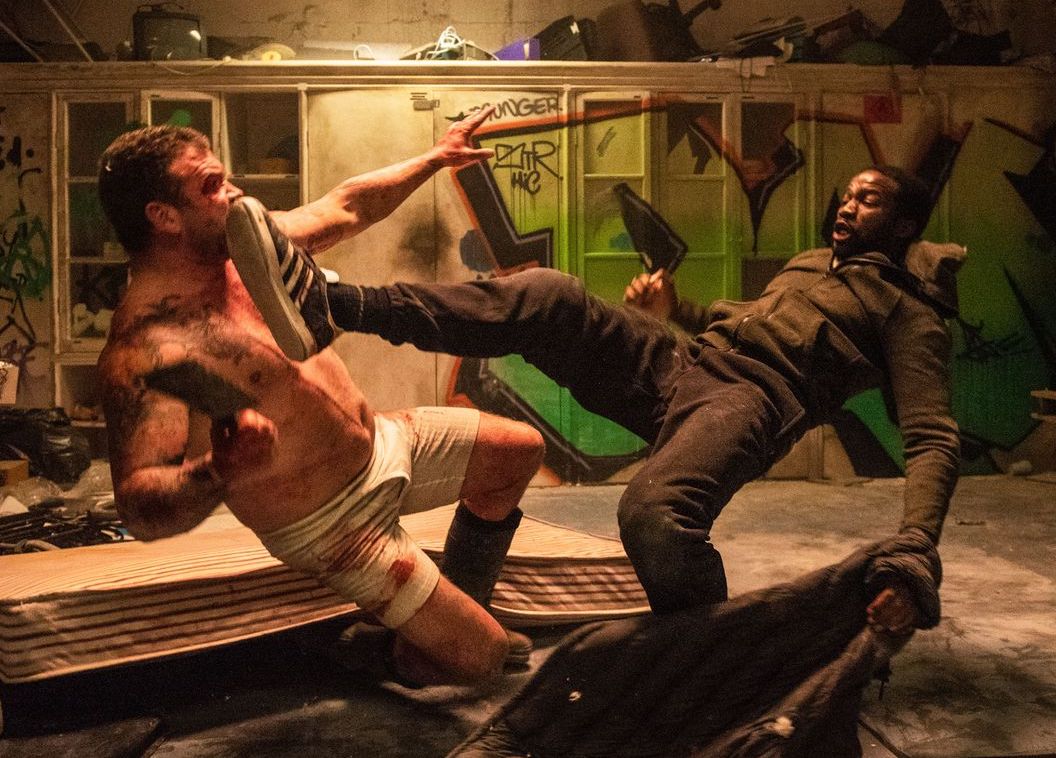
When the Brit series “Gangs of London” premiered in 2020 on AMC it dished up the most graphic violence ever seen on mainstream cable.
Each episode was highlighted by at least one state-of-the-art fight scene…sometimes featuring firearms, often with bladed weapons, frequently with fists, feet and teeth.
We’re talking John Wick-level action choreography melded with a gruesome attention to the trauma inflicted on the human body. Sometimes balletic but mostly brutal. In the middle of the first season nearly an entire episode was devoted to the siege of a remote farmhouse by a small army of mercenaries…it was an astounding action set piece comparable to Sam Peckinpah’s “The Wild Bunch.”
“Gangs…” Season Two just dropped on Max and, if anything, it raises the ante on onscreen mayhem.
The premise is pretty much summed up in the title. Various gangs representing different ethnic groups (Pakistanis, Irish, Kurdish, etc.) vie for supremacy of the London underworld. The authorities are conspicuous in their absence…apparently standard-issue law enforcement is utterly ineffective in curtailing the carnage.
Our nominal hero is undercover cop Elliott (Sope Dirisu) who infiltrates the gang led by the demented mother/son duo Marian and Sean Wallace (Michelle Fairley, Joe Cole). The idea is to undermine the Wallaces from within, but to prove his loyalty (and to elude discovery) Elliott must participate in the gang’s reign of terror. He’s the closest thing we have to a moral authority, but even he has way too much blood on his hands.
This being a Brit production, the acting is top-notch. Season Two features the arrival of the loathsome Koba (Waleed Zuaiter), a platinum-haired enforcer from Georgia (the eastern European Georgia, not the American one) tasked with ending the infighting whether the warring gangs like it or not. Kidnapping and torturing the wife of an uncooperative gangster is all in a day’s work for this ruthless killer…Koba may be the year’s best heavy.
Season Two also raises tantalizing questions about “the investors,” a shadowy group of plutocrats (we never see them) who are the mob bosses’ bosses. I have to imagine that Season Three (now in production) will find Elliott exposing their Koch-level shenanigans.
Just about every aspect of “Gangs of London” works. The question is whether you can handle the series’ pervasive nihilism and unapologetic barbarity. Because no matter how you approach it, you’ll end up rooting for one of the bad guys.
“RESERVATION DOGS” (Hulu)
Apparently the world is made up of two kinds of viewers: Those who immediately recognized the genius of “Reservation Dogs” and those of us who discover it later.
When the show debuted in 2021 I gave it a go, but couldn’t slip into its distinctive vibe about slacker teens growing up hopeless on an Oklahoma Indian Reservation. There was something about the pseudo-amateurish performances that rubbed me the wrong way.
Or maybe it was some weird sort of white privilege. “Rez Dogs” has been written, directed and overwhelmingly acted by Native Americans, and it is unapologetic in unfolding from a distinctively N.A. point of view. To an old white guy it didn’t seem a good fit.
A friend, however, encouraged me start again, this time with Season Two. I did…and am eternally thankful for the recommendation.
Most of the Season Two episodes put one or more of the characters through an experience that is simultaneously universal and specifically Native American.
One features young Bear (D’Pharaoh Woon-A-Tai) taking his first paying job…as a roofer. His experiences with the older crew members widen his perspectives and his growing satisfaction at delivering a good day’s work suggests his gentle shift toward maturity.
An entire episode is devoted to the death of the grandmother of Elora (Devery Jaccobs). Virually every major cast member shows up to pay their respects to the fading matriarch, and the interplay among them beautifully reflects the humor, loss and resignation experienced during such a pivotal moment.
Gay kid Cheese (Lane Factor) finds himself in juvie (he was visiting his weed-growing uncle when the cops arrived). And a handful of aunties travel to a Native American confab in a big hotel…it’s a chance to leave the rez behind, party like their old former selves and maybe snag a fine man.
The shows are funny, yes. The characters are periodically visited by the spirits of long-gone tribal members, like William Knifeman, a horse-riding, joke-telling warrior who is far more laid back than intimidating, and Deer Lady, a beautiful but vengeful creature who gruesomely settles scores with folk who have lived badly.
And in one absurdity-drenched segment straight arrow tribal cop Big (Zahn McClarnon) accidentally takes an acid trip and in the woods stumbles across a coven of white Oklahoma businessmen planning to seize Indian land.
But there’s a growing seriousness that comes to its full fruition in Season Three. The overarching theme has the kids little by little coming to terms with just what means to be Indian. Though they are acutely aware of the ridiculous elements of their existence (a touchy-feely session with a couple of wannabe New-Agey Native American gurus is simultaneously hilarious and creepy), these young people are developing a sense of community and discovering a new respect for traditions.
The last few episodes pretty much left me an emotional wreck. But you know what? The kids are gonna be alright.
“WINNING TIME: THE RISE OF THE LAKERS DYNASTY” (MAX)
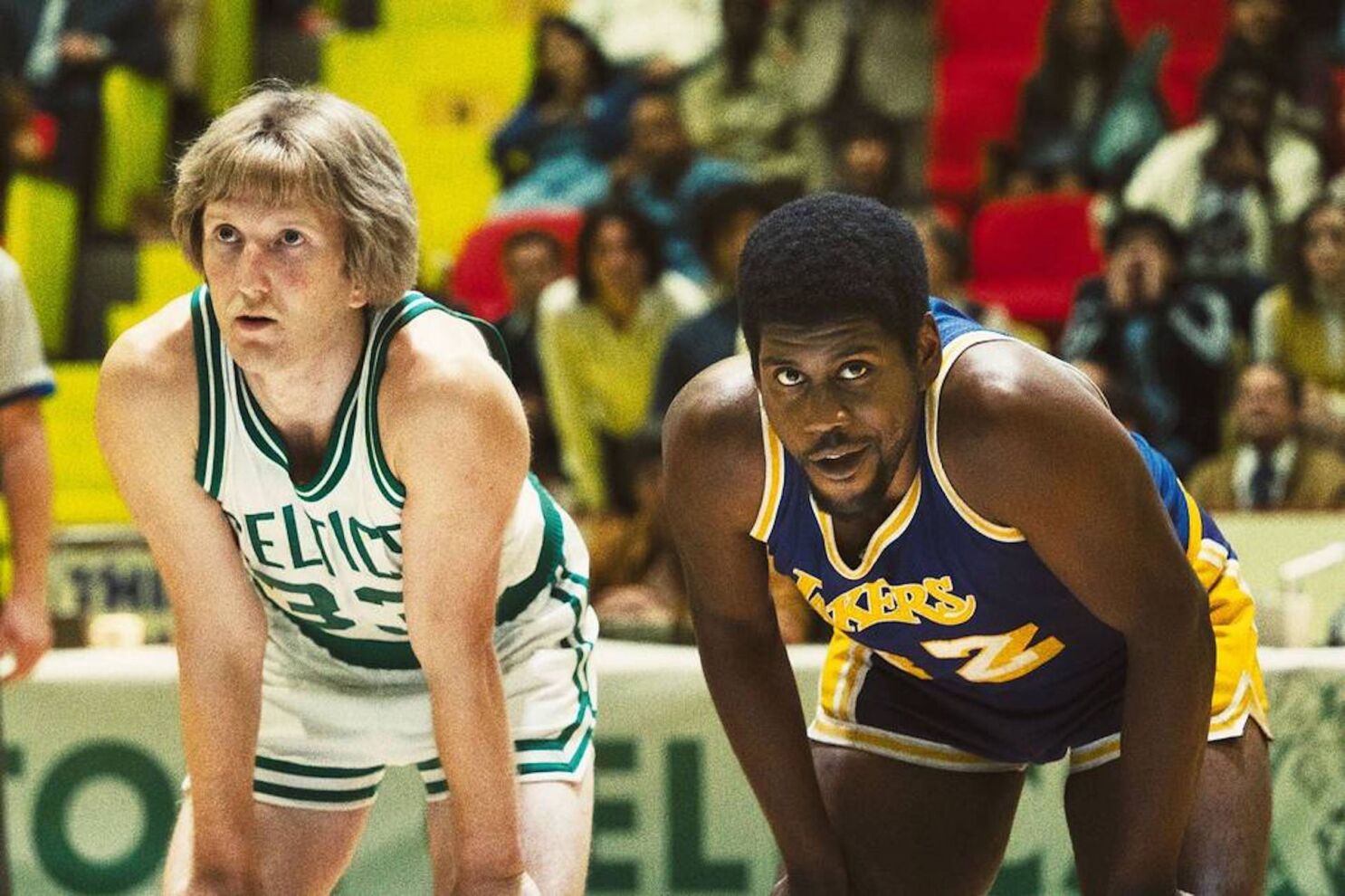
You don’t have to know anything about basketball to become a big fan of “Winning Time,” whose two seasons chronicle the rise of the L.A. Lakers and provide a veritable smorgasbord of acting treats.
As in most sports sagas there are ups and downs on the court, but the game itself takes a backseat to the potent characters drawn from real-life personalities.
These outsized egos include team owner and dedicated Lothario Jerry Buss (John C. Reilly), his doting mother (Sally Field), charming/naughty court superstar Magic Johnson (Quincy Isaiah), Kareen Abdul Jabbar (Solomon Hughes) and coaches like Jerry West (Jason Clarke), Pat Riley (Adrien Brody), Paul Westhead (Jason Segel) and Jack McKinney (Tracy Letts).
Season Two spends a lot of time with the Lakers’ nemesis, Larry Bird (Sean Patrick Small).
As far as I can tell, the series sticks pretty close to the historic truth, although clearly the writers have had to invent what went on behind closed doors. I particularly love that the show is not in awe of its sugjects…there is a full panoply of human foible on display.
And the look of it all! Rarely have we seen a series which so consistently captures the visual and aural sensations of a past era, in this case the 1980s. The makers of “Winning Time” dig up old newsfilm and video, but they also employ (or masterfully fake) now-abandoned visual formats.
The result is a series that feels more like a time machine than a conventional TV show.
As a rule, political strongmen despise artists, dismissing them as dreamers and dissenters always threatening to infect the body politic with their decadence.
Thing is, given enough time the artists always have the last word.
Exhibit A is “El Conde (The Count),” a Chilean feature that informs us that right-wing dictator Augusto Pinochet did not die in 2006, as is widely believed, but lives on as a vampire who sucks the life out of unsuspecting victims just as he sucked up the wealth of his country.
Written and directed by Pablo Larrain (who co-wrote with Guillermo Calderon), this batshit-crazy blend of horror and political satire plays out in an otherworldly, treeless landscape that has been magnificently captured in Edward Lachman’s sumptuous black-and-white photography.
Here’s the setup: The aged Count (Jaime Vadell) is slowly losing his marbles in a sort of sprawling ranch house that has seen better days. (It must be the only homestead on Earth that features a functioning guillotine.)
His wife Lucia (Gloria Munchmyer), his butler and (during the good old days) chief torturer Fyodor (Alfred Castro) and the Count’s four back-biting adult children have gathered in emergency session. They all fear that the world-weary old dictator will starve himself to death before they can figure out where he squirreled away his ill-gotten fortune.
To help sort it all out, the family has employed a forensic accountant, a young woman named Carmencita (Paula Luchsinger). What they don’t know is that Carmencita is a nun who has traded in her habit for street clothes. What’s more, she has orders to perform an exorcism on the evil old bastard.
Paula Lunchsinger
(Am I imagining, or are Luchsinger’s sharp features and boyish ‘do lit and photographed in such a way as to evoke memories of Falconetti’s Joan of Arc?)
While the characters deliver their lines in Spanish, the story is narrated by a female with an English accent. Initially this is puzzling…before it’s all over we’ll meet this woman face-to-face, confirming our worst fears about a once-powerful world leader. (Yeah, that’s kinda vague. But the late-reel reveal is too delicious to give it up here.)
In flashbacks we see how as a young soldier in the French revolution the Count developed a taste for blood (he actually licks the blade that beheads Marie Antoinette) and a hatred of revolutionaries and lefties in general. (How did he become a vampire? It will be revealed, but not here.)
Eventually he made his way to the Americas, became a ruthless military leader and took over Chille after a CIA-planned 1972 overthrow of Salvador Allende’s freely-elected socialist government. For more than 20 years Pinochet ruled with an iron hand, “disappearing” more than 1200 troublesome citizens and torturing countless others.
Gloria Munchmyer, Jaime Vadell
According to this film’s alternate history, when finally deposed and facing conviction for human rights violations, the Count faked his own death and retreated to his remote hideout.
Periodically, though, he dons his old caped uniform and glides through the night sky to Santiago to feast on humanity. These flying scenes are spectacularly dreamlike…even beautiful in a balletic way.
“The Conde” has a fine old time fiddling with the usual vampire tropes, and its gleeful indictment of reactionary politics and the pilfering that so often accompanies it is absolutely merciless.
There’s a built-in issue with the film…none of the characters — not even the undercover nun — is remotely likable. Everybody is greedy, scheming, corrupt. Or willing to be corrupted.
Thankfully the acting, the allegorical elements and the mind-blowing technical expertise (photography, locations, costuming, production design) are so inventive that there’s always something marvelous to wonder at.
The film would probably have benefitted from a tighter edit (lose 15 minutes and you might have a small masterpiece), but as it stands “El Conde” is a nasty miracle.
“THE WONDERFUL STORY OF HENRY SUGAR” My rating: A(Netflix)
37 minutes | MPAA rating: PG
At the risk of committing cinematic apostasy, I’d like to suggest that in the future Wes Anderson limit himself to short films.
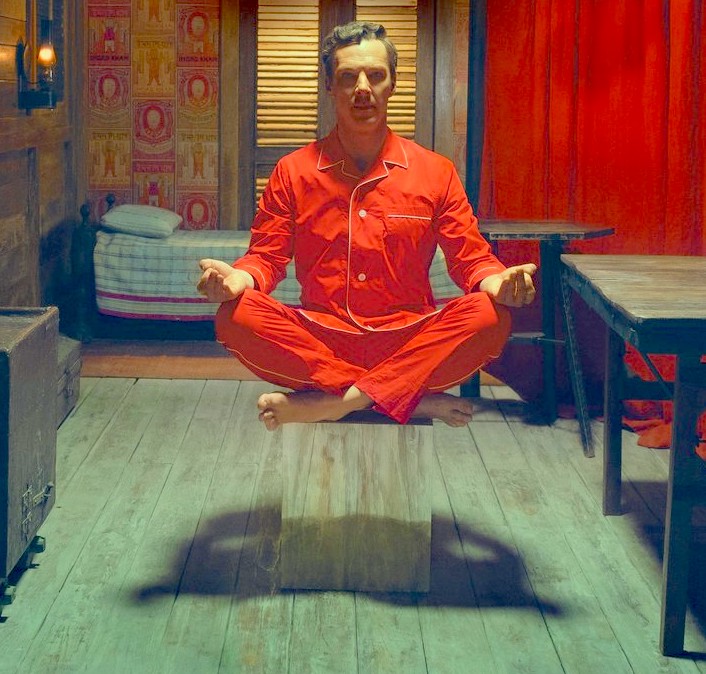
I have come to this conclusion after viewing Anderson’s “The Wonderful Story of Henry Sugar,” 37 minutes of visual and aural bliss emphasizing all that is great about the Anderson style without ever wearing out its welcome.
Hanging around too long has been the major flaw of Anderson’s recent features like “Asteroid City” and “The French Dispatch,” quirky whimsy being an elusive thing to sustain over 90 minutes.
But “…Henry Sugar,” based on a short story by the late Roald Dahl, is a pure delight. the ideal marriage of material and presentational form.
It’s not so much an adaptation of Dahl’s yarn as a word-for-word recitation, with the cast members (familiar faces from the Anderson screen universe) speaking the author’s words directly to the viewer.
What’s it about? Well, it begins in the yellow cottage in which Dahl (Ralph Fiennes) does his writing. Dahl tells us the story of “The Man Who Sees Without Using His Eyes.”
Through a delightful series of interlocking flashbacks (stories within stories within stories…a familiar Anderson device) we follow Imdad Khan (Ben Kingsley), who as a young man in the 1930s became a devotee of a holy Indian hermit and learned to identify objects — like playing cards — even though his eyes have been completely bandaged.
Ralph Fiennes
The adult Khan exploits this skill as one of the main attractions of a traveling vaudeville show. Along the way he becomes the obsession of a physician (Dev Patel) bent on understanding this phenomenon.
Eventually the yarn turns to wastrel Henry Sugar (Benedict Cumberbatch), an upperclass Brit ne’er-do-well addicted to gambling. Sugar finds a journal written by Khan in a fellow rich twit’s library, steals it, and studies it for several years with singleminded intensity..
Sugar wants to employ Khan’s remote viewing system to read the cards held by his fellow casino denizens. He pulls it off…only to realize that gambling is no longer thrilling when you know you can’t lose.
The story is oddball charming and even has a nifty moral to it.
And the presentational style is, well, beautiful. The film is awash in pastel eruptions, with sets that often resemble huge doll houses and at other times fold up or open out like gigantic pop-up books.
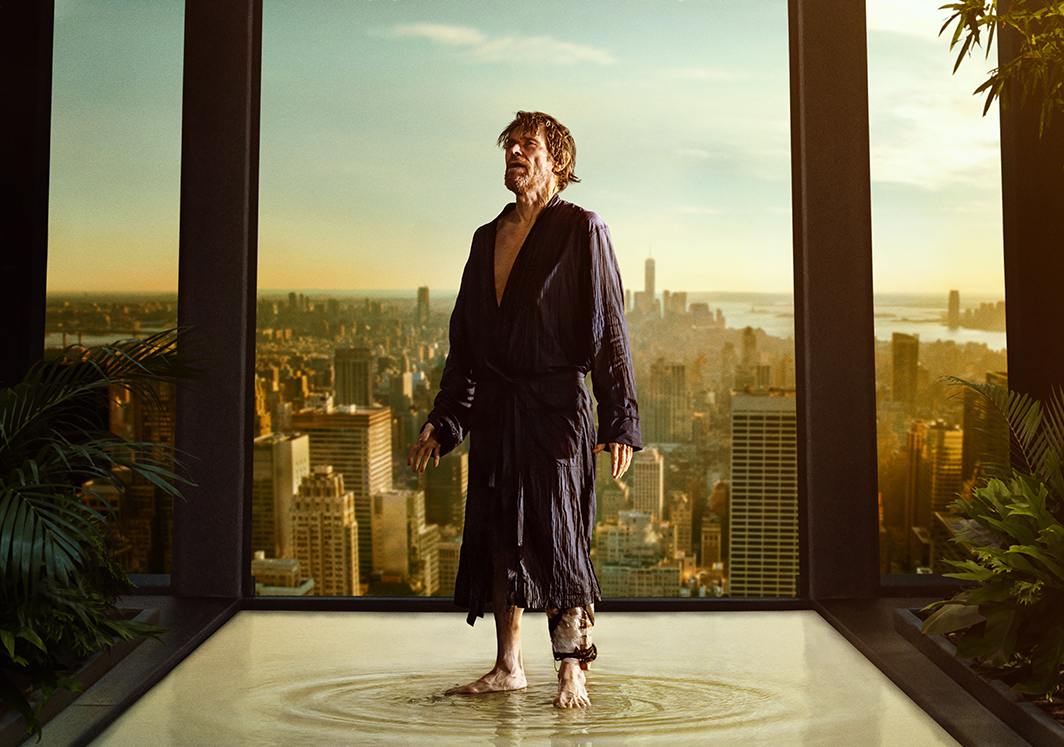
Before drifting away into ambiguity, Vasillis Katsoupis’ “Inside” serves as both a reasonably diverting escape tale and as a one-man acting showcase for Willem Dafoe.
It begins with a high-tech burglary. Dafoe’s Nemo (we only know the character’s name from the credits) is dropped by helicopter onto the roof of an NYC high rise. He makes his way to the penthouse, a sprawling living space that takes up the entire top floor.
The towering walls are covered with expensive modern art…and that’s why Nemo is there. The absent owner of this palace has a collection worth millions; Nemo and his confederates (we only hear them through the walkie-talkie he carries) have a shopping list of items to steal.
But it all goes haywire. The apartment’s security system is way more sophisticated than the robbers thought, and within minutes of arriving Nemo finds himself locked inside. His partners in crime sign off, leaving him to whatever fate awaits.
It’s kind of like Robinson Crusoe with a panoramic view of Manhattan.
Nemo’s desperate attempts to disarm the security system are disastrous. Over the course of his imprisonment the apartment’s damaged climate controls send the temperature soaring to 100 or dropping almost to freezing. Our man spends days sweltering in his skivvies, and then must bundle up in pilfered clothing as the temp plummets.
More bad news: His tinkering has rendered inoperable the in-house phone that otherwise could be used to call the front desk downstairs.
The apartment’s owner apparently turned off the utilities before leaving for an extended European vacation, so Nemo has neither running water nor gas with which to cook the few items he finds frozen in the fridge. Luckily a couple of tropical trees in a huge planter are periodically watered by tiny hoses connected to a timer, so Nemo strategically places cups and saucers to collect the daily spray.
He can’t even watch TV. The big set in the living room will only deliver feeds from security cameras around the building, so our man must find entertainment eavesdropping on residents and staffers — especially a pretty young maid he dubs Jasmine (Eliza Stuyck).
“Inside” chronicles in minute detail Nemo’s day-to-day survival regimen and his escape attempts, which include building a shaky scaffolding of cannibalized furniture in an attempt to reach a skylight 20 feet overhead.
Dafoe embodies the character’s physical and mental deterioration with virtually no dialogue. Nor are there flashbacks to tell us anything about Nemo’s past. Is he just a thief or is he also an art lover? (Would an art lover paint mustaches on the priceless portraits on the walls?) At one point he passes the time by drawing his own mural on a wall.
It’s all very minimalist and for at least its first half “Inside” is a gripping survival story.
But “Inside” wears out its welcome, slipping ever more deeply into improbability. Example: Nemo deliberately starts a fire, setting off sprinklers that leave him ankle-deep in water. Yet apparently the rest of the building is unaware of the deluge…I mean, wouldn’t all that water leak down to the floors below?
Perhaps the biggest bugaboo, though, is Katsoupis and co-writer Ben Hopkins’ decision to leave us hanging without a clear resolution. They probably thought of it as artful. I kinda felt like it was a cheat.
The people who made “Theater Camp” are, quite obviously, former child actors.
Which is why anyone who ever devoted a few formative months of their youth to singing, dancing and dreaming of stardom will find this film triggers a tsunami of fond memories.
For some that will be enough.
I wanted more.
Maybe it’s because “Theater Camp” — written by Noah Galvin, Molly Gordon and Nick Lieberman and directed by Gordon and Lieberman —is a bit too much in love with its own mythology to bring out the knives.
I was hoping for “Waiting for Guffman”-level laughs.“ What I got was a bunch of narrative backstage cliches without the really biting satire that would lift the film from the modestly amusing to the truly memorable.
Here’s the setup: Joan Rudinsky, the long-time founder/director of Camp AdirondACTS (played in a prologue by Amy Seders) is hospitalized and in a coma. In her absence a skeleton staff overseen by her theatrically clueless son Troy (Jimmy Tatro) are struggling to keep their young campers occupied, fed and engaged in producing the summer’s penultimate show, a musical tribute to Joan.
The usual “types” are on display, with the central characters being Angelo and Sylvia (Ben Platt, Gordon) who fell in love when they were students at AdirondACTS and, since Angelo’s coming out, have been best buds.
Problem is, Sylvia seems to have marketable talents (she’s been asked to audition for a cruise show) while Angelo seems destined never to move beyond the camp. This makes for some tension.
Meanwhile the inept Troy is considering a buyout from the rival (and much more posh) summer camp across the lake. Also he’s getting romantically encouraging vibes from the other camp’s CFO (Patti Harrison).
There are some modest laughs here, but the approach is gentle and sweet, possibly the result of the filmmaker’s improvisational approach. The hoped-for avalanche of social comedy never materializes.
In fact, “Theater Camp” only really comes together in the last reel when the kids put on their big tribute to Joan and in classic movie fantasy fashion transcend amateurism to dleliver an inspired night of musical theater.
One of my all-time favorite documentaries is Werner Herzog’s 2011 “Cave of Forgotten Dreams” in which the eccentric filmmaker took a 3-D camera into a French cave to record the incredible wall paintings of animals rendered more than 30,000 years ago.
The makers of that art were clearly human, and as I noted at the time, “Cave…” is about nothing less than the birth of the human soul.
The perfect bookend to Herzog’s masterwork is “Unknown: Cave of Bones,” Mark Mannucci’s chronicle of the the almost decade-long exploration of the Rising Star cave system in South Africa.
Rising Star contains a treasure trove of bones belonging to hominids that lived between 250,000 and 300,000 years ago. They were small creatures with brains about the size of a chimpanzee’s. They are regarded as animals, not humans.
This newly discovered ancient species was dubbed homo naledi.
Early on we meet paleoanthropologist Lee Berger, an American-born South African in charge of the project. He, along with a couple of colleagues, becomes our narrator and guide into a mystery that stretches back to the beginning of our world.
The deeper explorers penetrated the cave, the more surprises they encountered.
Lee Berger
In a room so inaccessible that only the thinnest of scientists could squeeze through to it (Berger tells us up front that he’ll never see the place save on a video feed…he’s too hefty to make his way there) the team discovered the bones of one individual who had undergone special treatment.
His/her remains had not been abandoned on the cave floor. They had been deliberately buried. Moreover, the body had to have been carried or dragged up and down a daunting series of chutes, inclines and crawl spaces to get there.
Wait a minute. Burial implies a social system. It implies that these creatures had the emotional capacity to protect or honor the remains of a beloved individual. And it strongly suggests that homo naledi was contemplating an afterlife.
But weren’t these just, well, animals?
It gets better. The scientists discover a burial in which a stone had been placed in the deceased’s hand…a stone that apparently had been knapped to create a sharp edge and a pointed end.
In other words, a tool.
And cross-hatch patterns are found scratched into the cave wall. We call that art.
Unfolding as a kind of real-life mystery, “Unknown…” alternates terrific footage from inside the cave with talking head commentary from Berger and fellow primatologists Agustin Fuentes and John Hawks.
These guys are scientists. They deal in facts. They’re uncomfortable with metaphysical postulating.
And yet their worlds are rocked by the notion that 200,000 years before homo sapiens emerged there were creatures exhibiting human-like behavior: funerary rituals, tool creating, art making. Raising the question of just how we’re supposed to define the words “human being.”
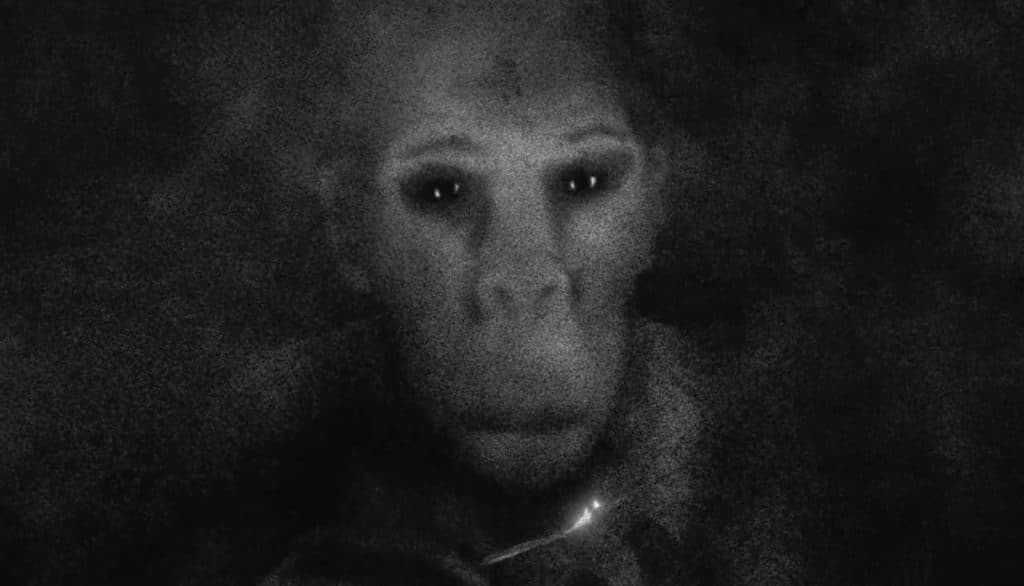
Mannucci’s documentary is immeasurably aided by the use of animated sequences to suggest how homo naledi might have looked and moved. These black-and-white sequences are painterly, blurred just enough to give an idea of this ancient world without depicting details that might not be supported by the evidence.
The result is a haunting, unexpectedly moving dreamlike experience that leaves the viewer in quiet awe.
“HIJACK” (Apple+): I’d watch Idris Elba clean his ears with a Q-Tip. In “Hijack” he is but one member of an excellent ensemble delivering the year’s best nail-biter.
This seven-part miniseries unfolds in real time. Shorty after taking off from a Middle East airport, a British passenger jet is taken over by gunmen. Their motivations are unclear until late in the drama, but every episode cannily drops breadcrumb clues that we must sort through.
In that we’re like passenger Sam Nelson (Elba), a heavy-hitting corporate negotiator flying back to his native London. Nelson isn’t a man of action. No kung fu, no fisticuffs. He’s a thinker who places himself between the hijackers and the terrified passengers in an effort to prevent what looks increasingly like a high body count.
“Hijack” unfolds not only in the air, where we meet all sorts of passengers — as in John Ford’s “Stagecoach,” they represent all aspects of humankind, good and bad —but also on the ground as the British authorities, air traffic controllers and anti-terrorism experts try to stave off a worst-case scenario in which the air liner is shot down by military jets.
Perhaps the show’s deeply satisfying complexity is the result of a seven-person writing staff who keep coming up with new and intriguing twists. Meanwhile directors Jim Field Smith and Mo Ali make the most of the yarn’s claustrophobic elements.
With its real-time delivery “Hijack” is the perfect one-day binge.
Timothy Olyphant, Aunjanue Ellis-Taylor
“JUSTIFIED: CITY PRIMIEVAL” (Hulu): More Raylan Givens? YES, PLEASE.
Timothy Olyphant reprises his signature role as U.S. Marshal Raylan Givens in this eight-parter (too short, but still) that finds our Kentucky-bred lawman working a case in Detroit (as gritty in its own way as coal country).
Nearly 16 years have passed since we last saw Raylan, and if anything he looks sexier than ever. Maybe it’s because he’s now older and a bit wiser, long divorced and traveling with his teenage daughter, who is way too cocky for her years. (She’s played by Olyphant’s real-life kiddo Vivian…the apple didn’t drop far from this tree).
The villain this time around is Clement Mansell (Boyd Holbrook), a seductive/terrifying good ol’ boy who likes to preen in his tidy whities. Early on Mansell kills a judge and steals his little brown book of bribery. The idea is to blackmail the “respectable” folk listed in this incriminating volume.
Toss in Mansell’s grudge match with the local Albanian ganglord (Terry Kinney), his affair with a fortune-hunting casino cocktail waitress (Adelaide Clemens, suggesting the good girl she played in “Rectified” has gone bad), and an uneasy partnership with a dive bar owner (Vondie Curtis-Hall), and you’ve got plenty of nerve-shredding action.
But there’s more, with our boy Raylan finding a sympathetic soul in Mansell’s criminal attorney, winning played by Aunjanue Ellis-Taylor. It may be the year’s most unexpected and satisfying TV romance.
Oh…and the final episode ties up loose ends with a coda that damn near rivals the final sendoff of “ Six Feet Under.”
Matthew Goode as Robert Evans, Miles Teller as Al Ruddy
“THE OFFER” (Paramount +): The making of 1972’s “The Godfather” was every bit as gripping as the film itself…at least according to this 10-part miniseries which, we’re told, was inspired by Al Ruddy’s experiences while producing the film.
Miles Teller plays Ruddy, whose track record (“Hogan’s Heroes,” a motorcycle movie) hardly seemed up to adapting Mario Puzo’s best-selling Mafia novel to the big screen. Basically Ruddy learned the hard way, putting out daily brushfires (budget problems, location hassles) and finding himself aligned with real-world mobster Joe Columbo, who initially opposed the film as being anti-Italian and later padded the production’s payroll with his non-working “workers.”
Teller provides a solid center to the film, but the real fun comes from a small army of supporting players who chew the scenery with relish: Matthew Goode as studio head and ladies’ man Robert Evans, Giovanni Ribisi as frog-voiced Joe Columbo, and Brit character actor Burn Gorman as Charles Bluhdorn, the Austrian owner of Paramount and the very image of a capitalist martinet.
Though they have cannily cast actors who sound (and sometimes look) like stars Al Pacino and Marlon Brando, the series’ makers don’t try to re-enact moments from the actual movie. But frequently we watch the faces of crew members as they oversee a scene being shot, and their awestruck expressions make it clear that movie magic is being captured.
For most viewers “The Offer” will be a huge package of surprise revelations. Director Frances Coppola (an excellent Dan Fogler) had to fight off numerous attempts by the studio brass to fire Pacino (he was deemed too short, too actorish). The production barely scraped together enough money to send a skeleton crew to Sicily.
And according to Ruddy’s telling, he was held captive by thug “Crazy” Joe Gallo who demanded money from a production that had none left.
For movie geeks “The Offer” is a total pigout. And the highest praise is that as soon as you’ve finished it you can’t wait to watch the original “Godfather” one more time.












 Butler's Cinema Scene