Feeds:
Posts
Comments

lone-survivor-wahlberg“LONE SURVIVOR” My rating: B (Opens wide on Jan. 10)

121 minutes | MPAA rating: R

A superior action film based on real events, “Lone Survivor” is a modern update of the classic “lost patrol” movie in which a small unit of soldiers is trapped behind enemy lines and, often, doomed to fight to the last man.

It was inspired by Operation Red Wings, a 2005 mission in which four Navy SEALs were dropped in the mountains of Afghanistan to locate and keep tabs on a Taliban war lord.  As the title suggests, it didn’t go well.

The opening credits of writer/director Peter Berg’s action drama unfold against documentary footage of the grueling (some might say sadistic) training that potential SEALs must negotiate to become part of this elite fighting force. It’s so rough that bodies and spirits begin to break down. For some classes the dropout rate is 90 percent.

The ones who last are tough bastards.

The film proper begins with one of the SEALSs, Marcus Luttrell (Mark Wahlberg), being evacuated by a rescue team. He’s been badly wounded and dies as the medics scramble to revive and stabilize him.

Berg’s screenplay, adapted from the non-fiction book by Luttrell and Patrick Robinson (obviously, Luttrell lived to tell the tale), then flashes back several days as the four members of Operation Red Wings are briefed and make preparations for their mission.

Continue Reading »

Joaquinn Phoenix

Joaquin Phoenix…isolated, but not for long

“HER” My rating: A- (Opens wide on Jan. 10)

120 minutes | MPAA rating: R

The sentient computer — the mechanical brain that becomes self aware — has been with us for many years now (perhaps most famously in the person of “2001’s” HAL 9000). But writer/director Spike Jonze’s “Her” pushes that idea in new and wonderful directions.

Along the way it becomes the best film of 2013.

In the near future — so near you can’t categorize the film as science fiction — a computer operating system is developed that so perfectly imitates human thought and emotion as to make the iPhone’s Siri seem like a grunting Neanderthal.

Theodore Twombly (Joaquin Phoenix) is a lonely romantic.  Lonely because he and his wife (Rooney Mara) are divorcing — though Tehodore cannot bring himself to sign the papers.  Romantic because his day job is writing heartfelt letters  to strangers.

He works for a company that, for a fee, will compose personal letters to family members, dearly beloveds, friends and acquaintances. Apparently in this near future most personal written correspondence is limited to texting abbreviatons and emoticons. Some folks will pay big bucks for a well-written, sincere and “handwritten” letter (actually, a computer provides the appropriate font and coughs it out of a laser printer).

Theodore is a master of this old-fashioned form of communication — which only makes his sterile personal life all the more ironic.

Continue Reading »

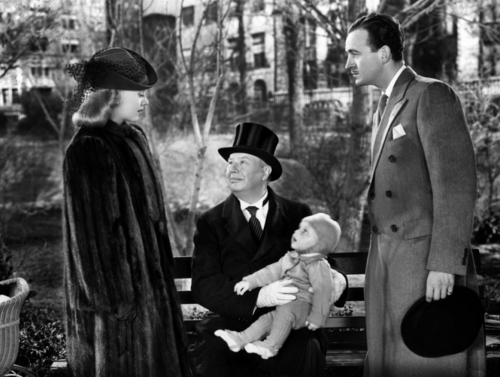
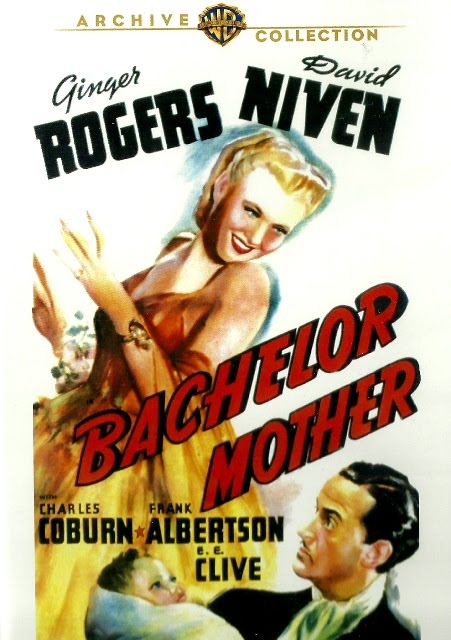
Ginger Rogers, Charles Coburn, David Niven

Ginger Rogers, Charles Coburn, David Niven

“Bachelor Morther” screens at 1:30 p.m. Saturday, January 11, 2014 in the Durwood Film Vault of the Kansas City Central Library, 14W. 10th St.  Admission is free. It’s part of the year-long film sereies Hollywood’s Greatest Year, which offers movies released in 1939.

During the heyday of the Motion Picture Production Code (1930-1968), there were certain things that just couldn’t happen in an American movie.

You couldn’t get away with murder, since the code demanded that criminals be punished before the lights came up.

Bathrooms in Hollywood movies didn’t have toilets…at least you never saw one on screen.

A man and wife couldn’t share a single bed. Twin beds were the order of the day, and should members of the opposite sex find themselves occupying the same horizontal space, at least one of the gentleman’s feet must be planted firmly on the floor.

For that matter, you couldn’t discuss sex, much less show it. Even “excessive or lustful kissing” was prohibited.

Today it all sounds ludicrous, but back then the Production Code exercised immense power in Hollywood, guaranteeing that any movie released by a major studio would be suitable for everyone from Junior to Grandma.

Hollywood, being Hollywood, found ways to get around it.BACHELOR MOTHER - Copy Continue Reading »

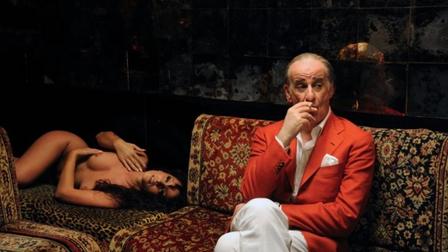
Toni Servillo in "The Great Beauty"

Toni Servillo in “The Great Beauty”

“THE GREAT BEAUTY” My rating: B+ (Opening Jan. 3 at the Tivoli)

142 minutes | No MPAA rating

It’s impossible to talk about “The Great Beauty” without bringing up Federico Fellini’s “La Dolce Vida.”

Paolo Sorrentino’s film is, if not a literal sequel to that 1960 masterwork about ennui among the jet setters, inescapably a thematic sequel.  And like Fellini’s film, it takes its journalist protagonist on an episodic ride through the Roman night life they don’t feature in the tourist brochures.

The picture begins with achingly beautiful images of Rome.  Cinematographer Luca Bigazzi’s camera seems to float effortlessly through a series of semi-tableaus — the effect is like a sensuous melding of moments from Lars Von Trier’s “Melancholia” and Terrence Malick’s “Tree of Life.”

Then we suddenly find ourselves plunged into an orgiastic party filled with flashing lights,  throbbing techno music and swaying revelers.  The man of the hour is Jep Gambardella (Toni Servillo), a man about town celebrating his 65th birthday.

Some 40 years ago Jep came to Rome after writing a promising first novel…and never followed up on the promise.  Now he does celebrity interviews for a magazine. Apparently it pays well enough for him to maintain a spectacular apartment overlooking the Coliseum.

He’s a Roman down to his toenails — he never leaves the city and knows every alley, fountain, park and plaza like his own bedroom. He wanders the city in the wee hours, usually going home only with the rising sun.

Continue Reading »

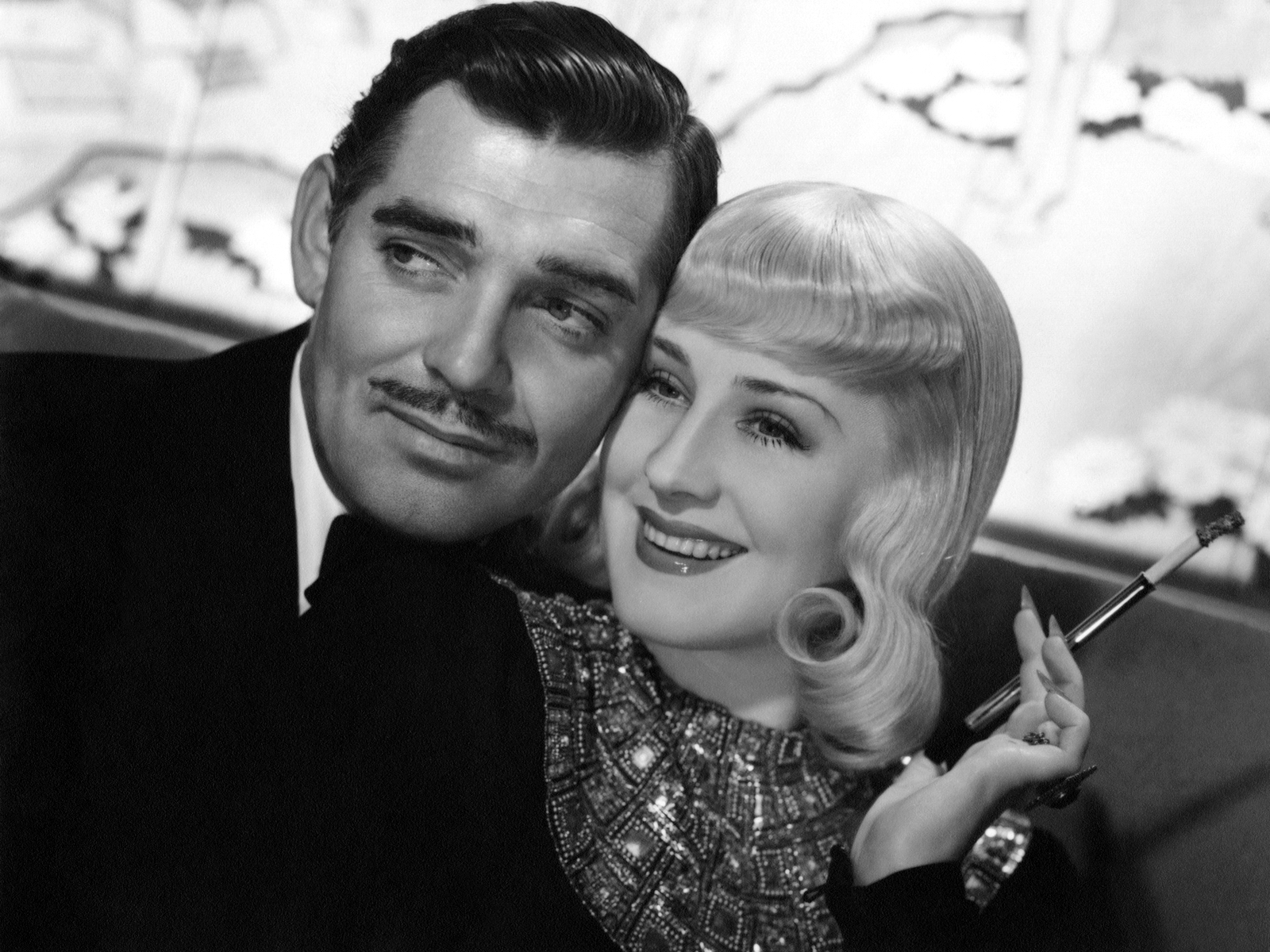
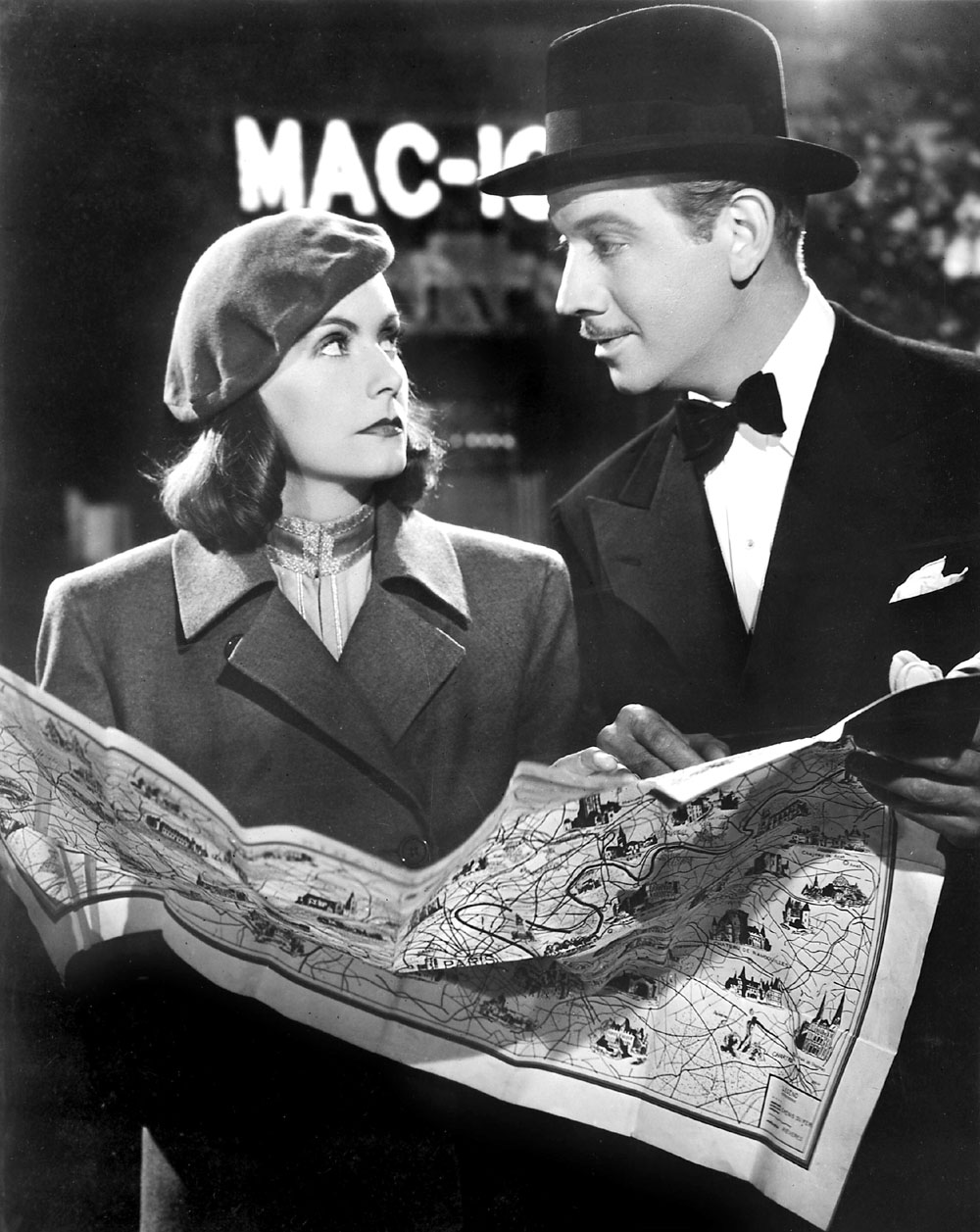
Greta Garbo, Melvyn Douglas

Greta Garbo, Melvyn Douglas

“Ninotchka” screens at 1:30 p.m. Saturday, January 4, 2014, in the Durwood Film Vault of the Kansas City Central Library, 14 W. 10th St.  Admission is free. It’s part of the year-long film series America’s Greatest Year, which offers movies released in 1939.

For most of her career, the great Swedish star  Greta Garbo (1905-1990) was known as a dramatic actress. A tragic actress, in fact.

In films like “Flesh and the Devil” (1926), “Anna Karenina” (’35), and “Camille”(‘36), the ethereal-looking Garbo loved, suffered, and died. With regularity.

Audiences were riveted by Garbo’s subtlety of expression, something they were unaccustomed to in silent film. In just a few years she became the best-known woman in world, the “unapproachable goddess of the most widespread and remarkable mythology in human history,” according to social critic Alistair Cooke.

Garbo was considered the movies’ most mysterious and seductive leading lady. Most of her films were box office sensations, and the public became obsessed with her personal life and loves … a situation the fundamentally shy and insecure actress found distressing. As a result she went to extremes to shun unwanted publicity and protect her privacy.

Comedians and even animated cartoons often spoofed a line from Garbo’s film “Grand Hotel” in which her moody ballerina character says, “I want to be alone.”

Continue Reading »

John Wayne in "STAGECOACH" (1939)

John Wayne in “STAGECOACH” (1939)

“Gone With the Wind.” “The Wizard of Oz.” “Stagecoach.” “Mr. Smith Goes to Washington.” “Wuthering Heights.”

Vivian Leigh and Hattie  McDaniel in "Gone With the Wind"

Vivian Leigh and Hattie McDaniel in “GONE WITH THE WIND”

What these great films have in common is the year in which they hit America’s movie screens. Film critics regard 1939 as the greatest year in Hollywood history, when more memorable movies were released than at any other time.

Throughout 2014, the Kansas City Public Library recreates the movie going experience enjoyed by audiences 75 years earlier. Each week, the free series Hollywood’s Greatest Year will present a movie from 1939.

Laurence Olivier, Merle Oberon in "Wuthering Heights"

Laurence Olivier, Merle Oberon in “WUTHERING HEIGHTS”

To kick off the series, Yours Truly (Robert W. Butler,  former Kansas City Star movie critic,  proprietor of this web site, and a member of the Library’s public affairs department) is giving an introductory talk, 1939: Hollywood’s Greatest Year, on Sunday, December 29, 2013, at 2 p.m. at the Plaza Branch, 4801 Main St.

A reception follows the event. Admission is free.

The actual films series begins the first Saturday of the new year in the Durwood Film Vault at the Downtown Library, 14 W. 10th.  All screenings are at 1:30 p.m. on Saturdays.  The first month is dedicated to comedy and features the films “Ninotchka” (Jan. 4), “Bachelor Mother (Jan. 11), “Idiot’s Delight” (Jan. 18) and “Only Angels Have Wings” (Jan. 25).

Janes Stewart in "MR. SMITH GOES TO WASHINGTON"

James Stewart in “MR. SMITH GOES TO WASHINGTON”

Embracing comedies, musicals, Westerns, heavy-hitting dramas, crime stories, horror, romance – virtually the entire range of films released by the major movie studios — the series includes 1939’s entries from such long-running series as Sherlock HolmesThe Thin ManAndy Hardy, and Tarzan.

Virtually every star then in front of the camera is represented: Henry Fonda, Greta Garbo, Ginger Rogers, John Wayne, Clark Gable, Jean Arthur, Cary Grant, Laurence Olivier, Bette Davis, Errol Flynn, Olivia de Havilland, Humphrey Bogart, Paul Muni, Judy Garland, Spencer Tracy, Mickey Rooney … the list seems endless.

Hope to see you Sunday at the Plaza Library, then on Saturdays throughout the year at the Central Library.

| Robert W. Butler

Walter-Mitty-575“THE SECRET LIFE OF WALTER MITTY” My rating : C+ (Opening wide on Dec. 25)

114 minutes | MPAA rating: PG

You’ve got to be of a certain age for the name Walter Mitty to even mean anything. In other words, old.

First appearing in a short story by James Thurber and then enacted on the screen by Danny Kaye in 1947, the story of a milquetoast Every Man who dreams himself the hero of countless adventures became so ubiquitous that any mousey guy with an active fantasy life was immediately identified as a Walter Mitty type.

More than 60 years later we have Walter’s latest incarnation in “The Secret Life of Walter Mitty,” starring and directed by Ben Stiller. An actor who has often dealt in broad caricatures, Stiller here dials things way down. And he’s more interested in heart than in laughs.

The film opens cleverly enough with poor gray Walter wending his way to his job at Life magazine. He’s usually so lost in his own imagination that he misses his train. The opening credits are cleverly projected onto the city buildings around him.

Walter is a shy guy who aches longingly for a new coworker (Kristen Wiig) who seems not to know he exists. So he invents fantasies in which he’s able to sweep her off her feet. Part of the fun of the film’s opening passages is not knowing what’s real and what’s in Walter’s noggin.

Walter lives in the tomb-like basement of a vast office building where he’s a “negative assets manager.”  His job is to receive, process, and print the rolls of film sent by the one Life photographer who has resisted the digital revolution. Of course you could also read “negative assets manager” in another way…and in fact Walter finds his livelihod threatened when the magazine is taken over by a sneering  downsizer (Adam Scott) who announces they’re closing up shop after publishing one last issue. Continue Reading »

wolf 2“THE WOLF OF WALL STREET” My rating: C+ (Opens wide on Dec. 25)

179 minutes | MPAA rating: R

Is “The Wolf of Wall Street” the result of some sort of show-biz wager?

It’s as if Martin Scorsese (arguably America’s greatest living filmmaker) and Leonardo DiCaprio (Scorsese’s latter-day DeNiro) accepted a challenge to make a three-hour movie that would entice us to laugh along with despicable characters – just because they thought they had the special juice to pull it off.

And there are moments when they come close.

“Wolf” is based on the memoir by Jordan Belfort, a poster boy for ‘90s stock market shenanigans, who made millions selling his customers worthless securities and ended up going to prison for his misdeeds.

Now I’m the sort of fellow who tries to find the essential humanity in just about everyone, but Belfort is the financial equivalent of Adolf Hitler and Pol Pot. He’s arrogant and greedy and virtually without conscience – capitalism at its most corrupt.

And DiCaprio and Scorsese have to sweat like stevedores to make him a palatable companion for 180 minutes.

This is a speedball of a movie that maniacally tears along from one scene of misbehavior to the next, hardly ever slowing down to contemplate just what message we’re to take away. Presumably Scorsese disapproves of Belfort and what he represents … but the film feels just the opposite. It seems a monumental  celebration of greed and excess.

Continue Reading »

Idris Elba as the imprisoned Nelson Mandela

Idris Elba as the imprisoned Nelson Mandela

“MANDELLA: LONG WALK TO FREEDOM”  My rating: B- (Opens wide Dec. 25)

139 minutes | MPAA rating: PG-13

“Mandela: Long Walk to Freedom” is an honorable stab at a screen biography of a much-revered individual. On one level it’s inspiring, sure…how could a movie about the late Nelson Mandela not be inspiring?

But it’s also pedestrian…not in terms of production value but in its low-keyed sensibilities. Director Justin Chadwick, a veteran of British television with only two other features to his credit (“The Other Boleyn Girl,” “The First Grader”), is aiming for an intimate epic but comes up short. As a huge admirer of Mandela, I wanted to be deeply moved by this film. I wasn’t.

For starters, there’s the casting of Idris Elba in the title role. I know, I know…Elba is a terrific actor and extraordinarily studly, which is part of the problem. Look at the brooding look he gives in the poster for the movie…it’s more “The Wire” than peace, love and brotherhood.

Continue Reading »

Paul Muni as Emile Zola

Paul Muni as Emile Zola

“THE LIFE OF EMILE ZOLA”screens at 1:30 p.m. Saturday, Dec. 28, at the Kansas City Central Library, 14 W. 10th St., as part of the film series Muni the Magnificent.

Its title notwithstanding,”The Life of Emile Zola” is anything but a conventional screen biography.

This Oscar winner for best picture could more accurately have been entitled The Dreyfus Affair, for that notorious case of military injustice is the film’s centerpiece.

We’re introduced to Émile Zola (Paul Muni) as a young man living in a freezing Paris garret in the 1860s (his roomie is painter Paul Cezanne) and trying to jump start his literary career.

Making the acquaintance of a weary prostitute, he interviews her, taking notes on her sad story and writing the best-seller Nana. He’s arrived.

The film then shoots forward several decades. Zola is now a well-established author whose naturalistic novels have scandalized many readers and revolutionized writing. As his old friend Cézanne notes, Zola has become fat and complacent.

And then the Dreyfus scandal hits the headlines in 1894.

Continue Reading »