 “LES MISERABLES” My rating: B+ (Opens wide on Christmas Day)
157 minutes | MPAA rating: PG-13
I’ll wasn’t all that eager to see the new film version of the worldwide stage triumph “Les Miserables.”
As a working theater critic I saw the Victor Hugo-inspired stage musical too many times. And whenever I flip to my local PBS station it seems like there’s a concert version of the show being aired as a fund raiser.
I found much to admire in “Les Miz.” But I never fell in love with it. And, frankly, I was feeling pretty mizzed out.
Now we have a massive, near-three-hour film version directed by Tom Hooper (the Englishman who burst upon the world cinema scene two years ago with “The King’s Speech”) and starring Hugh Jackman, Russell Crowe, Anne Hathaway, Amanda Seyfried, Sacha Baron Cohen, Helena Bonham Carter and Eddie Redmayne.
Well, I won’t say I’m now in love. But Hooper’s “Les Miz” is filled with deeply moving moments, stirring music and several terrific performances that transcend the superficiality of the characters and the improbabilities of the plot.
In short, I cannot imagine a better screen version of this work.
Spanning something like 40 years in the early 19th century, this is the story of Jean Valjean, who is imprisoned for stealing a loaf of bread and who violates his parole by assuming a false identity and becoming not only a wealthy pillar of society, but a genuinely virtuous man. He adopts the orphaned daughter of one of his factory workers and gets involved in one of France’s periodic political uprisings.
Through all this Valjean is pursued by the relentless policeman Javert, a compassionless ideologue who believes that once a criminal, always a criminal.
So it’s a big, epic, sprawling yarn. And as fashioned by the stage show’s original creators — Claude-Michel Schonberg and Alain Boublil (with Herbert Kretzmer providing the English lyrics) – it’s practically nonstop music. Virtually every word is sung.
The trick, then, is to make audiences who are perhaps not that familiar with musicals – much less one that feels an awful lot like grand opera – accept the essential unreality of the setup.
 Hooper has found what I consider a nearly-ideal approach to this dilemma. Most film musicals first record the music and vocals, then have the players lip sync during filming. Here the cast members’ vocals are recorded live on the set (the players were fed an instrumental track through a tiny earplug).
For the most part this works brilliantly, particularly in hugely emotional solo numbers like Jackman’s rendition of Valjean’s “What Have I Done?” and especially “I Dreamed a Dream,” sung by Hathaway as the dying factory-girl-turned-prostitute Fantine.
By eliminating that barrier between what the actor is actually feeling and his/her recorded vocal performance, many of the film’s musical numbers have an intimacy and power that is nearly overwhelming. Under these circumstances an unplanned pause in delivery, a spontaneous gasp or groan draws us in in ways rarely before experienced in film musicals.
Continue Reading »
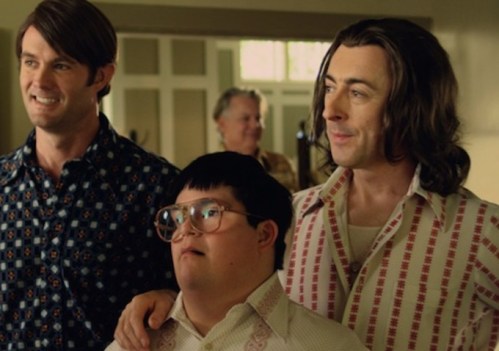 “ANY DAY NOW” My rating: C+ (Opening Jan. 4 at the Tivoli)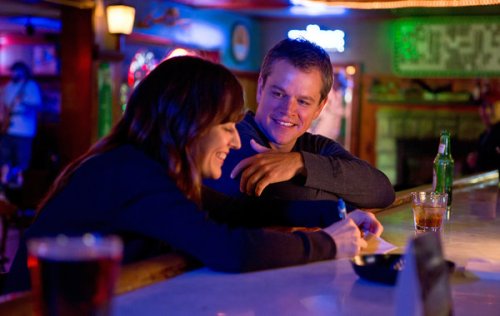
 “THE IMPOSSIBLE” My rating: B+ (Opens Jan. 4 at the Glenwood Arts, Cinemark Palace, Palazzo 16 and Independence 20)114 minutes | MPAA rating: PG-13
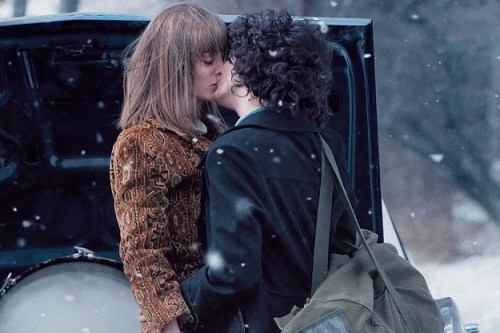 “NOT FADE AWAY” My rating: B (Opens Jan. 4 at the Tivoli)
 “DJANGO UNCHAINED” My rating: C (Opens wide on Christmas Day)
 “CIRQUE DU SOLEIL: WORLDS AWAY” My rating: B- (Opening wide on Dec. 21)
 “THIS IS 40” My rating: C- (Opens wide on Dec. 21)
 “JACK REACHER” My rating: C (Opens wide on Dec. 21)
 Butler's Cinema Scene