Feeds:
Posts
Comments

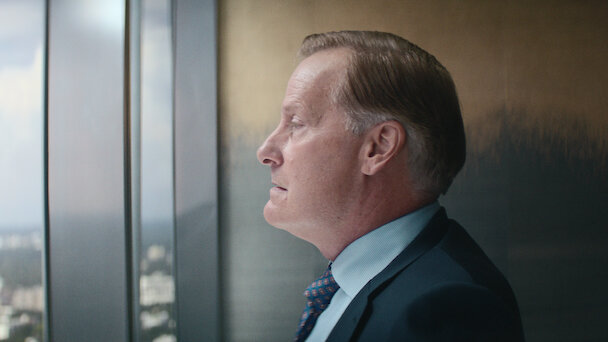
Tobias Menzies

“MANHUNT” (Apple +): A largely overlooked but crucial moment of American history gets an almost microscopic examination in “Manhunt,” a gripping and immersive dive into the assassination of Abraham Lincoln and its aftermath.

Created by Monica Beletsky (“Fargo,” “Friday Night Lights”), this seven-episode series focuses on Edwin Stanton (Tobias Menzies), Lincoln’s Secretary of War who, as the show begins is celebrating the defeat of the Confederacy and looking forward to implementing his boss’s reconstruction program in the South.

When Lincoln is assassinated near the end of Episode One, it becomes Stanton’s obsession to find the killer and uncover a conspiracy that might lead directly to Jefferson Davis, the former Confederate President now in federal custody.

The assassin, actor John Wilkes Booth (Anthony Boyle, doing a 180 from the selfless bomber navigator he played in the recent “Masters of the Air”), spends nearly two weeks on the run, determined to reach Richmond VA where, he is sure, he will find shelter and a hero’s welcome. Aside from his rampant racism, Booth’s salient characteristic is his ego…he’s a matinee idol despite lacking the acting chops of his more famous brother Edwin. Killing a President seems to him a pretty good way of achieving immortality.

As a history lesson “Manhunt” will be, for most viewers, a revelation.  

Killing Old Abe  was just one facet of a plan to bump off the major figures in the Lincoln administration. The killers missed most of their targets; eventually several individuals were convicted and hanged.

Though battlefield hostilities had ceased, a Confederate government in exile in Canada continued its attempts to manipulate events in the U.S.

Lincoln’s Veep, Andrew Johnson (Glenn Morshower), won a place on the ticket because his conservative credentials might draw voters dubious about Lincoln.  It worked and Lincoln won re-election;  with the President’s death, though, Johnson took over and jettisoned the former administration’s ambitious plans to bring hundreds of thousands of former slaves into American society.

The dismayed Stanton prophetically protests that the result will be a permanent underclass. 

Menzies, perhaps best known as the sneeringly vile villain of “Outlander,”  is spectacularly good as Stanton, creating a character whose conscience pushes him to act even when his body is breaking down (an asthmatic, he outlived Lincoln by only two years). When Johnson attempted to replace him on the cabinet, Stanton barricaded himself in his office for nearly three months to prevent the transfer of power.

Lincoln (Hamish Linklater) is prominently featured only in the first episode,  but is seen in flashbacks throughout the production. Getting more screen time is Lili Taylor as his widow, Mary Todd Lincoln.

The series revels in some of its minor characters, like Oswell Swann (Roger Payano), a freed black man who for a price guided Booth through a swamp;  Mary Simms (Lovie Simone), an enslaved woman who became a key witness in the trial of the conspirators, and Boston Corbett (William Mark McCullough), a former drunk turned Union soldier and religious fanatic who fired the shot that killed Booth.

Indeed, the series has been extremely well cast, the one big mistake being Patton Oswalt as a self-serving “detective” helping track down the killers.  Despite a luxurious beard, I kept expecting him to crack wise.

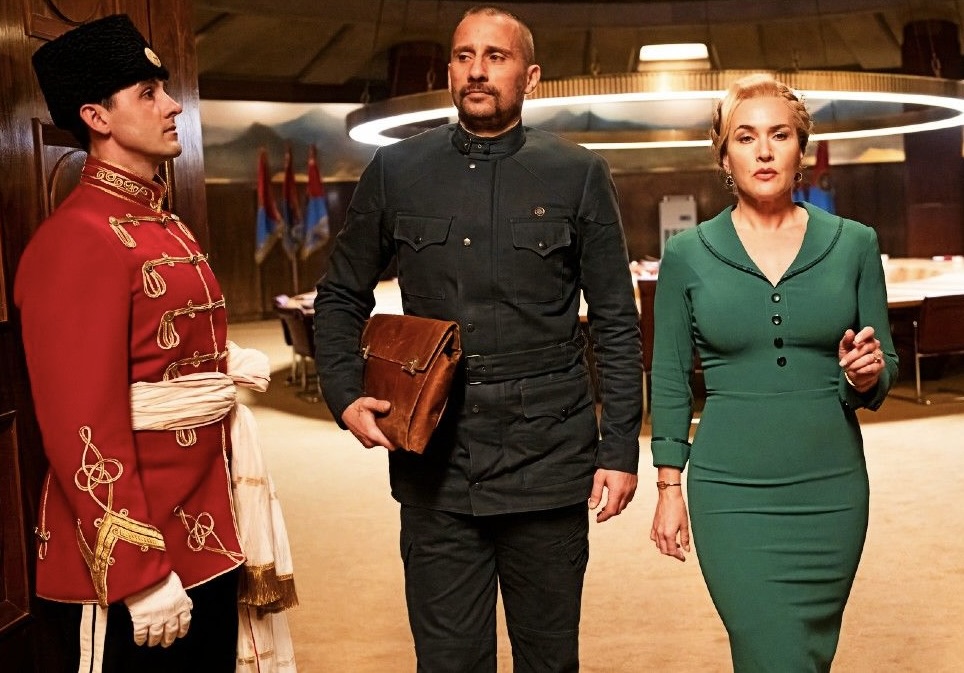
Matthias Schoenaerts, Kate Winslet

“THE REGIME” (Max):  As a black comedy about fascistic populism “The Regime” could hardly be more timely.

Yet it nevertheless wore out its welcome well before reaching its eighth and final episode.

First, the good stuff:  Kate Winslet is at the top of her game as Elena Vernham, the chancellor of a small Eastern European country whose outward charisma covers a host of insecurities (mold in the palace…eek!!!) and a casual brutality inherited from her late father, a former chancellor whose ghastly corpse resides in a glass coffin.

In the first episode we are introduced to Corporal Herbert Zubak (Matthias Schoenaerts). a thug who eagerly butchered a group of striking workers and now finds himself promoted to the position of Chancellor Verhnam’s body guard.  It doesn’t take all that long for the dead-eyed Zubak to find his way into the boss’s bed and a position of real power.

We’re given a handful of nervous advisers whose main job is to keep the Chancellor from doing anything too ruinous while trying to ensure their own survival (sounds  lot like the Trump White House), and a chief of household (Andrea Riseborough, looking even more androgynous than usual) whose young son the childless Verhnam insists on raising as her own.

At its best, “The Regime” (it was created by Will Tracy) bears a close kinship to the savage political satires of  Armando Iannucci (“The Death of Stalin,” “Veep,” “In the Loop”).

Problem is, once having set up its premise, the show seems stuck in a loop, hitting the same notes over and over with few variations. Thank heaven for Hugh Grant, who shows up midway as a sardonic former chancellor now residing in one of Verhnam’s prisons. 

Production values are high, and the acting solid enough that I stuck with it. Still, I hoped for more. 

| Robert W. Butler
“SASQUATCH SUNSET” My rating: B (At the Screenland Armor)

89 minutes | MPAA rating: R

“Sasquatch Sunset” arrives with a reputation: Apparently at early screenings it set near-records for audience walk-outs,

Well, screw those guys.  

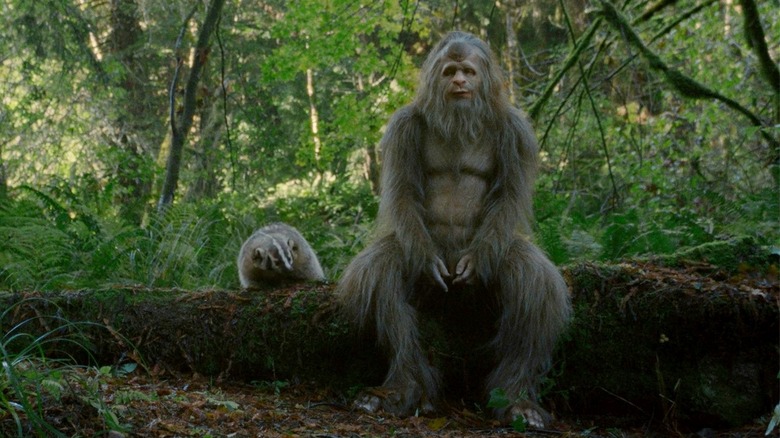
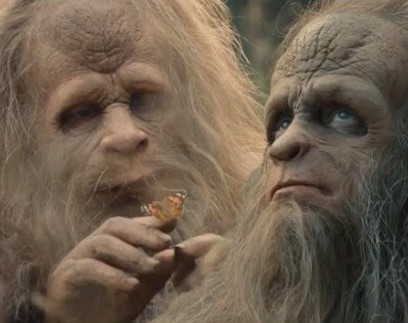
I found this bizarro fantasy from sibling filmmakers David and Nathan Zellner to be pretty damn wonderful, a sort of comic tragedy with no dialogue, a jaw-dropping matter-of-factness when it comes to bodily functions, and a cast of players so hidden behind fake hair and prosthetics that they are unrecognizable.

Unfolding in the what appears to be the forests of the Pacific Northwest (the luscious cinematography is by Mike Gioulakis), this is the story of a family struggling to survive.

Our protagonists are Papa Sasquatch (Nathan Zellner) and Momma Sasquatch (Riley Keough) and their two boys (Jessie Eisenberg and Christopher Zajac-Denek). They live a nomadic life, always in search of food.

Initially “Sasquatch Sunset” mimics nature films (or perhaps it’s more accurate to say that it’s like the “Dawn of Man” sequence of “2001: A Space Odyssey” blown up to feature length).  The camera captures these shaggy hominids foraging, interacting with other wildlife (elk, skunk, badger, cougar), and employing branches to construct temporary lean-tos for sleeping. They also horse around. Recreational play is part of their daily existence.

They don’t talk, exactly, but they do communicate through grunts, moans and shrieks. 

Periodically they will use heavy logs to pound in unison on tree trunks.  This is their version of jungle drumming; they hope to make contact with others bigfoot clans.   Alas, their messages elicit no response. Perhaps they’re the last of their kind.

The National Geographic aspects of the film are often in counterpoint to a thick current of humor running throughout.

There’s a slapstick encounter with a turtle, and much emphasis on bodily functions. (Like the great apes, the sasquatch throw their own feces at interlopers.) 

Papa Sasquatch is particularly amusing. He’s a hirsute Homer Simpson with a taste for fermented berries and psychedelic ‘shrooms. When his amorous advances are angrily rejected by Momma Sasquatch, he becomes fascinated by a log featuring a seductive-looking hole. (Thus cementing his genetic kinship with human males.)

About halfway through, though, the mood darkens.  We discover that the Sasquatch bury their dead, leaving little abstract sculptures of bent twigs on the grave in tribute.

And it comes as something of a shock when our hairy heroes encounter a tree marked by a huge red X in spray paint.  Later they will angrily tear up a human campsite (but not before gorging themselves on Cheetos).  And their minds are completely blown when they stumble across a roadway winding its way through the woods.

There’s no plot to speak of, just a series of episodes.  But over “Sasquatch Sunset’s” brief running time we come not only to recognize these animals as individuals with their own personalities, but as  representatives of a much larger struggle between survival and extinction. There might just be a lesson there for the rest of us.

| Robert W. Butler
Andrew Scott

“RIPLEY” (Netflix):   

Patricia Highsmith’s charming/creepy con man Tom Ripley has been a favorite of filmmakers ever since the character first saw the light of print in 1955.

Over the years he’s been portrayed by Matt Damon, Barry Pepper, John Malkovich, Alain Delon and Dennis Hopper, among others. 

So I approached writer/director Steve Zaillian’s new adaption on Netflix with a few misgivings. What could this 8-part series possibly bring to the table that I hadn’t already encountered in all those other movies?

Silly me. 

This is now officially my favorite Ripley of all.  Andrew “Hot Priest” Scott is both seductive and repellant in the title role, deftly sliding between charm and creepiness, between superficial warmth and a near-reptilian indifference.

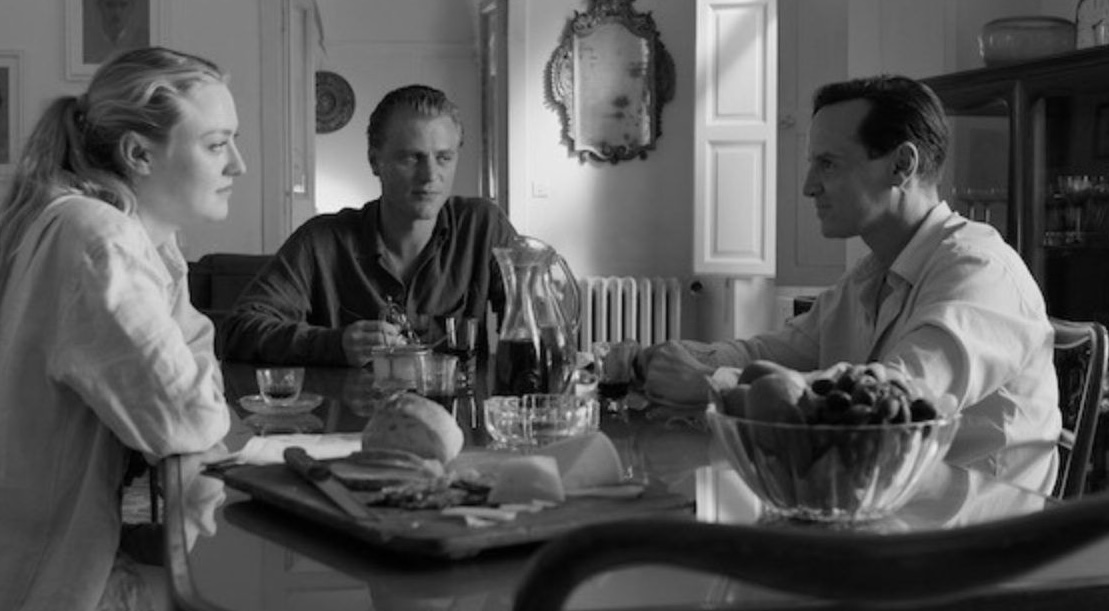
But sharing star billing is the series’ use of Italian backdrops, captured in black-and-white footage so jaw-droopingly rich that you want to linger on every frame, soaking up the unerringly “right” compositions and mesmerizing interplay between light and dark.

In fact, cinematographer Robert Elswit just might singlehandedly make b&w a thing again.  The format has the almost mystical ability to capture and magnify textures ranging from worn marble to fabrics. This “Ripley” is more than a crime story or a personality study…it’s a freakin’ sensory adventure.

(Elswit uses only a brief moment of color…it’s at the end of Episode 6. Look for it.)

The plot is pretty much as you remember it.  In the late 1950s New York scammer Tom Ripley is recruited by a rich man to seek out the  wayward son who has decamped to Italy.

Ripley barely knows the young fellow he’s supposed to bring back to the States, but at the very least he can spend a couple of months living high on the old man’s money.

His target, Dickie Greenleaf (Johnny Flynn), is a wannabe writer and painter who has a taste for the expensive things — like the  original Picasso on his villa wall — that a plebe like Ripley can only dream of. 

In fact, our man soon realizes he isn’t satisfied with being Dickie’s drinking buddy and traveling companion…Ripley wants to take over Dickie’s life, to actually become Dickie.  Which will of course necessitate the real Dickie disappearing.

Dakota Fanning, Johnny Flynn, Andrew Scott

Two of the series’ episodes are devoted to depicting separate murders and Ripley’s coverup efforts. Zaillian has filmed these with virtually no dialogue, studying Ripley’s efforts to clean his messes and hide the evidence in practically microscopic detail.

Along the way he ratchets up the tension to painful levels…time after time it looks as though Ripley is going to be found out…and like a cat he somehow always lands on his feet. Whether by luck or strategic thinking, he always turns the odds in his favor.

“Ripley” is pretty much a one-man show, and Scott is nothing short of hypnotic.  You find yourself rooting for Ripley against your good judgment; there’s perverse pleasure (and in several instances sardonic humor) in watching him run circles around everybody…including us viewers.

It’s not entirely a one-man show. Dakota Fanning is effective as Dickie’s girlfriend, whose almost instant dislike of Ripley may put her in his cross hairs. Eliot Sumner has some fine moments as Freddie, Dickie’s fey friend, and Maurizio Lombardi is quite wonderful as the Roman police inspector wrapped up in Ripley’s wild goose chase.

| Robert W. Butler

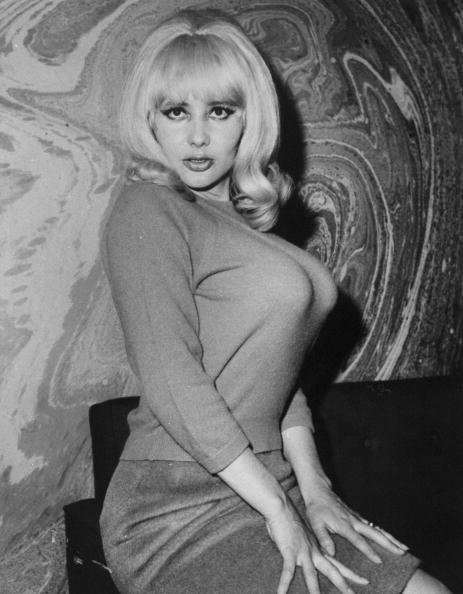
Carol Doda

“CAROL DODA TOPLESS AT THE CONDOR”  My rating: B- (At the Glenwood Arts)

100 minutes | MPAA rating: R

One of the more obscure outliers of modern American social history gets examined in “Carol Doda Topless at the Condor,” a documentary that succeeds more in recreating a bygone era than in coming to any definitive conclusions about its central figure.

Carol Doda (she died in 2015 at age 78) was, for a decade or so beginning in the mid-1960s.  a household name. She was famous/notorious for dancing topless at the Condor Club in San Francisco’s North Beach neighborhood.

Doda was not a stripper. Or even an exotic dancer.  She did a standard go-go routine with the difference that she was nude from the waist up.

This was in an era when even burlesque stars wore pasties; by freeing the nipple one might claim that Doda opened the door to a whole new approach to public nudity.

Whether she intended to do so or was just in the right place at the right time is one of many questions Marlo McKenzie and Jonathan Parker’s film leave unanswered.

The film does a nice job of establishing how San Francisco became “the off-season Vegas,” a nightlife center offering tourists a plethora of jazz and comedy clubs that earned the town the nickname “Baghdad by the Bay.”

Carol Doda was a waitress at the Condor Club.  But she delivered drinks with a wiggle and exuberant dance movies while wearing a white leotard.  Eventually the club’s owners suggested that she might do her dance from atop the grand piano on the bandstand.

At the same time fashion designer Rudy Gernreich was introducing his topless swimsuit (or monokini);  Doda and her bosses decided to up the ante by having her dance in the breast-baring outfit. Result: standing-room crowds and queues around the block.

Ere long Doda was making her entrance on a specially rigged piano that lowered from a hole in the ceiling with the star performer already on top and gyrating.  And she began beefing up her modest bosom with silicon injections.

Overnight virtually every club in town went topless.  The cops responded with a city-wide raid; Doda and her fellow topless dancers prevailed in court and as a result San Francisco became the  first city to recognize the legality of topless performance.

“Carol Doda Topless…” eschews narration and instead relies on dozens of talking-head snippets featuring Doda’s old bosses, fellow dancers, even bartenders at clubs where she worked.  

There are also a handful of female scholars attempting to establish Doda’s place in the feminist continuum, and they are wildly contradictory.  Was Doda exploited or was she a canny exploiter?  Was she a photo-feminist?  And if so, deliberately or accidentally?  

The film employs lots of footage of Doda being interviewed, but it’s just about impossible to pin down her personality. For a woman who nightly bared it all, she was remarkably shy.

“I want to be in show business and I don’t know any other way than showing my bosoms,” she says at one point.  In another interview she calls her act “another form of art, like a nude painting or statue.”

So who was this woman?  There are hints that she came to San Francisco after a failed marriage, leaving behind one or two children.  The movie raises the idea that Doda developed serious health problems as the result of her regular use of silicon  injections to maintain her breasts, but never comes to any conclusions.

In interviews she could be self-effacing, but there’s no evidence that irony played a role in her act.  She was a naked lady dancing. Period.

Doda never discussed her personal life; even women who worked with her for years knew little about her.  She is alleged to have had a liaison with Frank Sinatra; thereafter she preferred young men…one commentator suggests that guys barely out of their teens were more malleable and less troublesome.

In later life, when the topless bookings dropped off, Doda sang with a heavy metal band, did  phone porn, developed her own  line of face creams  and opened a boutique specializing in  intimate wear (apparently she would look at a female customer and know immediately what design and size of bra would be appropriate).

Ultimately we’re left with the sense that Carol Doda wanted desperately to be a star despite her lack of conventional talent, and had the insight or blind luck to find the one way to get there.

| Robert W. Butler

Nicolas Cage

“BUTCHER’S CROSSING” My rating: B (Hulu)

105 minutes | MPAA rating: R

An unintended consequence of the rise of streaming services is that the once-ubiquitous Western has been pulled back from the brink of extinction.

The oater is, if no longer the box office giant of old, at least widely available over the Net. What’s more, filmmakers are  making new Westerns.

Granted, most of them are cheap, indifferently acted and recycle  the same old revenge plot…which makes an aberration like “Butcher’s Crossing” that much more remarkable.

Directed and co-written by Gabe Polsky, “Butcher’s Crossing” is nothing less than a landlocked Moby Dick, a tale of obsession and madness on a sea of grass.

Our Ishmael is young Will Andrews (Fred Hechinger), an Easterner who has dropped out of college to pursue his dreams of adventure in the Wild West.

Now, a decade after the end of the Civil War, Will has arrived in the ramshackle Kansas burg of Butcher’s Crossing determined to hook up with a party of buffalo hunters so he can experience the wonders of this new world first hand.

Will finds himself financing a hunting expedition under the leadership of Miller (Nicholas Cage, with shaved head and untamed beard).  

A veteran buffalo hunter, Miller claims to have years ago discovered an isolated valley in the Rockies absolutely jammed with bison.  And not the raggedy leftovers being brought in by other hunters; these are prime animals, Miller claims. Their skins will bring top dollar.

There are two other members of the party. The one-handed cook Charlie (Xander Berkeley, unrecognizable) is an old coot whose religious mania may be an indicator of more serious psychological problems.

And then there’s Fred (Jeremy Bobb), a surly skinner who prepares the hides to be hauled back to what passes for civilization.

For all his outward show of competence, Miller is an unsettling risk taker, leading his party into the heart of Indian country (they don’t encounter any natives but come across the gruesome remains of a fellow who did) and choosing a route which has them running dangerously low on water.

Eventually they reach the hidden valley in the mountains. And it’s exactly what Miller promised.

He starts shooting…and won’t stop. Not when they have harvested three times as many skins as they can haul out. Miller appears to be on a quest to kill every last buffalo.

Which is bad enough from an ecological standpoint, but it also delays the group’s return to Kansas.  Trapped by an early snowstorm, they’re stranded until spring, short on provisions and with inadequate shelter.

Under these circumstances the worst in men comes out.

The screenplay by Polsky, Liam Satre-Meloy and John Williams is spare and economical. And while the film cannot overcome a meandering last act that left me wanting more, the journey to get there is gripping and harrowing.

The acting is solid without making a big deal of things.  One half expects Cage to slip into full eye-rolling mode to depict the madness of this prairie Ahab, but he never overplays his hand.  In fact, his quiet menace is far more intimidating than angry histrionics.  

As our young hero, Hechinger is mostly placed in the position of observer.  Yet I was particularly impressed by the way this kid is drained by months of fear and deprivation.  He starts out frat boy and ends up practically an old feller.

Special kudos to cinematographer David Gallego, whose images of a largely uninhabited landscape are mesmerizing (the film was short largely on the Blackfeet Reservation in Montana), and to editor  Nick Pezzillo, who creates some hallucinogenic montages reflecting the characters’ mental and emotional deterioration.

The production values are solid, from the equipment carried by the party to the wrangling of the bufalo…if I didn’t know better I’d say some of these big shaggies can actually act.

(One small complaint…when will Hollywood realize that there exists in Kansas no town from which you can view a mountain? Just sayin’.)

Finally, the film doesn’t address the near-extermination of the American bison directly…although the opening and closing credits do feature old photos of piles of buffalo bones and bales of skins. The filmmakers have enough faith in their audience that they saw no need to preach — and it pays off.

| Robert W. Butler

Sean Penn, Tye Sheridan

“ASPHALT CITY” My rating: B (In theaters)

120 minutes | MPAA rating: R

It’s been so well done that you’re compelled to keep watching, but along the way “Asphalt City” will have you wondering just how much ugliness and trauma an audience is expected to take.

Jean-Stéphane Sauvaire’s third feature is a grim, gritty and existentially challenging study of a young man going slowly bonkers.  But that isn’t immediately clear.

For the first 45 minutes the film employs a semi-documentary style (handheld camera, a cacophony of screams, the almost constant shriek of ambulance sirens) to sink us neck-deep in the daily grind of Ollie Cross (Tye Sheridan), a new EMT for the NYC Fire Department.

Along with Cross’s partner, the much more experienced and disturbingly cynical Rutkovsky (Sean Penn), we are almost immediately thrown into the chaos of a shooting in a housing project.  It’s a scattered, splattered dreamlike (or, more accurealy, nightmarish) collage of pulsing gore, angry voices and intimidating gestures.

Basically the first half of the movie is a rapid-fire montage of what Cross and Rutkovsky endure daily: Heart attacks, overdoses, the ugly fallout of physical mayhem.  A bedsore-riddled patient in a cheap nursing home. A body discovered after weeks in fly-infested apartment. 

Many of the people they serve speak no English and are antagonistic whenever anyone in a uniform shows up. Like the middle-aged female junkie brought back from the edge who cusses out her saviors for not letting her out of the ambulance to score.

“We cant save everyone, not even with all the toys and the training,” Rutkovsky tells the newbie.

The screenplay (by Ben Mac Brown, Shannon Burke and Ryan King) doesn’t provide Cross with much respite in his off-duty hours. He  sublets a beyond-shabby room in a China Town tenement; he’s hoping to save enough money for medical school…if he can pass the entrance exams.

About the only calming element in his world is a young single mother (Raquel Nave) he meets at a dance club; the mostly wordless scenes between the two are frankly intimate, but the effect is less eroticism  than lyrical escapism. For a minute, anyway, Cross can forget the horrors of his workday.

After 45 minutes “Asphalt City” tones down the frantic editing and bobbling camerawork and settles down enough to dig a bit into its characters.

Rutkovsiy introduces the kid to a woman (Kathleen Waterston) who wryly identifies herself as “the most recent ex-wife and mother of his only child.” Indeed, in the presence of his young daughter the grizzled Rutkovsky is all gentleness and loving language.

A couple of segments stand out for their fierceness.  In one Rutkovsky loses it and attacks a surly wife beater; in another the pair frantically work on a young woman (“True Detective’s” Kali Reis) found in a blood-soaked bed.  She has given birth to what appears to be a dead baby. Plus she used heroin to try to dull the pain of labor.

Slowly it dawns on us that Cross is losing it.  Initially he sees himself as a good guy (out of uniform  he sports a flashy red jacket with angel wings embroidered on the shoulders), but no one could remain unaffected by the daily diet of anger and anger’s bloody fallout.

“We carry the misery and nobody gives two shits about it,” observes one of the EMTs.

Indeed, among the paramedics the most effective retirement plan seems to be  suicide.

“Asphalt City” ends on a more-or-less upbeat note, but not before pushing its young protagonist into primal scream territory.

Along the way it delivers a few notable surprises.

Mike Tyson (yes, that Mike Tyson) is absolutely believable as a tough/weary NYFD chief in charge of the EMTs.

Michael Pitt (where’s he been for the last decade?) is astonishingly good as a soul-dead paramedic  perfectly happy to deny treatment to a wounded drug dealer — if the creep dies in the back of an ambulance it would be a public service.

And there’s a small army of performers (I’m guessing relatively few of them are professional actors) who are devastatingly effective as the New Yorkers our heroes encounter on their runs.

In its last 20  minutes “Asphalt City” flirts with pretentiousness. But by then it’s earned our trust.

| Robert W. Butler

Millie Bobby Brown

“DAMSEL” My rating: B- (Netflix)

110 minutes | MPAA: PG-13

The female-centric actioner “Damsel” is, in a weird way, a twisty homage to “The Princess Bride.”

Except that whereas the title character that 1987 classic was an imperiled  beauty who relied on brawling menfolk for a rescue, in “Damsel” it’s the princess who kicks ass.

Bonus points: Robin Wright, who of course played Princess Buttercup back in the day, is this time around cast as a beautiful/evil queen in the classic Disney tradition.

“Damsel” stars Millie Bobby Brown as a fairy tale princess who  singlehandedly takes on a fire-breathing dragon. Brown became a near-household word for her work (beginning at age 12)  in the “Stranger Things” series, had a supporting role in “Godzilla: King of the Monsters,” and proved quite charming as a Victorian-era teen sleuth in “Enola Holmes.”

One hopes that some day soon she will tackle a role commensurate with her talent.  But for now we’ll have to be content with lightweight diversions like this one.

Brown’s Elodie is the daughter of the provincial Lord Bamford (Ray Winstone) who rules a fairly inhospitable region of the film’s Middle Earth-ish world.  Bayford’s realm is always on the verge of starvation/bankruptcy, so when a marriage proposal arrives from a much more wealthy kingdom he jumps at the chance to benefit his people by marrying off Elodie.

In due course Elodie and Prince Henry (Nick Robinson) are wed in an elaborate ceremony in the crazily ornate castle lorded over by Henry’s Mom, Queen Isabelle (Robin Wright). 

Elodie finds herself falling for Henry…until she finds herself falling literally down a chasm into the dragon’s lair.  Seems that Isabella’s family has for centuries been placating the dragon with sacrificial virgins…Elodie discovers the remains of earlier brides as she navigates a labyrinth of tunnels and chambers.

“Damsel” plays something like a “Die Hard” parody, with Elodie overcoming her panic to get down to the task of evading and hopefully eliminating the great beast. Think of the dragon’s mountain lair as a Medieval version of a high-rise office building.

Despite some gruesome fiery deaths, this film from director Juan Carlos Fresnadillo may be too sanitized for hard-core action fans.  The ideal audience appears to be young girls, who will glom onto the sword-waving heroine while overlooking some of the more creaky plot points.

No biggie, but a decent enough way to pass a couple of hours.

| Robert W. Butler

Tom Brady, Bill Bilachick

“DYNASTY: THE NEW ENGLAND PATRIOTS”  (Apple+):   

Even as a fair-weather sports fan I was aware of the NFL’s New England Patriots in the Belichick/Brady era…at least enough to hate them whenever they squared off agains my Chiefs.

But the new 10-part documentary miniseries from Ron Howard’s production company is just about the perfect way to experience 20 years of superlative football.

Not that the series whitewashes the Pats’ history.  Spygate and Inflationgate are both prominently featured (those were, of course, scandals in which the team was accused of cheating). An entire episode is devoted to Aaron Hernandez, the tight end who could not outrun his unsavory past, was convicted of murder and died in prison.

There’s the looming presence of coach Bill Belichick, whose genius as a football strategist was nearly overpowered by his surly personality. Even team owner Robert Kraft (the rare multimillionaire who seems to be a be a genuinely good guy) is forced to admit that “my coach is a pain in the tush.”

And then there’s Tom Brady, who was picked up so late in the draft that just about everybody else already had gone home, and nevertheless became the greatest quarterback of all time. Much of his success was the result of unrelenting hard work and discipline…he’s got an ego, sure, but by series’ end I felt stirrings of affection for the guy.  

For a Chiefs fan “Dynasty” is a doubly fascinating experience, since it dovetails uncannily with the emerging Patrick Mahomes/Andy Reid storyline.  In both cases it’s a perfect pairing of coach with player; the difference, as far as I can tell, is the elements of toxic masculinity/competitiveness that eventually pushed Belichick and Brady apart are largely missing from Arrowhead’s environment.

Or so one hopes. We shall see.

Ken Watanabe, Anson Elgort

“TOKYO VICE” (Prime):   

Gangster yarns are always tasty.  Stories about the Yakuza, Japan’s infamous underworld, are even better, with a patina of samurai ethos plastered over the mayhem.

“Tokyo Vice,” based on the memoir by American journalist Jake Adelstein, has the added oomph of plopping us down in a foreign culture and exploring it (or at least certain aspects of it) in almost microscopic detail.

Anson Elgort (Tony in Spielberg’s “West Side Story”) stars as Adelstein, a recent college grad from Missouri who in the 1990s became the first foreign reporter on a major Japanese newspaper.  

Accustomed to American-style journalism, Adelstein often finds himself stymied  by the regimented way of doing things in Japan, especially the ingrained awe of authority. 

(Example:  Adelstein visits a crime scene and views a mutilated body, but when he reports about the ”murder” he is chastised by his editors; in Japan they must wait for the police to officially declare a murder has occurred before the word can even be printed.)

“Tokyo Vice” is crammed with interesting characters. The ever-great Ken Watanabe plays a crime-weary detective who becomes the reporter’s secret ally on the police beat. Rachel Keller plays a rebellious American farm girl (from Utah, no less) whose dream of running her own Tokyo nightclub are compromised by the crooks who provide funding.  Rinko Kikuchi (the tortured teen in “Babel”) is Adelstein’s immediate handler on the newspaper, an unusual gig for a woman and one that requires her to always defer to the men in the room.

And then there are the heavies, the Yakuza warlords and their henchmen.  I’m  not familiar with any of these actors, but they have been cast with a keen eye for their striking physical characteristics and ability to exude intimidation.

Kaya Scodelario, Theo James

“THE GENTLEMEN” (Netflix):   

There is a good Guy Ritchie, the jokester/genius who gave us funky Brit crime capers like “Lock, Stock, and Two Smoking Barrels” and “Snatch.”

And there is a bad Guy Ritchie, as evidenced by his intolerable short-attention-span takes on Sherlock Holmes.

“The Gentleman” is good Guy Ritchie…in spades. He created the series (it’s inspired by his 2018 film of the same name, but with some major changes) and wrote and directed several episodes.

Theo James stars as Eddie Horniman (really? Horny Man?), who returns from service in His Majesty’s army to find his Pater dead; what’s more, the old man’s will jumps over the doped-up older son Freddy (Daniel Inge) to make Eddie a Duke and sole inheritor of the estate.

Eddie quickly discovers that the only thing keeping the manor afloat is an underground (literally) marijuana factory.  Seems the previous Duke was in cahoots with an imprisoned drug kingpin (Ray Winstone) and his coolly beautiful daughter (Kaya Scodelario), providing a safe space to grow and process the weed. 

Being a good guy, Eddie starts laying plans to extricate the family from this criminal enterprise.

Yeah. Good luck with that.

What makes ironically-title “The Gentlemen” fascinating is the slow corruption of our leading man. 

That and a small army of great performers delivering arrestingly eccentric characters.

Joely Richardson plays Eddie’s mother, who at first seems a font of entitled obliviousness but eventually is revealed to be much more on the ball. Vinnie Jones is the family’s uber-loyal gamekeeper.  Giancarlo Esposito is as an American billionaire determined to buy the estate. Pearce Quigley is scarily memorable as a Bible-quoting gangster whose beard and brutality are strictly OId Testament.

“The Gentlemen” effortlessly juggles hilarity and grotesque gruesomeness.  It may not be “important,” but it sure is fun.

| Robert W. Butler

Kali Reis

“CATCH THE FAIR ONE” My rating: B+ (Hulu)

85 minutes | No MPAA rating

Whatever your takeaway on the latest season of “True Detective,” it’s pretty obvious that Kali Reis is the show’s breakout star.

Reis is a professional boxer (holding several WBC titles) of Cherokee and Nipmuc ancestry. In the Max series she plays an Alaska state trooper working with Jodi Foster’s burned-out police chief to solve a mass murder — and, not coincidentally, to discover the truth behind the disappearance of a Native American woman.

It’s a pretty great gig for an acting newcomer.  If you want to understand how Reis landed the job, took no further than her little-seen 2021 drama “Catch the Fair One,” now on Hulu.

In her acting debut Reis is more than just acceptable.  She’s mesmerizing.  Add to her performing chops the fact that she co-wrote the screenplay with director Josef Kubota Wladyka, and it’s easy to spot what the “True Detective” producers saw in her.

“Catch the Fair One” is essentially a revenge melodrama, but that description doesn’t do it justice.  

The depth of the characterizations, the aura of tragic inevitability, the way in which horrible acts are made even more unsettling because they’re presented in such a matter-of-fact, non-exploitative manner…all these add up to a truly gripping and gut-twisting movie experience.

Trying to find another movie to compare it to, I keep turning to 1973’s “The Friends of Eddie Coyle,” a crime drama so effectively rooted in semi-documentary reality that it has few peers.  

In “Catch…” Reis plays Kaylee, a Native American woman whose life was upended by the disappearance a few years earlier of her younger sister, Weeta.

Kaylee’s road has been one big pothole. She’s only recently kicked a drug addiction. She trains incessantly at a mostly-male boxing gym where she’s ready to both dish out and absorb punishment. She sleeps in a woman’s shelter with a razor blade in her mouth.

Mostly she feels guilty.  Weeta and Kaylee’s mother, Jaya (Kimberly Guerrero), is an activist who runs support groups for abused Native American women.  Weeta was her hope for a better future; Kaylee is the black sheep who delivers nothing but disappointment.

Getting wind of a sex trafficking operation in their rural, snowbound neighborhood in upstate New York, Kaylee comes up with a dangerous plan…she’ll allow herself to be recruited into the prostitution ring in the hope of picking up Weeta’s trail.

It’s a desperate, last-resort move, and even a woman toughened by years of pain and abuse is horrified and terrorized by what she encounters.

If the film has a mesmerizing leading lady, it also has a firm hand behind the camera.  Wladyka proves himself a master of mood…the film is a slowly-tightening vise of suspense and anxiety. Practically Hitchcockian.  

And yet there’s nothing here that says, “Look at me, Ma.” No dramatic or visual grandstanding…which makes the yarn’s dark underbelly all the more disquieting.

| Robert W. Butler

“FRIDA” My rating: A (Prime)

87 minutes | MPAA rating: R

I figured I’d pretty much been Kahlo-ed out.

Couldn’t have been more mistaken.

“Frida,” the new doc from Ron Howard’s production company, is an eye-enchanting and soul-stirring experience.  It is among the best documentaries about an artist I’ve ever seen.

Here’s what makes it so special…director Carla Gutierrez completely blows off the usual art history approach.  There are no critics discussing Frida Kahlo’s work or her impact on contemporary culture.

Instead this is an intimate bio told in Kahlo’s own words (and those of her closest friends and family).  As Frida (voiced by an actress reading from the artist’s own diaries) relates events from a colorful life, the screen lights up with arresting images.

Half the film consists of archival footage and still photos of Frida and her world, often colorized to create a dreamlike effect. The other half is made up of brilliant animation sequences in which her paintings come to sinuous life (these sections were overseen by animation creative director Sofia Inés Cázares).

The results are seductive and haunting.

If her painting style would eventually be categorized as surrealism, Frida’s writing is brutally realistic about her personal life.  

Even so, at times her prose achieves the beauty of minimalist poetry. Describing her early yearnings for a physical relationship with a classmate, she begins by stating “I think everything that gives pleasure is good,” and then follows up that thought with a string of seductive words:  “breath,” “scent,” “armpit,” “love,” “abyss.”

(By the way, most of the film’s dialogue is in Spanish with English subtitles.  This only reinforces the illusion that we’re being confronted by Frida herself.)

As a teen she was involved in a Mexico city bus accident that left her in pain for the rest of her life.  The incident was also responsible for her becoming an artist… laying for  months on her back in a body cast, the girl was going mad with boredom. Frida’s mother created an overhead easel the patient could reach and hung beside it a mirror, The teen began doing self portraits…and never stopped. 

Frida’s two marriages to Mexican muralist Diego Rivera comprise one of the 20th century’s great love stories.  Rivera (again voiced by an actor, reading from the artist’s memoir) admits to being a selfish womanizer. Frida was an intensely sexual person who enjoyed relations with both women and men (Rivera, a font of machismo, was turned on by the former, infuriated by the latter).

To a large extent this doc is the story of how Frida emerged from the shadow of her world-famous spouse and found her own visual voice.

Much of this transpired in the early 1930s when the couple were living in New York City and Frida had little to do while Rivera worked on mural commissions.  

If her stay in the U.S.A. honed Frida’s art, it only solidified her leftist inclinations…she  was absolutely dismissive in her rejection of American capitalism, which she found soulless, and the shallow affectations of the ruling class. For all its poverty and unrest, she much preferred her native Mexico.

The cumulative effect of ”Frida” is overwhelming. Staring for almost 90 minutes at photos and films of the woman and her self-portraits, listening to her voice thoughts that most of us keep to ourselves, one gets the uncanny feeling of having actually met her.

But it’s more than that.  By film’s end you may find yourself in love with this woman.

| Robert W. Butler