
Kate Hudson, Hugh Jackman
“SONG SUNG BLUE” My rating: B (In theaters)
133 minutes | MPAA rating: PG-13
The phrase “audience pleaser” might very well have been coined to describe “Song Sung Blue,” a ridiculously entertaining comedy-drama-musical from the chameleonic Craig Brewer.
First off…this is not a Neil Diamond biopic, despite the trailers featuring a shaggy and sequined Hugh Jackman crooning hits from the Diamond catalog.
Jackman is playing a real-life character, Mike Sardina, a Milwaukee native who in the ‘90s became something of a local celeb as a Neil Diamond interpreter (not an imitator…there’s a difference).
With his wife Claire (played by Kate Hudson, who has snagged a Golden Globe nomination) Mike created an act called Lightning and Thunder. Their regional fame was such that one time they actually opened for Pearl Jam.
When we first meet Mike and Claire they’re part of a celebrity sound-alike show. Claire does a Patsy Cline act, while Mike has been hired to sing Don Ho hits. Except that once on stage he starts singing Neil Diamond, with whom he has been obsessed for years.
Brewer’s amusing screenplay follows the couple’s courtship (they’re both blue collar, divorced with teenage daughters) and the development of the act. (Playing members of their entourage are Michael Imperioli, Fisher Stevens and Jim Belushi.)
It’s pleasantly romantic and affectionately amusing…but things really come to life in the musical numbers. Mike’s Neil Diamond addiction is so weighty that along with “Crackling Rosie” and “Sweet Caroline” he tosses in semi-obscure Diamond songs that many of us have never heard.
Expect “Neil Diamond’s Greatest Hits” to climb the charts in the film’s wake.
In its latter passages “Song Sung Blue” takes a somber turn, first with a disfiguring auto accident and finally with something even more sobering. But somehow Neil Diamond’s music helps navigate the bumps in Mike and Claire’s lives.
Laughter, song and tears. It’s a satisfying package.
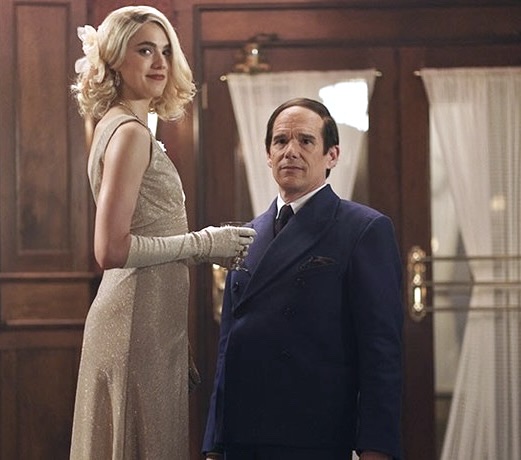
Margaret Qualley, Ethan Hawke
“BLUE MOON” My rating: B+ (Various PPV services)
100 minutes | MPAA rating: R
Ethan Hawke has always been watchable, but in recent years his work (“First Reformed,” “Juliet, Naked” and the streaming series “The Good Lord Bird” and “The Lowdown”) has taken on near-legendary weight.
“Blue Moon” cements his rep as one of our best actors.
Here Hawke plays Lorenz Hart, the famed lyricist who with writing partner Richard Rodgers created his own chapter in the Great American Songbook (“Where or When,” “My Funny Valentine,” “Bewitched, Bothered and Bewildered,” “(I’ll Take) Manhattan” and of course “Blue Moon”).
Written by Robert Kaplow (and based in part on Hart’s correspondence) and directed by Richard Linklater (his second excellent film of the season after “Nouvelle Vague”), the film opens in 1943 with the debut of “Oklahoma!” on Broadway.
The show obviously is going to be huge success, which utterly demoralizes one member of the audience. Lorenz Hart (Hawke) realizes his old collaborator Rodgers (Andrew Scott) is now joined at hip to a different lyricist, Oscar Hammerstein. And he’s sick about it.
“Blue Moon” unfolds mostly in the bar of Sardi’s restaurant, where Hart has fled to drown his sorrows while members of the “Oklahoma!” crew gather to read the reviews. The film’s first 30 minutes are a virtual monologue as Hart bitches to the bartender (Bobby Cannavale) and cajoles his way into a drink or two (he’s supposed to be on the wagon — in fact, Hart’s boozing and unreliability contributed to Rodgers leaving for more stable pastures).
So Hart grumbles about how “Oklahoma!” caters to the audience’s sappiest instincts…he’s even pissed at the exclamation point in the title. He’s catty, whiney and sad…all while putting on a show of aloof indifference and intellectual superiority.
His harangue also gives us a chance to marvel at Hawke’s transformation. His Hart sports a desperate combover that isn’t fooling anyone. And through some cinematic trickery the five-foot-ten Hawke has been reduced to Hart’s sawed-off five feet. Even women tower over him.
Hart spends a good part of the evening describing the college coed with whom he’s in love…which sounds like wishful thinking since he’s so obviously gay. This dream girl (Margaret Qualley) only wants Hart as a friend and mentor. Yet more rejection.
A good deal of the pleasure of “Blue Moon” comes from its attention to detail. The cast of characters includes New Yorker writer E.B. White, the famed photographer Weegee, an adolescent Steven Sondheim, and college boy George Roy Hill (who would go on to direct films like “The World of Henry Orient,” “Butch Cassidy and the Sundance Kid,” “The Sting” and “The World According to Garp”).
The supporting perfs are all fine, but this is strictly Hawke’s show. He fills every frame with anger and anxiety and yearning. It would be easy enough to dislike his “Larry” Hart, but just when you think you’ve had enough he says something so witty, so pithy, so heart-breaking that you crumble.
He gets my vote for the year’s best performance.
| Robert W. Butler



 Butler's Cinema Scene