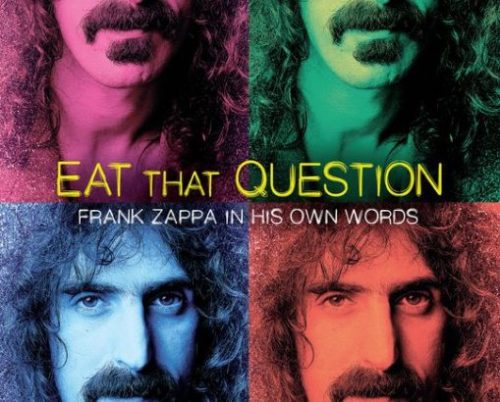
 “EAT THAT QUESTION: FRANK ZAPPA IN HIS OWN WORDS” My rating: B+
93 minutes | MPAA rating: R
Rock legend Frank Zappa once observed that while he might be a household name, most people had never heard a bar of his music or knew why he was famous.
Nearly a quarter century after his death from prostate cancer, things haven’t changed all that much. Zappa — founder, composer and lead guitarist for the Mothers of Invention — still has die-hard fans (present company included), but he’s off the radar of most millennials.
“Eat That Question” has the power to change that.
A documentary about Zappa could go in a dozen different directions. Filmmaker Thorsten Schutte has chosen to concentrate almost exclusively on what Zappa had to say about himself and his music in dozens of filmed interviews.
Oh, there are snippets of live performances — enough to convince even the tone deaf of Zappa’s adventurous explorations of musicial styles ranging from doo-wop to classical, of his guitar skills and of the extraordinarily high degree of musicianship he demanded of his players.
But mostly this is Zappa talking — and what a talker he was!
It begins with Zappa telling a interviewer that being interviewed is an artificial situation “two steps removed from the Inquisition.”
What’s amazing, given the stupefying cluelessness of many of the media types who grill Zappa (one calls him “Mephistophelian”), is the weary tolerance he exhibits, allowing his dry wit to now and then comment on the vapidity of the whole process.
(It should be noted here that Schutte’s film provides a mostly positive view of Zappa, a man quite capable of behaving like an asshole — asshole-ism and genius not being mutually exclusive qualities. The cast members of “Saturday Night Live” have voted Zappa their least favorite guest host of all time…no small thing given that Steven Seagal was also in the running. Well, Zappa didn’t suffer fools gladly, and he wasn’t about to cave to some network executive’s idea of humor.)
He was a social commentator whose lyrics gnawed away at what he saw as the vapidity of contemporary American culture. He wasn’t overtly political — he was way too much a rugged individualist to wave the banner for any organized cause — but Zappa was in his own way a great moralist.
Yeah, he often used naughty language and adolescent sex jokes and crude humor. But what used to be shocking now seems pretty mainstream. The messages he sent — especially his contempt for religion and a misleading mass media — are as vital as ever. (In one TV interview Zappa predicted that America was rapidly heading toward a right-wing theocracy.)
 Butler's Cinema Scene