Very few of us have the connections or the cash to participate in the Costume Institute Gala, one of the major fundraisers of NYC’s Metropolitan Museum of Art.
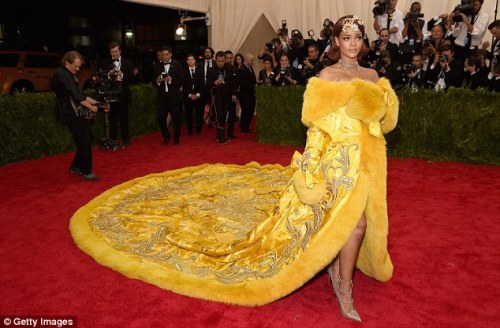
Thanks to ‘s “The First Monday in May,” though, we can vicariously crash this celebrity-studded and glamor-heavy event.
For his latest documentary director Andrew Rossi (“Page One: Inside the New York Times”) delivers a grab bag of ideas and themes centering on fashion.
In part, the film is a history of the museum’s Costume Institute and the struggle to have fashion recognized as an art form worthy to stand alongside painting and sculpture.
It also looks back at the blockbuster show several years back featuring the bizarro fashion of the late Alexander McQueen, and efforts by Gala organizers to top that record-setting event.
Rossi’s camera centers on several individuals who are planning this massive undertaking, which for 2015 has been dubbed “China: Through the Looking Glass.” The massive production will illustrate how Western (and some Eastern) designers have drawn upon traditional Chinese art for inspiration.
“DIANA VREELAND: THE EYE MUST TRAVEL” My rating: A-(Opening Jan. 18 at the Tivoli)
86 minutes | MPAA rating: PG-13
“A new dress doesn’t get you anywhere,” Diana Vreeland says in the new documentary about her life.
“It’s the life you live in the dress.”
That attitude is what made Vreeland (1903-1989) not only the most important fashion editor ever (she spent most of her career at Harper’s Bazaar and Vogue)but one of the major cultural forces of the 20th century.
As someone who knew Vreeland by name only (I knew she was big in fashion but couldn’t tell you why), “Diana Vreeland: The Eye Has to Travel” is a major revelation. Vreeland wasn’t a designer – she didn’t create fashion — but on the pages of her magazines she presented it in such a way that fashion became more than just clothes. It became a philosophy of life.
This terrific documentary was made by Lisa Immordino Vreeland, Vreeland’s granddaughter-in-law. Perhaps it is that intimacy that makes the film work…the director knew the best of her subject but she also knew where the bodies were buried. The resulting film is complex, insightful and (Vreeland herself would demand this) thoroughly entertaining.
Much of that is due to Vreeland herself. She was an ugly woman (sorry, there’s no getting around it) but she was so smart and had such a fabulous sense of style that looks didn’t matter.
She was a wit, an eccentric (who late in life began applying flaming rouge not only to her cheeks but to her ears), a lover of the arts, a denizen of Harlem nightclubs. When she went to work for Harper’s Bazaar in 1937 (after spending a decade in London, where she befriended Coco Chanel and ran her own lingerie store) she began writing a regular column called “Why Don’t You?” After a few years she became the magazine’s fashion editor.
She discovered Lauren Bacall (then a young model) and helped Jackie Kennedy achieve her “look.” But more than anything else the photographs and layouts she oversaw for the magazine changed the way people viewed and thought about clothes. Vreeland was to fashion was Ayn Rand was to pompous selfishness.
The film doesn’t hide the fact that the hard-working, fashion-obsessed Vreeland usually was an absentee wife and mother (her sons seem hardly to have known her). She could exasperate her employees and colleagues with her demands (which more often than not were right on, aesthetically speaking).
And, like Oscar Wilde, she valued style far above substance. Indeed, it’s difficult to say whether she had any political, moral, religious or social convictions beyond her admiration for beauty and pleasure.
But she had an outsized personality that was impossible to ignore.
“Diana Vreeland: The Eye Has to Travel” benefits hugely from archival interviews its subject conducted over the years. And the filmmakers cannily have taken the written transcripts of a series of conversations between Vreeland and George Plimpton and had sound-alike actors bring them to life. These become the documentary’s narrative underpinnings.


 Butler's Cinema Scene