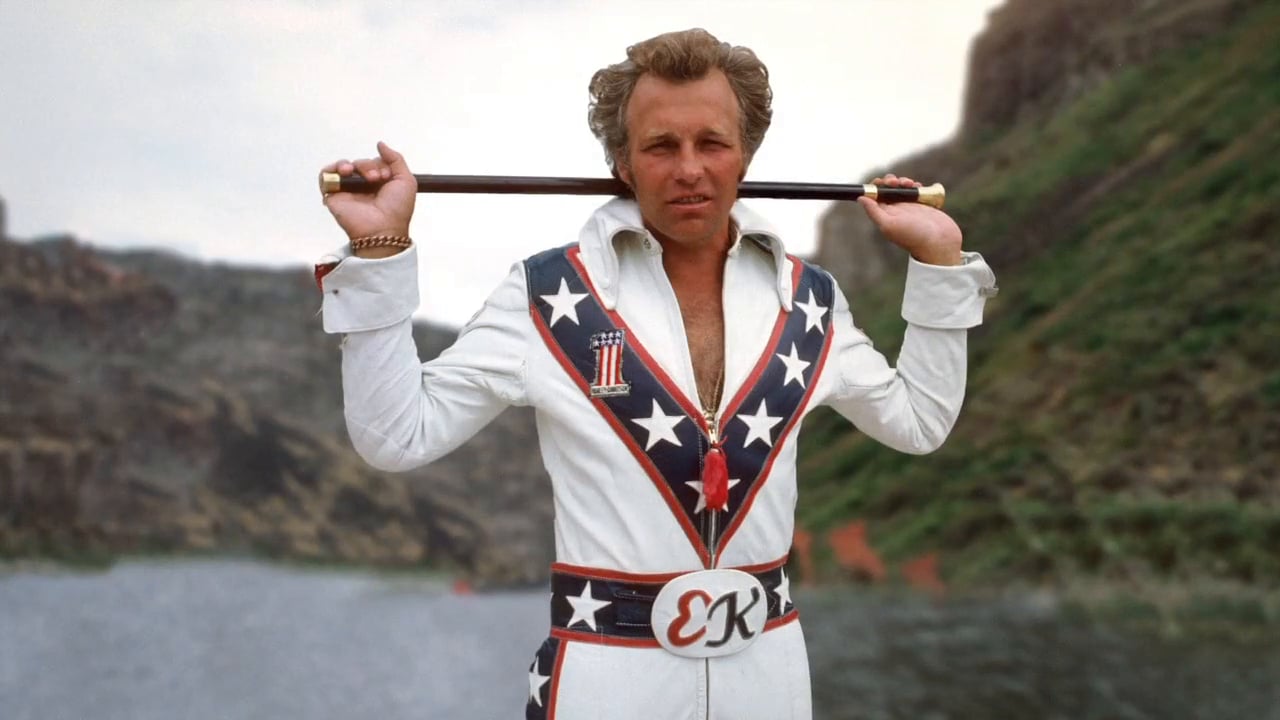
Robert “Evel” Knievel
“BEING EVEL” My rating: B
99 minutes | No MPAA rating
Motorcycle daredevil Robert “Evel” Knieval has been gone for a decade but his influence is everywhere, from our current fascination with extreme sports, to his pioneering of what we’d now call reality TV, to a talent for self-marketing that at the time seemed goofy grandstanding but which now is standard operating procedure. (You could argue that Donald Trump has taken it all the way to presidential politics).
In “Being Evel” — a title with a double meaning, given Knieval’s late career transformation into bully/jerk/boor — Oscar-winning director Daniel Junge (for the 2012 documentary short
“Saving Face””) chronicles the man’s life and lasting influence through a plethora of hair-raising news footage and the memories of those who knew him, hated him, and still revere him.
Reared by relatives in Butte, Montana, after being abandoned by his parents, Robert Knieval became a full-fledged juvenile delinquent and wild kid (“If you dared him he’d do it”) who used his beloved motorcycle to torment the local cops.
His wife Linda — who after years of his flagrant infidelities has few good words for her late hubby — describes Robert ordering her into his car in what might have been either a kidnapping or an elopement: “Danged if we didn’t get married.”
As a young husband and father Robert decided to go for the American dream — by selling life insurance. His powers of persuasion were legendary. In one week he sold 271 policies…to the inmates and staff of a mental institution.
He then turned to selling Harleys, and from that it was a short step to creating a cycle stunt team. One of his first challenges was an attempt to fly his bike over a field of rattlesnakes. He landed in their reptilian midst, sending angry diamondbacks scattering through the panicked crowd of spectators.
Throughout his career Knievel (he was given the nickname “Evil” by a jail guard, then changed the spelling in a rare display of subtlety) tended to announce outrageous stunts without ever looking into whether he could possibly pull them off.
But he quickly learned all about marketing, adopting an Elvis swagger and the King’s penchant for caped leather outfits in patriotic motifs.
 Butler's Cinema Scene