
Annette Bening
“NYAD” My rating: B (Netflix)
121 minutes | MPAA rating: PG-13
Athletic excellence and obsessive ambition are regular bedfellows, perhaps no more so than in this story of distance swimmer Diana Nyad,
Scripted by Julia Cox (from Nyad’s book Find a Way) and directed by Jimmy Chin and Eliizabeth Chai Vasarhelyi, this,is a slow buildup to Nyad’s 2013 master achievement, a 110-mile solo swim at age 60 (sans shark cages and resting raft) from Havana to Key West.
It was her fifth attempt, earlier ones having been scuttled by unpredictable tides and unfavorable winds, jellyfish stings, low water temperature and sheer exhaustion creating a dissociative mental state not unlike a drug-free acid trip.
The film benefits hugely from its casting, Annette Bening makes of her Nyad an almost superhuman force willing to cajole, beg and borrow (if not steal) to get the funds for her expensive attempts, which required a motorized boat, kayaks and crew to man it all.
There’s more than a little stubborn craziness at work here (one must wonder at the masochistic elements of the sport), and the film in flashbacks offers details about the adolescent Diana’s sexual abuse at the hands of her Hall of Fame swimming coach.
In the present Nyad’s obsessions strain relations even with her best friend Bonnie Stoll (an excellent Jodie Foster), who puts her own life on hold to pitch in with the advance work and to accompany Nyad on her attempts (Stoll remains on the boat, feeding the swimmer thorough a tube but never touching her…that would violate the solo swim rules).
Viewers may wonder whether Nyad, who is openly gay, and Stoll were lovers. The film isn’t clear on that point and in the end it doesn’t matter. This is a film about friendship surviving just about everything life can throw at it.
Special nod also to Rhys Ifans for his portrayal of John Bartlett, a veteran Caribbean captain who piloted the escort ship on Nyad’s attempts, even as he was battling the illness that would kill him.
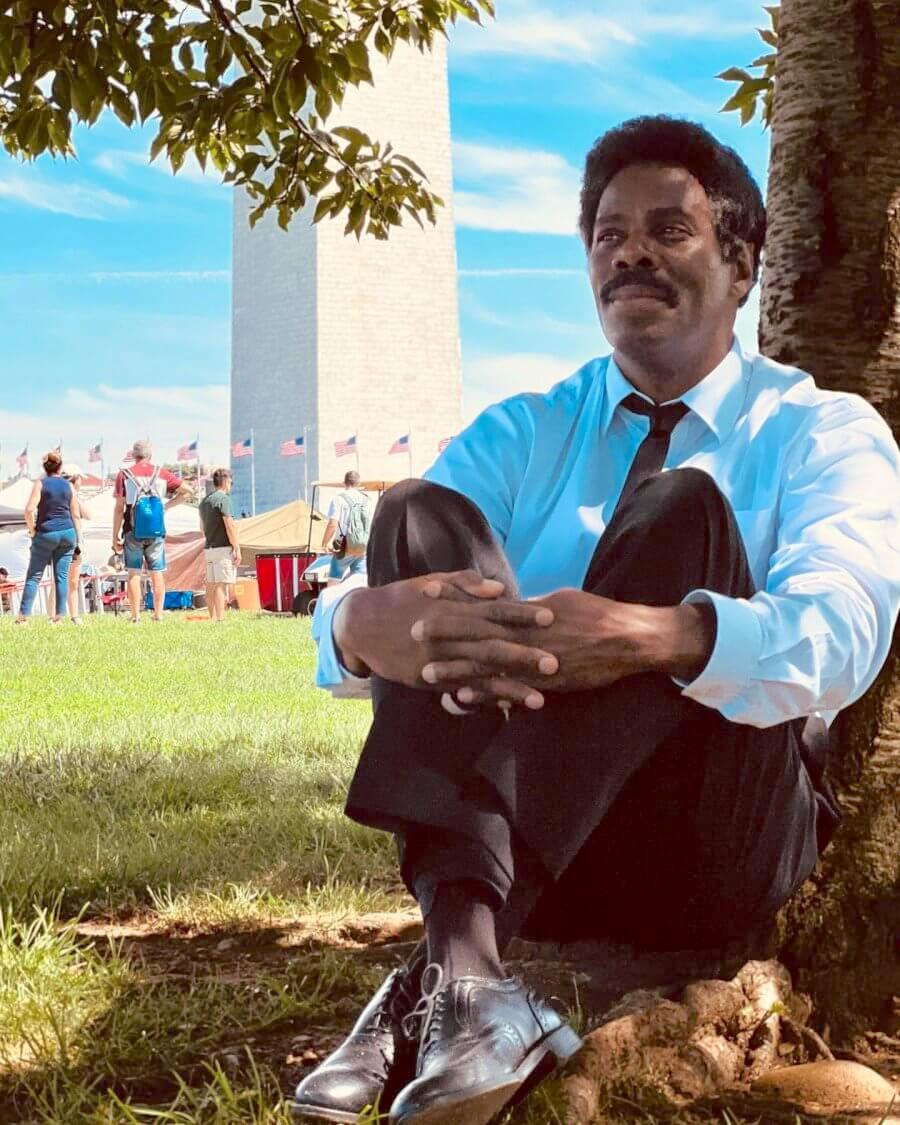
Colman Domingo
“RUSTIN” My rating: B (Netflix)
106 minutes | MPAA rating: PG-13
Martin Luther King Jr.’s “I Have a Dream” speech at the 1963 March on Washington may have been the single most memorable moment of the Civil Rights era.
It wouldn’t have happened without Bayard Rustin, a gay black man of outstanding intellectual power and organizational ability.
The march was largely Rustin’s idea, and he certainly was its greatest facilitator, overcoming obstacles thrown up not only by the white establishment but by his fellow African American leaders.
Here Rustin is portrayed by Colman Domingo as an aggressive (and often aggressively off-putting) visionary whose dreams are forever being threatened by his gayness, a chink in his otherwise impressive social armor that his enemies found all too easy to exploit.
“Rustin” is an impressive recreation of a specific time and place. The script is by Julian Breece (TV’s “First Wives Club”) and Dustin Lance Black (“Milk”), while the insightful but unobtrusive direction is by George C. Wolfe (“Ma Rainey’s Black Bottom”).
And talk about a supporting cast!!! Chris Rock as a doubtful Roy Wilkins, Jeffrey Wright as a sneaky Rep. Adam Clayton Powell, Glynn Turman as A. Philip Randolph, and Ami Ameen as Martin Luther King, Jr. Toss in Audra McDonald and CCH Pounder and you’ve got carefully applied star power almost everywhere you look…yet all provide just the right support for Domingo’s soul-stirring performance.
When it’s over you’ll be convinced that Bayard Rustin should be a household name.

Tommy Lee Jones, Jamie Foxx
“THE BURIAL” My rating: B (Prime)
136 minutes | MPAA rating: R
Based on a real court case, “The Burial” is a David-vs-Goliath legal drama that offers juicy roles for Tommy Lee Jones and Jamie Foxx while dabbling in racial issues.
Jones’ Jeremiah O’Keefe is the operator of a regional chain of mortuaries. But debt has forced him into bed with a gigantic funeral home conglomerate that has been gobbling up little mom-and-pop operations. Now O’Keefe is looking for a legal cavalier willing to take on the big boys (the heavy here is a ruthless corporate raider played by the ever excellent Bill Camp).
O’Keefe’s search leads him to Willie Gary (Foxx), a cocky and flamboyant lawyer who fancies himself the incarnation of Johnny Cochran. Initially Gay isn’t interested in the funeral home case. He specializes in personal injury; moreover, he proudly views himself as an African American lawyer going to bat almost exclusively for African American clients.
But despite the cultural divide separating them, Gary and O’Keefe click on a personal basis. So much so that when Gary’s black associates bail on the case, he continues to work it virtually as a one-man show.
As effective as it is as a courtroom drama (Jurnee Smollett is very fine as Gary’s opposing counsel), “The Burial” is most satisfying as an examination of two men with vastly different life experiences who evolve into something more like a friends than legal allies.
Jones has so often played the grumpy hard ass that it comes as a revelation that he here is so vulnerable and, well, decent. Similarly, Foxx is terrific at revealing the individual behind the TV-ad bravado.
| Robert W. Butler
 “DJANGO UNCHAINED” My rating: C (Opens wide on Christmas Day)
 Butler's Cinema Scene