
Tomasin McKenzie
“LIFE AFTER LIFE”’ (Amazon Prime)
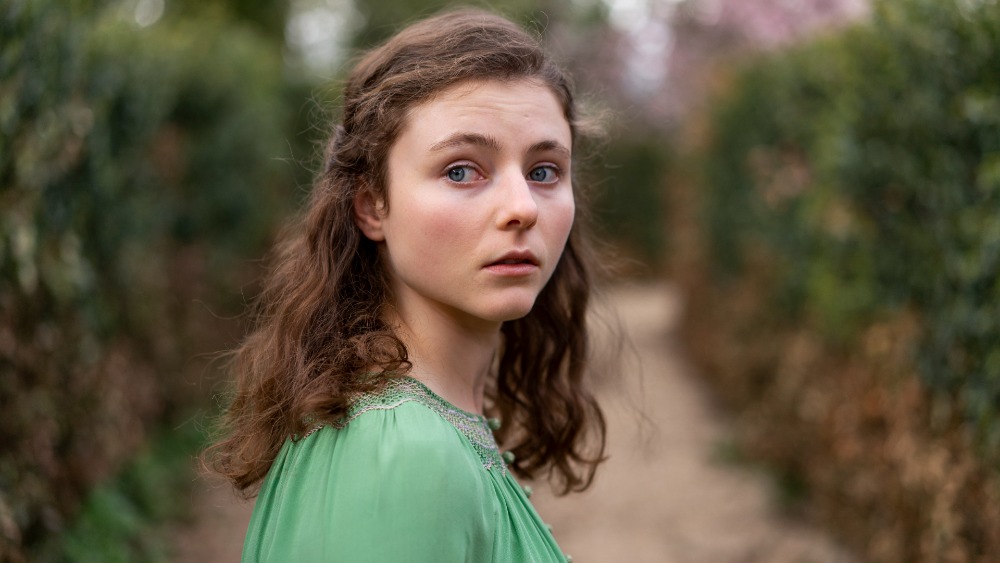
Tomasin McKenzie has been on the verge of first-class stardom for several years now. “Life After Life” should cement her reputation.
Now 24, this descendent of Down Under theatrical royalty has exhibited wisdom beyond her years in her choice of projects.
Titles like “Leave No Trace,” “Jojo Rabbit,” “Lost Girls,” “The Power of the Dog,” “Last Night in Soho” and “Joy” are not only good movies, they have allowed McKenzie to display gob-smacking range.
She can play anything from childish innocence to middle-aged maturity. “Life after Life” allows her to do it all in one four-hour miniseries. She’s unforgettable.
The thumbnail description of “Life…” (based on Kate Atkinson’s best-selling novel) is that it’s sort of a non-comedic “Groundhog Day” with a protagonist who dies dozens of times only to be reborn back in 1910 to start the process all over again.
Our lead character, Ursula (played as a teen and adult by McKenzie), has vague deja vu-ish memories of her previous incarnations…just enough to avoid situations that in the past led to her demise. Like Bill Murray’s weather man, she learns from her failures.
Problem is, fate always catches up with her, throwing new dangers in her path.
She dies. She is reborn. She dies. Reborn. Dies. Reborn.
Will she ever get off this karmic Ferris Wheel?
Created and scripted by Bathsheba Doran and directed by John Crowley (who has a way with young actresses…witness the perf he got from Saoirse Ronan in “Brooklyn”), “Life After Life” is crammed with fantasy elements.
Yet you can’t call it an escapist experience. Life is cruel and though she finds moments of love, Ursula’s lives more closely resemble the trials of Job than a hopeful march toward Nirvana.
Born in 1910 to a well-off and loving Brit gentleman (James McArdle) and his brittle wife (Sian Clifford), little Ursula dies shortly after birth, strangled by her own umbilical cord.
Not to worry. She’s soon reborn; this time the country doctor overseeing the delivery acts decisively to save the baby.

Childhood in her parents’ green estate should be idyllic. But Ursula (played as a child and early adolescent by Eliza Riley and Isla Johnson) lives under a cloud of gloom. Even as a youngster she sense that nothing is permanent.
Indeed, in less talented hands Ursula’s revolving door of disasters might seem ludicrous.
Death by drowning. A fall from an upstairs window. Fatal auto accident. Rape. Abortion.
Small wonder that adolescent Ursula is bitter, grouchy and even borderline homicidal.
And that’s just the personal crises. In the background we endure two world wars. In one of her lifetimes Ursula marries a German and moves with her husband to the Third Reich, just in time to endure starvation with her three-year-old daughter. In another she and a lover are blown to smithereens during the London Blitz.
You cannot outrun fate.
The pitfalls inherent in this project were considerable. It’s like playing a board game where you’re repeatedly sent back to the go position. Atkinson’s script and the editing (by Nick Emerson) deftly lay out just where we are in Ursula’s spiritual journey, with each succeeding life zipping through the scenes we’ve already witnessed to get on with her latest travails.
(For those of us who still don’t glom onto the film’s methodology, a voiceover narration by Leslie Manville pops up now and then to offer guidance.)
The performances of the huge cast are quietly spectacular. There are so many catch-in-the-throat moments here that the four episodes become an acting marathon.
Holding it all together is McKenzie, whose ability to convincingly transform from freckled youngster to embattled adult and back again is positively superhuman.
For all its grim elements, “Life After Life” is weirdly poetic. Each time Ursula dies she finds herself surrounded by gently dancing snowflakes, a recurring visual that suggests a kindness in death that is missing from our heroine’s lives.
Prepare to be haunted.
| Robert W. Butler
 Butler's Cinema Scene