Feeds:
Posts
Comments

Posts Tagged ‘Nicolas Cage’

Nicolas Cage as Red in “Mandy”

“MANDY” My rating: A- (Hulu) 

121 minutes | No MPAA rating

“SYMPATHY FOR THE DEVIL”My rating: B- (Hulu)  

90 minutes | No MPAA rating

The prevailing wisdom is that Nicolas Cage will make any movie if the price is right, that you needn’t send him the script until the check has cleared.

And looking at his output over the last decade, that summation seems fairly accurate.  

For every noteworthy title on his resume (“Pig,” “Dream Scenario,” “The Unbearable Weight of Massive Talent”) there are a half dozen half-baked and utterly forgettable genre flicks (mostly revenge melodramas) that in a previous era would have gone straight to video.

Today, of course, they go straight to streaming.  

If the quality of Cage’s output is questionable, the quantity is staggering.  Since 2015 he has racked up more than 40 film credits, usually as the lead actor.  This would be regarded as Herculean for any performer, but Cage’s batting average is further enhanced by the fact that for nearly three of those years Hollywood was in a covid shutdown. 

Now I cannot claim to have seen all of Cage’s recent work (life’s too short, you know?) but I’ve been doing some surfing around the streaming services and have stumbled across a couple of titles that previously eluded me.

First off, from 2018, is “Mandy,” a revenge melodrama (check) that practically pulsates with human agony (thanks to Cage’s performance) while radiating a psychological/surreal intensity that is simultaneously seductive and repellant. 

This might be great filmmaking.  It might be trash. I could make a case for either.

The real star here is writer/director Panos Cosmatos, who creates a nightmare world rooted in the eccentric weirdness of Nicolas Winding Refn and accented with the surreal beauty of Lars Van Trier’s “Melancholia.” There’s even a nod here to Bergman’s “Persona.”

“Mandy” is crammed with laughable pulp fiction tropes, but even when it tosses in the odd playful  moment you’ll find yourself a prisoner of its somber intensity.

The setup:  Lumberjack Red (Nicolas Cage) lives in a comfy cabin in the north woods with his squeeze Mandy (Andrea Riseborough),

Linus Roache is Jeremiah, the bonkers head of a religious cult (he’s positively Koresh-ian) whose followers think only of satisfying his psychological and sexual needs.

Jeremiah spots Mandy on one of his drives and orders his minions to kidnap her. This they do, but not before torturing Red, whom they leave for dead.

They should have made sure.

There’s stuff going on here that just shouldn’t work…like a gang of bikers (are they human or demons?) whose costuming makes them look like the love children of “Hellraiser’s” Pinhead and “Pulp Fiction’s” Geek.

As the batshit crazy Jeremiah, Roache (who spent several seasons as a prosecutor on “Law & Order”) gets to dig into some mind-blowing bloviatory dialogue.  There’s a touch of Robert Mitchum’s killer preacher from “Night of the Hunter.” It’s totally unlike anything he’s ever done.

And that’s another unexpected thing. On top of its visual/aural splendors, “Mandy” has been fabulously well acted.  

The great Bill Duke makes a rare on-screen appearance as Red’s buddy, who keeps an impressive cache of weaponry in his mobile home. And as cult members the veteran actors Olwen Fouere, Richard Brake, Line Pallet and Ned Dennehy (you may not know the names but you’ll recognize the faces) give remarkably nuanced and unnerving performances.

But holding it all together is Cage.  It’s a pitiless performance…in one harrowing segment the camera zooms in on Red’s bloodied features and stays there for what seems like minutes as he screams in emotional (the love of his life has been taken) and physical pain (he awakens to find he’s been bundled in barbed wire and one hand has been nailed to the floor).

“Mandy” is exhausting and draining, but I’d happily watch it again.  

Nicolas Cage as The Passenger in “Sympathy for the Devil”

Then there’s “Sympathy for the Devil,” a 2023 drama in which Cage appears as a gun-toting killer who carjacks a suburban dad and forces him to cruise around nighttime Las Vegas.

When we first see Cage’s character (identified in the credits as The Passenger) he’s like the cartoon embodiment of Sin City’s underbelly.  With hair dyed to match the day-glo maroon of his tuxedo jacket and a Mephistophelean goatee, the guy comes off  like a cheesy stage magician who might keep a dead hooker in his car trunk. (He even forces his victim to participate in a card trick.)

The Driver (Joel Kinnaman) has just pulled into a hospital parking garage. His wife is upstairs giving birth to their second child — all he wants is to be at her side.

But, no, he’s forced at gunpoint to drive his captor out of town for…well, let’s not ruin anything.

Yuval Adler’s film is basically a claustrophobic two-hander.  There are encounters with other citizens — an unfortunate cop, the terrified travelers at an all-night highway diner — must mostly it’s just these two guys in a car surrounded by  the desert night.

Was the kidnapping arbitrary? A wrong place, wrong time thing? The Passenger is a smirking, taunting presence. The Driver claims there’s been a mistake, that he’s just a working jerk. 

But maybe there’s something in the pasts of these two that made this  evening inevitable?

Luke Paradise’s screenplay manages a magic trick of its own, turning the Passenger over time from a holy terror to a man with a painful past…which is how we end up sympathizing with this particular devil. (Viewers familiar with Cronenberg’s “A History of Violence” may guess where this is all going.)

Thanks to Cage it almost works.  The Passenger is a preposterous character who really doesn’t wash, psychologically speaking.  But watching Cage tear into this material it almost doesn’t matter.  The guy is out there sweating to turn straw into gold. In the end he turns that straw into brass, but it’s still a wonder to behold.

| Robert W. Butler
Read Full Post »

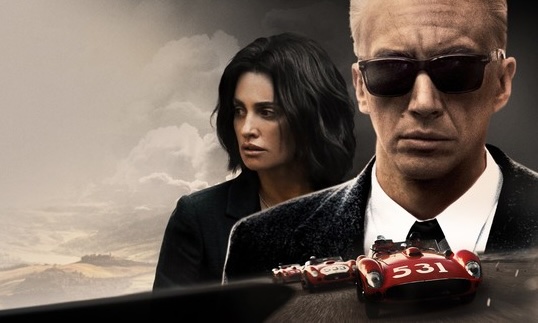
Penelope Cruz, Adam Driver

“FERRARI’ My rating: B- (Hulu)

130 minutes | MPAA rating: R

Great performances from Adam Driver and Penelope Cruz notwithstanding, “Ferrari” is a hard movie to warm up to…because its subject is a hard man to like.

Director Michael Mann’s latest is a character study of sorts, centering on a giant of industry at a pivotal moment in his career.  That the career in question is auto racing makes for built-in drama.

In 1957 Enzo Ferrari (Driver) is both at the peak of his powers as a maker of racing cars and on a financial precipice.  His obsession with fielding the world’s best race team has left him nearly insolvent and facing the glum prospect of forging a partnership with big money interests who will want a say in running the show.

His domestic life is no less precipitous.  Ferrari and his all-but estranged wife Laura (Cruz) are still mourning the death a year before of their only child; Ferrari’s history of infidelity isn’t helping.

In fact, for more than a decade he has kept a former assembly line employee, Lina (Sharlene Woodley, whom I never for a minute bought as Italian), as his mistress.  They even have a 10-year-old son, a humiliation Ferrari has managed to keep a secret from Laura, although everybody else seems to know about it.

And now Laura holds the fate of the company…she owns half the stock and her cheating hubby can do nothing without her approval.

meanwhile Ferrari is putting all his chips in on winning the Mila Miglia, a 1000-mile race on public roads so dangerous that drivers joke about dying at the hands of dogs and children.  Ironically it will be the last Mila Miglia ever, with a death toll so off the charts the entire event would be permanently cancelled.

Driver’s Ferrari is self-absorbed and always a few chess moves ahead of everybody else.  He offers a gentlemanly facade but is ruthless in achieving his goals.  He can also be amusingly crotchety. 

In one memorable scene he reams a pack of racing journalists: “When we win I can’t see my cars for the shots of starlet’s asses.  When we lose you’re a lynch mob. It’s enough to make the Pope weep.”

The real star of the show though, is Cruz. Sans makeup and carrying her load of grief like a manhole cover, she is a modern-day Medea torn between revenge and the need to see the family business succeed. It’s a wow-quality performance.

Pedro Pascal, Nicolas Cage

“THE UNBEARABLE WEIGHT OF MASSIVE TALENT” My rating: B (Roku)

107 minutes | MPAA rating: R

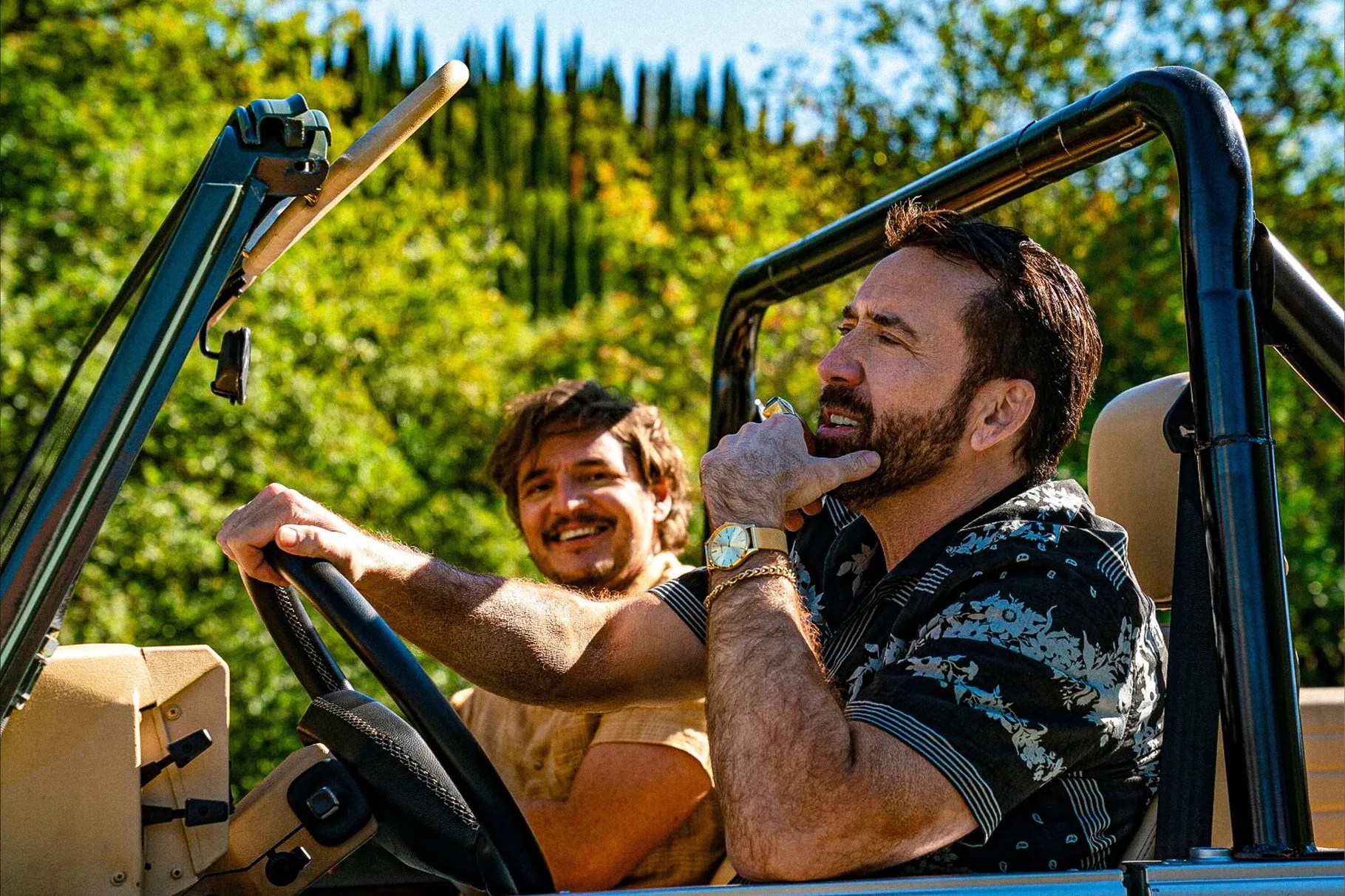
Movies don’t get much more meta than “The Unbearable Weight of Massive Talent” in which Nicolas Cage — a sometimes great actor who often seems more interested in the paycheck than the screenplay — plays Nicolas Cage, a sometimes great actor who often seems more interested in the paycheck than the screenplay.

Co-written and directed by Tom Gormican, “Unbearable Weight…” offers self-parody on steroids. Apparently Nicolas Cage is aware of all the weird things people say about him and is more than happy to exploit them. 

The premise finds Cage (who often imagines conversations with his younger, more successful self) so desperate for work that he agrees to fly to Spain to be the entertainment at the birthday party of billionaire named Javi Gutierrez (Pedro Pascal).  Surprisingly, Javi and Nick hit it off…they appreciate the same old movies and Javi has even written a screenplay he’d love for his guest to consider.

Enter two dodgy CIA types (Tiffany Haddish, Ike Barinholtz) who inform Nicolas that his host is actually an international arms dealer…and convince him to become a spy inside Javi’s sprawling seaside estate.

Part buddy movie, part spy spoof (Nick and Javi end up searching for a politician’s kidnapped daughter), part sendup of Hollywood excess, “The Unbearable Weight of Massive Talent” roars along  thanks to Cage’s willingness to send up his own oft-overcooked acting style.

 One can only imagine that for this actor it offered a decade’s worth of therapy in just one gig.

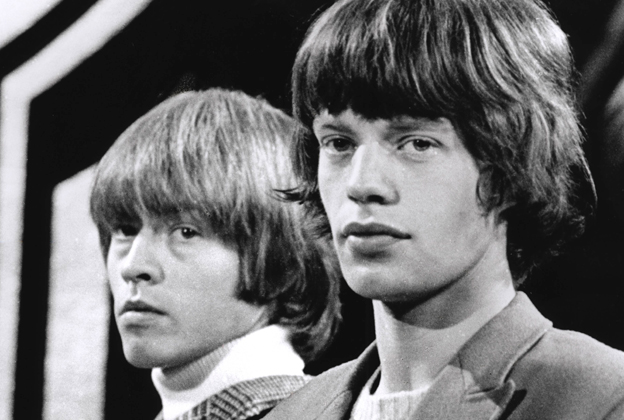
Brian Jones, Mick Jagger

“THE STONES AND BRIAN JONES *My rating: B (Hulu)

93 minutes | No MPAA rating

Documentarian Nick Broomfield has always had a thing for music subjects — Suge Knight and the murders of Biggie & Tupac, Leonard Cohen, Whitney Houston, Kurt Cobain and Courtney Love.

Here he tunes up the way-back machine to explore the life and legacy of the forgotten Rolling Stone, Brian Jones.

It’s a sad tale.  Jones was the founder of the Stones, envisioning it as a blues band. He was charismatic and well spoken,  and wildly musical (he introduced the sitar to the Stones and played the flute solo on “Ruby Tuesday”).

But he was eclipsed by the songwriting talents of Mick Jagger and Keith Richards. At the same time Jones’ emotional/mental issues and substance abuse derailed his career; he became so unreliable that Jagger and Richards fired him.  After that it was a quick trip to the boneyard.

For boomers “The Stones and Brian Jones” is a heady trip down Memory Lane. Broomfield has assembled a treasure trove of vintage footage of the Stones. 

It’s a tale populated  not only by the Stones themselves (bassist Bill Wyman is a valuable talking head here), but by the likes of Eric Burden (of The Animals), Marianne Faithful (the pop songstress who had affairs with three of the band’s members), Jones’ various girlfriends (he left behind a small army of illegitimate children) and Paul McCarthy.

Undergoing particular scrutiny is the late Anita Pallenberg, glamorous girlfriend to the band who comes off as a self-serving succubus.

 Curiously, Broomfield has chosen not to say much of anything about Jones 1969 drowning death.  Over the years there has been a growing body of evidence to suggest Jones was murdered, probably by a worker with whom he had a pay dispute. But no mention of that here.

| Robert W. Butler

Read Full Post »

Nicolas Cage

“BUTCHER’S CROSSING” My rating: B (Hulu)

105 minutes | MPAA rating: R

An unintended consequence of the rise of streaming services is that the once-ubiquitous Western has been pulled back from the brink of extinction.

The oater is, if no longer the box office giant of old, at least widely available over the Net. What’s more, filmmakers are  making new Westerns.

Granted, most of them are cheap, indifferently acted and recycle  the same old revenge plot…which makes an aberration like “Butcher’s Crossing” that much more remarkable.

Directed and co-written by Gabe Polsky, “Butcher’s Crossing” is nothing less than a landlocked Moby Dick, a tale of obsession and madness on a sea of grass.

Our Ishmael is young Will Andrews (Fred Hechinger), an Easterner who has dropped out of college to pursue his dreams of adventure in the Wild West.

Now, a decade after the end of the Civil War, Will has arrived in the ramshackle Kansas burg of Butcher’s Crossing determined to hook up with a party of buffalo hunters so he can experience the wonders of this new world first hand.

Will finds himself financing a hunting expedition under the leadership of Miller (Nicholas Cage, with shaved head and untamed beard).  

A veteran buffalo hunter, Miller claims to have years ago discovered an isolated valley in the Rockies absolutely jammed with bison.  And not the raggedy leftovers being brought in by other hunters; these are prime animals, Miller claims. Their skins will bring top dollar.

There are two other members of the party. The one-handed cook Charlie (Xander Berkeley, unrecognizable) is an old coot whose religious mania may be an indicator of more serious psychological problems.

And then there’s Fred (Jeremy Bobb), a surly skinner who prepares the hides to be hauled back to what passes for civilization.

For all his outward show of competence, Miller is an unsettling risk taker, leading his party into the heart of Indian country (they don’t encounter any natives but come across the gruesome remains of a fellow who did) and choosing a route which has them running dangerously low on water.

Eventually they reach the hidden valley in the mountains. And it’s exactly what Miller promised.

He starts shooting…and won’t stop. Not when they have harvested three times as many skins as they can haul out. Miller appears to be on a quest to kill every last buffalo.

Which is bad enough from an ecological standpoint, but it also delays the group’s return to Kansas.  Trapped by an early snowstorm, they’re stranded until spring, short on provisions and with inadequate shelter.

Under these circumstances the worst in men comes out.

The screenplay by Polsky, Liam Satre-Meloy and John Williams is spare and economical. And while the film cannot overcome a meandering last act that left me wanting more, the journey to get there is gripping and harrowing.

The acting is solid without making a big deal of things.  One half expects Cage to slip into full eye-rolling mode to depict the madness of this prairie Ahab, but he never overplays his hand.  In fact, his quiet menace is far more intimidating than angry histrionics.  

As our young hero, Hechinger is mostly placed in the position of observer.  Yet I was particularly impressed by the way this kid is drained by months of fear and deprivation.  He starts out frat boy and ends up practically an old feller.

Special kudos to cinematographer David Gallego, whose images of a largely uninhabited landscape are mesmerizing (the film was short largely on the Blackfeet Reservation in Montana), and to editor  Nick Pezzillo, who creates some hallucinogenic montages reflecting the characters’ mental and emotional deterioration.

The production values are solid, from the equipment carried by the party to the wrangling of the bufalo…if I didn’t know better I’d say some of these big shaggies can actually act.

(One small complaint…when will Hollywood realize that there exists in Kansas no town from which you can view a mountain? Just sayin’.)

Finally, the film doesn’t address the near-extermination of the American bison directly…although the opening and closing credits do feature old photos of piles of buffalo bones and bales of skins. The filmmakers have enough faith in their audience that they saw no need to preach — and it pays off.

| Robert W. Butler

Read Full Post »

Nicolas Cage

“DREAM SCENARIO” My rating: B (HBO Max)

102 minutes | MPAA rating: R

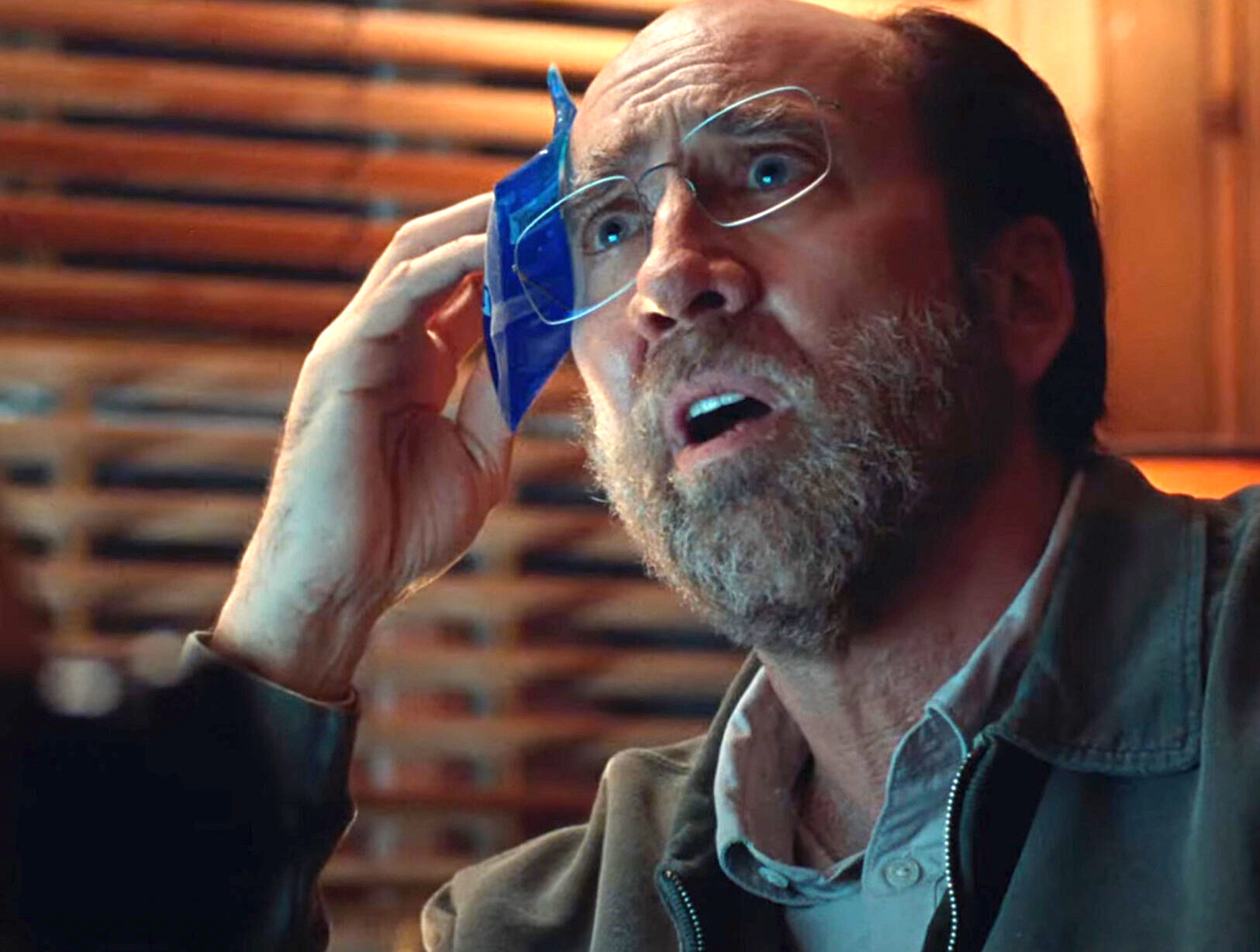
“See you in my dreams” takes on comedic/sinister possibilities in Kristoffer Borgli’s “Dream Scenario,” featuring Nicolas Cage at his most bleakly amusing.

Cage’s Paul Matthews is a bearded, balding, bespectacled professor of evolutionary biology at a small college.  He’s bland and boring (it’s all the kids can do to stay awake in class); at home he is just tolerated by his marriage-weary wife (Jiulianne Nicholson) and their two teen daughters.

In other words, Paul’s a nobody.

Until, that is, total strangers report seeing him in their dreams.  Initially this phantom Paul simply walks through or observes what’s happening to the slumbering citizens. Even in dangerous situations he doesn’t react…he’s as ineffectual in dreamland as he is in real life.

But as the phenomenon grows, Paul becomes famous.  Thousands, nay, millions of people around the globe are encountering him while they snooze.

Paul tries to parlay his notoriety into a book deal (one advertising whiz kid wants him to somehow endorse a soft drink during his somnambulant visitations). But as time goes by there are disturbing developments.  Dreamers report that Dream Paul has violently attacked them. Sexually assaulted them, even.

And suddenly, through no fault of his own, the dull professor is an object of hatred and disgust.

“Dream Scenario” frequently shifts from the “real” world to depictions of the characters’ dreams; by the time it’s over you may be guessing which is which.

This is only writer/director Borgli’s second feature after numerous shorts; he’s clearly a talent to watch for.

Julia Louis-Dreyfus, Tobias Menzies

“YOU HURT MY FEELINGS” My rating: B  (For rent on various streaming services)

93 minutes } MPAA rating: R

Nicole Holofcener, our foremost chronicler of contemporary angst, scores again with “You Hurt My Feelings.”

It’s a comedy about how people lie so as not to hurt each other’s feelings. And perhaps end up doing even more damage.

Our main characters are Beth and Don (Julia Louis-Dreyfus, Tobia Menzies), New Yorkers with what appears to be an ideal marriage.  She’s a writer seeking a publisher for her second book.  He’s a clinical psychologist.

A big part of their marriage is offering mutual encouragement. Which also means never doing or saying anything discouraging…even if you have to fib about it.

So when Beth asks Don to read her new book, he’s full of praise.  Phony praise, as it turns out.  He just wants to be supportive.

Holofcener  gives us a smorgasbord of characters —the couple’s twenty something son (Owen Teague), Beth’s sister and neurotic actor brother-in-law (Micheala Watkins, Trey Santiago-Hudson),  her kvetching mother (Jeannie Berlin) and various of Don’s patients (David Cross, Amber Tamblyn, Zach Cherry) — most of whom muddle through by saying not what they think but what they think  other people want to hear.

“You Hurt…” is often laugh-out-loud funny (nobody surpasses Louis-Dreyfus in the sarcastic putdown department) but ultimately makes a telling point: it’s virtually impossible to survive in this modern world without lying.

“ALBERT BROOKS: DEFENDING MY LIFE” My rating: B+ (HBO MAX)

88 minutes | No MPAA rating

If you don’t already consider Albert Brooks (born Albert Einstein) a comedy genius, this documentary from Rob Reiner makes the point repeatedly.

Turns out that Reiner and Brooks were school pals and have been buds ever since; “…Defending My Life” is something of a valentine to Brooks’ eccentric and eclectic talents.

There are priceless clips of his early conceptual comedy (he was Andy Kaufman before there was an Andy Kaufman), scenes from the many movie’s he’s directed (“Modern Romance,” “Lost in America,” “Defending Your Life”) and of the acting he’s done for others (“Drive,” “Finding Nemo,” “Taxi Deriver,” “Broadcast News”).

A big chunk of the film is devoted to a conversation between Reiner and his subject…it’s like hanging out with a couple of good friends.

And there’s a small army of Brooks-loving celebs (James L. Brooks, Larry David, Judd Apatow, Tiffany Haddish, Jonah Hill, Conan O’Brien, Chris Rock, Sarah Silverman, Steven Spielberg) to give testimonials.  Nobody seems to be kissing ass here…their sincere admiration is so genuine you could use it as a heating pad.

 | Robert W. Butler

Read Full Post »

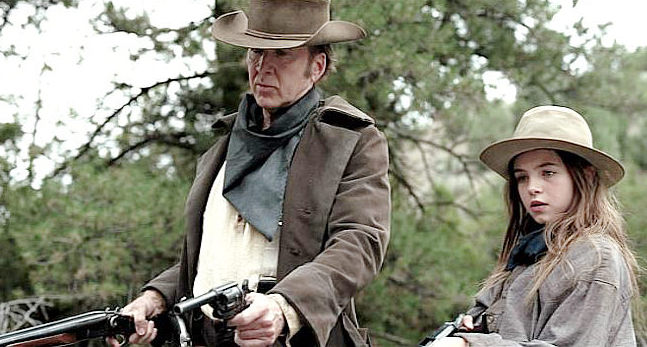
Nicolas Cage, Ryan Keira Armstrong

“THE OLD WAY” My rating: B- (Hulu)

95 minutes | MPAA rating: R

It’s gotten so that every Nicolas Cage movie is met with equal parts hope and dread.

Will Cage deliver a one-of-a-kind, borderline brilliant performance along the line of 2021’s “Pig”? Or will it be yet another weary entry in his “don’t-send-the-script-send-the-paycheck” marathon?

Director Brett Donowho’s good-looking oater “The Old Way” is a bit of both.

Lord knows it doesn’t start with a whole lot of promise.  In a prequel we meet gunfighter Colton Briggs (Cage), who has an Eastwood squint and a ridiculous ‘stache apparently harvested from the late Wilford Brimley’s upper lip.

Briggs is a hired gun in a range war involving a cattle baron with a penchant for flowery speechifying (Carl W. Lucas’ screenplay periodically slows for displays of frontier loquaciousness) and a bunch of struggling settlers.  The upshot:  Just about everybody but Briggs and a newly orphaned boy lie dead. Time to move on.

Twenty years later Briggs is running a general store in a tiny burg.  He’s traded in his guns and facial hair for a civilians’ suit and derby hat; just outside town he has a modest ranch where he lives with his wife (Kerry Knuppe) and 12-year-old daughter Brooke (Ryan Kiera Armstrong).

Initially it appears that Cage is in his take-the-money-and-run mode…his features are sullenly passive (at best he looks like he’s fighting a constant migraine) and Briggs’ interactions with his daughter perfunctory at best.  No warmth wasted. In short, the one-time gunfighter now appears to be a terribly boring bean counter. (This non-performance is deliberate, as we shall see.)

One evening father and daughter return home to find their  wife/mother  murdered and the place occupied by a weary U.S. marshal (Nick Searcy at his folksy best) and his posse.  The lawmen have been chasing outlaw James McCallister (Noah Le Gros), who with a trio of bad actors has broken out of prison. 

The old marshal wants to take down the McCallister gang — but by the book.  A wrathful Briggs has other ideas.

In one blood-curdling scene Briggs points a pistol at his sleeping child; if she’s dead, he will have one less thing to worry about on his quest for revenge.  Instead he decides to bring her along.

Noah Le Gros, Ryan Keira Armstrong

“The Old Way” almost makes a fetish of recycling ideas from other films.  The killer-turned-domestic notion has been pulled directly from Clint Eastwood’s “Unforgiven.” Revenge yarns are a staple of the Western genre. And stories in which an adult killer is teamed with an innocent child are legion (for starters there’s “The Professional” with Jean Reno and then-tweener Natalie Portman; also, Eastwood’s “A Perfect World” in which escapee Kevin Costner leads a little boy on a Texas crime spree; not to mention the two versions of “True Grit”).

But then halfway through Lucas’ script suddenly shifts into focus.  Over a campfire Briggs admits to Brooke that for most of his life — his marriage being the sole exception — he has never felt emotion.  Not love, not fear.  Maybe hate. To survive he has learned to fake normal behavior.

And suddenly we’re watching “Dexter”-on-the-prairie.

Well, that explains Cage’s undemonstrative performance.

It gets better.  Briggs’ particular brand of psychopathology seems to have been inherited by Brooke. Maybe you noticed she didn’t shed a tear over her dead Mommy? And now she’s asking her old man for shooting lessons.

Needless to say, these father-and-daughter avengers will get the chance to settle scores.  And it turns out that the murder of Briggs’ wife wasn’t random…James McCallister is seeking his own revenge for a 20-year-old killing.

“The Old Way” (the title refers to McCallister’s desire to settle things in a classic gunfighter fashion, on the street at high noon) is a bumpy if fascinating ride. The screenplay is filled with seemingly unnecessary moments (in a long monologue a customer at Briggs’ store explains how his apple tree bears poisonous fruit due to its proximity to an outhouse) that are later revealed to have important relevance to the developing story. Sneaky.

Cage and young Miss Armstrong manage to make us care about a couple of individuals who are emotionally unapproachable, and the locations and production design feel real enough.

In the end “The Old Way” is minor Cage in a minor film, but lovers of Westerns and sleight-of-hand acting will find it a tolerable amusement.

| Robert W. Butler

Read Full Post »

Nicolas Cage

“PIG” My rating: C+ (VOD)

92 minutes | MPAA rating: R

If Keanu Reeve’s John Wick will kill 100 thugs to avenge his pet puppy, how far will Nicolas Cage’s truffle-hunting hermit go to retrieve his kidnapped porcine pet and coworker?

That’s the setup of writer/director Michael Sarnoski’s “Pig,” a good idea that takes itself way too seriously.

The opening moments establish the relationship of the uber-hairy Robin (Cage) and his pig colleague in a cabin in the forests of the great Pacific Northwest.

Robin — who survives without telephone, electricity, running water or even a functional vehicle — hunts truffles, the gourmet fungi that grow among the tree roots and can sell for big bucks.

He locates these delectables with the help of his swine buddy (who’s a whiz at sniffing out their prey); then sells them to Amir (Alex Wolff), who transports them in his ridiculous yellow sports car to Portland and resells the delicacies to the city’s finest restaurants.

We’ve barely able to absorb the details of Robin and Pig’s lives when tragedy strikes. One night the cabin is invaded by unseen baddies; the pig is kidnapped and Robin beaten bloody.

Refusing to even wash the gore off his face (by film’s end he resembles Jim Caviezel in the latter stages of “Passion of the Christ”), Robin takes off for the big city, first on foot and then commandeering Amir and his posh wheels.

Amir throws a blanket over the passenger seat in a probably futile effort to keep Robin’s body odor from impregnating the leather upholstery.

One of Robin’s first stops is at an underground fight club — yeah, just like the movie “Fight Club” — where our man allows himself to once more be beaten senseless in return for hints as to where his pig pal might be.

Eventually the trail leads to Amir’s estranged father (Adam Arkin), a sort of restaurant godfather who rules his culinary world through intimidation and, if necessary, violence.

Along the way we discover that Robin was once a legendary chef but dropped out 15 years earlier for unspecified reasons. Possibly it’s because he hated the direction the restaurant biz was heading ($50 for what appears to be a single berry frozen in a cloud of dry ice fumes). Even more likely it’s because Robin is seriously damaged goods.

“Pig” is Sarnoski’s feature debut; it’s a good-looking film if an emotionally and intellectually impenetrable one.

Aside from his determination to get his pig back (it’s his only friend), Robin is a glowering cipher.

That said, Cage has such a commanding screen presence that I kept watching just to see what he’d do next. This one-time Oscar winner may in recent years have descended into hackdom, but he’s a hack with astounding charisma.

As Amir, Wolff has the thankless task of playing a weak-willed poseur in constant fear of Daddy damnation.

Arkin fares somewhat better; though his character is simply preposterous, the actor finds a vulnerable center.

There are opportunities for humor here which Sarnoski studious ignores. Instead he leans heavily on the pretention button, giving the film chapter titles like “Rustic Mushroom Tort” and “Mom’s French Toast and Deconstructed Scallops.”

When it’s over you may crave a Big Mac.

| Robert W. Butler

Read Full Post »

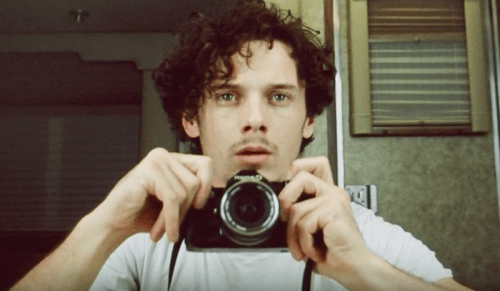
Anton Yeltsin

“LOVE, ANTOSHA” My rating: B+

93 minutes | No MPAA rating

I knew who Anton Yeltsin was, of course.  I’d seen the young actor as Chekhov in J.J. Abrams’ “Star Trek” reboots, and in a couple of other movies like Jodie Foster’s “The Beaver.”

And of course I knew he died in 2017 at age 27 in a freak accident, pinned against a metal gate by his rolling automobile.

None of which prepared me for the gut punch that is “Love, Antosha,” a love letter to the late actor signed by his parents, his boyhood friends, and his heavy-hitting acting colleagues.

It seems nobody who knew Yeltsin had anything but love for him. And that emotion comes roiling off the screen.

Garret Price’s documentary opens with home movies from Yeltsin’s childhood. What we see is an impossibly handsome kid with a big performer’s personality that fills the room.

We also get a bit of back story about his parents,  competitive Soviet ice dancers who emigrated to the U.S.A. to get away from growing anti-Semitism in the new Russian Republic.

Here’s something I did not know:  While a teen Anton was diagnosed with cystic fibrosis, the devastating lung condition (the average life expectancy of a sufferer is 37 years). He was so full of energy, so good at masking his symptoms and plowing ahead, that many of his show biz colleagues were unaware that he had gone through life essentially under a death sentence.

(more…)

Read Full Post »

Nicolas Cage

“211” My rating: C

86 minutes | MPAA rating: R

“211” is less interesting as a film than as a commentary on the failing fortunes of Nicolas Cage.

In the last five years the Oscar winner (for 1995’s “Leaving Las Vegas”) has starred in nearly 20 movies, only one of them (“Joe”) of more than passing interest. “211” is more of the same.

York Alec Shackleton’s action/crime drama is a mashup of “Die Hard” and “Dog Day Afternoon,” with Cage playing a beat cop (he’s about to turn in his retirement papers, of course) who finds himself in the middle of a bank robbery and hostage situation.

Curiously, Cage’s cop, Mike Chandler, is but one of a dozen characters of more or less equal importance.  Shackleton’s screenplay attempts to approach the situation from multiple perspectives.

Thus you’ve got Mike’s partner and son-in-law (Dwayne Cameron), as well as the black teen (Michael Rainey Jr.) who for disciplinary purposes has been required to do a police ride-along.  While pinned down the kid comes up with a MacGyver-ish way to communicate with the outside world.

Meanwhile his mother(Shari Watson),  the head of the hospital E.R., contends with a flood of casualties of the mayhem.

There’s also an Interpol cop (Sapir Azulay) who for months has been tracking the criminals, a band of former U.S. special forces soldiers turned murderously mercenary. These baddies are the least-developed of the characters, delivering curt orders in cliched militaryspeak.

“211” (police code for an armed robbery) has been competently made, with a couple of furious action sequences (and a disturbingly high civilian body count) but it really never adds up to much. Cage doesn’t embarrass himself here, but there’s only so much anyone could do with these cut-and-dried characters.

| Robert W. Butler

Read Full Post »

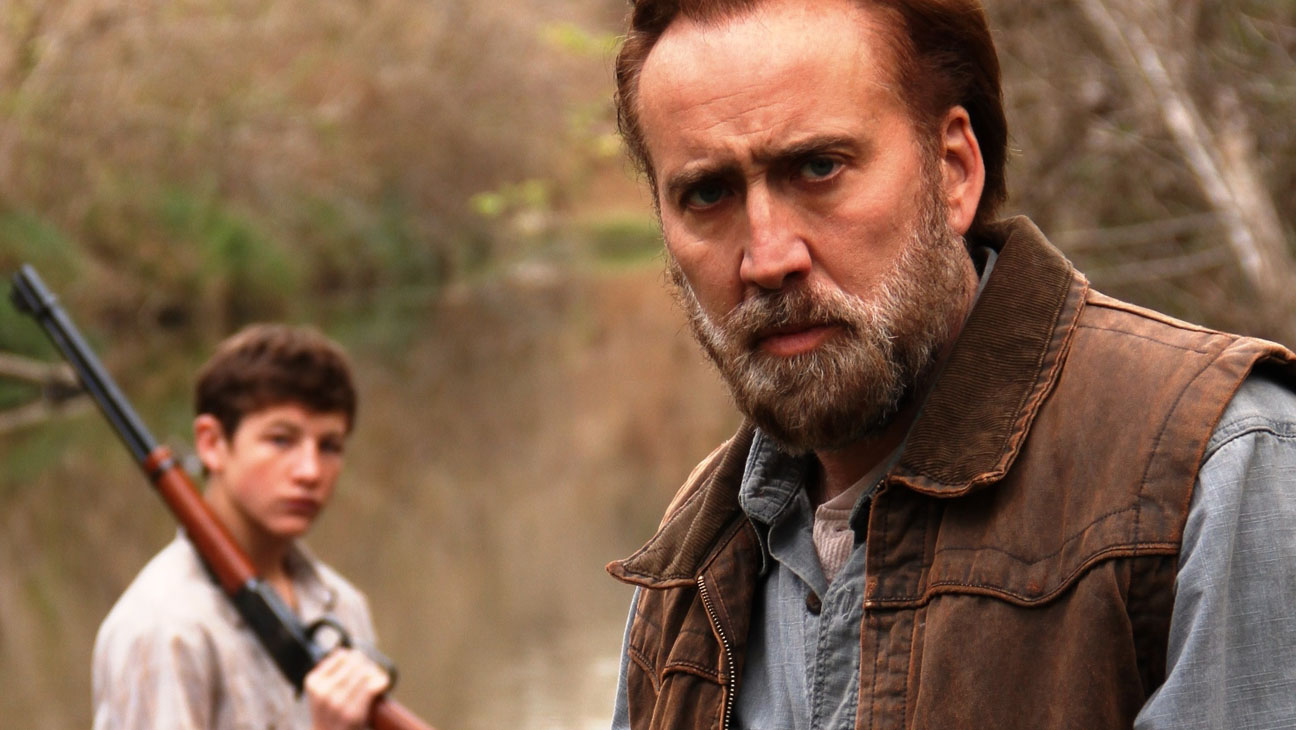
Tye Sullivan, Nicolas Cage in "Joe"

Tye Sullivan, Nicolas Cage in “Joe”

“JOE” My rating: B (Now showing at the Leawood)

118 minutes | MPAA rating: R

Nicolas Cage has for so long seemed a parody of himself that it’s a minor shock to realize that an Oscar-winning actor still lurks beneath the scenery chewing.

As the title character of the rural-Texas drama “Joe,” Cage shows he’s still got it, delivering an indelible portrait of a small-town ex-con trying to get through life without falling back into the violence that almost ruined his life.

The bearded, laconic Joe contracts with a big lumber concern to scour company forest land, poisoning trees that are of no commercial value to make way for new seedlings. He has a crew of workers – unsophisticated, rural black men, mostly – with whom he does a neat balancing act, being both the man who writes the paychecks and just one of the guys.

Gary Hawkins’ screenplay (adapting Larry Brown’s novel) isn’t densely plotted. It’s more of an extended character study.

Joe lives outside town in a nondescript farmhouse. A pit bull on a chain lives beneath the porch. He tends to drink alone at the local bar. He’s hasn’t got a regular girl – although halfway through he allows a local gal to stay with him until her trouble at home blows over. He’s known by his first name at the seedy whorehouse outside town.

At the same time, Joe appears always ready to do a good deed for someone even more hapless at negotiating life than he is. He’s no Chamber of Commerce poster boy, but he tries to keep his nose clean and do right by others.

(more…)

Read Full Post »