
Bette Davis, Brian Ahern
“Juarez” screens at 1:30 p.m. Saturday, May 24, 2014 in the Durwood Film Vault of the Kansas City Central Library, 14W. 10th St. Admission is free. It’s part of the year-long film series Hollywood’s Greatest Year, featuring movies released in 1939.
The makers of “Juarez” went out of their way to ensure the film would be as historically accurate as possible.
The Warner Bros. research department amassed a 300-volume library of volumes about Mexico in the mid-19th century. Two historians were hired to vet the script being written by Aeneas MacKenzie. When MacKenzie was finished he had a screenplay long enough for two films, so other writers (especially John Huston, who was yet to make his directing debut) were called in to trim it.
Paul Muni
Well, “Juarez” may be historically accurate. But this 1939 release is also an inflated bore, a history lesson in which the history smothers all the drama.
For starters the film has no center. It’s named after Benito Juarez, who served five terms as president of Mexico and who was the leader of the revolution that overthrew the French-imposed reign of Emperor Maximilian.
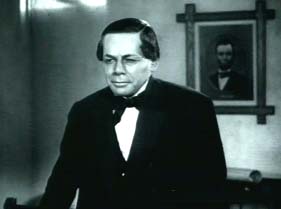
The studio brass thought they had a sure thing in Paul Muni, the Oscar-winning actor who was famous for disappearing into the roles of real-life figures like Louis Pasteur and Emile Zola.
But Muni’s Juarez is wooden and stiff, less a human being than a stuffed owl. You’ve got to admire the makeup job that transforms him into a Mexican Indian (it took two hours in the makeup chair every morning), but this performance is borderline robotic.
 Butler's Cinema Scene