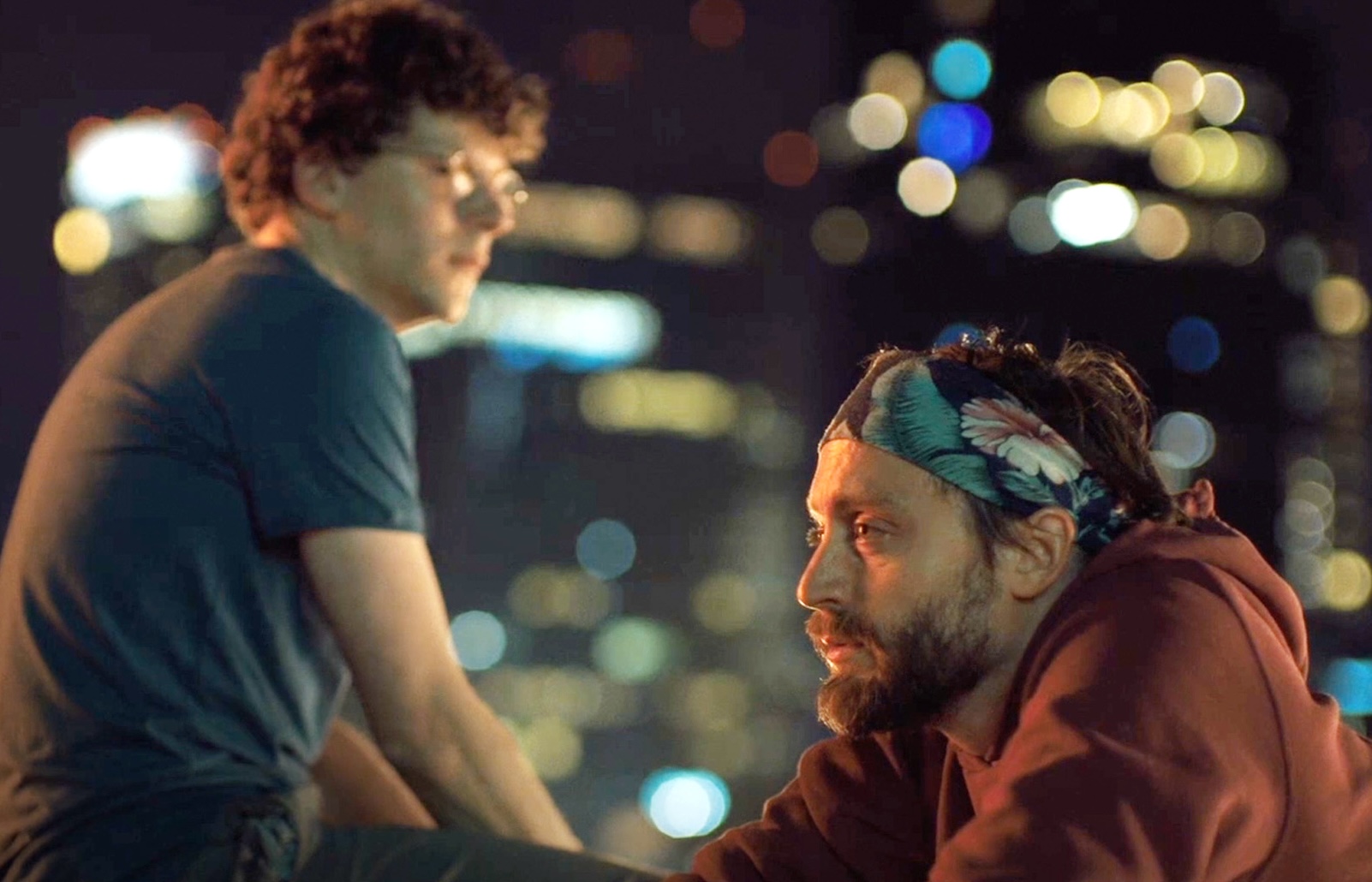
Jesse Eisenberg, Kieran Culkin
“A REAL PAIN” My rating: B (Available on demand)
90 minutes | MPAA rating: R
Family. Neuroses. The Holocaust.
When it comes to his second film as a writer/director Jesse Eisenberg doesn’t shy from the big issues.
What’s amazing about “A Real Pain” is the way he deftly balances the comedic and the dramatic (even the tragic). It’s a nifty trick that has eluded even veteran filmmakers.
Moreover, Eisenberg also stars in the film…though he’s magnanimous enough to give the really showy material to co-star Kieran Culkin.
David (Eisenberg) is a New Yorker with a wife and young son who has invited his black sheep cousin Benji (Culkin) on a guided tour of Poland, the birthplace of their dearly beloved and recently departed grandmother.
It’ll be a chance for the boyhood buds to reconnect, not only with each other but with their family history.
They’ve signed on for a Holocaust tour (their comrades on the journey will be American Jews); at some point David plans to leave the tour so he and Benji can visit the house in which their grandmother lived.
From their first meeting in an American airport it’s obvious that they’re oil and water.
David is uptight, OCD, emotionally muted. He has everything planned down to the minute.
Benji is an unkempt man child —garrulous, charming, spontaneous, He’s the sort of guy unafraid to ask intensely personal questions of strangers, to nudge you out of your comfort zone. He has prepared for the trip by mailing a parcel of marijuana to their Warsaw hotel.
Eisenberg’s script follows two tracks. First there’s the cousins’ experiences with the other members of the tour.
Jennifer Gray has a nice turn as a middle-aged divorcee from LA; Kurt Egylawan plays an African convert to Judaism. Will Sharpe has some good moments as the tour leader, whose running commentary of canned observations may be designed to mask the pain of regularly visiting sites where thousands of innocents were slaughtered.
Throughout, though, there’s a canny dissection of the young men’s relationship, the shared love often threatened by Benji’s barely-hidden manic depression. Still mourning his grandmother, Benji tries to mask his pain by playing a cocky hipster…but the facade is cracking.
I said Eisenberg gave the showy material to Culkin, and that’s true. But late in the proceedings David has a an absolutely wonderful monologue about family and responsibility that gives the film a transcendent moral core.
| Robert W. Butler

 Butler's Cinema Scene