Feeds:
Posts
Comments

Posts Tagged ‘ridley scott’

“GLADIATOR II” My rating: C+ (In theaters)

148 minutes | MPAA rating: R

“Gladiator II” is pretentious twaddle.

At least it’s brilliantly-produced twaddle.

Director Ridley Scott’s followup to his 2000 Oscar winner (what were they thinking?) is less a sequel than a loose remake.  It’s forever repeating beats from the original.

You see that right in the opening credits, which unfold over a montage of moments from the original “Gladiator,” albeit this time rendered in painterly animation.

Once again we get color-desaturated dream sequences and flashbacks.

Then there’s the plot, which begins with a massive battle, then becomes the story of an honest man reduced to slavery and a life of fighting in the arena. (Remember the gladiator owner played by Oliver Reed the first time around? This time those duties are fulfilled by Denzel Washington.)

The first film had a crazy emperor.  This one has two crazy emperors.

And again there’s an iffy subplot about Roman political machinations with lots of uplifting/dubious oratory espousing democratic ideals that sound more like Thomas Jefferson than Marcus Aurelius. (At one point we even get an “I am Spartacus” moment.)

But here’s the thing: “Gladiator II” is bigger, noisier, faster.  Special effects that looked phony in the original are now so sophisticated that one cannot tell a real rampaging rhino from a digitally created one. The city-scapes are awe-inspiring.

The whole thing pulses with visceral/sensory overload.

And it needs to, because dramatically “Glad II” feels like amateur hour. (The screenplay is by David Scarpa, Peter Craig and David Franzoni.)

Our hero (I never caught his name…I now see that this was deliberate) is played by Paul Mescal. I’ll call him Hero.

Paul Mescal

Hero comes to Rome in chains after a Roman fleet destroyed his city on the coast of North African. Having lost his home and his wife in the battle, Hero carries a chip on his shoulder.  All he wants before dying is revenge on the general who ruined his life.

That would be Marcus Acacius (Pedro Pascal), who is now married to the princess Lucilla (Connie Nielsen, reprising her role from the first film).  Together they are plotting to overthrow the sibling emperors Geta and Caracalla (Joseph Quinn, Fred Hchinger), a debauched pair of painted syphilitic psychos. 

Before it’s all over, Hero’s path will cross those of Marcus and Lucilla in an unexpected (and wildly unlikely) plot reveal. 

But then there’s the spectacle.  Scott and his production designers have outdone themselves in creating the Colosseum in beautiful downtown Rome. 

The first big brawl finds humans battling a troop of killer baboons.  Then we move on to that armored rhinoceros, which is about the size of a Sherman tank.  Most awe inspiring of all is a naval battle staged in the flooded arena. Those Romans thought of everything, including introducing  huge sharks which swim around the galleys to snatch anyone who falls overboard.

The acting?  It’s okay.  Just okay.

Which is disappointing because Mescal has in recent roles (“Aftersun,” “All of Us Strangers,” “Normal People”) displayed a subtly seductive approach.  He’s one of the few actors who can find interesting things to do with “nice” characters.

Ironic, then, that as our vengeful protagonist he’s kind of a one-note creation.  Barely suppressed rage gets tiresome after a while.

Washington has been getting some awards-season buildup for his work as the gladiator master and Machiavellian power broker  Macrinus. I don’t see it.  The character has a few moments of gloating triumph as he turns the tables on Rome’s blue-blooded politicians, but I yearned for Washington to exhibit some wickedly comic impulses. Nope.
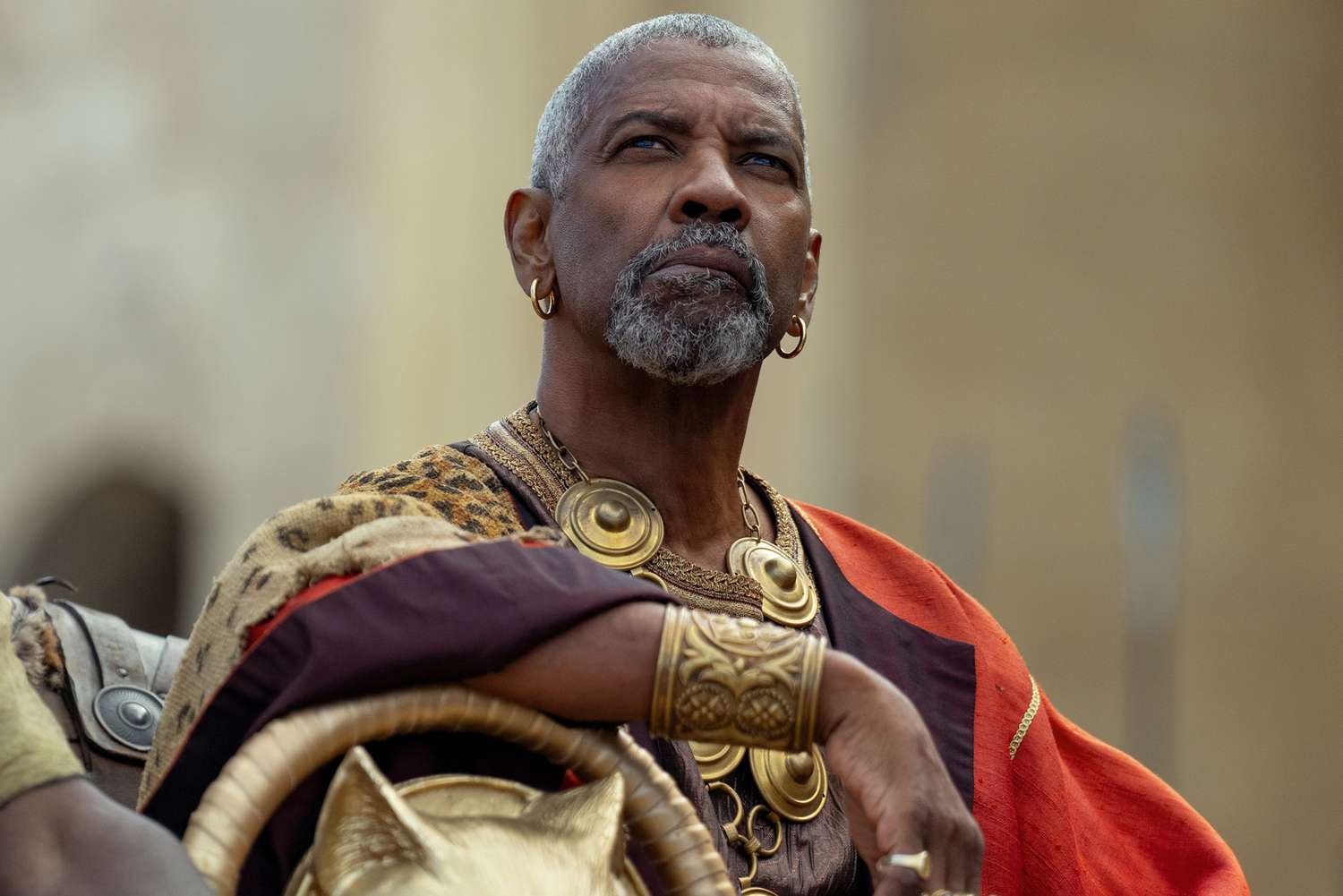
Denzel Washington

Everyone else delivers their lines with the sort of bloviating declamatory dialogue that wouldn’t be out of place in an old Hollywood epic from the 1950s.

Here’s the thing:  “Gladiator” is all surface and no substance.  There are no interesting ideas beneath the grandeur and violence, no emotional engagement.

Like Scott’s last film, the curiously untethered “Napoleon,” “Gladiator II” is a display of elephantine emptiness.  No wonder it feels about 45 minutes too long.

| Robert W. Butler

Read Full Post »

“NAPOLEON” My rating: C (In theaters)

158 minutes | MPAA rating: R

Like Dracula, Sherlock Holmes and any number of Shakespearean characters, Napoleon Bonaparte is one of those figures ever ripe for fresh cinematic reinterpretation.

I only wish I knew what incarnation director Ridley Scott and leading man Joaquin Phoenix were going for in their big, noisy, not-very-interesting “Napoleon.”

This is less viable drama than a 2 1/2-hour illustrated history lesson.  The most memorable moments are several battle scenes that depict the grandeur/horror of Napoleonic-era warfare without ever evoking a genuine emotional response.

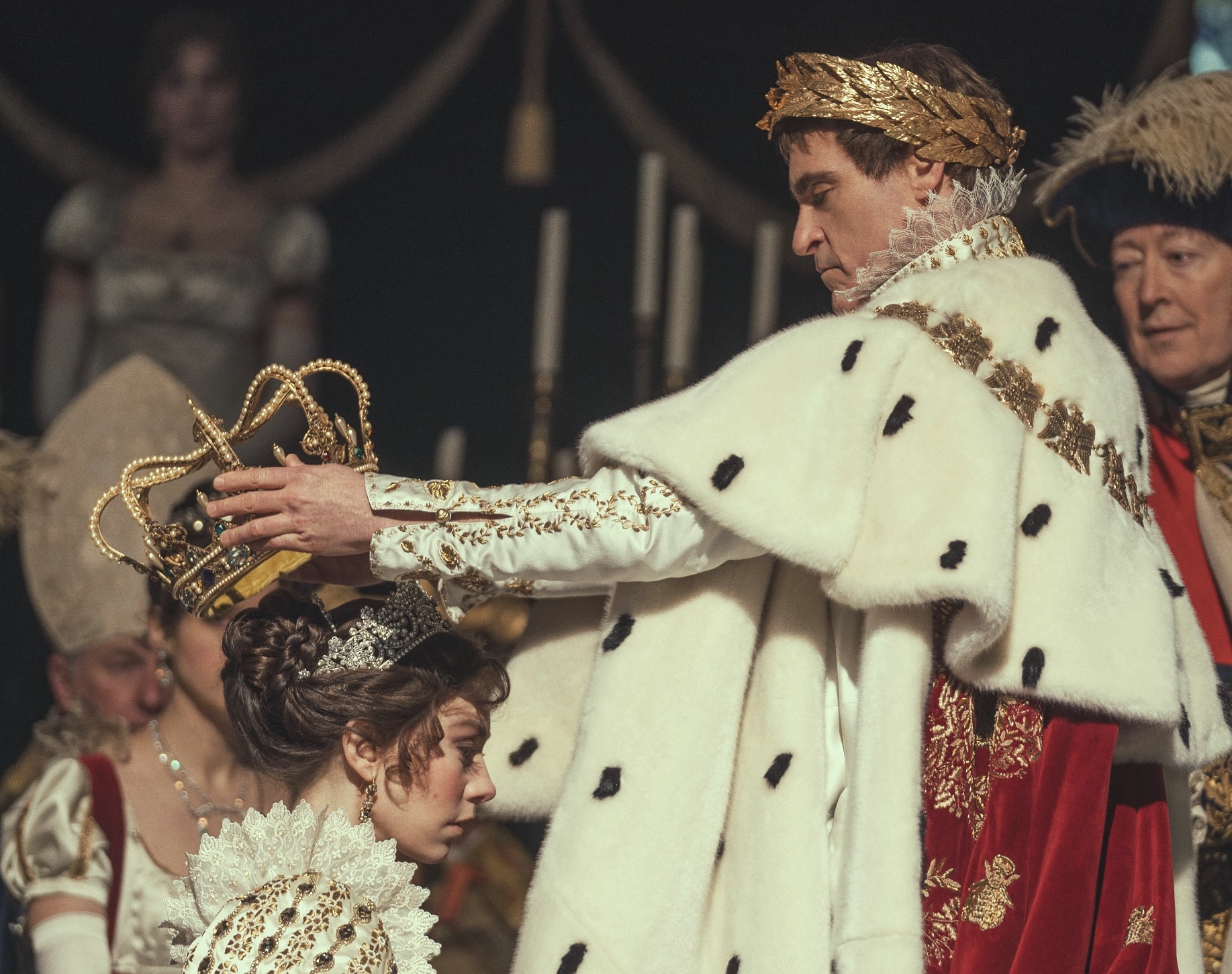
As for the drama, it centers almost exclusively on the relationship of Napoleon (Phoenix) and his Empress Josephine (Vanessa Kirby). Indeed, David Scarpa’s screenplay is essentially a two-hander.  Virtually every other character (among them heavy hitters like Robespierre, Talleyrand, the Duke of Wellington and assorted European royalty) has been reduced to walk-on status.

So it’s a love story…sorta.  

The film begins with the French Revolution and is basically a series of highlights of the Napoleonic legend, sometimes jumping years between scenes.  

Phoenix’s Napoleon presents as a socially inept clod who just happens to be a military genius.  He is bereft of charm or a sense of humor.  Early on  I found myself wondering if we were supposed to regard this Napoleon as being on the autism spectrum.

We see our protagonist on various military campaigns (Egypt, Austria, Russia) where he wins the hearts of his troops in spite of his personality (as long as he keeps producing victories he’s their guy). We see Napoleon use his grapeshot-loaded artillery to quell an urban uprising of Royalists, turning a  crowd  of protesting Parisians into so many mounds of ground round. 

His military prowess gives him a foothold in the new Revolutionary government, first as one of three consuls leading France and then as emperor.

Vanessa Kirby, Joaquin Phoenix

Except that there’s little in Phoenix’s performance to suggest why anybody would even consider Napoleon as emperor material.  He’s kind of a doofus and almost seems to have lucked into his imperial status. 

Maybe the film is meant to be a Trumpian allegory about a numbnuts who ends up running a country.  But that suggests a sense of satire found nowhere in the Scott canon.

Whatever sparks this “Napoleon” strikes come from the collision of our man with Josephine.  

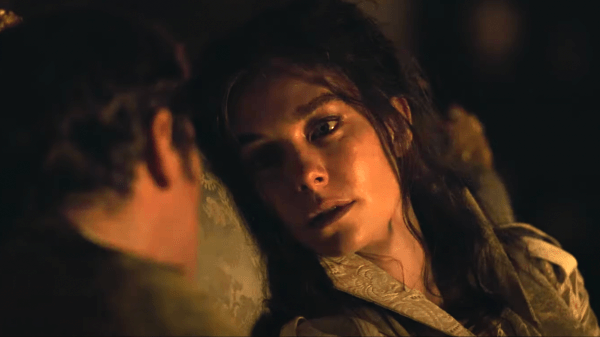
When we first see Kirby in the role she wears her hair in a sort of pixie cut (I’m guessing the look was the result of Josephine’s long imprisonment after her husband went to the guillotine) and exudes a feral feline sexuality.

You can see why the ham-fisted Nappie is attracted, though initially she appears unimpressed by his jackrabbit lovemaking technique.  In fact, while he’s off fighting the Republic’s enemies Josephine is messing around with other fellas.

Vanessa Kirby

But over time they become a codependent team who trade insults as a prelude to copulation.  Only problem is, Josephine is unable to give her emperor a son. But even after their divorce and Napoleon’s marriage to a more fertile female (I think there’s only one shot of this second wife in the whole picture) he continues to visit his original squeeze at the country estate to which she has been exiled.

“I wish  I could quit you” might well be their motto.

That Phoenix is one of our finest actors isn’t up for debate. But here he can’t seem to wrap his head around his character, and as a result we’re all left in the dark.

Was Napoleon a power-hungry tyrant? Or was he devoted heart and soul to his country? What kind of ruler  was he? (The film offers not a clue.) 

Did he have any hobbies?  Favorite foods?  I’m grasping at straws here.

Like “The Duellists,” Scott’s first film and also set in the Napoleon Wars, this latest effort is an impressive physical recreation of a time and place.  That sense is reinforced by a score made up almost exclusively of period music.

But the duties of physically creating the film seem to have left Scott no time to contemplate what he wants to say. This director has never exhibited a strong individual style, but here the absence of a point of view is maddening.

And why oh why has cinematographer Dariusz Wolski opted for a visual style so dimly lit that even scenes set in bright sunshine seem gray? There are no bright colors — at least in that regard the visual palette reflects the general joylessness of the overall enterprise.

| Robert W. Butler

Read Full Post »

This image has an empty alt attribute; its file name is napoleon-2023.jpeg

“NAPOLEON” My rating: C (In theaters)

158 minutes | MPAA rating: R

Like Dracula, Sherlock Holmes and any number of Shakespearean characters, Napoleon Bonaparte is one of those figures ever ripe for fresh cinematic reinterpretation.

I only wish I knew what incarnation director Ridley Scott and leading man Joaquin Phoenix were going for in their big, noisy, not-very-interesting “Napoleon.”

This is less viable drama than a 2 1/2-hour illustrated history lesson.  The most memorable moments are several battle scenes that depict the grandeur/horror of Napoleonic-era warfare without ever evoking a genuine emotional response.

As for the drama, it centers almost exclusively on the relationship of Napoleon (Phoenix) and his Empress Josephine (Vanessa Kirby). Indeed, David Scarpa’s screenplay is essentially a two-hander.  Virtually every other character (among them heavy hitters like Robespierre, Talleyrand, the Duke of Wellington and assorted European royalty) has been reduced to walk-on status.

So it’s a love story…sorta.  

The film begins with the French Revolution and is basically a series of highlights of the Napoleonic legend, sometimes jumping years between scenes.  

Phoenix’s Napoleon presents as a socially inept clod who just happens to be a military genius.  He is bereft of charm or a sense of humor.  Early on  I found myself wondering if we were supposed to regard this Napoleon as being on the autism spectrum.

We see our protagonist on various military campaigns (Egypt, Austria, Russia) where he wins the hearts of his troops in spite of his personality (as long as he keeps producing victories he’s their guy). We see Napoleon use his grapeshot-loaded artillery to quell an urban uprising of Royalists, turning a  crowd  of protesting Parisians into so many mounds of ground round. 

His military prowess gives him a foothold in the new Revolutionary government, first as one of three consuls leading France and then as emperor.

Vanessa Kirby, Joaquin Phoenix

Except that there’s little in Phoenix’s performance to suggest why anybody would even consider Napoleon as emperor material.  He’s kind of a doofus and almost seems to have lucked into his imperial status. 

Maybe the film is meant to be a Trumpian allegory about a numbnuts who ends up running a country.  But that suggests a sense of satire found nowhere in the Scott canon.

Whatever sparks this “Napoleon” strikes come from the collision of our man with Josephine.  

When we first see Kirby in the role she wears her hair in a sort of pixie cut (I’m guessing the look was the result of Josephine’s long imprisonment after her husband went to the guillotine) and exudes a feral feline sexuality.

You can see why the ham-fisted Nappie is attracted, though initially she appears unimpressed by his jackrabbit lovemaking technique.  In fact, while he’s off fighting the Republic’s enemies Josephine is messing around with other fellas.

Vanessa Kirby

But over time they become a codependent team who trade insults as a prelude to copulation.  Only problem is, Josephine is unable to give her emperor a son. But even after their divorce and Napoleon’s marriage to a more fertile female (I think there’s only one shot of this second wife in the whole picture) he continues to visit his original squeeze at the country estate to which she has been exiled.

“I wish  I could quit you” might well be their motto.

That Phoenix is one of our finest actors isn’t up for debate. But here he can’t seem to wrap his head around his character, and as a result we’re all left in the dark.

Was Napoleon a power-hungry tyrant? Or was he devoted heart and soul to his country? What kind of ruler  was he? (The film offers not a clue.) 

Did he have any hobbies?  Favorite foods?  I’m grasping at straws here.

Like “The Duellists,” Scott’s first film and also set in the Napoleon Wars, this latest effort is an impressive physical recreation of a time and place.  That sense is reinforced by a score made up almost exclusively of period music.

But the duties of physically creating the film seem to have left Scott no time to contemplate what he wants to say. This director has never exhibited a strong individual style, but here the absence of a point of view is maddening.

And why oh why has cinematographer Dariusz Wolski opted for a visual style so dimly lit that even scenes set in bright sunshine seem gray? There are no bright colors — at least in that regard the visual palette reflects the general joylessness of the overall enterprise.

| Robert W. Butler

Read Full Post »

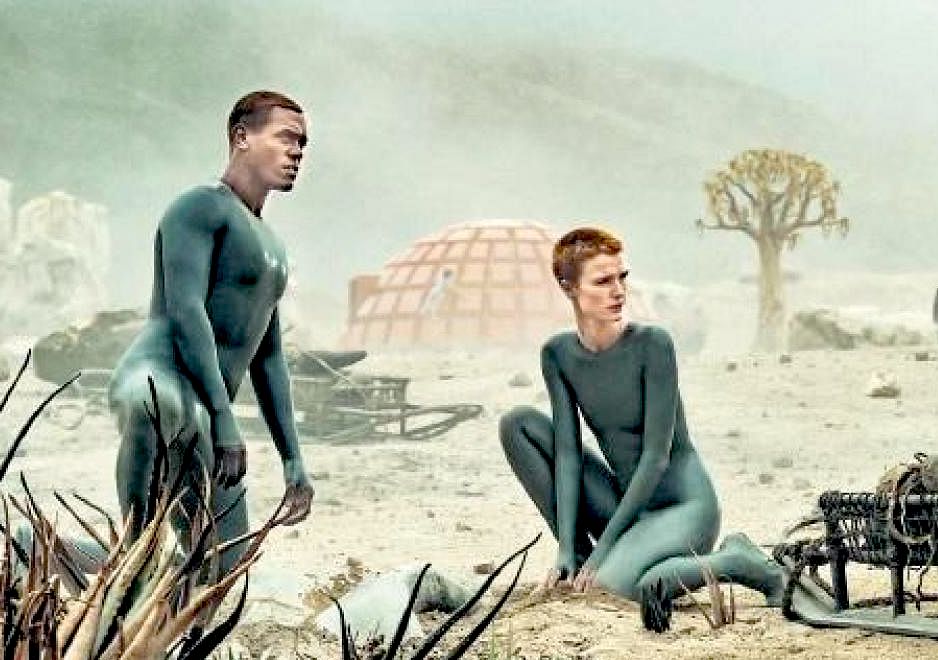
Abubakar Salim, Amanda Collin as an interplanetary Adam and Eve

“RAISED BY WOLVES” (HBO Max)

“Raised by Wolves” gets high marks for its ability to inspire navel-gazing and metaphysical thumb-sucking.

Problem is, I watched the first two seasons of this Ridley Scott-produced sci-fier without feeling anything.  Not once. Nada.

Yeah, the series created by Aaron Guzikowski  is teaming with interesting ideas.  But I cared not one whit about any of the characters, their fates or the overall narrative.

Plus the actors are all saddled with the worst hair styles ever seen on television.

Initially the series sets up an intriguing premise.  

In the future Earth has become uninhabitable in a civil war between true believers and atheists (sound familiar?).  Things have gotten so bad that both sides make for a distant planet capable of supporting human life.

Several story threads unfold.

In the central one, a female android called Mother (Amanda Collin) and her assistant, Father (Abubakar Salim), travel to this new Eden. Once there they follow their programming given them by their atheist creator and start raising a family: human children who have gestated in Mother’s body. 

More than a mere caregiver, Mother is a mighty weapon, a so-called Necromancer who has an arsenal of tricks worthy of Superman: heat-ray vision, the ability to fly, unmatched strength. She’ll use them to protect her offspring and to ensure the survival of rational godlessness.

Then there’’s the married couple,  Marcus and Sue (Travis Fimmel, Niamh Algar)  who have been carrying on a losing fight as atheist soldiers.  They escape Earth by undergoing surgery so that they can replace (after assassinating) two high-ranking deists.

Thing is, the man Marcus has replaced is regarded as a prophet.  It isn’t easy keeping one’s secret atheism when surrounded by believers who kowtow to your every whim; before too long Marcus undergoes a fundamental shift in thinking.  Adoration goes to his head and he becomes a convert to the religion he once despised.

Parenting is a big issue here.  Mother and Father must cope with the growing pains of their children and find ways to finesse the emotions that they themselves lack. Meanwhile Marcus and Sue become attached to the son of the couple they are impersonating.  

Niamh Algar, Travis Fimmel

In both cases we have individuals not inclined toward maternal and paternal feelings forced into positions of caring. So the series is very much about discovering one’s nurturing abilities.

And of course it’s also about faith and science, superstition and rationality, feeling and cold, hard calculation.

Yeah, all that’s in there, plus some really spectacular production design and top notch special effects.

But after the first three episodes — which promise epic things to come — “Raised by Wolves” wafts into emotional and narrative oblivion. 

Plus we’re saddled with a really irritating bunch of child actors.

And, apparently, in the future humor no longer exists.

| Robert W. Butler

Read Full Post »

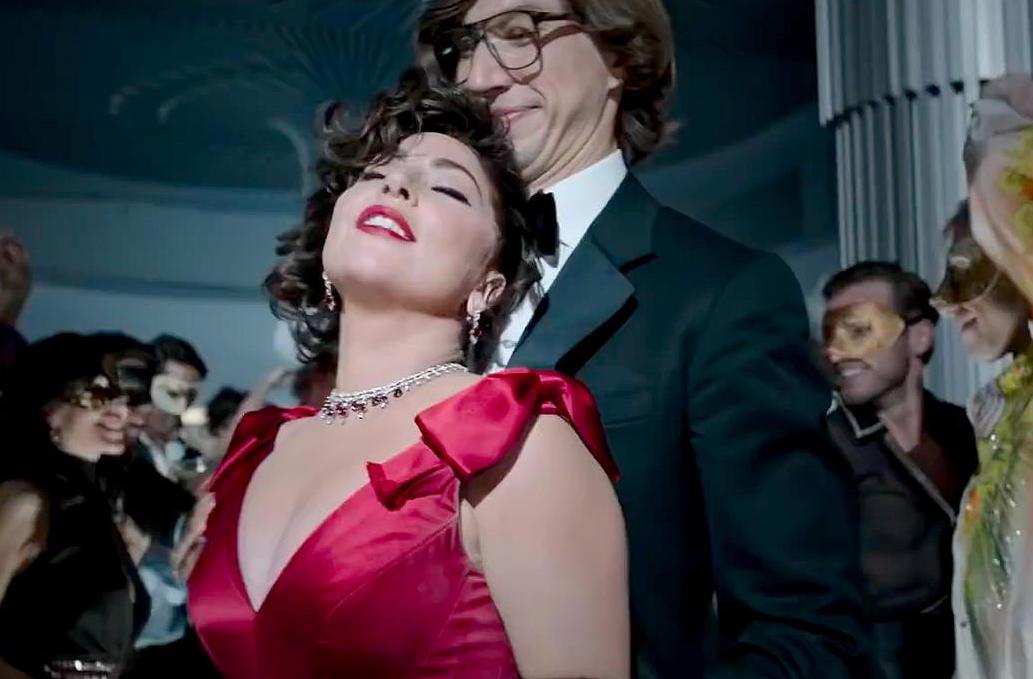
Lady Gaga, Adam Driver

“HOUSE OF GUCCI” My rating: C (In theaters)

167 minutes | MPAA rating: R

We’re all familiar with cinematic sagas of backstabbing among the filthy rich. Entire TV series have grown around that idea.

In fact, we’re so accustomed to the wealthy misbehaving that any example of the genre trying to capture our time and attention had best come up with something — an approach, an edge, an attitude — that sets it apart.

This is precisely what Ridley Scott’s “House of Gucci” fails to do.

This is a multi-character epic of greed and power that is intermittently intriguing but which overall suffers from a bad case of meh

The screenplay by Becky Johnston and Roberto Bentivegna (based on Sara Gay Forden’s nonfiction book) lacks a point of view or even an obvious purpose.  The story is based on facts, but the telling is satire- and irony-free, a bland recitation of events with no attempt to analyze or interpret.

In a shorter film this might have been finessed, but “…Gucci” runs for more than 2 1/2 hours…by the halfway point a viewer’s attention span starts to wander as it becomes clear we’re not going anywhere.

And director Scott’s heart clearly isn’t in it.  This effort lacks even his trademark visual pizzazz. 

The film is strongest in its early passages, when we’re introduced to Patrizia Reggiani (Lady Gaga), who works as a secretary for her papa’s Milanese trucking company.  Gaga once again establishes her bona fides as a genuine movie star…here she seems to be channelling Sophia Loren and Gina Lollobridgida, a potent mixture of sex and sassiness. 

Out partying  one night Patrizia bumps into a rather shy but charming young man who introduces himself as Maurizio Gucci (Adam Driver).

He describes himself as a humble law student, but Patrizia recognizes that this is one of the heirs to the Gucci fashion empire.  She starts stalking Maurizio, plotting an “accidental” meeting.

Is she a gold digger?  Well, Maurizio’s uber-cultured father (Jeremy Irons) certainly thinks so, but the film declines to pass judgment.  Patrizia is in some ways solidly plebeian (she doesn’t like reading) but she’s no shortage of ambition, something that gratifies her to Maurizio’s uncle Aldo (Al Pacino), who runs the Gucci empire from a New York high rise.

Under his new wife’s insistent prodding the laid-back Maurizio is slowly sucked into the firm’s management, undergoing a bit of a personality change in the process.  Power corrupts, don’t cha know?

In fact, Patrizia makes such a pest of herself, meddling in Gucci business, that divorce rears its ugly head. In a plot development that beggars the imagination (but which actually happened), she befriends a TV psychic (Salma Hayek) and together they put together a hit on hubby.

That’s the main plot thread of “House of Gucci,” but it’s only one of many.  

Jared Leto

The film jerks to life every time Jared Leto makes an appearance as Aldo’s son Paolo, a wannabe designer utterly lacking in taste and talent who owns a big chunk of Guggi stock but is considered an idiot by one and all.  

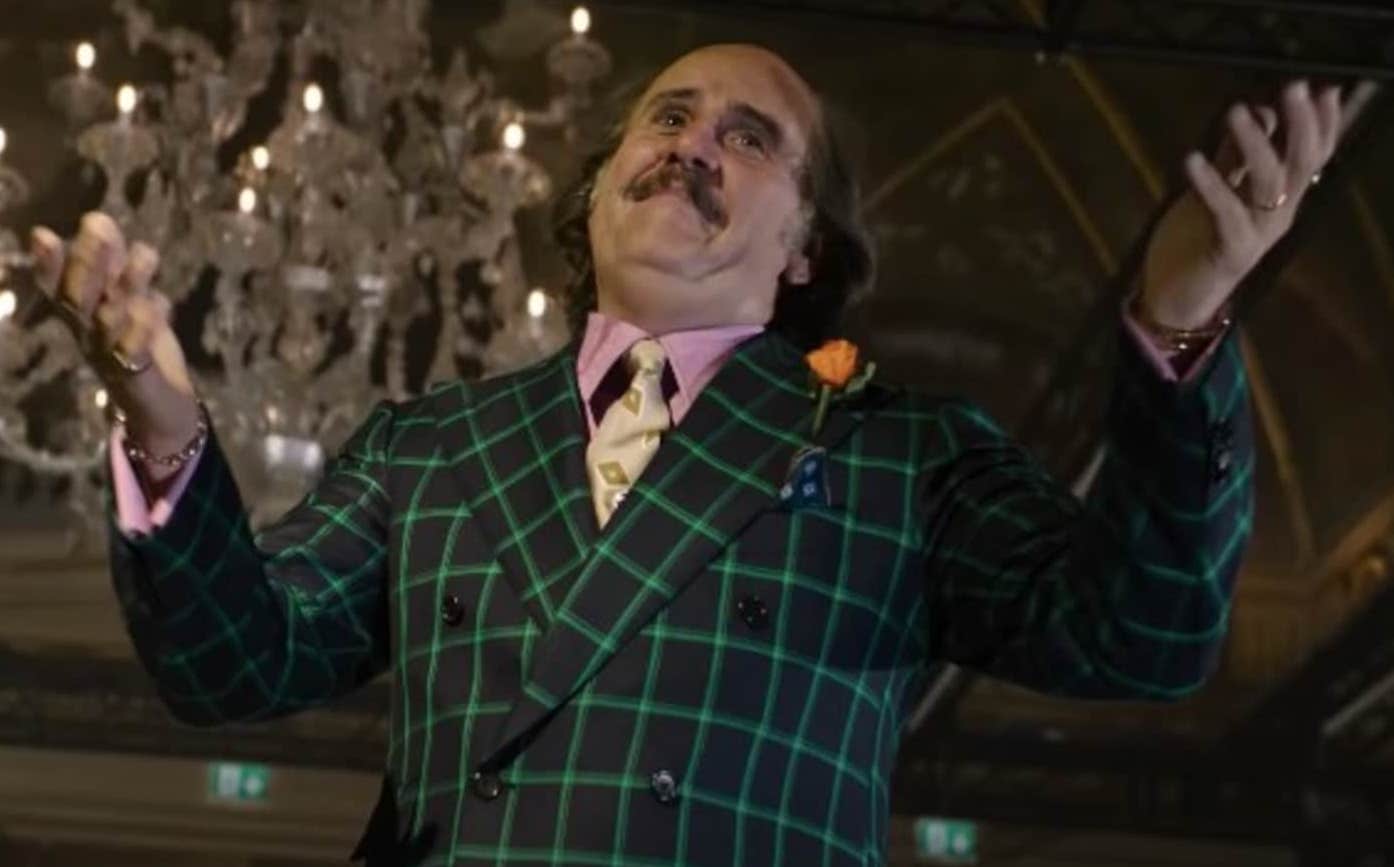
Leto is unrecognizable beneath bald pate, scraggly hair and double chin…his Paolo is like a parody of every hapless loser you’ve ever met.   You’re almost tempted to feel sorry for him, but the guy is so clueless and irritating we practically take pleasure in his humiliations.

(Some smart grad student in psychology is going to do a thesis on why one of the most handsome actors in Hollywood insists in role after role on uglying himself up beneath layers of grotesque makeup and prosthetics.)

There is no shortage of betrayals here.  Patrizia and Maurizio learn that Uncle Aldo has been cheating on his America taxes and turn him in so they can take over the company.  Then they must face a coup engineered by the CEO of Gucci America (Jack Huston).  

While Patrizia stews in divorcee hell, Maurizio cavorts with a thin French friend (Camille Cottin).

Damn, but these rich folk push the envelope.

Truth be told, most of the performances here are just fine.  It’s the storytelling that lets us down, keeping us at arm’s length and ultimately leaving us without any character to care about.

| Robert W. Butler

Read Full Post »

martianMV5BMTUxODUzMDY0NF5BMl5BanBnXkFtZTgwMDE0MDE5NTE@._V1__SX1377_SY911_“THE MARTIAN” My rating: A

141 minutes | MPAA rating: PG-13

With “The Martian” director Ridley Scott and star Matt Damon deliver an almost perfect piece of popular filmmaking, an intimate sci-fi epic that is smart, spectacular and stirring.

This big screen adaptation (by screenwriter Drew Goddard) of Andy Weir’s best-seller about an astronaut stranded on Mars has just about everything — laughs, thrills, visual splendor and a rousing endorsement of the brotherhood of man.

It’s the least pretentious and most wholly enjoyable film of Scott’s extensive career (which includes  “Alien,” “Blade Runner,” “Thelma & Louise” and “Gladiator”) and pushes Damon’s acting talents to the max.

The premise melds elements of 1964’s “Robinson Crusoe on Mars” and “Apollo 13” (earthbound scientists and engineers invent ways to help their desperate colleague).

Matt Damon

Matt Damon

And nestled inside this riveting adventure is a sly commentary on bureaucracy.

Set in a near future in which the American space program is thriving (the film’s most patently fantastic assertion), “The Martian” opens on Mars, where a team led by Melissa Lewis (Jessica Chastain) is wrapping up a month-long scientific mission. A fierce sandstorm catches the astronauts out in the open, and they barely make it to the Martian lander that will return them to the orbiting mother ship.

But one of them, botanist Mark Watney (Damon), is literally blown away by the raging wind. Believing him dead, Lewis has no choice but to take off without him before the storm makes liftoff impossible.

But Mark isn’t dead. He awakens to a beeping alarm in his helmet telling him he’s almost out of air, struggles out of the sand in which he is half buried and discovers that he’s been skewered by a shard of wind-blown metal.

He barely makes it into the now unoccupied housing module where he performs a bit of surgery on himself and takes stock of his situation. (more…)

Read Full Post »

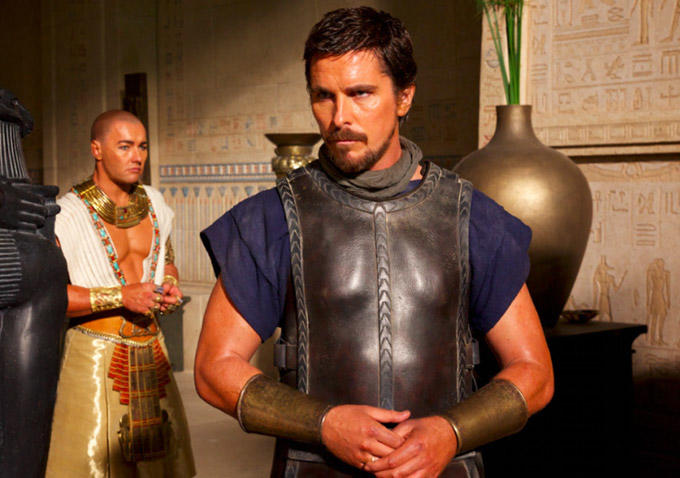
Joel Edgerton and Christian Bale as Rhamses and Moses

Joel Edgerton and Christian Bale as Ramses and Moses

“EXODUS: GODS AND KINGS” My rating: C

150 minutes | MPAA rating: PG-13

Ridley Scott’s “Exodus: Gods and Kings” runs for almost 2 1/2 hours — and that still isn’t enough time for it to figure out why it’s here or what it wants to say.

It’s based, of course, on the Old Testament story of the exodus of the captive Hebrews from Egypt, but the filmmakers are obviously ambivalent over matters of faith. Heck, they explain away the story’s supernatural elements as the result of a bump to Moses’ noggin.

This is the second monster-budget biblical epic of the year (it follows Darren Aronofsky’s over-produced and over-thought “Noah”). If Hollywood doesn’t believe, why does it bother?

In a word: spectacle. Scott and his visual wizards pull out the stops to create the thriving Egyptian capital of Memphis, the parting and unparting of the Red Sea, a slam-bang  battle with an invading army.

But on a spiritual and dramatic level “Exodus” is a creaky affair.

Most of us are familiar with Cecil B. DeMille’s 1956 “The Ten Commandments,” an alternately silly and awe-inspiring affair. DeMille may have had the dramatic instincts of a snake oil salesman, but he was a fierce believer in his own showmanship, and if you can ignore the absurd emoting, his epic remains ridiculously entertaining.

Scott, on the other hand, delivers a film that is, well, grumpy. For all the f/x wizardly, there’s not much joy or discovery to be had. “Exodus” feels like a paint-by-numbers job assembled by an indifferent committee

(more…)

Read Full Post »