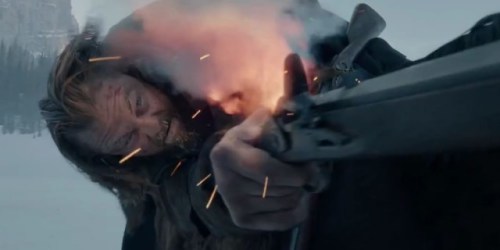
Leonardo DiCaprio
“THE REVENANT” My rating: B
156 minutes | MPAA rating: R
At its most basic level, “The Revenant” is a revenge melodrama with Leonardo DiCaprio playing a man who endures unimaginable hardships to get even.
But the latest from writer/director Alejandro Gonzalez Inarritu (“Birdman,” “Babel”) is much more than that.
This inspired-by-fact epic is one of the most richly sensory films ever made, an evocation of the American wilderness that is both beautiful and terrifying. In this world of heightened awareness every rock and limb seems etched by the hand of a master and the forests are alive with the creaking of timber. (Who knew aspens were so damn noisy?)
The primitive world evoked here is so sumptuous and scary that it threatens to overwhelm “The Revenant’s” dramatic elements.
The screenplay (by Inarritu and Mark L. Smith) is inspired by the true story of Hugh Glass (DiCaprio), a member of a fur trapping expedition who in 1823 was mauled by a bear. Expected to die of his injuries, Glass was left in the care of two companions instructed to give him a decent burial.
Except Glass wouldn’t die. His watchers, terrified of an Indian attack, abandoned him and rejoined their companions. But Glass clawed his way out of a shallow grave and with superhuman determination traveled 200 miles — first on his stomach, then on foot — to exact revenge.
(This story was filmed in 1971 as “Man in the Wilderness” with Richard Harris in the lead.)
On its most successful narrative level “The Revenant” is a survival story. Lacking food and weapons, DiCaprio’s Glass must scavenge for sustenance, sucking the marrow from the bones of a long-dead elk and scarfing raw fish and buffalo innards. He cauterizes his wounds by sprinkling gunpowder over the savaged flesh and igniting it with a burning stick.
It isn’t so much that Glass wants to live as he is determined to punish Fitzgerald (a grunting Tom Hardy), the venal fellow trapper who left him for dead.
 Butler's Cinema Scene