Feeds:
Posts
Comments

Posts Tagged ‘Tim Roth’

Cillian Murphy, Barry Keoghan

“Peaky Blinders: The Immortal Man” My rating: B- (Netflix)

112 minutes | MPAA rating: R

The new stand-alone final episode of “Peaky Blinders” isn’t bad — just unnecessary.

The Brit series, which ran on Netflix from 2013 to 2022, was exemplary television, a crime drama and family saga that occasionally reached Shakespearean heights.  Kind of an episodic “Godfather” with a Birmingham accent.

One wonders if creator Steven Knight’s decision to add a final filmic coda to the story of the outlaw Shelby clan was prompted by the Oscar win (for “Oppenheimer”) by Cillian Murphy, whose brooding presence as the ruthless and tormented Thomas Shelby  was the show’s driving force.

Certainly it wasn’t because Knight had some sort of important story to tell. “Peaky Blinders: The Immortal Man” feels like it was thrown together, a movie in search of a reason for being. 

Oh, the atmosphere is as brooding as ever, and Murphy is always watchable. But the whole production seems to have been glued together from a bunch of pieces Knight had lying about.

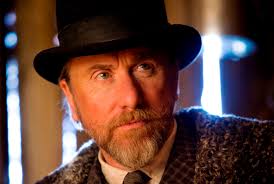
It’s World War II and the British fascist Beckett (Tim Roth at his most reprehensible) is charged with smuggling into England several million dollars in fake pound notes counterfeited by the Nazis.  The idea is to crash the economy  and bring the German conquest of Britain to a swift conclusion.

To facilitate this scheme Beckett needs the assistance of the Peaky Blinders, the crime syndicate created by Tommy Shelby but now run by his estranged son Duke (Barry Keoghan). 

Duke apparently has no patriotic sensibilities.  But his father Tommy, long retired on his country estate and haunted by the memories of the loved ones he has lost, gets wind of the plot and comes out of retirement to foil it.

That’s all you need to know.  There are several solid action sequences and the production values are top notch, but something feels off.

Mostly it’s the feeling that Tommy’s newfound love of country has been manufactured out of whole cloth.  It’s a convenient but squishy plot device.

Moreover, Knight’s screenplay (the director is Tom Harper) has Tommy doing some pretty reprehensible things.  Like murdering a British soldier on leave because he and his pals are making too much noise in Tommy’s favorite pub. Not exactly the way to prove your nationalistic bona fides.

Along the way we get some wacko diversions, like Rebecca Ferguson as the twin of Tommy’s long-dead gypsy wife.  She periodically goes into trance in which her body is inhabited by the spirit of her dead sister.  No, really.
Jorma Tommila

“SISU: ROAD TO REVENGE” My rating: C+ (Netflix)

89 minutes | MPAA rating: R

“Sisu” was one of 2022’s guilty pleasures.

Alas, the new followup, “Sisu: Road to Revenge” mostly left me feeling guilty.

The original film was a combination of “Saving Private Ryan” and a Road Runner cartoon, with a silent Finnish commando taking out a platoon of goonish Germans in one spectacular action sequence after another.

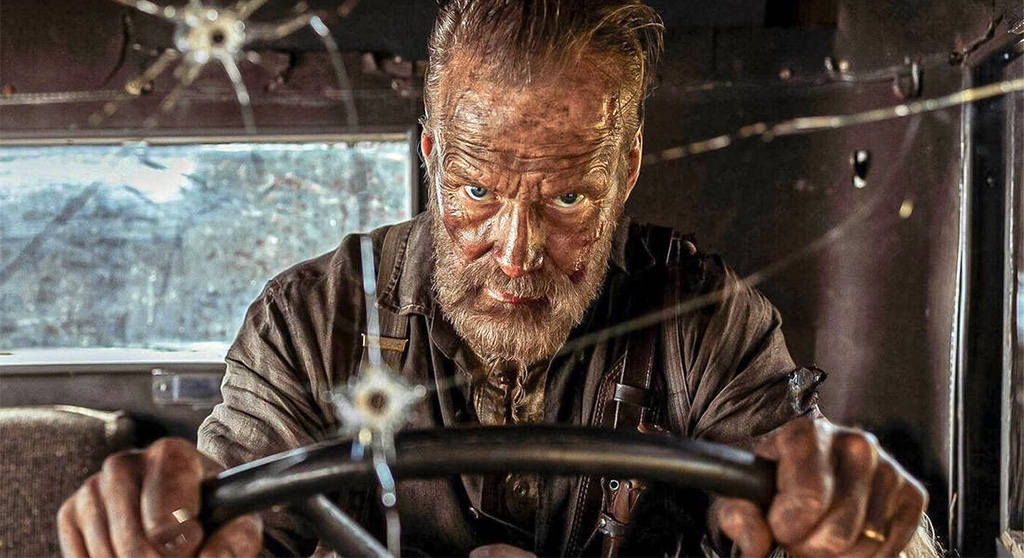
This sequel once again features Jorma Tommila as Astami, the bearded loner whose survival skills are legendary.  The war is over and Astami (accompanied by his fluffy pooch) squares off against the Soviets who now occupy his old stomping grounds in eastern Finland.

It’s a road movie. Our hero has returned to dismantle the home he once shared with his now-deceased family so that he can rebuild on free Finnish soil.  The action takes place as he drives a flatbed truck loaded with lumber, pursued by same Russian war criminal  (Steven Lang) who murdered his family.

There are some spectacular (and, frankly, ridiculous) stunts with tanks, motorcycles and fighter planes, and a long sequence taking place on a train suggests that writer/director Jamari Hollander is well acquainted with Buster Keaton’s silent classic “The General.” 

Lang’s bad guy oozes menace.  Astami once again endures punishments that approach “Passion of the Christ” levels of torture porn.

But this time around it feels forced and phony — not that the original was realistic, but it at least radiated originality.  “Sisu: Road to Revenge” feels too calculated, too by-the-numbers.
Rami Malick, Russell Crowe

“NUREMBERG” My rating: B (Netflix)

148 minutes | MPAA rating: PG-13

James Vanderbilt’s “Nuremberg” starts off feeling like a made-for-TV movie with an A-list cast.

But stick with it and you’ll find a historical drama that resonates with uncomfortable lessons still relevant today.

The screenplay by Vanderbilt and Jack El-Hai focuses on the war crime trials that unfolded in Nuremberg, Germany, at the end of the World War II. 

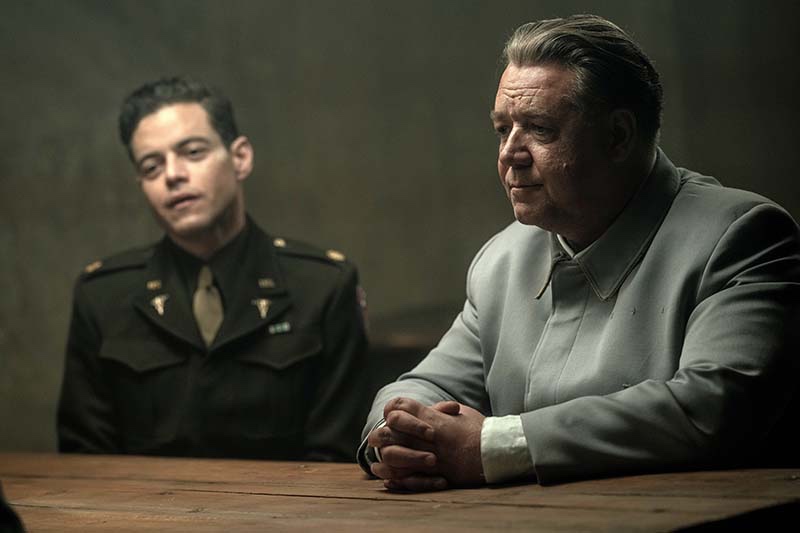
The main focus is on Herman Göring (Russell Crowe), Hitler’s second in command, and an American military psychiatrist, Douglas Kelley (Rami Malek), assigned to befriend and evaluate the unrepentant Nazi before his trial can proceed.

So what we’ve got here are two Oscar winners in a duel of words and ideas.  Göring is pompous, arrogant and defiant, yet still capable of charm.  Kelley finds himself fascinated by his prisoner/patient…so much so that he develops an unhealthy interest in Goring’s wife and daughter.

There’s plenty of star power orbiting around these two.  Michael Shannon plays Robert Jackson, an American jurist prosecuting the case; Richard E. Grant is his British counterpart. John Slattery is the hard-ass officer in charge of the prisoners.  Leo Woodall is the German-speaking interpreter who must assist Göring while not revealing that most members of his Jewish family died in the Holocaust.

“Nuremberg” is most effective in hammering home the idea that the rise of Naziism was not some aberration but rather a sly exploitation of the fears, foible and prejudices that still afflict the human race.

It could happen all over again.  Hell, perhaps it already has.

| Robert W. Butler

Read Full Post »

Kurt Russell, Samuel L. Jackson

Kurt Russell, Samuel L. Jackson


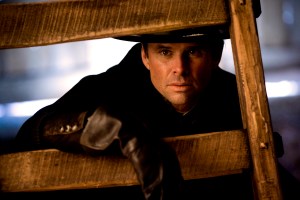
 “THE HATEFUL EIGHT” My rating: C

168 minutes | MPAA rating: R

Quentin Tarantino’s films rarely have much to say.

It’s the masterful style with which he doesn’t say anything that accounts for the filmmaker’s critical and popular success.

“The Hateful Eight” suggests that approach is wearing thin.

Absurdly violent yet overly talky, queasily looking for laughs in racism and sexism, and essentially devoid of meaning (unless you find meaning in nihilism), this Western arrives in a blast of near-comical self importance.

Walton Goggins

Walton Goggins

Shot on 70mm film (at least in the version opening Christmas Day at the AMC Town Center; it begins a run in conventional digital a week later) and featuring a 3-hour running time that includes both an overture and intermission, “The Hateful Eight” harkens back to the long-ago days of road-show movie exhibition.

Except, again, it’s not actually about anything.

The film begins with astonishing widescreen vistas of a stagecoach working its way across blinding mountainside snowfields. But, perversely enough,  it spends most of its time claustrophobically sealed in a one-room stagecoach station. Which makes Tarantino’s use of 70mm film seem like a case of using an elephant gun to get rid of a housefly.

John Ruth (Kurt Russell ), a shaggy bounty hunter with Yosemite Sam facial hair, and his prisoner Daisy Domergue (Jennifer Jason Leigh) are the only passengers on a stagecoach bound for Red Rocks, the town where Ruth will deliver Daisy for hanging.

They’re stopped in the middle of nowhere by yet another bounty hunter, Major Marquis Warren (Samuel L. Jackson), a former officer in the Union Army who still wears his flamboyant blue-and-gold military greatcoat.  Warren’s horses have died in a blizzard and he needs a lift for himself and the corpses of the two criminals he has gunned down.

Ruth is immediately suspicious, concerned that he may be robbed of his prisoner before he can collect the bounty. But he allows Warren and the two stiffs to come aboard, and soon they have arrived at Minnie’s Haberdashery, a sort of middle-of-nowhere Quik-Trip for the frontier set.

Minnie and the way station regulars are off attending to family business, according to Bob (Demian Bichir), the Mexican hand who helps stable the horses from an oncoming blizzard.

Tim Roth

Tim Roth

Inside the station are several stranded travelers.

There’s Smithers (Bruce Dern), a former Confederate general who still wears his uniform. Mannix (Walton Goggins) is on his way to Red Rocks to start his new job as sheriff.  The British Mobray (Tim Roth) identifies himself as the territorial hangman — he’ll be stretching Daisy’s neck pretty soon.

Joe (Michael Madsen) is a quietly intimidating cowhand. Rounding out the gathering is Ruth’s stagecoach driver, the inoffensive O.B. (James Parks).

There is much macho posturing as these various personalities determine the pecking order. (It may be intended as comic, but I rarely laughed.)

And there’s lots of race baiting. Here we’ve got a black man who insists on the deference accorded everyone else…that’s sure to stir up negative sentiments, especially from the former Confederate general. (BTW…am I the only one offended by Tarantino’s overreliance on the “n” word?)

There’s a sort of Agatha Christie drawing room mystery to the first half of the film. Snowed in and forced to confront one another, some of these he-men drop hints that maybe they aren’t who they say they are. Mind games are played.

And who the hell poisoned the coffee?

Throughout the slatternly Daisy makes wise-ass comments and gets knocked around by her captor.  Leigh doesn’t have to do much acting and when she does it’s through a mask of dried blood.

(more…)

Read Full Post »

selma-bridge“SELMA”  My rating: B+ 

127 minutes  | MPAA rating: PG-13

“Like writing history with lightning.”

That was President Woodrow Wilson’s reaction to a 1915 White House screening of the Civil War epic “Birth of a Nation,” a film whose artistic ambitions were matched only by its racism.

A century later, director Ava DuVernay has given us “Selma,” a docudrama about a pivotal campaign in the fight for civil rights for black Americans. You could say this film writes history not so much with lightning as with compassion.

“Selma” often gets the details wrong (shuffling chronologies and geography, for instance), but its emotional heft is undeniable. In re-creating the 1965 protest marches from Selma, Ala., led by the Rev. Martin Luther King Jr., the movie captures the epic sweep of social upheaval, but also the way it played out for the individuals — famous and anonymous — who made it happen.

David Oweyolo as the Rev. Martin Luther King, Jr.

David Oweyolo as the Rev. Martin Luther King, Jr.

It’s as close to being there as most of us will ever get.

The screenplay by Paul Webb (his first) cannily begins with three scenes that establish the film’s breadth of focus and what is at stake.

In Oslo, Norway, the Reverend King (David Oyelowo, who like most of the lead players is British) accepts the Nobel Peace Prize.

In Selma, black housewife Annie Lee Cooper (Oprah Winfrey, one of the movie’s producers) attempts to register to vote. A sneering clerk orders her to recite from memory the preamble to the U.S. Constitution. When she does so flawlessly, he tells her to come back when she has memorized the names of all the county judges in Alabama.

And in Montgomery, Ala., four black girls are killed when a bomb planted by racists goes off in their church during Sunday services.

King and other civil rights leaders focus their efforts to register black voters in Selma, a burg so racially backward and with such thuggish law enforcement that it perfectly meets their needs.  With the media focused on the situation — dignified protestors being abused by white cops and racist mobs — the federal government will be forced to get involved. (more…)

Read Full Post »