You know how librarians and literature professors are always coming up with lists of the books you must have read to be a well-rounded, literate individual?
Well, the Kansas City Public Library is doing the same thing for movie literacy.
“Movies That Matter” is a 20-film free film series featuring masterpieces of world cinema. They will be presented at 1:30 p.m. on Sundays from September 2012 to May 2013 in the Truman Forum, a 220-seat auditorium in the basement level of the Plaza Branch Library at 4801 Main Street.
The movies range from silent comedies to hard-hitting dramas, samurai flicks, existential Swedish costume epics, Hollywood screwball hilarity, an MGM musical and the first-ever animated feature.
“Movies That Matter” was programmed by yours truly. I’ll also be doing five-minute illustrated introductions before each film and a recap after each screening.
I’ll admit up front that this is a very personal, subjective list of movies. These are films that, above all, matter to me. Mo matter how often I see them, they remain entertaining, thought provoking, deeply moving.
A few of them, I believe, have actually changed my life…or at least the way I look at life.
Great filmmakers – like great painters or poets or composers – use their art to share with us their perceptions of existence. When all the pieces come together (and in the complex and collaborative world of film it doesn’t happen all that often), the results can lift us out of ourselves and transport us to brave new worlds.
These movies matter precisely because of their ability to open up our eyes, our ears, our minds, and our emotions. Each has its own personality, and these personalities are as unique as those of our friends and family members.
Once you’ve met them, they don’t go away. They’re with you forever.
| Robert W. Butler
THE SCHEDULE:
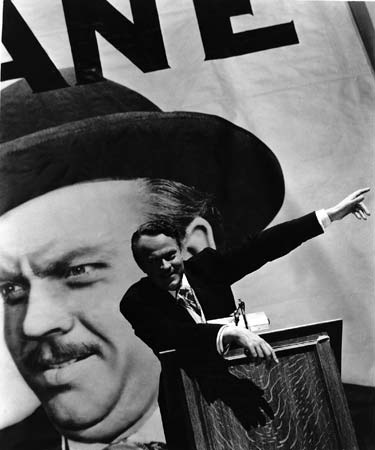 CITIZEN KANE (USA; 1941) Sunday, Sept. 2, 2012
The greatness of Orson Welles’ “Citizen Kane” comes at the viewer from every direction.
Technically it is a masterpiece of inventive filmmaking, employing dramatic lighting and sound effects, seemingly impossible camera angles and movements, deep focus, and more special effects than any Hollywood picture up to that time.
Narratively “Kane” is a puzzle, depicting the life of a famous and powerful man through the often-contradictory memories of those who loved or despised him.
It offers Orson Welles – only 24 when he co-wrote, starred in, and directed the movie – in the performance of a lifetime, playing a character from the age of 25 to nearly 80.
And the story of the film’s creation – and its near destruction by newspaper magnate William Randolph Hearst, whose career and private life inspired the character of Charles Foster Kane – is one of the great behind-the-scenes tales in all of Hollywood history.
THE GENERAL (USA: 1926) Sunday, September 16, 2012
Upon its release Buster Keaton’s “The General” was dismissed as a critical and commercial failure.
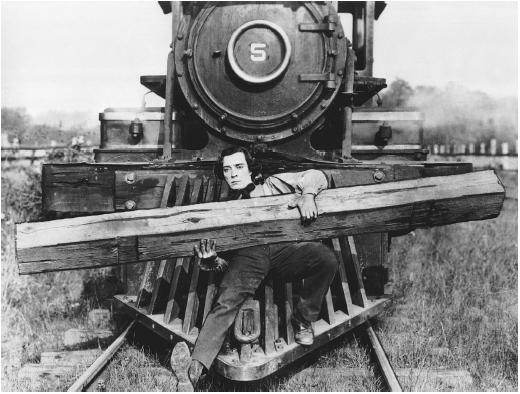 Now it is considered not only one of the finest comedies of the silent era but one of the best films ever made.
Inspired by the actual Civil War hijacking of a Confederate train by Union spies, Keaton took a grim yarn (the federals were captured and hanged) and turned it into a comic masterpiece. Now it’s the story of a Southern engineer who loses to the bluebellies both of his great loves: his locomotive, The General, and the woman he adores.
With nothing more than his own determination and ingenuity, the stoic Johnny Grey takes off in pursuit.
Filled with inventive stunts involving men and huge machines and a visual style that recalls the Civil War photos of Matthew Brady, “The General” is a monumental film from a guy who denied that he was an artist, much less a genius.
But we know better.
THE SEVENTH SEAL (Sweden; 1957) Sunday, September 30, 2012
 Great artists are also great philosophers. It’s just that they express their world view through poems, paintings, music, and drama.
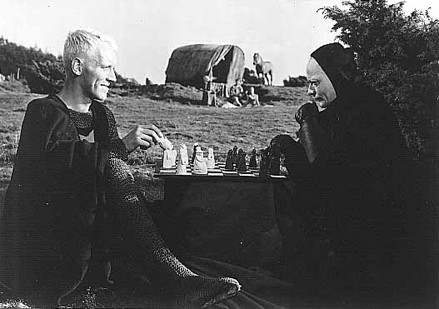
In “The Seventh Seal” Ingmar Berman attempts nothing less than to describe man’s place in the universe. Though his story is set in the Middle Ages, its concerns are universal: faith versus disbelief, carnality versus restraint, fear versus hope.
Through the post-crusade wanderings of a spiritually tormented knight (Max Von Sydow) and his earthy squire, we witness a plague-ravaged world of religious hysteria, childlike faith, witch burnings, and drunken carousing.
And through it all the knight plays a game of chess with Death himself.
Sounds awfully grim. But “The Seventh Seal“ is also a remarkably funny film, albeit one that builds to a sublimely transcendent conclusion.
RASHOMON (Japan; 1950) Sunday, October 14, 2012
 What is reality, anyway? (Lily Tomlin once called it “a collective hunch.”)
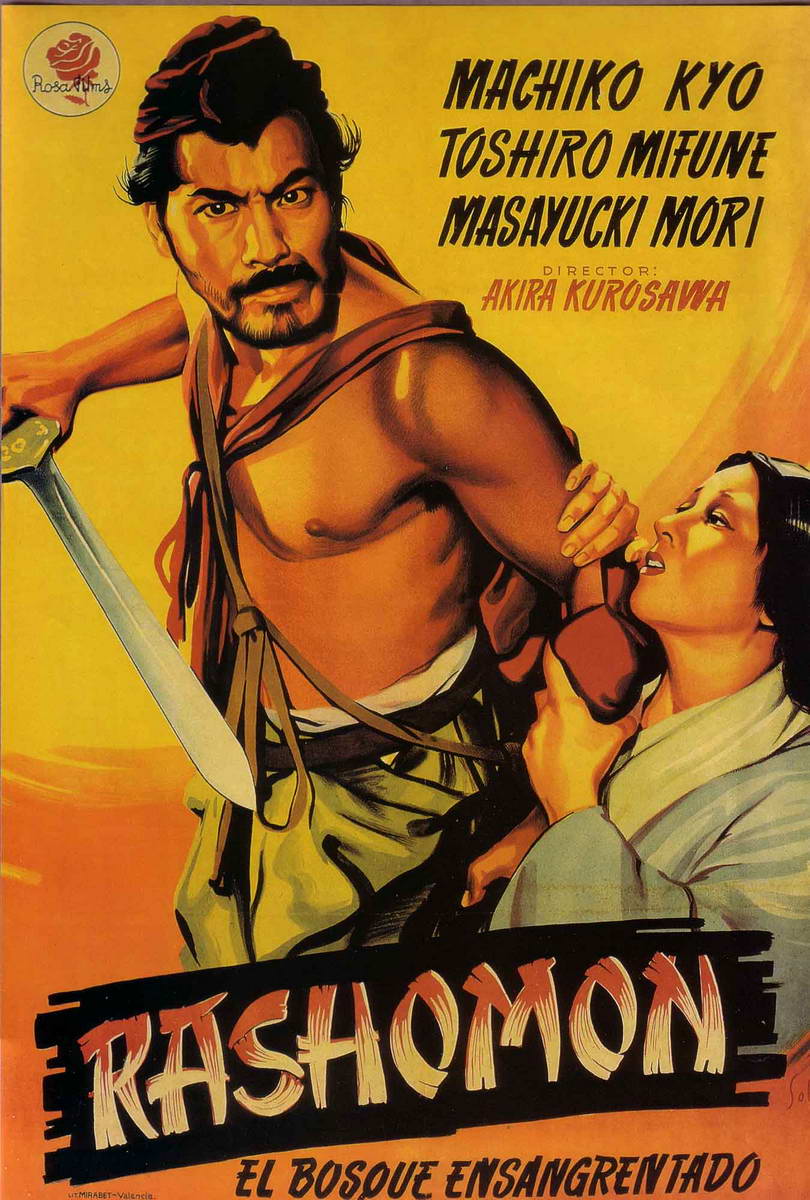
Set in feudal Japan, Akira Kurosawa’s “Rashomon” explores that question by examining a violent crime.
On a forest path a nobleman has been murdered and his wife raped. But during the trial of the perpetrator we hear four wildy contradictory reports of what happened. The fragile wife says one thing, the preening criminal (Toshiro Mifune in the role that made him an international star) another. The ghost of the dead husband, speaking through a medium, offers a third version. And contradicting everyone is a woodcutter who saw it all unfold.
Whom are we to believe? And can we ever really know the “truth”?
With “Rashomon” Kurosawa took his place as one of the world’s great filmmakers. In his half-century career he made more than 30 movies, including masterpieces like “The Seven Samurai,” “Ikiru,” “Yojimbo,” “ Ran,” “The Hidden Fortress” and “Throne of Blood.”
NOSFERATU (Germany; 1922) Sunday, October 28, 2012
After 90 years of bloodsuckers in movies and television, it’s astounding that the scariest depiction of a vampire on film is still the original one.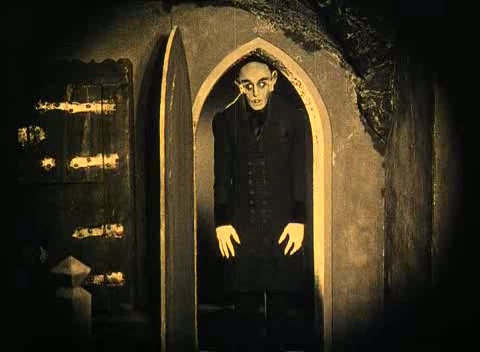
“Nosferatu” was a blatant ripoff of Bram Stoker’s Dracula, with the characters’ names changed in an attempt to avoid lawsuits for copyright infringement. (The filmmakers were sued anyway.)
The movie is dark and moody and director F.W. Murnau upped the weirdness with cinematic tricks like using the film negative for certain scenes.
But the real terror comes in the performance of Max Schreck as the evil Count Orlok. This vampire is more feral than human, with pointy bat ears and opossum teeth. Schreck, a member of Max Reinhart’s theater troupe, went on to make three dozen German films before dying in 1936 at the age of 57.
What better way to observe Halloween than with the greatest vampire flick of them all?
RAGING BULL (USA; 1980) Sunday, November 18, 2012
Just how bad must a man be for us to no longer care about him?
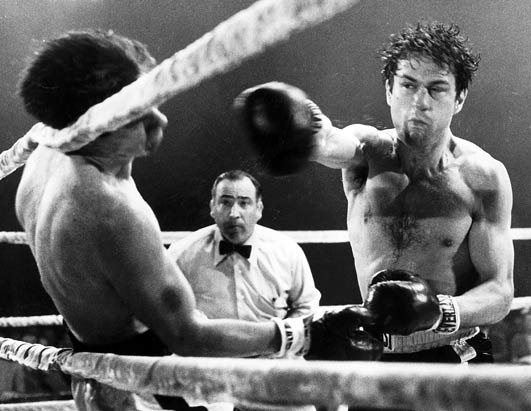 That’s the question at the heart of Martin Scorsese’s “Raging Bull,” the violent, profane, angry story of real-life professional fighter Jake LaMotta, who was a champion in the ring and a driven, jealous, impetuous monster in his private life.
Propelled by Robert DeNiro’s Oscar-winning performance (he gained 60 pounds to portray the retired, broken-down LaMotta) and a level of cinematic craftsmanship rarely surpassed, “Raging Bull” is widely regarded as the best American film of the 1980s.
Among its eight Oscar nominations were those for best supporting actor (Joe Pesci) and supporting actress (Cathy Moriarty, only 19 at the time), picture, cinematography, and director.
Above all, “Raging Bull” tests the limits of our compassion and tolerance. It just might be the most Christian movie of Scorsese’s career.
THE BICYCLE THIEVES (Italy; 1948) Sunday, November 18, 2012
Vittorio De Sica’s “The Bicycle Thieves” is the ultimate statement of the post-war Italian neo-realist movement, which employed real 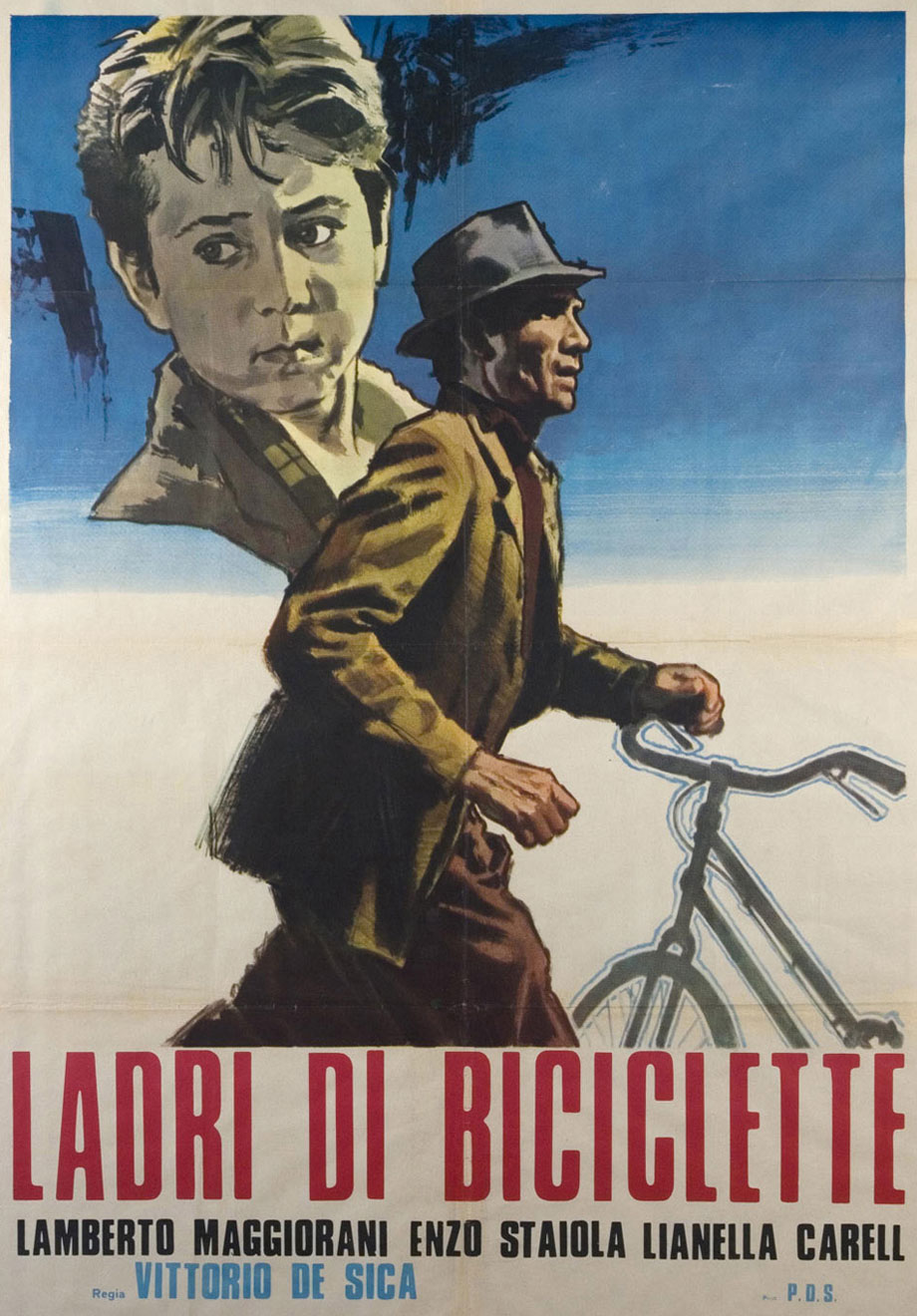 locations and non-professional actors to depict the struggles of working-class men and woman.
Unable to support his hungry wife and son, Antonio (Lamberto Maggiorani) finally lands a job pasting movie posters on walls around Rome. But his newfound security is threatened when his bicycle – essential to his work – is stolen from outside the family’s tenement.
With his boy (the amazing Enzo Staiola), Antonio begins searching the city, desperate to find the bicycle that will allow him to feed his family.
“The Bicycle Thieves” is a deceptively simple film that makes no big show of technique. It’s about family and hope and economic hardship … and 60 years after its creation it can still leave audiences gasping and in tears.
THE MANCHURIAN CANDIDATE (USA; 1962) Sunday, December 2, 2012
An American soldier is captured by the North Koreans, brainwashed, and sent home as a programmed political assassin.
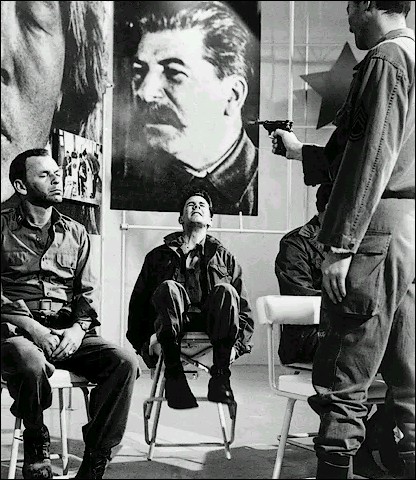 From that description “The Manchurian Candidate” sounds like a straight-ahead thriller.
But this film, the best of director John Frankenheimer’s career, is a marvelous study in conflicting moods. Mixed in with the tension is genuine heartbreak and a wide streak of sarcasm and satire.
This black comedy about right-wing demagogues and sneaky Commie science is fuelled by terrific performances from Lawrence Harvey, Frank Sinatra, and especially the unforgettable Angela Lansbury as a manipulative modern-day Lady Macbeth with Oedipal issues.
And the story around the film is fascinating, too. Producer Sinatra took it out of circulation for many years after the assassination of his friend John F. Kennedy, an event that some said was prophesized by the movie.
SNOW WHITE AND THE SEVEN DWARFS (USA; 1939) Sunday, December 9, 2012
“Snow White and the Seven Dwarfs” was the first feature-length cartoon. According to many it remains the greatest.
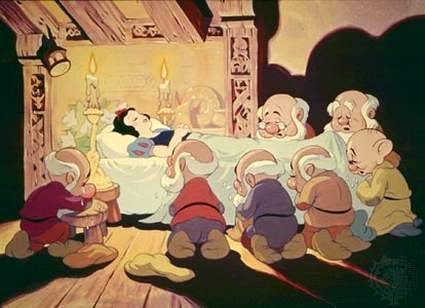 That’s hindsight for you. At the time Walt Disney was considered crazy for going deep into debt to make the picture, which was derided as “Disney’s Folly” by naysayers who maintained that the human eye and brain couldn’t accommodate 90 uninterrupted minutes of animation.
About the only way in which the film seems dated is in its depiction of Snow White, who is awfully placid when compared to today’s assertive cartoon heroines.
But in every other regard – narrative, the characterizations of the dwarfs, the scary elements, the astonishing atmospheric effects, the careful balance of humor and terror – “Snow White and the Seven Dwarfs” remains a triumph of popular entertainment.
THE PASSION OF JOAN OF ARC (France; 1928) Sunday, January 6, 2013
There exists no other film even remotely like Carl Theodor Dreyer’s ”The Passion of Joan of Arc.”
 Dreyer, a Dane, tells the story of France’s great heroine almost entirely in closeups. He insisted that his actors wear no makeup so that every wrinkle and broken blood vessel could be captured by the camera. His fashioned his script from the official courtroom accounts of Joan’s trial by the English for witchraft.
Above it all towers Maria Falconetti ‘s performance as Joan. Though Falconetti was famous for her work in stage comedies, here she gives a wrenching, heartbreaking, and transcendent performance as the doomed future saint. Often the emotional pain on her features seems too much to bear, but the film has been so beautifully photographed that we are seduced nonetheless.
It was Falconetti’s second and last appearance in a feature film. She found the experience so grueling that she never again submitted to it.
But she and Dreyer left behind a masterpiece.
MY DARLING CLEMENTINE (USA; 1946) Sunday, January 13, 2013
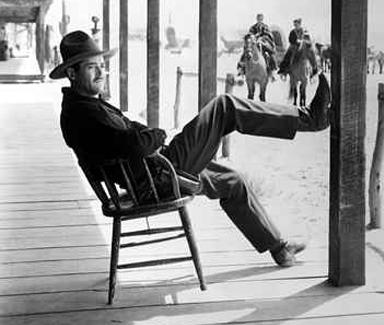 John Ford’s best Westerns were about more than gunplay and horses. Ford used cowboy clichés to explore big themes.
On its surface, “My Darling Clementine” is just one more retelling of the story of Wyatt Earp and the famous shootout at the OK Corral.
But in Ford’s hands it becomes a meditation on Manifest Destiny, on the westward surge of American civilization, on the stabilizing effects of church and school and law.
Here the famous lawman (Henry Fonda) comes to rough and tumble Tombstone, Arizona, to create order out of the chaos of frontier society. He’s opposed by the primitive Clantons (led by Walter Brennan at his scuzzy best) and finds an unlikely ally in the killer Doc Holliday (Victor Mature), who has fled the refinements of the East to indulge his self-destructive proclivities.
“My Darling Clementine” isn’t just a Western. It’s poetry on horseback.
BRINGING UP BABY (USA; 1938) Sunday, January 27, 2013
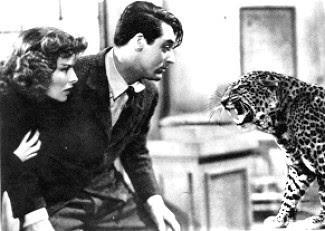 Depression-era movie goers wanted escapism, laughs, and romance. Thus the popularity of screwball comedy.
This rollicking genre offered rapid-fire dialogue, farcical situations, a big dash of slapstick, and often cross dressing.
“Bringing Up Baby” has all of those, plus Cary Grant as a befuddled paleontologist and Katharine Hepburn as a ditzy heiress who is dangling in front of him the promise of a big contribution. The Baby of the title, by the way, is Hepburn’s pet leopard.
Behind the camera is Howard Hawks, a man as comfortable with madcap silliness (“His Girl Friday,” “Monkey Business”) as with Westerns (“Red River,” “Rio Bravo”), film noir (“The Big Sleep”), gangster movies (“Scarface”), science fiction (“The Thing From Another World”) and real-life hagiography (“Sergeant York”).
ALL ABOUT EVE (USA, 1950) Sunday, February 10, 2013
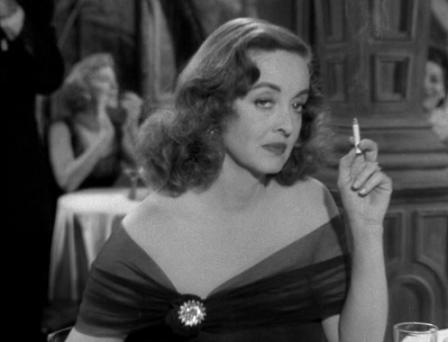 “Bill’s 32. He looks 32. He looked it five years ago. He’ll look it 20 years from now. I hate men.”
“All About Eve” is many things.
An affectionate/satiric look at the theater and its denizens.
A proto-feminist manifesto that takes on issues of age, beauty, and desirability.
A showcase for one of the greatest female stars of all time.
Plus it is widely regarded as having the best dialogue ever spoken in a Hollywood movie.
The teaming of writer/director Joseph Mankiewicz and leading lady Bette Davis was a meeting of giants. Toss in Anne Baxter, Celeste Holm, Gary Merrill, George Sanders, Hugh Marlowe, and an unknown named Marilyn Monroe, and you have a landmark of American cinema.
“Fasten your seatbelts. It’s going to be a bumpy night!”
DR. STRANGELOVE…OR HOW I LEARNED TO STOP WORRYING AND LOVE THE BOMB (USA, 1964) Sunday, February 24, 2013
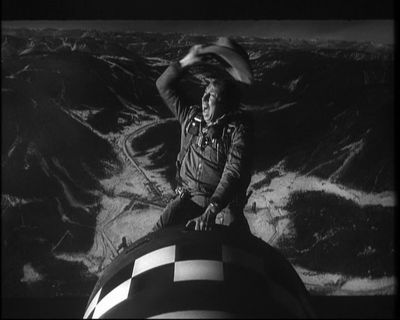 The Cold War concept of mutually assured destruction held that if the U.S. and the U.S.S.R. maintained more atomic weapons than they could ever need, neither would dare start a war for the simple reason that there would be no survivors.
Scripted by Terry Southern and performed by a brilliant cast (Peter Sellers, George C. Scott, Sterling Hayden, Slim Pickens, Keenan Wynn), Stanley Kubrick’s “Dr. Strangelove” employs absurdism and satire to punch holes in this idea.
A paranoid Strategic Air Command general launches a sneak attack on the Soviets. The story alternates between the War Room where the brass are desperately attempting to turn around our airplanes and a bomber whose crewmen are determined to see their mission through to its fissionable end.
With Sellers playing three characters – a British officer, the anemic President of the United States, and the titular Dr. Strangelove (a former Nazi scientist) – the film plumbs the depths of military madness.
THE CIRCUS (USA: 1928) Sunday, March 10,2013
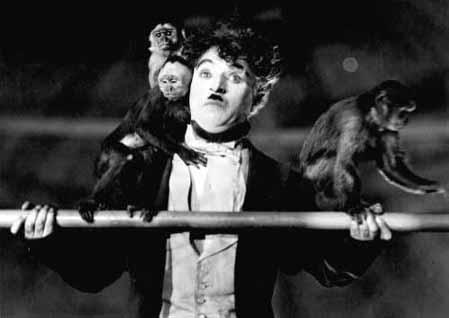 Just about everything that could go wrong did go wrong while Charlie Chaplin was making “The Circus.”
A studio fire destroyed the sets. Chaplin was going through a bitter divorce. His mother, long plagued with mental problems, died. And the IRS took the wildly popular movie star to court over back taxes.
The production was shut down for eight months.
Yet from all this misery came a masterpiece that sums up all that is great about Chaplin: Amazing acrobatics, side-splitting comedy, bittersweet romance.
Result: ”The Circus” became the seventh highest-grossing silent film of all time, earning more than $3.8 million. But we celebrate it today because of the pleasure it continues to deliver.
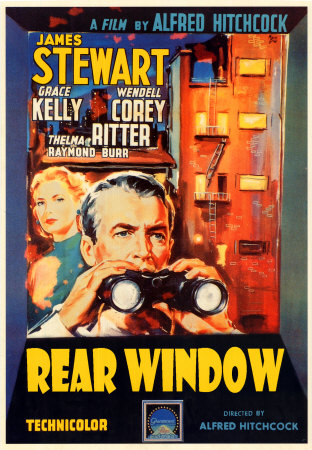 REAR WINDOW (USA; 1954) Sunday, March 24, 2013
It’s arguably Alfred Hitchcock’s best, most enjoyable film, a creepy/funny tale of a man who spies on his neighbors and stumbles across a murder that puts his life at risk.
But like many of Hitchcock’s efforts, there’s something serious percolating inside “Rear Window.” In photographer Jeff Jeffries (James Stewart), who is confined to his Greenwich Village apartment with a broken leg, Hitch gives us a character who represents the modern consumer of media, a voyeur who has no qualms about eavesdropping on the private lives of other people.
Among the film’s many virtues is the point-of-view cinematography, a fantastic set representing a block of apartment buildings, a very funny supporting performance by Thelma Ritter, and the astonishingly beautiful Grace Kelly, for whom Hitchcock provided one of the movies’ great entrances.
WINGS OF DESIRE (Germany; 1987) Sunday, April 7, 2013
High above the divided city of Berlin, angels in black topcoats perch on tall buildings, eavesdropping on the thoughts and prayers of the millions milling below them. They cannot interfere in human life, only empathize.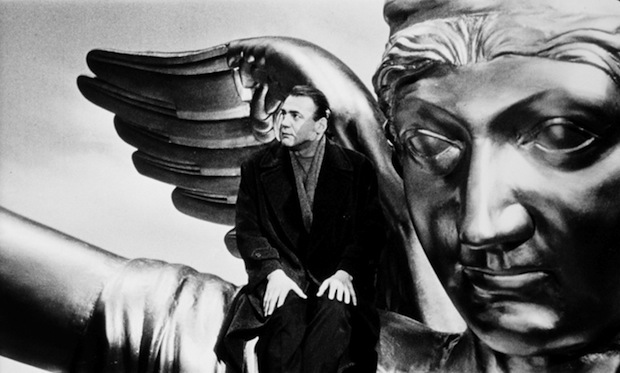
But one of these heavenly guardians (the great Bruno Ganz) is so moved by his encounter with a woman that he makes the leap to mortality and must negotiate a world that he now sees in color for the first time.
Though born and raised in Germany, Wim Wenders quickly became a citizen of the world with films like “Paris, Texas” (scripted by Sam Shepard), “Hammet” (a mystery involving the famed mystery writer), and the documentary “The Buena Vista Social Club” about Cuban musicians.
The haunting “Wings of Desire,” an example of Wnders’ long-running collaboration with avant garde writer Peter Handke, is both a beautifully poetic allegory and a droll comedy (American star Peter Falk shows up to play himself in perhaps the cleverest plot twist ever).
SINGIN’ IN THE RAIN (USA; 1952) Sunday, April 21, 2013
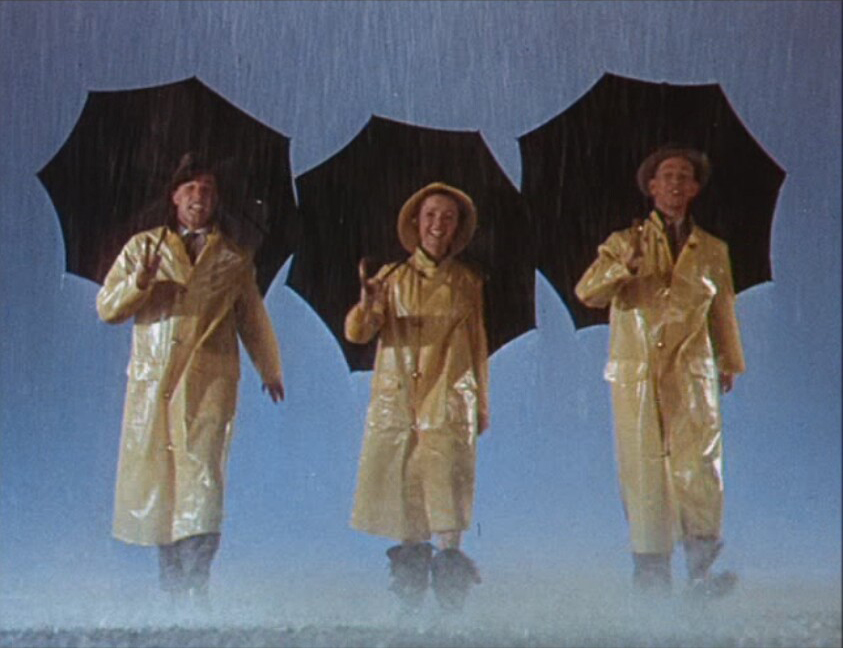 Widely regarded as the best musical of Hollywood’s Golden Era, “Singin’ in the Rain” began as vehicle to recycle songs written by Arthur Freed and Nacio Herb Brown. Freed was in charge of producing musicals at MGM, so basically the film would line his own pocket.
But if its origins were ignoble, the picture itself is hugely enjoyable, with all the disparate elements coming together in a most wonderful way.
Screenwriters Adolph Comden and Betty Green invented a story that takes place in Hollywood just as silent movies were giving way to sound (the same setting as in the Oscar-winning “The Artist”). Gene Kelly and newcomer Debbie Reynolds provided the romance; Donald O’Connor and Oscar-winning Jean Hagen the comedy.
And the terrifically hummable songs –“Singin’ in the Rain,” “Make ‘Em Laugh,” “All I Do Is Dream of You,” “You Are My Lucky Star,” “Moses Supposes,” “You Were Meant for Me” – are staged with high style by directors Kelly and Stanley Donen.
Dare you to walk away with a frown on your face.
SUNSET BOULEVARD (USA; 1950) Sunday, May 5, 2013
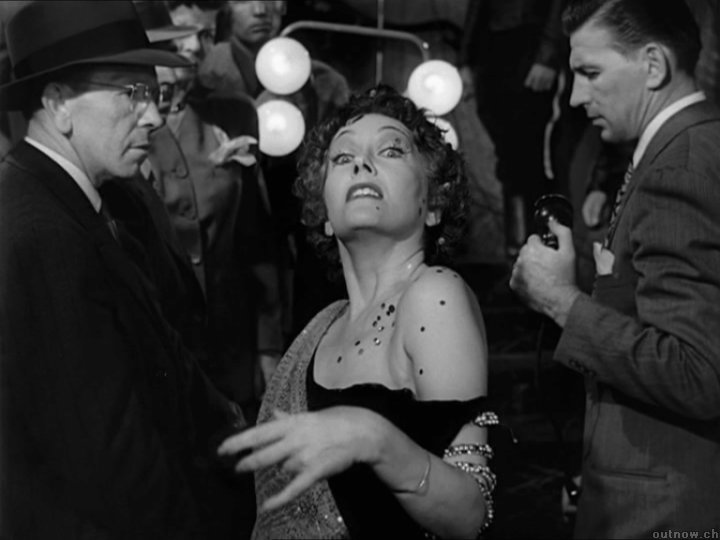 Hollywood has long been known as the Dream Factory. But what happens when the dream dies?
That’s the subject of Billy Wilder’s brilliant, biting “Sunset Boulevard,” a memorable blend of film noir and satire in which a callow young writer becomes the boy toy of a has-been silent star slipping into madness.
Wilder, a German immigrant, had a savage eye for his adopted country, as evidenced in films like “The Apartment,” “Some Like It Hot,” “Double Indemnity” and “Ace in the Hole.”
But in “Sunset Boulevard” he turned his attention to the movies themselves, especially to those one-time immortals for whom the heady rush of fame has become a long slow slide into obscurity.
For his calculating “hero” Wilder turned to William Holden. And for Norma Desmond, the grotesque, predatory former silent movie icon, he cast real-life silent star Gloria Swanson.
“Sunset Boulevard” is today part of our movie vocabulary (“All right, Mr. DeMille, I’m ready for my close-up”). It’s become a hit Broadway musical and in 1998 was named the 12th best American film of all time by the American Film Institute.
METROPOLIS (Germany; 1927) Sunday, May 19, 2013
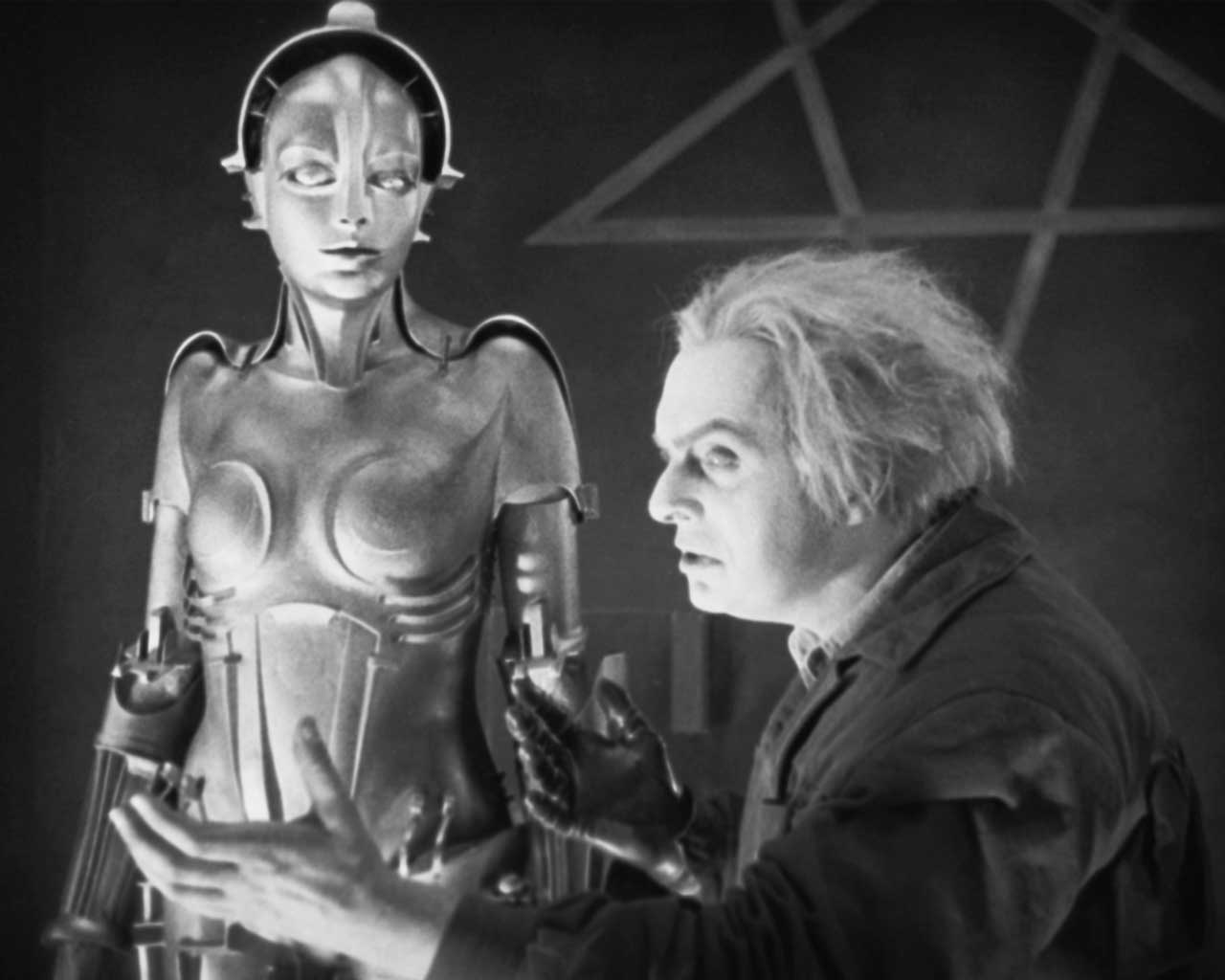 “Metropolis” is one of the silliest films ever. Which does not in the least detract from its greatness.
Fritz Lang’s expressionist science-fiction epic is so big, so spectacular, that even in the f/x-savvy world of the 21st century it leaves audiences a bit stunned.
Set in the future (or at least what filmmakers in 1926 thought the future might look like), “Metropolis” depicts a towering modern city. The privileged few party and cavort; the real work is done by thousands of drone-like workers who live and toil underground, rarely venturing into the sunlight.
But when the son of Metropolis’ industrialist leader falls for Maria (Brigitte Helm), the virginal saint of the slums, things quickly spin out of control. Especially when a mad scientist fashions a voluptuous robot in Maria’s image and sends it out to make mischief.
“Metropolis’” visual effects continue to astound and delight, while the film’s plot seems more relevant with every passing year. (The wealthy one percent? The vanishing middle class? It’s all here.)
 Butler's Cinema Scene
Wow! I’m so looking forward to these movies. Thank you!
We love umkc and Tom Poe’s film series over the years at the Tivoli…thank you very much for this offering…even tho we have seen all of these I would love to be part of the discussion pre and post on movie day….we love to hear from film critics in this way and you and Tom are our favorites!!
Bob, I’m really looking forward to this. Two questions: will these be all-ages events? I think this would be a great way to introduce these classics to my tweens and teens. Also, which version of Metropolis will you be showing in May? Hopefully it’s the 2008 restored version. Please let me know.
Yep, all ages…although Raging Bull is R-rated, so you may want to exercise parental restraint on that one.
Really like the series and the idea behind it (movie literacy, yes!), but have we really not had a movie that mattered since 1987? Maybe it’s a generational thing, so it’s difficult for me to see a list like this as complete without having a film released in my lifetime.
Best of luck for every success. Wish I could be there.
In my book, it takes at least 30 years before you can consider a movie a masterpiece. If it still gets the job done after 30 years, then it’s in.
The rub is whether you’re judging movies to be canonical masterpieces (in which case I get the arm’s length treatment on time) or judging movies based on their importance to you.
It may take 20-30 years to tell whether a movie has survived the test of time but if a movie grabs you and sticks with you, you know after just a couple. A movie that changes your life doesn’t have to be 30 years old.
I think of movies that matter as either being the movies that made me love cinema or hugely influential movies within cinema itself. The distinction matters when picking a list. Time to make some popcorn and see what I’m missing.