Feeds:
Posts
Comments

Archive for August, 2022

Jella Haase

“KLEO” My rating: B+ (Netflix)

Establishing and maintaining a consistent attitude in a feature-length film isn’t easy.  It must be harder still in a limited series with a running time of nearly eight hours that walks a tightrope between conflicting moods.

Yet the German “Kleo” pulls it off with an attention-grabbing blend of action, intrigue, social satire and flat-out hilarity.

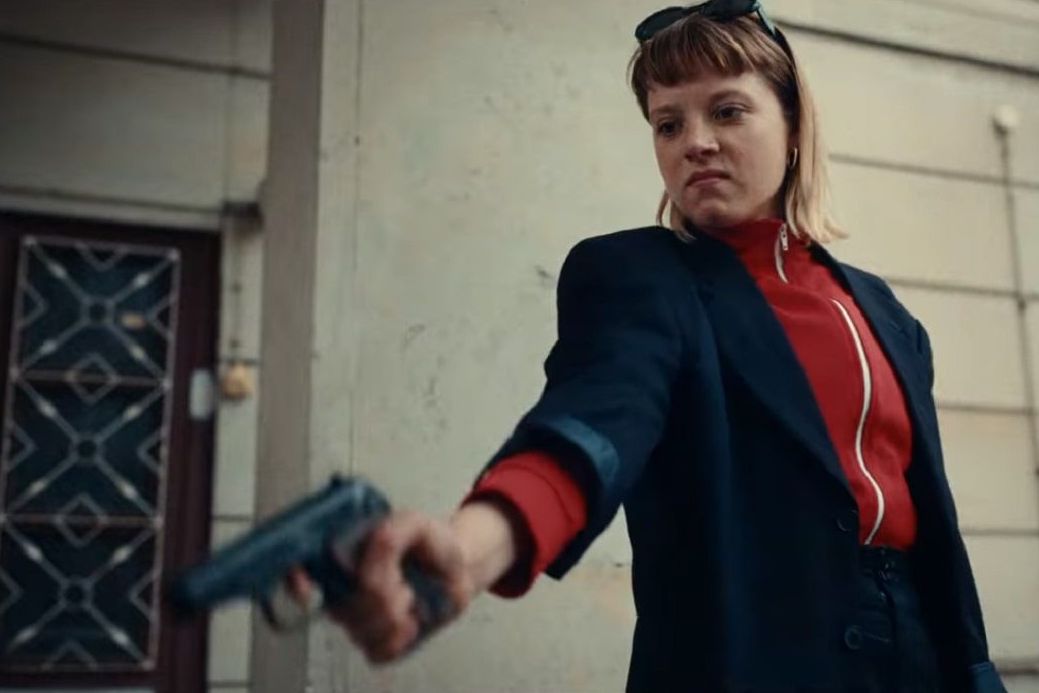
The titular heroine of this series (Jella Haase)  is a round-faced orphan who has been raised by her grandfather — one of East Germany’s security czars — to be the perfect deadly tool of Communism.

The first episode — set just before the collapse of the Soviet Union — follows young Kleo into West Berlin where, guzzled up in decidedly non-proletariat wig and costume, she assassinates a reveler at a disco. She returns to kudos from her spymaster bosses and warm embraces from her boyfriend/handler Andi (Vladimir Burlakov), by whom she is pregnant.

But Kleo’s world is turned upside down when she is falsely accused of treason, convicted by a kangaroo court and thrown into prison.  Released only after the fall of the Berlin Wall, Kleo — who has miscarried — is determined to find out why she was betrayed. It all seems to harken back to that disco mission.

Over the series she works her way through the hierarchy of the now-defunct Stasi (the East German secret police), looking for answers and leaving a trail of bodies. (Think former Nazis scurrying like rats for cover.)

It’s easy enough to spot the influences behind this series from creators Hanno Hackfort, Bob Konrad and Richard Kropf.

Most obviously there’s “La Femme Nikita” and “Killing Eve,” both of which featured young female assassins who are masters of both murder and disguises.

The violence — often mixing shock and black comedy — seems a clear reference to the work of Quentin Tarantino.  Indeed, late in the series Kleo finds herself targeted by one of her former Stasi colleagues, played by Vincent Redetzki with a manic eccentricity that brilliantly mimics Tarantino’s onscreen persona.

And “Kleo” is a hugely satisfying “buddy” picture.  Our girl teams up with a bumbling West German cop who witnessed the long-ago disco assassination and ever since has been obsessed with getting to the bottom of it.  He’s played by Dimitrij Schaad, whose performance is blitheringly endearing. (If there’s an American remake, he MUST be played by Charlie Day.)

Dimitrij Schaad, Jella Haase

As much as it is a spy mystery, “Kleo” is a commentary on Communism and the collision of Soviet repression with Western hedonism.  Kleo has only known the buttoned-down life  of socialist dogma; now she must negotiate a world of wide-open possibilities and capitalist idiocy.  

The latter is perfectly embodied in the person of Thilo (Julius Feldmeier), a druggie slacker from West Berlin she finds squatting in her old apartment (he moved to the East to take advantage of cheaper rents). Thilo believes he is an alien from a distant star and keeps looking for signs that the mothership is coming to bring him home. In the old Soviet-backed regime he’d be eliminated as an undesirable; here he’s practically status quo.

Now none of this works without a terrific actress holding down the crucial role of Kleo.  And the series has a brilliant leading lady in Jaase. 

Her Kleo is clever when it comes to spy craft, but she’s an emotional infant.  Jaase interprets her as a big (if deadly) child whose training as a government killer hasn’t  entirely erased her humanity.

The question that keeps us always guessing is which side of Kleo we’ll encounter in any given situation –K the ruthlessly effective assassin or the eternal adolescent looking for love.

To be honest, I can’t recall just what answers Kleo finds during her blood-soaked search.  It’s probably because what happens around the central mystery and the world in upheaval through which our girl moves is far more compelling.

| Robert W. Butler

Read Full Post »

John Boyega

“BREAKING” My rating: B (In theaters)

103 minutes | MPAA rating: PG-13

At some point early in the riveting “Breaking” most viewers are going to say to themselves that John Boyega is the new Denzel.

By the time the film is over they’ll be thinking that Denzel is the old John Bpyega.

The British Boyega has covered a lot of territory in just a few years on screen, from being a regular in the “Star Wars” universe to playing an alien-battling London punk in “Attack the Block” and an African American security guard with a conscience in Kathryn Bigelow’s “Detroit.”

If starring as a rebel Imperial storm trooper made Boyega a household name in some quarters, his performance in “Breaking” should sling him into the ranks of  Oscar contenders.  

As Brian Brown-Easley, a real-life Marine veteran undergoing a mental-emotional meltdown, Boyega gives a performance that is by turns subtle, in your face and heartbreaking.

For its first 30 minutes writer/director Abi Damaris Corbin’s film is basically a three-character drama unfolding in real time.  In a setup that will remind many of “Dog Day Afternoon,”  Boyega’s character walks into an Atlanta-area bank and passes a teller a note announcing that his backpack contains a bomb.

But it’s not a robbery.  We soon learn that Brian is at the end of his rope because his monthly veteran’s benefit has been seized by a collection agency to cover the unpaid tuition incurred in his brief and disastrous attempt at a college education. As his last stand he’s decided to hold the bank hostage until the media gets his story out and he gets his money back.

As hostage situations go, this one is unsettling for its civility.  Brian lets everyone in the bank leave save for a cashier (Selenis Leyva) and the branch manager (Nicole Beharie). And despite waving around what he claims is a detonator (looks like he assembled it with parts from the junk drawer), Brian fights his own peaking anxiety to present himself as polite and non-threatening…or at least as non-threatening as one can be in these circumstances.

In fact, Brian finds an ally of sorts in the manager, who turns down an opportunity to escape because she figures she’s all that’s between this desperate fellow and a sniper’s bullet.  The cashier, on the other hand, is perennially poised on the edge of hysteria.

Little by little the screenplay by Corbin and Kame Kwei-Armah introduces other characters. There’s a police hostage negotiator (the late Michael Kenneth Williams) who must work his away around a shoot-first commanding officer (Jeffrey Donovan) and  a new police chief determined to establish his bona fides as tough on crime.

Michael Kenneth Williams

Brian manages to get a call through to a news producer (Connie Britton) at a local TV station.

And periodically he rings up his estranged wife (Olivia Washington) and their precocious young daughter (London Covington), whose home has been invaded by a couple of grimly unhelpful FBI agents. 

“Breaking” moves with a sort of grim inevitability, balancing fear and suspense against Brian’s desperation.  And while everyone in the film is solid, Boyega’s performance is a tour de force as it shifts back and forth between depression, hope, anger, guilt…there are few emotional bases this young actor doesn’t tag here.

It’s one of those performances you’ll want to see twice, just to figure out how he pulled it off.

| Robert W. Butler

Read Full Post »

Aubrey Plaza

“EMILY THE CRIMINAL” My rating: B (Theaters)

95 minutes | MPAA rating: R

A seemingly normal young woman finds a new career on the wrong side of the law in “Emily the Criminal,” a low-keyed drama that argues persuasively that when the system is rigged crime actually does pay.

Aubrey Plaza is our titular protagonist, a young woman with a dead-end job hauling catered lunches to high-rise L.A. offices, a huge college loan debt, and an art degree she can’t put to use.

As John Patton Ford’s film begins Emily is undergoing a job interview in which she is caught trying to hide the fact that she has a criminal record. Evidently she once assaulted a boyfriend…whether or not he deserved it is an open question. The fact of her arrest is enough to keep Emily  from being hired by any reputable business.

A catering co-worker suggests something, well, a bit dicey.  And soon Emily finds herself with a dozen or so other economic burnouts being addressed by Youcef (Theo Rossi), who informs them that they are needed as “dummy shoppers.”  

The gig is not dangerous and no one will be physically hurt, Youcef announces in businesslike tones that eerily echo every new-employee orientation session you’ve ever sat through. But it is illegal, he admits.

Basically Emily and her fellow shoppers will be given a credit card — the information is stolen, Yuocef acknowledges — with which to buy a big flat-screen television.  They will bring the electronics to Youcef; he will pay them $200 in cash.

Easy money.

Emily is ready to walk out but there’s something about Youcef — perhaps it’s his honesty in revealing the illegality of the operation — that makes her put her conscience on the back burner.  Her first gig goes smoothly.

Her second, though, quickly turns hairy.  She’s supposed to use a credit card and forged money order to pick up a luxury car, and it’s pretty clear that the foreign types who are doing the selling are a bit shady themselves. Emily barely gets away with the vehicle and a bloody nose.

Theo Rossi

She’s shaken…but also stirred.  One of the marvels of Plaza’s performance is the way she mines her character’s central core of anger and alienation.  If the world won’t give Emily a  break, she’ll make her own.

Emily gets one last chance to go straight with a gig at a hipster ad agency;  during the interview the CEO (Gina Gershon) reveals that it’s a non-paying internship that may — or may not — result in actual employment. It’s one indignity too many for our girl, who storms out more determined than ever to make it any way she can.

Meanwhile her relationship with Youcef segues from student/mentor to hot and heavy.  Youcef (you may remember Rossi as one of the biker regulars on “Sons of Anarchy”) is a sweet fella who takes Emily to meet his Lebanese mama (Sheila Korsi); in fact, Emily will learn that Youcef is way too nice a guy for the illegal business in which he’s involved. 

Ford’s screenplay so matter-of-factly presents Emily’s situation that her bad moral choices make perfect sense; meanwhile he’s slowly turning up the tension as our girl’s escapades become ever more dangerous.

Holding down the whole shebang is Plaza, who plays Emily absolutely straight but with a deep pocket of percolating rage.  There’s not a sign of the actress‘ trademark snark; in fact, aside from some grimly satiric jabs at the 21st century work environment, the film is humorless.

| Robert W. Butler

Read Full Post »

Amber Midthunder and adversary

“PREY” My rating: B (Hulu)

99 minutes | MPAA rating: R

We’re way past expecting anything of interest to come out of the long-running “Predator” series,  yet Hulu’s  “Prey” consistently takes us by surprise while remaining faithful to the franchise’s mythology.

The gimmick at the heart of writer/director Dan Trachtenberg’s film:  “Prey” is set in the early 1700s in the American West.  Our human protagonists are members of the Comanche tribe; their alien adversary is pretty much the same laser-equipped killing machine we’re familiar with from all those other films.

Trachetnberg and co-writer Patrick Sidon go out of their way to faithfully depict the lifestyle of this continent’s original inhabitants…so much so that you could eliminate the sci-fi/horror elements and still have a pretty solid ethnological study of Native American existence.

Our lead character is Naru (Amber Midthunder), a young woman who defies tribal tradition by insisting on leading the life of a hunter…a role restricted to men.

She’s proficient with bow and arrow and tomahawk (even dreaming up a leather lanyard for the latter that allows her to retrieve a thrown weapon with a jerk of her arm). She has trained a dog — a creature viewed by her clan as an alarm system and possibly dinner — to be her hunting companion; they communicate through hand signals.

Naru’s widowed mother (Michelle Thrush) tolerates and even secretly encourages her daughter’s rebellious streak.  Her big brother Tabu (Dakota Beavers), one of the tribe’s best warriors, does his best to shield her from the jeers of the other young men (not that Naru really needs much help in defending herself from  male chauvinism).

And then, of course, a spaceship drops a predator into paradise.

The film builds slowly as tribal members discover clues that something new and scary is wandering through their post-card perfect landscape.  Three quarters of the way through there’s a battle between the Predator and a crew of French-Canadian fur trappers; turns out single-shot flintlock rifles are no match for alien technology.

“Prey” does a pretty good job of introducing modern (some would say “woke”) elements into the mix without clubbing us over the head with them.  Naru’s nascent feminism is implied rather than articulated.  

The presence of white men is introduced when Naru stumbles across a meadow filled with bison  carcasses, stripped of their hides and left to rot. (Never mind that the actual slaughter of the buffalo didn’t occur until after the Civil War, a 150 years later. The mountain men of this period would have been after beaver pelts.)

Moreover, while the natives live honorably by a shared code, the Frenchmen are presented as thugs and rapists…which is probably not too far from the truth.

Basically it all boils down to Naru using her ingenuity to outsmart her sophisticated enemy; as Arnold Schwarzenegger learned in the original “Predator,” sometimes the simplest solutions wisely applied will trump alien wiles.

The performances are unforced and natural; both Midthunder and Beavers exude screen charisma without making a big deal of it.

Technically the film is quite beautiful, evoking the sort of pristine wilderness captured so hauntingly in “The Revenant.” Costuming and props appear to be utterly authentic.

“Prey” was shot with English dialogue (except for the Frenchies). But for a fully immersive experience I’d go with Hulu”s “Comanche dub” option, which allows the aboriginal characters to speak in their tribal language.  Their words are translated into English subtitles, but “Prey” is such an effective piece of visual storytelling that you could watch it without subtitles and still perfectly understand what’s going on.

| Robert W. Butler

Read Full Post »

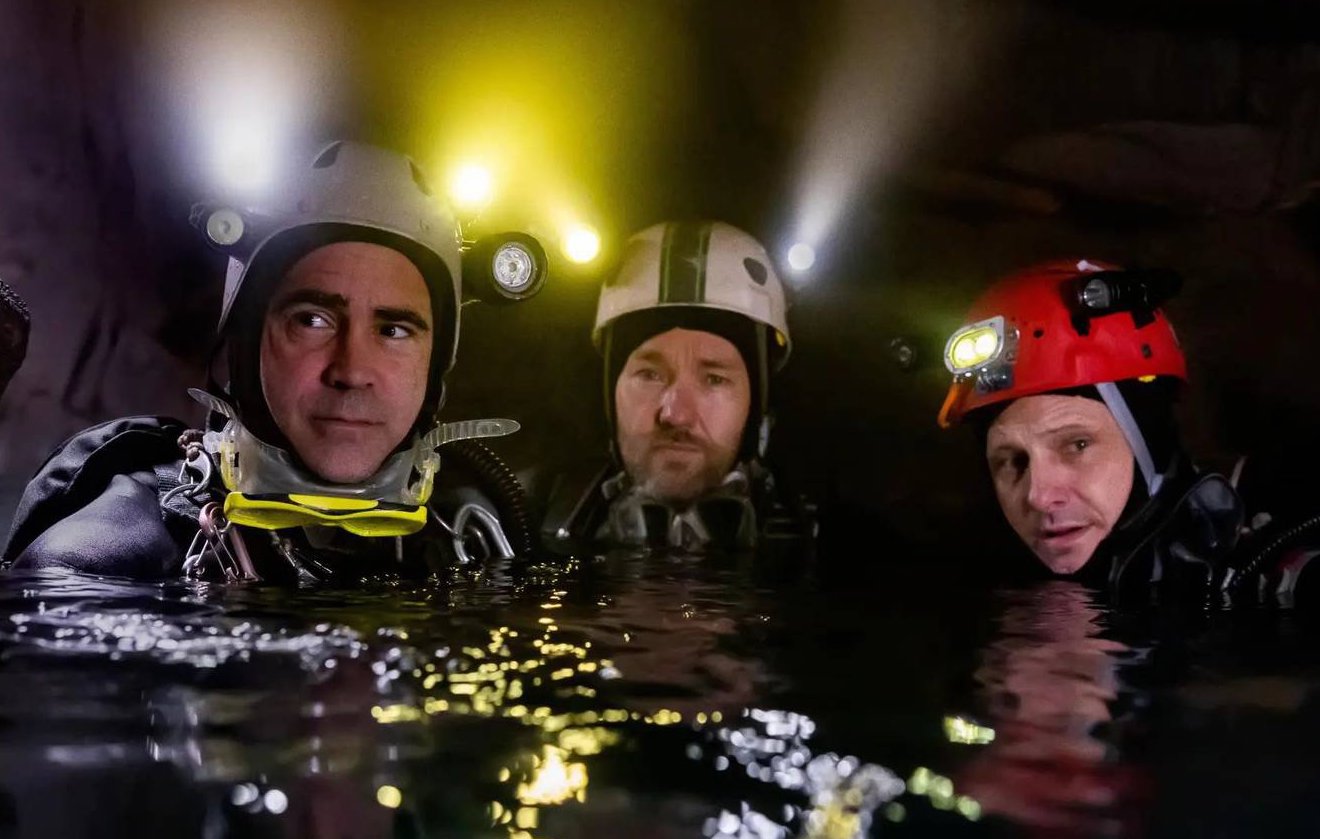
Colin Farrell, Joel Edgerton, Viggo Mortensen

“THIRTEEN LIVES” My rating: A (Amazon Prime)

147 minutes | MPAA rating: PG-13

“Thirteen Lives” may be the most engrossing, satisfying film of Ron Howard’s career.

It’s a virtual masterclass in dramatic construction and emotional massaging; moreover it is one of the few films I can think of that contains not one misstep, one wrong performance, one phony moment.

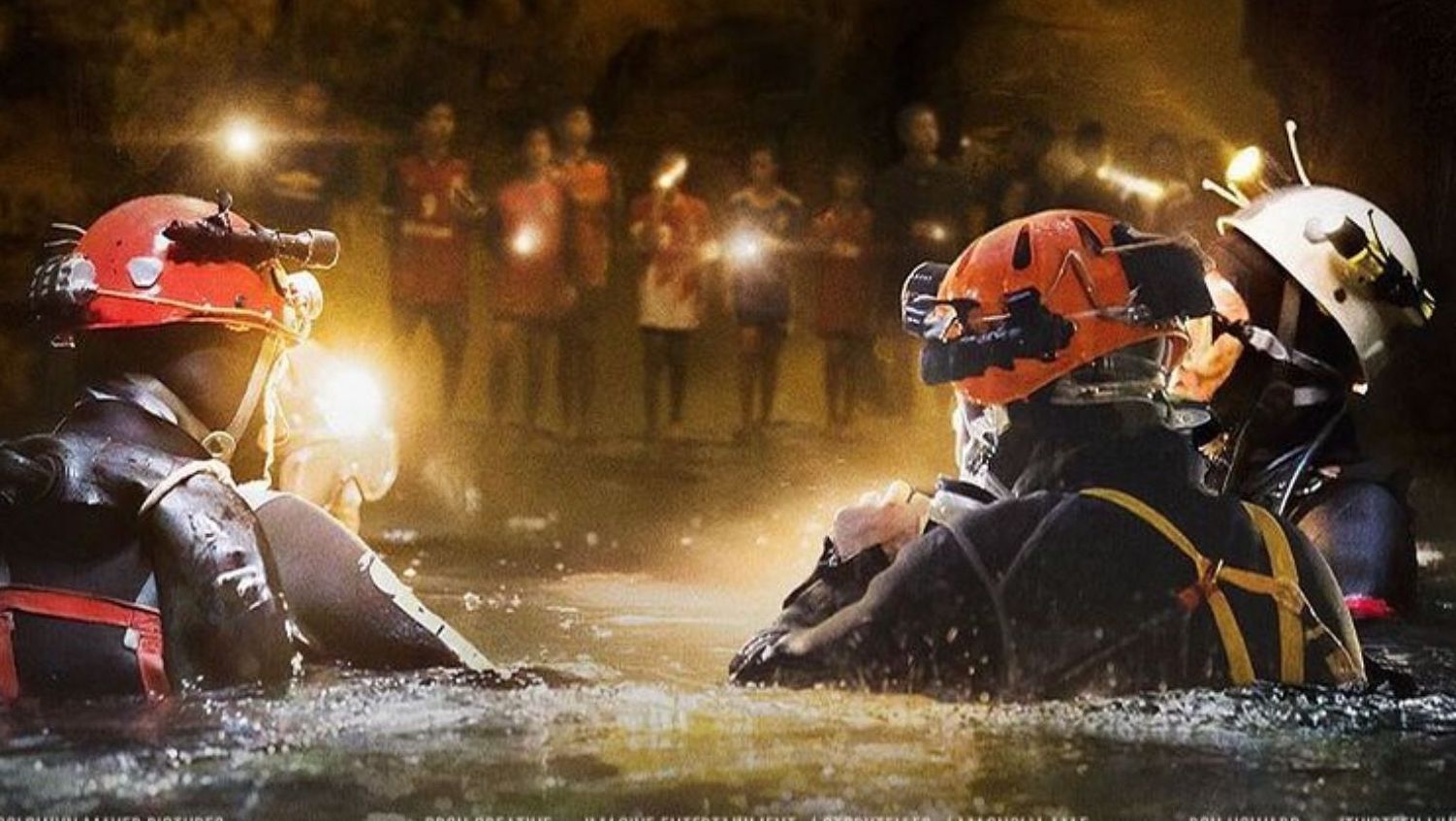
Howard’s recreation of the 2018 rescue of 12 Thai soccer players and their coach from a flooded cave (the screenplay is by William Nicholson and Don MacPherson) manages simultaneously to be a deeply emotional experience and a clear-eyed recreation of actual events. 

 It is modest to a fault, tempering overwhelmingly dramatic material through the lens of a measured docudrama style. Clearly, Howard’s recent forays into documentaries (“The Beatles: Eight Days a Week,” “Pavarotti,” “Rebuilding Paradise,” “We Feed People”) proved invaluable in finding just the right approach for this massive effort.

The payoff is nothing short of spectacular.

In many regards Howard’s 1995’s “Apollo 13” provided the model for this sort of fact-based historic recreation; “Thirteen Lives” is even more successful in capturing the tension between individual human drama and big, overwhelming events.

Though the film features Viggo Mortensen, Colin Farrell and Joel Edgerton as cave rescue specialists from the UK, there’s no actorly showboating, no obvious star turns.  Everyone seems to be foregoing their moment in the spotlight in favor of a group dynamic.

In this the performances reflect Howard’s overall message that while there certainly were heroes at work (including two Thai Navy Seals who died in the rescue efforts), this is  a tale of literally thousands of individuals who came together to accomplish the impossible.

Howard has never been a director who flexed his stylistic muscles; his approach here is straightforward, even impersonal. This allows us to concentrate on the story itself, which has been presented with marvelous economy and insight.

In the film’s opening minutes we meet the kids and their coach on the practice field.  They decide to treat themselves to a visit to the nearby Tham Luang, a spectacular cave nearly four miles long.  We see them park their bikes at the entrance and eagerly race into the darkness.

We won’t see them again for another hour, or 10 days in real time.  They go missing, their bikes are discovered, and immediately the authorities launch a rescue effort.

Tham Luang completely floods during the monsoon season, and the boys have been unlucky enough to enter the cavern just as an early storm is pouring millions of tons of water into the subterranean system.  It is presumed that they have been trapped by rising waters and forced to retreat ever deeper into the darkness.

While Thai military divers search for them in a labyrinth of submerged stalactites and passages so narrow they must remove their oxygen tanks, an army of volunteers descend on the mountain above the cave with shovels, pumps, pipes and chutes fashioned from split bamboo in an effort to divert water off the hillside and away from the cave.

on Howard

Local officials meet with local farmers to explain the process.  Will their crops be ruined when their fields flood? a woman asks.  Yes they will.  The farmers exchange glances and nod. Those 13 lives come first.

The cave rescue specialists played by Farrell and Mortensen arrive on the scene virtually without portfolio and by virtue of their independent status (they’re not part of the Thai military or government) have the freedom to take extraordinary risks. 

But discovering the boys alive doesn’t end the crisis.  The rain that trapped them was only a preview; within two weeks the full-fledged monsoon will fill every air pocket in the cave with water for several months.  They cannot wait out the weather; they must find a way out.

Several experienced divers have almost panicked and drowned in the treacherous waters.  There is virtually no safe way to guide the boys through several kilometers of cloudy runoff; none of the children have used scuba equipment and several cannot swim.  

That’s where Edgerton’s character comes in.  In addition to being a cave rescue diver, he’s an anesthesiologist; maybe they can suit the children up in scuba gear, knock them out with drugs and pull them to safety? 

“They’re packages,” one of the rescuers explains. “We’re just delivery guys.”

The second hour of “Thirteen Lives” is a step-by-step look at how the rescuers pulled it off. This is an exquisitely timed, bite-your-nails adventure that will have viewers shaking their heads in disbelief.

By film’s end audiences will feel nearly as battered and worn out as the kids and their saviors.  But it’s a good ache.

| Robert W. Butler

Read Full Post »

Patton Oswalt, James Morosini

“I LOVE MY DAD”  My rating: B- (Glenwood Arts) 

96 minutes | MPAA rating: R

Is “I Love My Dad” clever/charming or just plain creepy?

Reactions will run the gamut for filmmaker James Morosini’s second feature, an autobiographical slice of parent/child dysfunction that flits nervously between comedy and tragedy.

Middle aged Chuck (Patton Oswalt) has proven such a disappointment to his estranged teenage son Franklin (writer/director Morosini) that the kid has severed all lines of communication.

Chuck lives hundreds of miles from his son and ex-wife (Amy Landecker) and has missed most of Franklin’s adolescence, including the boy’s recent stint with a support group for high schoolers with suicidal tendencies.

Franklin, you see,  is an emotional mess and for this he blames good old Dad, a font of moral bankruptcy and selfishness.

But Chuck now finds himself desperately looking for connections with the child he’s pretty much ignored, and he comes up with a mind-bogglingly inappropriate scheme.

He’ll catfish Franklin by creating an online presence, disguising himself as a teenage girl who will exhibit a romantic interest in the lonely kid.  That way he can pry into Franklin’s life in the guise of another teen.

Remember, Franklin has been undergoing counseling for suicidal thoughts.  What could go wrong?

Chuck uses as his model the cute young waitress (Claudia Sulewski) who serves him breakfast at his local diner.  Without her permission he raids her online accounts, downloading her collection of selfies and building a fictional profile.

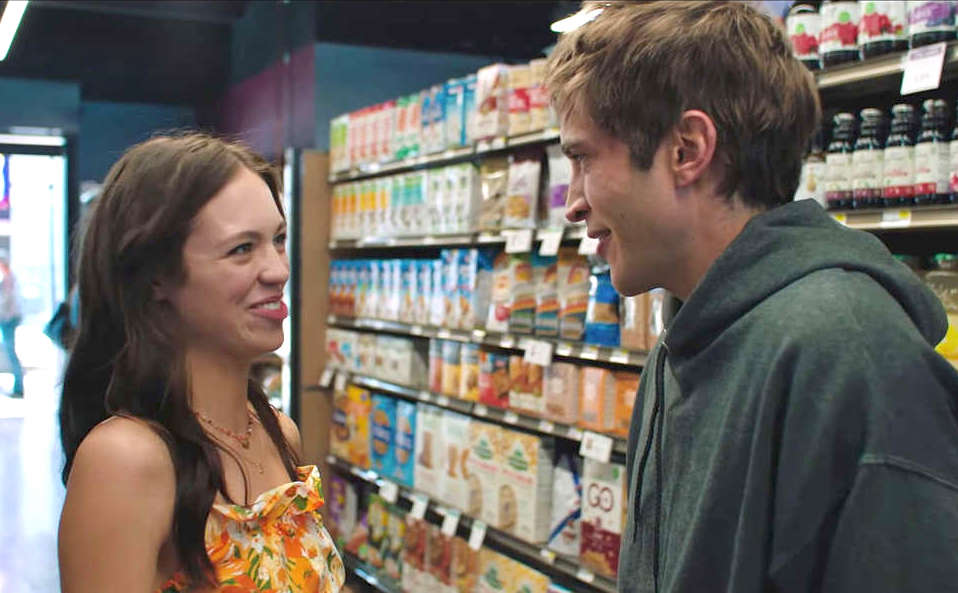
Morosini’s screenplay (it won the 2020 Screencraft competition) makes a big leap when it employs fantasy sequences to depict encounters between Franklin and his dream girl.  In reality they’re simply typing back and forth on their computer keyboards, but in Franklin’s mind this beautiful, funny, charming woman is right there in front of him, waiting to be kissed.

Claudia Sulewski, James Morosini

For his part, Chuck must keep scrambling to answer Franklin’s demands for a real honest-to-God telephone conversation with his long-distance paramour.  He recruits the help of his bed buddy and boss (Rachel Dratch) who immediately screws everything up by agreeing to a face-to-face meeting. 

Despite some overtly comic moments, the mood of “I Love My Dad” is one of every-growing anxiety. After all, Franklin is a fragile young man, and Morosini’s screenplay keeps digging an ever-deeper hole that will make his rude awakening to the truth all that more traumatic.

Saving the day (because I’m not sure I buy the “happy” ending Morosini supplies) are the performances.  

Oswalt is of course a great funnyman, but in recent years he’s successfully made the jump to dramatic roles; here he balances parental angst with an almost childlike eagerness to love and be loved.

Director Morosini radiates bruised soulfulness as Franklin and, despite being 31 years old when he shot the film, makes us believe he’s a teen.

And Sulewski — making her acting debut after a successful career as a YouTube and Instagram influencer — is dynamite in dual roles, both as the luscious “dream” girl and as the down-to-earth real-life waitress. 

| Robert W. Butler

Read Full Post »