Feeds:
Posts
Comments

Archive for the ‘Uncategorized’ Category

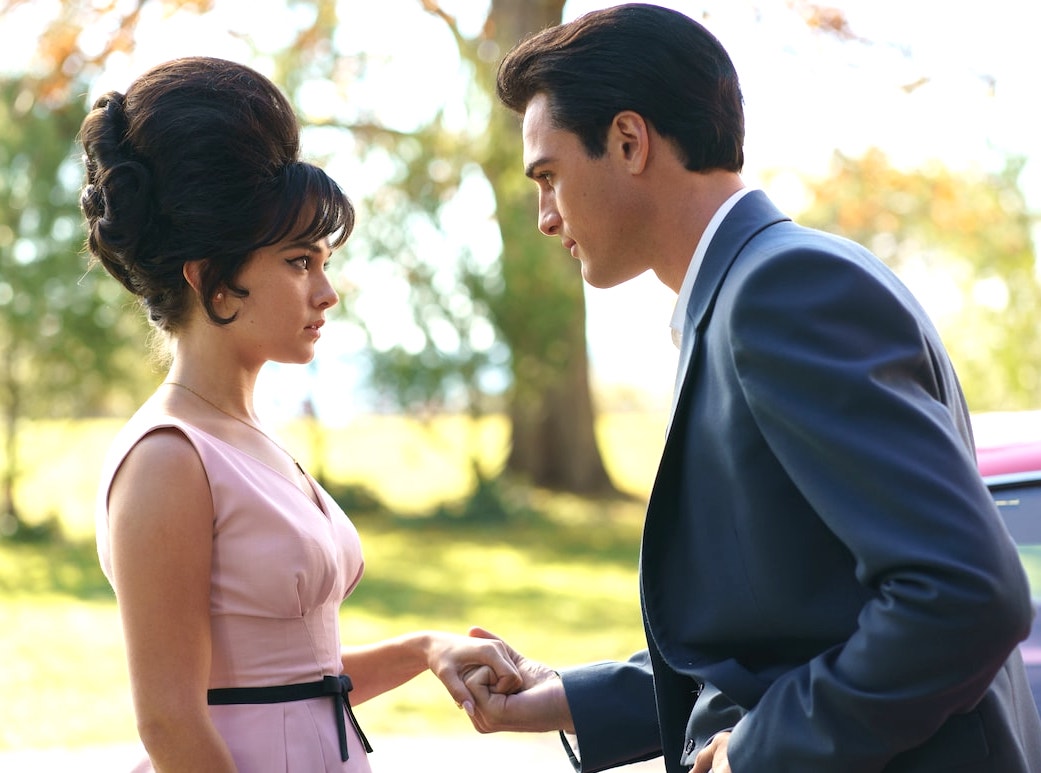
Cailee Spaeny, Jacob Elordi

“PRISCILLA” My rating: B- (In theaters)

113 minutes | MPAA rating: R

The star-crossed saga of Elvis and his child bride Priscilla Beaulieu has been retold so often that Sofia Coppola’s “Priscilla” will hold few surprises for Presley-holics.

What the film does offer is a dreamlike take on a teenage girl swept off her feet by the Earth’s most famous man. (Coppola and Sandra Harmon’s screenplay is based on Priscilla Presley’s memoir; Presley was a producer of the film.)

It was a romance destined to fall apart. The initially charming rock star became increasingly controlling and, after Priscilla gave birth to a baby girl, turned his back on the marital bed in favor of frat-house partying with his notorious “Memphis Mafia” of good ol’ boys.

In the title role Cailee Spaeny undergoes a remarkable physical and emotional transformation over the course of the film. Though virginal (Elvis wouldn’t consummate the relationship until marriage), her Priscilla isn’t entirely naive about the pitfalls in her path.  In a sense “Priscilla” is a study of her painfully blossoming emotional maturity.

Brit actor Jacob Elordi doesn’t attempt an Elvis imitation so much as an approximation…and it pretty much works.  Note that we don’t see Elvis performing any of his hits; instead the film’s soundtrack is heavy on other late-‘50s artists. 

Michelle Williams

“SHOWING UP” My rating: B (For rent on various streaming services)

107 minutes | MPAA rating: R

Filmmaker Kelly Reichardt once again finds the perfect voice for her cinematic minimalism in Michelle Williams, here almost unrecognizable as a drabbed-down middle-aged artist.

When not performing administrative drudge work at an urban art school, Williams’ Lizzy devotes herself to her sculptures — foot-high ceramic statues of women caught in moments of expansive movement or somber contemplation. To the extent that the film has a plot, it’s about Lizzy preparing for a one-woman show at a small local gallery.

Mostly we eavesdrop on her life. She lives alone with a cat. (Is she straight? Gay?)  Her best friend and landlord Jo (Hong Chau, an Oscar nominee for “The Whale”)  is a fiber artist who is as outgoing and vivacious as Lizzy is dour and brooding.  

Lizzy’s divorced mother is also her boss; her father (Judd Hirsch) is a well-regarded (and egotistic) potter, now retired.  There’s also a schizophrenic brother (John Magaro) favored by their parents as a genius, though he’s unable to hold a job.

What we get here is a portrait of a woman as gray as the colorless clothes she favors, but nevertheless devoted to creating art, even though she’ll never make a living off it. At least she’s showing up.

And as much as “Showing Up” is a personality study, it is also an astonishingly lived-in depiction of a world whose inhabitants are devoted to creating.  Anyone familiar with an art school environment will find the film almost a documentary experience.

| Robert W. Butler

Read Full Post »

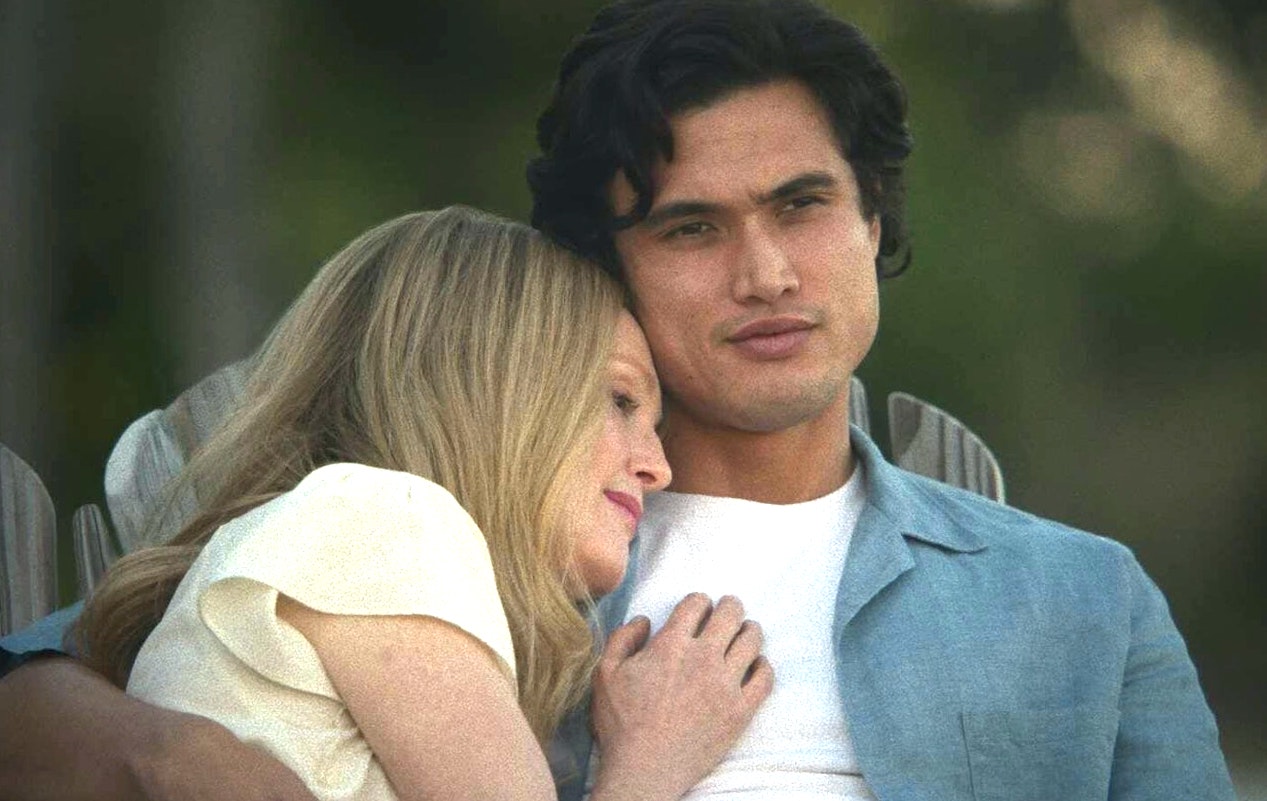
Natalie Portman, Julianne Moore

“MAY DECEMBER” My rating: B  (Netflix)

117 minutes | MPAA rating: R

Todd Hayne’s “May December” takes a lurid page from recent pop history and turns it into a troubling deep dive into bruised and battered psyches.

Set in moss-adorned Savannah, Samy Burch and Alex Mechanik’s screenplay centers on a visit from a Hollywood star.

Elizabeth Barry (Natalie Portman) has come to  town to research a role in an upcoming film. 

Specifically she’s here to interview and observe Gracie Yoo (Julianne Moore), the real-life woman she will be portraying.

When they first meet Gracie is hosting a raucus pre-graduation party for her college-bound twins and their friends. She’s obviously a perfectionist when it comes to wifely/motherly duties, but exhibits just enough world-weary Mom humor to soften her need to dominate every situation.

She appears determined to create a forced atmosphere of normalcy.

Right off the bat we notice something odd. There’s this guy, Joe (Charles Malton), about 20 years younger than Gracie who sometimes seems like a quiet servant. Is Joe her son? If so, isn’t that a rather disturbing kiss she plants on him?

What we quickly come to learn is that nearly two decades earlier Gracie and Joe were the center of a huge scandal.  The then-36-year-old Gracie had an affair with seventh grader Joe. She ended up having his baby in prison; they married upon her release and now have three offspring (the oldest, born behind bars, is already in college). 

And, yes, “May December” is clearly inspired by the story of the late Mary Kay Letourneau. 

In a sense the film is a detective story, with Elizabeth interviewing participants in the sordid saga:  Gracie’s blindsided first husband (D.W. Moffett) and emotionally burned-out adult son (Cory Michael SmithI), the pet shop owner (Charles Green) in whose storeroom the illicit lovers were found in flagrante delicto, Gracie’s supportive best friend (Joan Reilly).

Julianne Moore, Charles Melton

Outwardly, anyway, Gracie seems to have come through it all more or less intact.  She claims to have “no doubts, no regrets.” She keeps busy baking cakes for friends and running her household.

But behind closed doors she is often weepy and anxiety-riddled, sobbing in the arms of Joe, who in her presence smothers his own individuality in order to give unquestioning support.  Their dynamic is truly squirm-worthy.

Gracie —who is less than thrilled with Hollywood having another go at her story (some years earlier there was a tacky made-for-TV movie) — tells Elizabeth that it was 13-year-old Joe who seduced her, not the other way around.

“May December” is less interested in discovering who’s to blame than in examining the damage done.  The film explores level upon level of these characters…just when you think you’ve got one of them pinned down they do something that requires a quick reassessment.

Among those under the microscope is Elizabeth herself.  Ostensibly she’s our narrator/guide through this emotional minefield, but at some point we’ve got to ask if her show of friendship isn’t just another acting job. Clearly she’s determined to wring every bit of nuance out of Gracie’s story and to get there isn’t above creating collateral damage of her own.

In that regard “May December” is an indictment of show-biz duplicity and exploitation. Rarely has a film cast such a jaundiced eye on an actor’s process.

The acting is terrific. Moore and Portman, of course, are among our best film actresses. 

But the film’s real discovery is Melton, a veteran of TV’s “Riverdale” (he’s also a K-State alum) whose Joe undergoes the most striking transformation. Initially he seems to have almost no personality; get him away from Gracie, though, and you find an individual trap between childhood and adulthood, struggling to come to grips with a troubled past.

| Robert W. Butler

Read Full Post »

 “COMMON GROUND” My rating: B(At the Glenwood Arts)

195 minutes | No MPAA rating:

Exhaustive and a bit exhausting, the doc “Common Ground” makes an encyclopedic case for regenerative agriculture.

If that sounds like an earnest science lecture…well, it is, sort of.  But the filmmakers (Joshua Tickell and Rebecca Harrell Tickell) knock themselves out working to keep our attention over nearly two hours, filling the screen with arthouse cinematography and a small army of familiar Hollywood faces (Laura Dean, Rosario Dawson, Donald Glover, Jason Mom, Ian Somerhalder).

Mostly, though, there’s an avalanche of information that will convince most of us that modern agricultural methods are taking us down the highway to hell.  It’s time to change our ways.

The plot, if you will, consists of an opening section about the dangers of climate change that will leave most quaking in their boots, followed by examples of how we can turn the problem around and save ourselves and our planet.

We’re told early on that this is a movie about dirt. Well, soil to be more precise. “if the soil dies, we die.”

We meet Gabe Brown, a North Dakota farmer who is a  champion of the new agriculture. A big beefy guy in coveralls, Brown is also an erudite spokesman, pointing out how his land — farmed to minimize the loss of topsoil to wind and water — looks like an oasis compared two that of his neighbor who uses conventional methods and ends up with huge patches of unproductive dirt.

The neighbor’s system, we’re told, is working to kill things, while Brown’s is working in harmony and synchrony with nature, creating profit while enhancing the ecosystem for future generations.

Over the course of the film the same theme is hammered home: no tilling , use cover crops that return nurtrients to the soil, eliminate or reduce chemical use, integrate animals into cropland (the animals eat weeds and fertilize with droppings — you don’t have to eat them but you need them to be grazing).

“Common Ground” reaches far and wide.  There’s a section on Native American farming practices, on the contributions of black scientist George Washington Carver (who advocated the use of nitrogen-fixing cover crops to replenish soil) and of African women who, coming to his country as slaves, introduced crop seeds they had intentionally braided into their hair before the horrible sea voyage. That last one is a revelation.

A big chunk of the film is devoted to roasting Monsanto for promoting the cancer-causing herbicide glyphosate (sold commercially as Roundup). Particular attention is paid to the unfortunate fates of whistleblowers and investigative scientists and journalists who have dared challenge the chemical giant.

The bee die-offs? Yeah, that’s in here, too.  Pesticides are the culprit.

We even get into the mechanics of the annual Farm Bill, which to date has barely acknowledged the existence of restorative farming techniques, 

Factory farming of food animals is addressed. It’s an ugly business (don’t worry…no gross-out visuals here), but the film also points out that most of the new meat substitutes are crammed with plants grown with chemicals with names you can’t pronounce.

Woody Harrellson narrates a segment about hemp.  No comment necessary.

if there are moments when the viewer feels manhandled by the unyielding crush of information, “Common Ground” does assert there’s hope. 

We just have to change our ways.

| Robert W. Butler

Read Full Post »

Jacob Elordi, Barry Keoghan

“SALTBURN” My rating: B-(In theaters)

131 minutes | MPAA rating: R

Good-looking but off-putting, Emerald Fennell’s “Saltburn” is yet another examination of British class warfare.

Fennell, who made a remarkable directing debut a couple of years back with the female revenge dramedy  “Promising Young Woman,” here mines a favorite plot of English iconoclasts, that of a lowly commoner “adopted” by his societal betters.

Our protagonist is the delightfully named Oliver Quick (Barry Keoghan), whose freshman year at Oxford is highlighted by a growing friendship with the beautiful, charming, rich-as-hell Felix Catton (Jacob Elordi).  

It’s an odd pairing.  Oliver, while a good student, is something of a blank-faced emotional drone, definitely not one of the handsomely entitled sort Felix usually runs with.  

They meet when Oliver does an unexpectedly generous and apparently selfless favor for Felix, and the latter decides that maybe this working-class  kid provides just the sort of down-to-earth genuineness lacking in his posh life.

Upon learning that Oliver’s father has died of a drug overdose, Felix suggests Oliver spend the summer with him at his palatial family estate, Saltburn. Good times.

“Saltburn” touches on most of the plot points and characters common to this sort of enterprise.

There’s a cousin (Archie Madekwe) who hates the low-born OIiver from the get-go; a sad, substance-abusing sister (Sadie Soverall) who offers sexual promise; the mother  (Rosamund Pike), eager to prove her open mindedness (“I was a lesbian for a while…too wet for me”) by doting on the lower-class visitor; the father (Richard E. Grant) so rich he can spend his days on his collecting obsessions.

There’s also another visitor, the freeloading Pamela (Carey Mulligan), one of Mother’s friends but now wearing out her welcome. Upon learning she has died a member of the household observes: “She’d do anything for attention.”

Mining some of the same psychological landscape as “The Talented Mr. Ripley,” Fennell’s film slowly reveals that the harmlessly bland Oliver is in fact a sort of emotional vampire (in one shocking scene he appears to be feasting on menstrual blood). In fact, he’s the human version of the cuckoo, a bird that takes over other birds’ nests, destroying their eggs and substituting one of its own.

Rosamund Pike

The results are unashamedly misanthropic. “Saltburn” satirizes the ruling class, but its avenging angel proletarian “hero” is no better than his titled targets.

Given the contempt and cynicism on display, the film is watchable enough; it certainly doesn’t hurt that most of the roles have been taken by beautiful people.

Not that Barry Keoghan is beautiful, exactly.  In the right light his potato face exudes a sort of brute animal cunning;  at other times he can seem almost handsome. It’s the perfect chameleonic approach to a shifty character like Oliver.

And the film ends with a sequence so perfect — a naked Oliver dancing rapturously through the halls of Saltburn — that I’m almost willing to blow off my reservations. A strong finish is always a good thing.

| Robert W. Butler

Read Full Post »

Annette Bening

“NYAD” My rating: B  (Netflix)

121 minutes | MPAA rating: PG-13

Athletic excellence and obsessive ambition are regular bedfellows, perhaps no more so than in this story of distance swimmer Diana Nyad,

Scripted by Julia Cox (from Nyad’s book Find a Way) and directed by Jimmy Chin and Eliizabeth Chai Vasarhelyi,  this,is a slow buildup to Nyad’s 2013 master achievement, a 110-mile solo swim at age 60 (sans shark cages and resting raft) from Havana to Key West.

It was her fifth attempt, earlier ones having been scuttled by unpredictable tides and unfavorable winds, jellyfish stings, low water temperature and sheer exhaustion creating a dissociative mental state not unlike a drug-free acid trip.

The film benefits hugely from its casting,  Annette Bening makes of her  Nyad an almost superhuman force willing to cajole, beg and borrow (if not steal) to get the funds for her expensive attempts, which required a motorized boat, kayaks and crew to man it all. 

There’s more than a little stubborn craziness at work here (one must wonder at the masochistic elements of the sport), and the film in flashbacks offers details about the adolescent Diana’s sexual  abuse at the hands of her Hall of Fame swimming coach.

In the present Nyad’s obsessions strain relations even with her best friend Bonnie Stoll (an excellent Jodie Foster), who puts her own life on hold to pitch in with the advance work and to accompany Nyad on her attempts (Stoll remains on the boat, feeding the swimmer thorough a tube but never touching her…that would violate the solo swim rules).

Viewers may wonder whether Nyad, who is openly gay, and Stoll were lovers.  The film isn’t clear on that point and in the end  it doesn’t matter. This is a film about friendship surviving just about everything life can throw at it.

Special nod also to Rhys Ifans for his portrayal of John Bartlett, a veteran Caribbean captain who piloted the escort ship on Nyad’s attempts, even as he was battling the illness that would kill him.

Colman Domingo

“RUSTIN” My rating: B (Netflix)

106 minutes | MPAA rating: PG-13

Martin Luther King Jr.’s “I Have a Dream” speech at the 1963 March on Washington may have been the single most memorable moment of the Civil Rights era.

It wouldn’t have happened without Bayard Rustin, a gay black man of outstanding intellectual power and organizational ability. 

 The march was largely Rustin’s idea, and he certainly was its greatest facilitator, overcoming obstacles thrown up not only by the white establishment but by his fellow African American leaders.

Here Rustin is portrayed by Colman Domingo as an aggressive (and often aggressively off-putting) visionary whose dreams are forever being threatened by his gayness, a chink in his otherwise impressive social armor that his enemies found all too easy to exploit.

“Rustin” is an impressive recreation of a specific time and place.  The script is by Julian Breece (TV’s “First Wives Club”) and Dustin Lance Black (“Milk”), while the insightful but unobtrusive direction is by George C. Wolfe (“Ma Rainey’s Black Bottom”).

And talk about a supporting cast!!! Chris Rock as a doubtful Roy Wilkins, Jeffrey Wright as a sneaky Rep. Adam Clayton Powell, Glynn Turman as A. Philip Randolph, and Ami Ameen as Martin Luther King, Jr.  Toss in Audra McDonald and CCH Pounder and you’ve got carefully applied star power almost everywhere you look…yet all provide just the right support for Domingo’s soul-stirring performance.

When it’s over you’ll be convinced that Bayard Rustin should be a household name.

Tommy Lee Jones, Jamie Foxx

“THE BURIAL” My rating: B (Prime)

136 minutes | MPAA rating: R

Based on a real court case, “The Burial” is a David-vs-Goliath legal drama that offers juicy roles for Tommy Lee Jones and Jamie Foxx while dabbling in racial issues.

Jones’ Jeremiah O’Keefe is the operator of a regional chain of mortuaries. But debt has forced him into bed with a gigantic funeral home conglomerate that has been gobbling up little mom-and-pop operations. Now O’Keefe is looking for a legal cavalier willing to take on the big boys (the heavy here is a ruthless corporate raider played by the ever excellent Bill Camp).

O’Keefe’s search leads him to Willie Gary (Foxx), a cocky and flamboyant lawyer who fancies himself the incarnation of Johnny Cochran. Initially Gay isn’t interested in the funeral home case. He specializes in personal injury; moreover, he proudly views himself as an African American lawyer going to bat almost exclusively for African American clients.

But despite the cultural divide separating them, Gary and O’Keefe click on a personal basis. So much so that when Gary’s black associates bail on the case, he continues to work it virtually as a one-man show.

As effective as it is as a courtroom drama (Jurnee Smollett is very fine as Gary’s opposing counsel), “The Burial” is most satisfying as an examination of two men with vastly different life experiences who evolve into something more like a friends than legal allies.

Jones has so often played the grumpy hard ass that it comes as a revelation that he here is so vulnerable and, well, decent. Similarly, Foxx is terrific at revealing the individual behind the TV-ad bravado.

| Robert W. Butler

Read Full Post »

“NAPOLEON” My rating: C (In theaters)

158 minutes | MPAA rating: R

Like Dracula, Sherlock Holmes and any number of Shakespearean characters, Napoleon Bonaparte is one of those figures ever ripe for fresh cinematic reinterpretation.

I only wish I knew what incarnation director Ridley Scott and leading man Joaquin Phoenix were going for in their big, noisy, not-very-interesting “Napoleon.”

This is less viable drama than a 2 1/2-hour illustrated history lesson.  The most memorable moments are several battle scenes that depict the grandeur/horror of Napoleonic-era warfare without ever evoking a genuine emotional response.

As for the drama, it centers almost exclusively on the relationship of Napoleon (Phoenix) and his Empress Josephine (Vanessa Kirby). Indeed, David Scarpa’s screenplay is essentially a two-hander.  Virtually every other character (among them heavy hitters like Robespierre, Talleyrand, the Duke of Wellington and assorted European royalty) has been reduced to walk-on status.

So it’s a love story…sorta.  

The film begins with the French Revolution and is basically a series of highlights of the Napoleonic legend, sometimes jumping years between scenes.  

Phoenix’s Napoleon presents as a socially inept clod who just happens to be a military genius.  He is bereft of charm or a sense of humor.  Early on  I found myself wondering if we were supposed to regard this Napoleon as being on the autism spectrum.

We see our protagonist on various military campaigns (Egypt, Austria, Russia) where he wins the hearts of his troops in spite of his personality (as long as he keeps producing victories he’s their guy). We see Napoleon use his grapeshot-loaded artillery to quell an urban uprising of Royalists, turning a  crowd  of protesting Parisians into so many mounds of ground round. 

His military prowess gives him a foothold in the new Revolutionary government, first as one of three consuls leading France and then as emperor.

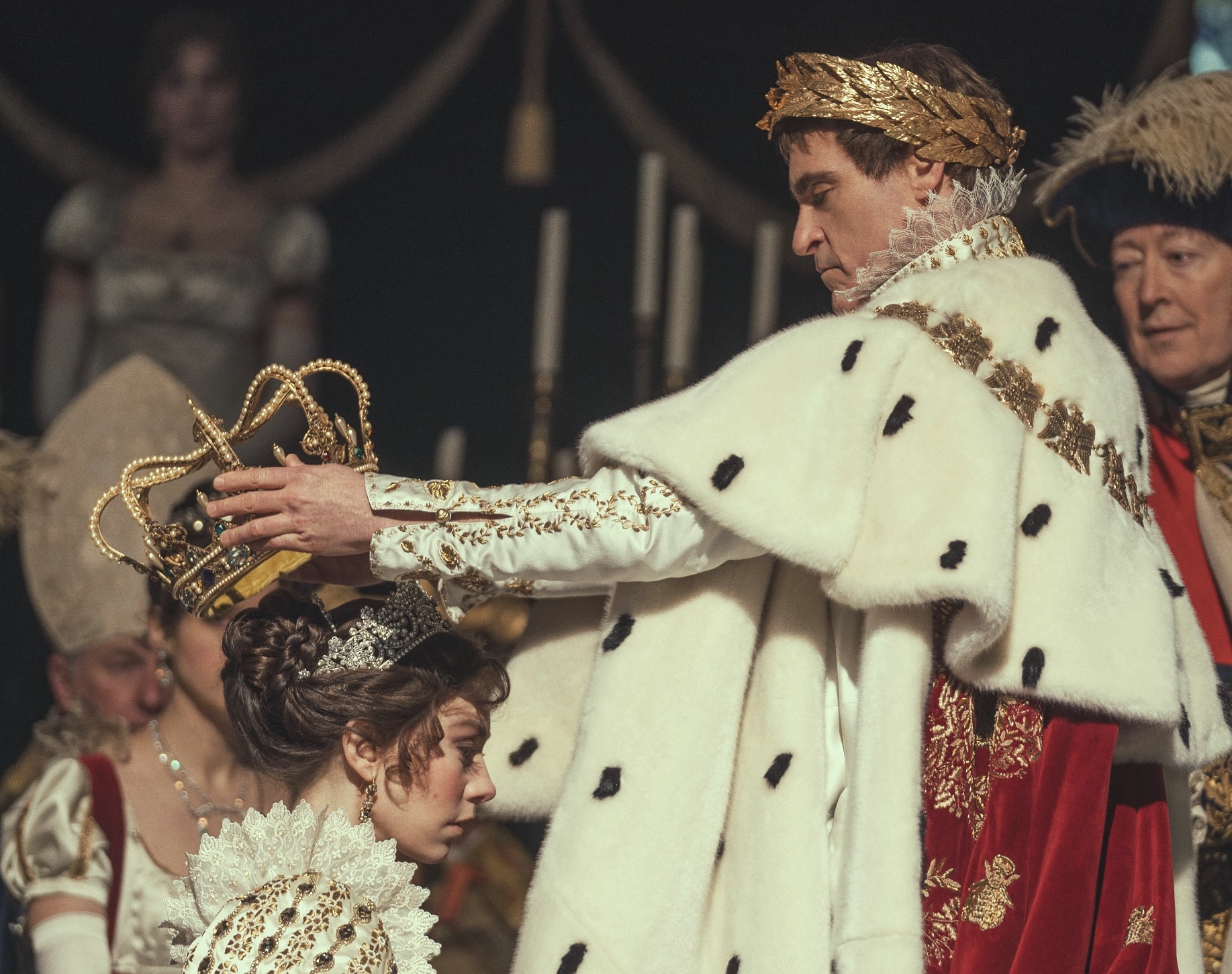
Vanessa Kirby, Joaquin Phoenix

Except that there’s little in Phoenix’s performance to suggest why anybody would even consider Napoleon as emperor material.  He’s kind of a doofus and almost seems to have lucked into his imperial status. 

Maybe the film is meant to be a Trumpian allegory about a numbnuts who ends up running a country.  But that suggests a sense of satire found nowhere in the Scott canon.

Whatever sparks this “Napoleon” strikes come from the collision of our man with Josephine.  

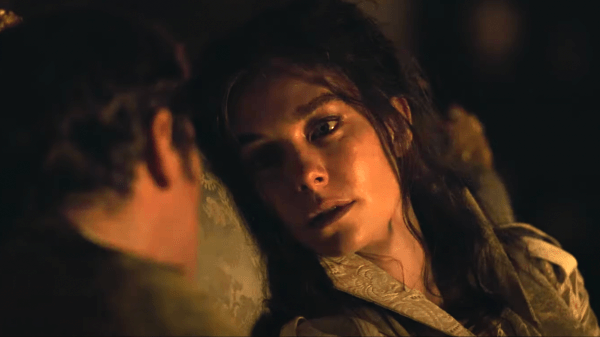
When we first see Kirby in the role she wears her hair in a sort of pixie cut (I’m guessing the look was the result of Josephine’s long imprisonment after her husband went to the guillotine) and exudes a feral feline sexuality.

You can see why the ham-fisted Nappie is attracted, though initially she appears unimpressed by his jackrabbit lovemaking technique.  In fact, while he’s off fighting the Republic’s enemies Josephine is messing around with other fellas.

Vanessa Kirby

But over time they become a codependent team who trade insults as a prelude to copulation.  Only problem is, Josephine is unable to give her emperor a son. But even after their divorce and Napoleon’s marriage to a more fertile female (I think there’s only one shot of this second wife in the whole picture) he continues to visit his original squeeze at the country estate to which she has been exiled.

“I wish  I could quit you” might well be their motto.

That Phoenix is one of our finest actors isn’t up for debate. But here he can’t seem to wrap his head around his character, and as a result we’re all left in the dark.

Was Napoleon a power-hungry tyrant? Or was he devoted heart and soul to his country? What kind of ruler  was he? (The film offers not a clue.) 

Did he have any hobbies?  Favorite foods?  I’m grasping at straws here.

Like “The Duellists,” Scott’s first film and also set in the Napoleon Wars, this latest effort is an impressive physical recreation of a time and place.  That sense is reinforced by a score made up almost exclusively of period music.

But the duties of physically creating the film seem to have left Scott no time to contemplate what he wants to say. This director has never exhibited a strong individual style, but here the absence of a point of view is maddening.

And why oh why has cinematographer Dariusz Wolski opted for a visual style so dimly lit that even scenes set in bright sunshine seem gray? There are no bright colors — at least in that regard the visual palette reflects the general joylessness of the overall enterprise.

| Robert W. Butler

Read Full Post »

This image has an empty alt attribute; its file name is napoleon-2023.jpeg

“NAPOLEON” My rating: C (In theaters)

158 minutes | MPAA rating: R

Like Dracula, Sherlock Holmes and any number of Shakespearean characters, Napoleon Bonaparte is one of those figures ever ripe for fresh cinematic reinterpretation.

I only wish I knew what incarnation director Ridley Scott and leading man Joaquin Phoenix were going for in their big, noisy, not-very-interesting “Napoleon.”

This is less viable drama than a 2 1/2-hour illustrated history lesson.  The most memorable moments are several battle scenes that depict the grandeur/horror of Napoleonic-era warfare without ever evoking a genuine emotional response.

As for the drama, it centers almost exclusively on the relationship of Napoleon (Phoenix) and his Empress Josephine (Vanessa Kirby). Indeed, David Scarpa’s screenplay is essentially a two-hander.  Virtually every other character (among them heavy hitters like Robespierre, Talleyrand, the Duke of Wellington and assorted European royalty) has been reduced to walk-on status.

So it’s a love story…sorta.  

The film begins with the French Revolution and is basically a series of highlights of the Napoleonic legend, sometimes jumping years between scenes.  

Phoenix’s Napoleon presents as a socially inept clod who just happens to be a military genius.  He is bereft of charm or a sense of humor.  Early on  I found myself wondering if we were supposed to regard this Napoleon as being on the autism spectrum.

We see our protagonist on various military campaigns (Egypt, Austria, Russia) where he wins the hearts of his troops in spite of his personality (as long as he keeps producing victories he’s their guy). We see Napoleon use his grapeshot-loaded artillery to quell an urban uprising of Royalists, turning a  crowd  of protesting Parisians into so many mounds of ground round. 

His military prowess gives him a foothold in the new Revolutionary government, first as one of three consuls leading France and then as emperor.

Vanessa Kirby, Joaquin Phoenix

Except that there’s little in Phoenix’s performance to suggest why anybody would even consider Napoleon as emperor material.  He’s kind of a doofus and almost seems to have lucked into his imperial status. 

Maybe the film is meant to be a Trumpian allegory about a numbnuts who ends up running a country.  But that suggests a sense of satire found nowhere in the Scott canon.

Whatever sparks this “Napoleon” strikes come from the collision of our man with Josephine.  

When we first see Kirby in the role she wears her hair in a sort of pixie cut (I’m guessing the look was the result of Josephine’s long imprisonment after her husband went to the guillotine) and exudes a feral feline sexuality.

You can see why the ham-fisted Nappie is attracted, though initially she appears unimpressed by his jackrabbit lovemaking technique.  In fact, while he’s off fighting the Republic’s enemies Josephine is messing around with other fellas.

Vanessa Kirby

But over time they become a codependent team who trade insults as a prelude to copulation.  Only problem is, Josephine is unable to give her emperor a son. But even after their divorce and Napoleon’s marriage to a more fertile female (I think there’s only one shot of this second wife in the whole picture) he continues to visit his original squeeze at the country estate to which she has been exiled.

“I wish  I could quit you” might well be their motto.

That Phoenix is one of our finest actors isn’t up for debate. But here he can’t seem to wrap his head around his character, and as a result we’re all left in the dark.

Was Napoleon a power-hungry tyrant? Or was he devoted heart and soul to his country? What kind of ruler  was he? (The film offers not a clue.) 

Did he have any hobbies?  Favorite foods?  I’m grasping at straws here.

Like “The Duellists,” Scott’s first film and also set in the Napoleon Wars, this latest effort is an impressive physical recreation of a time and place.  That sense is reinforced by a score made up almost exclusively of period music.

But the duties of physically creating the film seem to have left Scott no time to contemplate what he wants to say. This director has never exhibited a strong individual style, but here the absence of a point of view is maddening.

And why oh why has cinematographer Dariusz Wolski opted for a visual style so dimly lit that even scenes set in bright sunshine seem gray? There are no bright colors — at least in that regard the visual palette reflects the general joylessness of the overall enterprise.

| Robert W. Butler

Read Full Post »

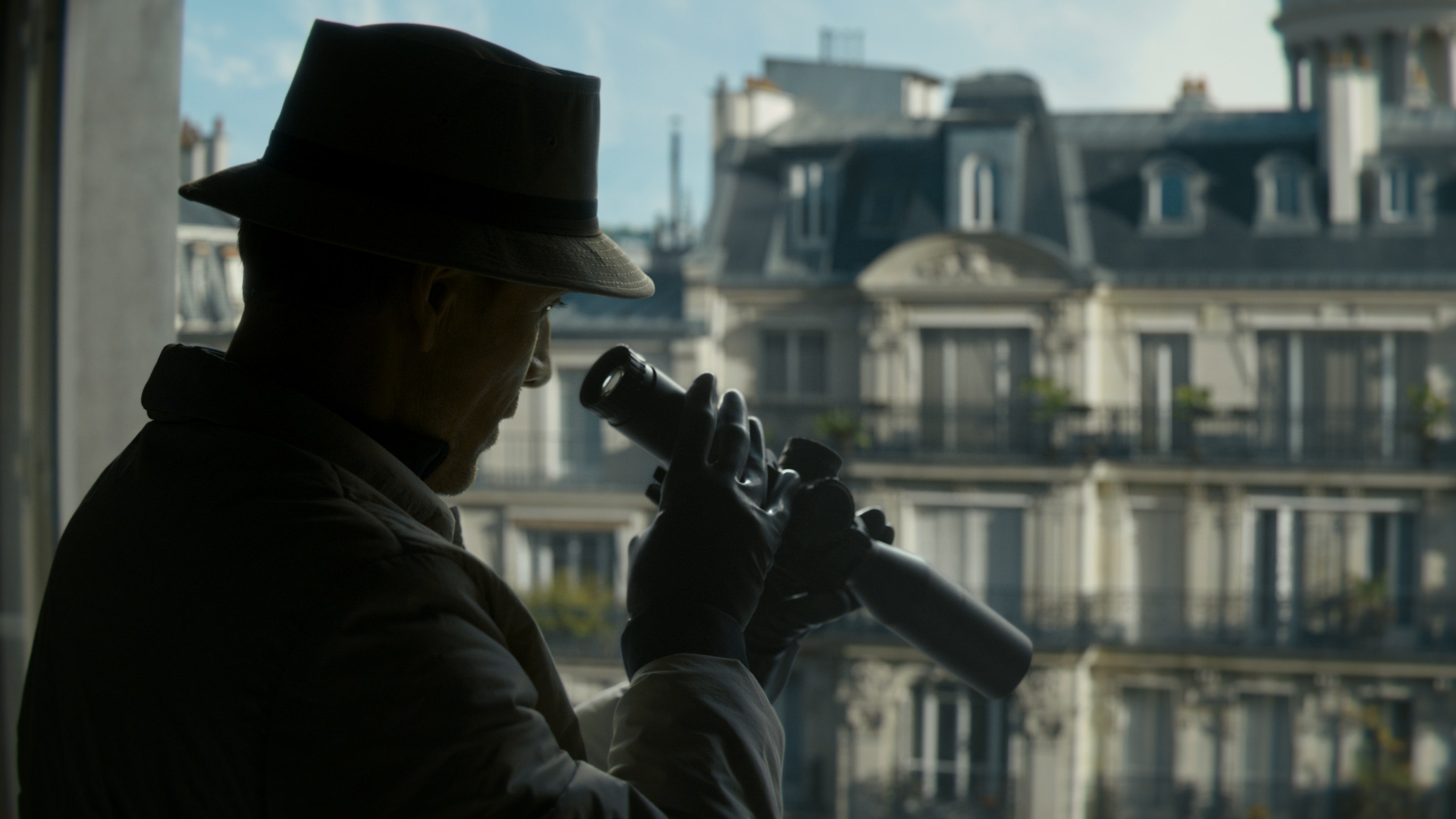
Michael Fassbender

“THE KILLER” My rating: B (Netflix)

118 minutes | MPAA rating: R

David Fincher’s latest is a minimalist epic about  a contract killer who appears to have no personality whatsoever.

Despite all this, it is a wildly entertaining effort.

Michael Fassbender is our unnamed protagonist, whom we meet in an under-renovation apartment in Paris.  He’s been there for days awaiting the arrival in the building across the street of his target.  We don’t know who he’s supposed to kill. or why.

All we know is that the Killer exhibits an astonishing level of patience. He passes the time scanning the street through a scope and doing yoga.

In the film he says almost nothing.  Well, that’s not quite true. In the first 30 minutes he gives us, in narration, a sort of primer on hitman etiquette.  In this he is quite chatty, holding forth on the necessity of anticipation and the dangers of improvisation.  As for the moral consequences of his actions… there’s no mention of that.  Doesn’t seem to matter.

The screenplay by Andrew Kevin Walker, Alexis Nolent and Lucy Jacamon is astonishingly straightforward.

The Paris job goes wrong. The Killer flees to his  palatial home base in the Dominican Republic only to find that rival killers from his employer have beat him there, torturing his girlfriend (Sophie Charlotte) so badly that she’s in the hospital.  

This calls for revenge.  Quickly, methodically and implacably the killer goes about eliminating the threats against him.  

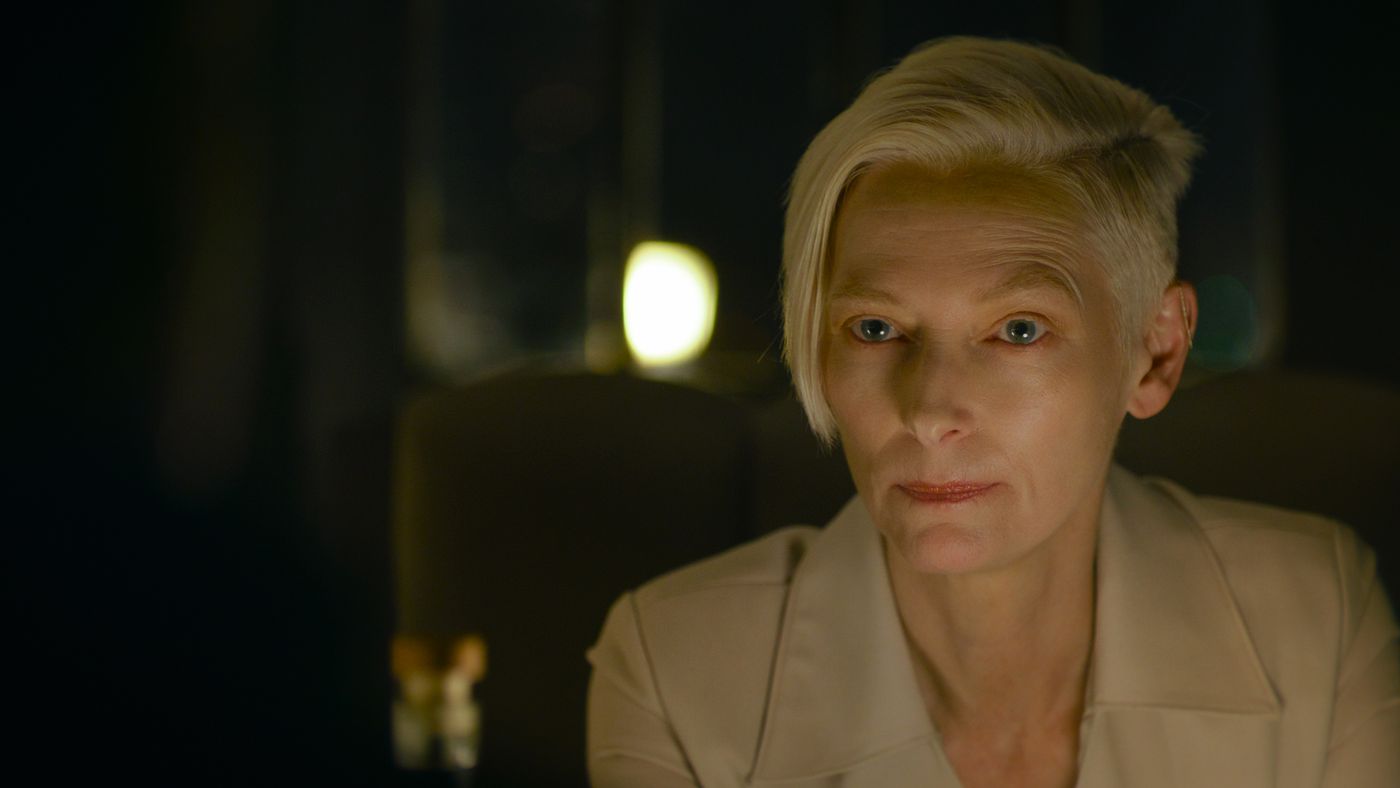
Tilda Swinton

That means paying a visit to the crooked New Orleans lawyer (Charles Parnell) who hands out his deadly assignments, the Florida thug (Sala Baker) who beat up his girl, the thug’s New York-based co-killer (Tilda Swinton) and finally the impossibly rich mover and shaker (Arliss Howard) who ordered the Paris hit.

As I mentioned, the Killer rarely says anything.  Not so most of his targets, who when facing death become remarkably loquacious.  A lot of good it does them. (The only one as silent as the Killer is the hulking goon in Florida; the two of them have a mano-a-mano smackdown for the ages.)

Now this all sounds terribly grim, and it should be pointed out that “The Killer” is often slyly amusing.  For example, our protagonist has a collection of fake identities (with attendant IDs, passports, credit cards and other documentation) in the names of classic TV sitcom characters: Felix Unger, Oscar Madison, Archibald Bunker, etc.

And then there’s the Killer’s clothing choices.  In voiceover he announces that the whole idea is to be so freaking bland that nobody can remember you; for much of the film he wanders around looking like a suburban dad at Disney World.

There’s no moral to “The Killer,” hardly any plot and certainly no characters you’d want to actually meet (okay, maybe the girlfriend, but she got beat up protecting a man she knows is a murderer).

Nevertheless, it’s a fun ride precisely because of its menagerie of cooly calculating/brutal/smooth talking creeps. 

| Robert W. Butler

Read Full Post »

Dominic Sessa, Paul Giamatti

“THE HOLDOVERS” My rating: B+ (In theaters)

133 minutes | MPAA rating: R

It starts out like a misanthropic “Goodbye Mr.  Chips” and ends like a pessimist’s take on “It’s a Wonderful Life.”

But before it’s over Alexander Payne’s “The Holdovers” exhibits a humanist’s love of its characters.  It’s the perfect Christmas movie for people who hate Christmas movies.

David Hemingson’s witty and ultimately moving screenplay unfolds over the holidays in 1970 at the Barton Academy, one of those posh New England prep schools where the rich send their errant and spoiled sons for an education in the classics and character building.

Despite a fabulous reputation, Barton achieves neither of those objectives. It’s basically a holding facility for entitled idiots, a fact all too obvious to Paul Hunham (Paul Giomatti), who has taught ancient history for 40 years to bored young adolescents he dismisses as hormonal Visigoths.

On this particular snowbound Christmas, the unmarried and spectacularly grumpy Hunham has been saddled with “holdover” duty.  He’s must oversee a handful of students who will remain on campus until classes resume in the New Year.

Among these “holdovers” is the son of Mormons on missionary duty abroad, a Korean whose family can’t afford the plane ticket home, and a football Adonis has been banned from his family Christmas for refusing to cut his hair (the rebellious ‘60s have only just ended and the Vietnam War still rages).

And then there’s Angus Tully (Dominic Sessa), a smart kid with a chip on  his shoulder the size of a manhole cover.  At the last minute his recently-remarried mother informs Angus that she’s opted to dedicate her holidays to a delayed honeymoon. Surly teenage sons are not invited.

 Da’Vine Joy Randolph

In addition to Hunham and his angry/disappointed/lonely young charges, we meet Mary (Da’Vine Joy Randolph). who runs the school’s dining hall. Mary’s son Curtis grew up on the campus, studied there (free tuition for employees’ offspring) and, lacking the money for college, enlisted in the Army, dying in Vietnam.

It’s a setup rich with heart-tugging possibilities, all of which Payne and Hemingson avoid like the plague.  The dialogue is sharp, bitter and often screamingly funny. The performances don’t beg our sympathy; quite the contrary, this is a prickly bunch of angry individuals. Unlikeable, even.

Yet over the film’s two-hour-plus running time (it actually seems much shorter) “The Holdovers” finds ways to reveal its characters’ pain, yearnings and fears without ever drifting into mushy territory.  The approach is astringent, clear-eyed and sardonic.  

If you’re not careful it can break your heart.

Here’s a prediction: Expect Giamatti to land an Oscar nomination for best actor; Randolph and Sessa should score in the supporting categories.

In the meantime, watch “The Holdovers” with someone you love.  Better still, watch it with someone you’re not so sure about.

| Robert W.Butler

Read Full Post »

Riz Ahmed, Jessie Buckley

“FINGERNAILS” My rating: C+ (Apple+)

113 minutes | MPAA rating: R

From the INTRIGUING IDEA GOES NOWHERE DEPARTMENT:

“Fingernails” unfolds in an alternate reality that looks a lot like America in the 1980s.  No ubiquitous cell phones or laptops. Most of the cars are sedans, not SUVs. The TV sets are modestly proportioned.

Except that in this reality the films “Titanic” (1997)  and “Notting Hill” (1999) are already classics (the latter a key title in the Hugh Grant Romance film festival).

And a special feature of this alternate universe is a process (allegedly scientific) that allows couples to test for romantic compatability. Ideally you want a score of 50%, indicating that a couple love each other equally.  More often though, those tested discover that they’ve  absolutely no future with their current squeeze.

And what do you have to sacrifice for this life-changing information? Well, in addition to paying a steep fee you must have one of your fingernails pulled out with pliers (sans anesthesia) so that it can be microwaved along with one yanked from your significant other.  Apparently fingernails are terrific indicators of one’s emotional state.

Anna (Jessie Buckley) is the latest employee of the Love Institute, which not only conducts the fingernail tests but holds seminars and workshops and issues reports on what its researchers have discovered about romance.

Anna and her beau Ryan (Jeremy Allen White) did the fingernail test several years earlier and were told that they were a perfect match.  Except that Anna is starting to get bored with the relationship (possibly Ryan is too nice and predictable).  Anna hopes that by working as a counselor at the Institute she can gain insights into her own romantic sensibilities.

Her work partner is Amir (Riz Ahmed), and it doesn’t take a fingernail test to determine that Anna’s affections soon will be directed his way.

As written by Christos Nikou, Sam Steiner and Davros Raptis and directed by Nikou, “Fingernails” scores more points for quirkiness than for emotional heft.

And even the quirkiness is of the low-caliber variety.  There are a couple of amusing moments but the film never quite jells as either comedy or romance.  I was ready for it to wrap things up a good half hour before the end.

That said, I’m a big fan of Buckley (even with a ‘do that looks like it was styled with a weed whacker).  Ahmed and White are solid as Anna’s romantic options, and Luke Wilson very nearly steals the film as the science-nerd chief of the Love Institute.

Forget about the fingernail test.  When it comes to human emotions there are no absolutes.

|Robert W. Butler

Read Full Post »

« Newer Posts - Older Posts »