“CAPTAIN PHILLIPS” My rating: B(Opens wide on Oct. 11)
134 minutes | MPAA rating: PG-13
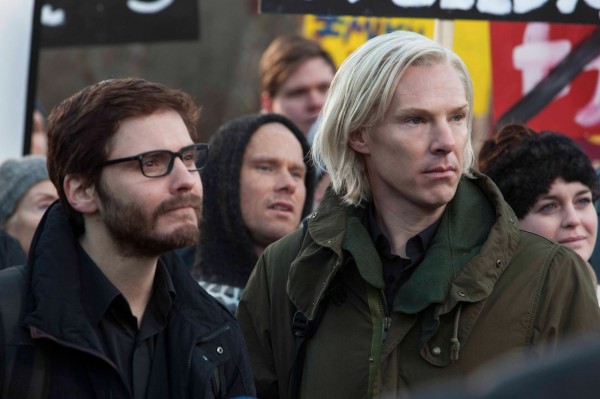
Tom Hanks’ near-uncanny ability to build a compelling Every Man character out of minimal substance is put to good use in “Captain Phillips,” director Paul Greengrass’s tension-charged recreation of a real-life 2009 hijacking of an American freighter in the Indian Ocean.
Capt. Richard Phillips, the main player in the incident and in this film, is a somewhat controversial character. He was hailed as a hero after Navy Seals rescued him from the lifeboat on which he was being held by four Somali pirates.
But since then members of his crew have sued Phillips for what they say was a reckless disregard for their safety by insisting on navigating close to the Somali coast – thus saving time and money – rather than plotting a course further out to sea.
Hanks and Greengrass have it both ways. We see early on that Phillips can be something of a tough captain – not a Queeg-ish martinet, exactly, but forceful enough to irritate some of his crewmen. But he’s also a resourceful fellow looking out for his men in a crisis.
It’s hard to say precisely what sort of a guy he is. “Captain Phillips” lives mostly in the moment, and we don’t learn a whole lot about our protagonist except when he’s under the gun.
Early on we see him driving to the airport with his wife (Catherine Keener, filmed so obliquely she’s hardly recognizable) and we learn that he’s married with a couple of college-age kids. And that’s about it.
Under most circumstances this would result in a movie with a hole where its center should be. But Tom Hanks fills the void with his own star presence. And it pretty much works.
“ESCAPE FROM TOMORROW” My rating: B-(Opens Oct. 11 at the Tivoli)
90 minutes | No MPAA rating:
“Escape from Tomorrow” is about as subversive as movies get.
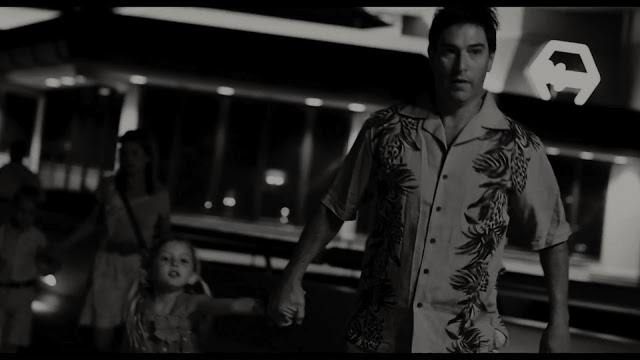
For starters, first-time writer/director Randy Moore shot most of it surreptitiously—and without permission – at Disneyland and Walt Disney World.
The cast members entered the parks like any other guests, and performed their scenes while surrounded by real tourists. Cinematographer Lucas Lee Graham employed small digital cameras that wouldn’t draw the attention of theme park authorities.
But equally as subversive is the movie’s satiric view of “The Happiest Place on Earth” as a shiny façade concealing a nightmare landscape of swirling, supernatural evil, and its depiction of the average American family as the joyless union of steady backbiting and sexual frustration.
While his wife Emily (Elena Schuber) and kids Sara and Elliot (Katelynn Rodriguez, Jack Dalton) sleep late in their Orlando-area hotel room, Jim (Roy Abramsohn) paces on the balcony in his skivvies as his boss informs him by telephone that he’s been canned.
Jim is in no mood to play the happy husband and father at Disney World, but what the hell…he’s already there, right?
Katelynn Rodriguez, Roy Abramsohn
Except that his day just keeps getting weirder and weirder.
First there are warnings posted about something called “cat flu.” (We later learn that among the alarming symptoms are hair balls.)
Jim is plagued by disturbing hallucinations in which animatronic dolls on the “It’s A Small World” ride briefly mutate into fanged, blazing-eyed demons.
And he’s so smitten with a couple of cute French teenagers (Annet Mahendru, Danielle Safady) that he spends hours stalking them, frequently forgetting that he’s supposed to be watching his kids.
“PARKLAND” My rating: B+ (Now showing at the Tivoli)
93 minutes | MPAA rating: PG-13
Sometimes you think you’re over a traumatic experience, that you long ago consigned painful thoughts and emotion to the distant past. And then something comes along – something like the movie “Parkland” – to tear the scars open once again.
“Parkland” is about the assassination of John Fitzgerald Kennedy. Over the last 50 years – I was a high school sophomore when it happened — the subject has spawned many movies, many of them (like Oliver Stone’s “JFK”) weaving conspiratorial scenarios.
This film, though, delivers a gut punch not with outlandish claims but simply by meticulously adhering to the facts. There’s little obvious effort to overdramatize; nevertheless, “Parkland” moved me on a very deep and still-raw level.
Zach Ephron
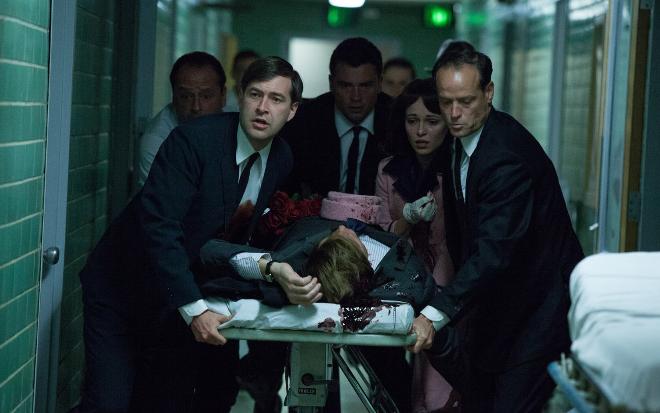
Based on Vincent Bugliosi’s book Four Days in November, Peter Landesman‘s docudrama gives the illusion of capturing the events of November 22 , 1963 in minute-by-minute fashion.
The title refers to Dallas’ Parkland Hospital, where emergency room personnel found themselves attempting to save the life of the President and then, almost exactly 48 hours later, were faced with doing the same for his assassin, Lee Harvey Oswald.
In recreating those unsettling two days, writer/director Landesman (this is his first film as director; he wrote the 2007 human trafficking drama “Trade”) cannily weaves original newsreel footage, TV and radio broadcasts, and new handheld footage to create a hauntingly seamless whole.
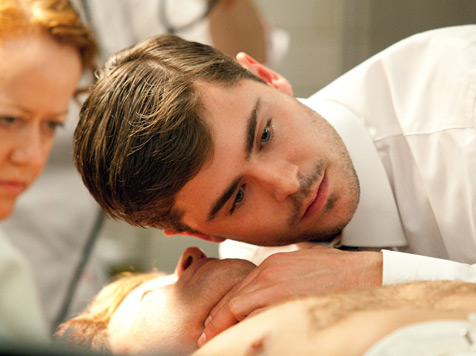
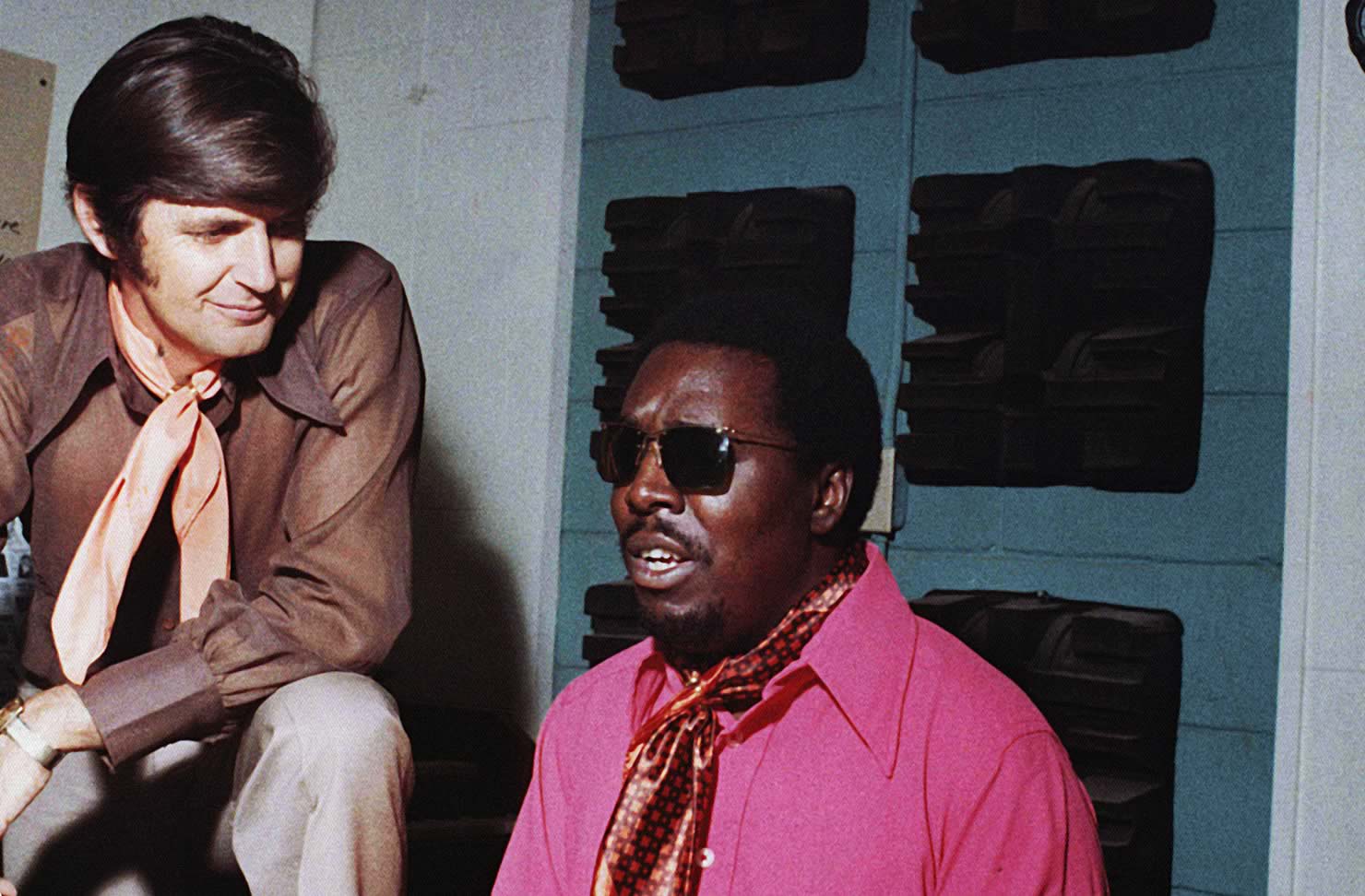
He’s assembled a cast of incredible depth and virtually no ego: Zac Efron as a young hospital resident who finds himself working on the President; Marcia Gay Harden as a tough-love-dispensing ER nurse; Ron Livingston, Billy Bob Thornton, Tom Welling, Mark Duplass and Gil Bellows as FBI and Secret Service agents; Paul Giamatti as Abraham Zapruder, the
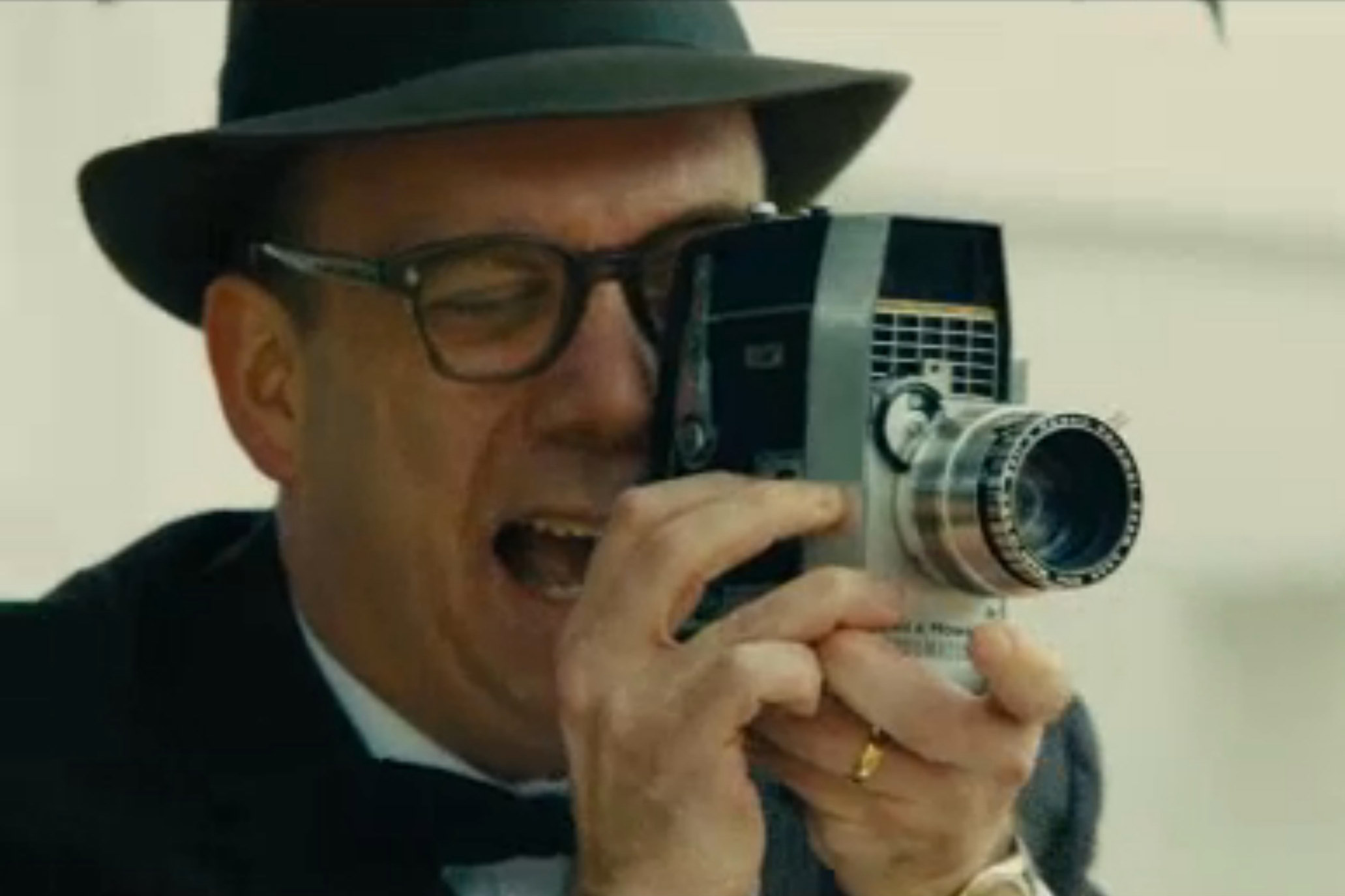
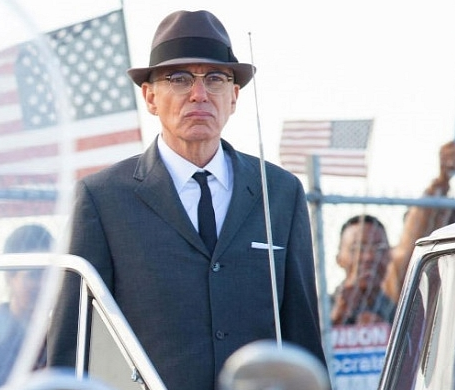
Paul Giamatti as Abraham Zapruder
dressmaker whose horrifying home movie captured the only images of the fatal bullet; and James Badge Dale as Oswald’s brother Robert and Jacki Weaver as Oswald’s mother, Marguerite.
This is powerful stuff, packed with moments of confusion, terror, and grief. Not to mention some insider stuff I wasn’t aware of.
For example, I didn’t know that the Secret Service agents and Dallas cops literally came to blows in the ER over the coroner’s demand that the President’s body not be removed until an autopsy had been performed.
I wasn’t aware of the race to get Zapruder’s film developed, since it contained essential evidence, or that the lab technician who took on the job warned that its 8mm format posed problems
Billy Bob Thornton
that could result in the loss of the entire reel.
Or that Secret Service agents hurriedly tore out two rows of seats from Air Force One to make room for JFK’s coffin: “We’re not carrying him down below like a piece of luggage!”
And perhaps nothing is quite so disturbing as Zapruder’s first look at his soon-to-be-notorious footage, crying out in anguish as the projected image of the shooting reflects off his eyeglasses.
For sheer lunacy on a Shakespearean scale, it’s hard to beat Marguerite Oswald, a mercenary madwoman certain that her assassin son was a secret agent of the United States being framed by his bosses.
“Parkland” runs for just 93 minutes …any longer and I don’t know if I could have taken it. But in recreating a time and place with astonishing fidelity, first-timer Landesman makes us understand what it was like to be on a turning point of history.
Former child actor Joseph Gordon-Levitt has displayed his grown-up chops in recent years in everything from big-budget sci-fi tent pole pictures to edgy indie fare.
His feature writing/directing debut, “Don Jon,” falls into the latter category if only because of the subject matter. Basically, it’s a comedy about masturbation.
It’s raunchy. Also very, very funny. And beneath the lewdness, “Don Jon” has something like a heart of gold.
Gordon-Levitt appears in just about every shot as Jon, a cocky Jersey Shore Guido with a formidable reputation with the women. He’s got the look made famous by MTV – ripped torso and a ‘do that’s borderline skinhead on the sides, while the hair on top is combed straight back and gelled into a tornado-proof finish.
You might view Jon as this generation’s Tony Manero (the John Travolta character in “Saturday Night Fever”) with one major exception: Jon has access to the internet, which means he can watch porn any time he likes. Which is pretty much all the time.
As Jon explains early on in voiceover narration – and he’s just being honest here – while he loves doin’ the ladies, he’s never quite at ease in the sack. He’s too conscious of the need to please, too uptight about the stuff he doesn’t want to do (cunnilingus, which disgusts him) and too disappointed about the stuff many girls won’t do (fellatio).
Which is where porn comes in. Snuggled all warm and naked in front of his computer, Jon can get his rocks off to just about any sexual scenario he can think of, and he doesn’t have to cuddle afterward. This guy buys Kleenex in bulk.
“PRISONERS” My rating: B- (Opening wide on Sept. 20)
153 minutes | MPAA rating: R
“Prisoners” is a grim, joyless thriller that briefly toys with being something more before thinking the better of it and settling down to being just a grim, joyless thriller.
It was made by Denis Villeneuve, a French filmmaker whose “Incendies” – a multigenerational story set in the violence-plagued Middle East — won my vote for the best release of 2010. That film flowed effortlessly forward and backward in time to tell an epic story of revenge and forgiveness, and compared to it “Prisoners” should have been pretty easy going.
But there’s something at war in the heart of this film, a struggle between the conventions of noir, flat-out melodrama and higher aspirations. This time Villeneuve struggles to keep all his balls in the air.
The film starts out strong with a two-family Thanksgiving dinner in a wooded working-class Pennsylvania suburb. The Dover family – Keller (Hugh Jackman), Grace (Maria Bello), teenage son Ralph (Dylan Minnette) and little daughter Anna (Erin Gerasimovich) – are chowing down with their best friends. The hosting Birch clan consists of Franklin (Terrence Howard), Nancy (Viola Davis), teen daughter Eliza (Zoe Borde) and little daughter Joy (Kyla Drew Simmons).
The two wee girls go out to play and vanish. The parents go from mild irrirtation to concern to panic. Soon the cops are on the scene in the person of Detective Loki (Jake Gyllenhaal), a socially-challenged loner whom we meet celebrating Thanksgiving alone at a Chinese diner. He does have this going for him: Loki has never failed to solve a case.
Question is, can he solve this one in time to save the little girls?
“THE BUTLER” My rating: B-(Opening wide on Aug. 16)
132 minutes | MPAA rating: PG-13
I’m not a huge fan of Lee Daniels (“Precious,” “The Paperboy”) or of his new film “The Butler.”
But I think I understand what he’s trying to do with this multi-decade story about a poor black man from the South who becomes a member of the White House staff, serving presidents and eavesdropping on America’s movers and shakers.
And I think he got the job done.
One of the drawbacks of better race relations in this country (which is not to say that everything’s fine…check out the Missouri State Fair rodeo clown controversy) is that we now have a generation of young black people who want nothing to do with America’s troubled racial past.
They are embarrassed by the very mention of slavery and tend to take for granted the civil rights they enjoy, with little appreciation of the generation of activists whose sacrifices made those advancements possible.
“The Butler,” I think, is aimed directly at this indifferent audience and seems to have been fashioned specifically to bring them up to speed, to force them to confront the bad old days of their grandparents.
It’s not a particularly artful film (despite a couple of fine performances) and is frequently downright clumsy. But it succeeds in bringing to life the arc of 20th century African American history in an accessible and dramatic manner.
Inspired by the life of Eugene Allen (1919-2010)– who worked for 34 years in the White House, rising through the ranks to become maître d’hotel (top butler) — Danny Strong’s screenplay is the fictional story of Cecil Gaines (Forest Whitaker).
Oprah Winfrey, Forest Whitaker
Early on Strong and Daniels lay things on with a trowel. One of the film’s first images is of two black men dangling from nooses. Then we’re back in the 1920s in a Southern cotton field where young Cecil witnesses his mother (Mariah Carey) being sexually abused by the landowner’s swaggering son. When her husband objects to this outrage, he is shot dead.
Shades of “Mandingo.”
The lady of the plantation (Vanessa Redgrave, the first of an endless stream of big-name actors making cameo appearances) takes pity on young Cecil and declares she’ll make him a “house nigger.” Under her training he becomes an ideal servant, finally taking off on his own to launch a career first at a Southern hotel, then at one in Washington D.C. That’s where he’s spotted and invited to work at the White House.
“The Butler” attempts to balance Cecil’s private life against the era’s burning social issues. Much of the tension comes from his belief, drilled into him, that a good butler should never make his presence known unless directly addressed by those he is serving. Cecil believes in hard work and personal advancement. He is decidedly uncomfortable with questions of politics or public policy, which leads to decades of tension with his activist son Louis (David Oyelowo) and charges of Uncle Tom-ism.
“KICK-ASS 2” My rating: C(Opening wide on Aug. 16)
103 minutes | MPAA rating: R
“Kick-Ass 2” is a letdown, a mean-spirited and puerile sequel that leaves you stranded between giggling and gagging.
But I’m not sorry to have seen it for one reason: Chloe Grace Moretz.
Moretz was only 12 in 2009 when she appeared in the first “Kick-Ass” as Mindy Macready, a little girl trained by her vigilante father to suit up in purple Spandex and fight crime under the name of Hit-Girl. The novelty of seeing this petite child stomping the hell out of viscious adults (and lobbing ear-stinging profanities) was memorable, to say the least.
In the intervening four years — during which she turned in a brilliant performance as a child vampire in “Let Me In” and had a big role in Martin Scorsese’s “Hugo” — Moretz has grown up considerably. She’s becoming a beautiful young woman (small wonder that this film often features looming closeups emphasizing her hazel eyes and full lips) and this lends a whole new aspect to her Hit-Girl persona.
To put it bluntly, she’s now a dirty old man’s dream teen.
Not that she’ll be making a career of that. She’s too talented. But her presence in “K-A 2” announces that as she matures she’s going to be a major star. Bet on it.
Despite Moretz, this new film has two strikes against it. First, even fans of the “Kick-Ass” comic books acknowledge that while the initial series was terrific, the followup was awful.
And, second, the first movie benefitted from the direction of Matthew Vaughn, the guy behind the nifty Brit crime film “Layer Cake” and, later, “X-Men: First Class.” For “K-A 2” he’s been replaced by Jeff Wadlow, who with his third feature doesn’t yet demonstrate the tonal control needed to keep the yarn’s amusing and appalling elements in balance.
“THE ACT OF KILLING” My rating: A-(Now at the Alamo Drafthouse Cinema)
116 minutes | No MPAA rating
Mind boggling.
Horrifying.
Astonishing.
Joshua Oppenheminer’s “The Act of Killing” is unlike any other documentary you’ve seen.
Other films have explored the “banality of evil.” Other films have looked at war crimes. But I can recall no other film that so effectively rubs our faces in brutality and the human capacity for violence.
In outline “The Act of Killing “ sounds like some sort of twisted comedy skit.
Anwar Congo
Oppenheimer’s subjects are the old men who nearly 50 years were members of the death squads that turned Indonesia into a bloodbath. In the wake of a 1965 military coup more than 1 million people were murdered for being communists…though there’s no way of knowing if these were real communists or simply folk unfortunate enough to run afoul of the ruling junta.
The filmmakers offer these graying killers – they describe themselves as “gangsters” and have spent most of their lives operating outside the law — a chance to make short movies re-enacting their glory days of murder and torture. Now in their 60s, these death squad veterans jump at the opportunity with the eagerness of children playing dress-up.
Told they can make any sort of film, some emulate an American crime melodramas, complete with double-breasted suits and fedoras. Some create a cowboy picture. There’s even a big Hollywood musical with pink-gowned dancing girls emerging from the mouth of a gigantic carp (a building in the shape of a fish) to the strains of “Born Free.”
The killers play both the executioners – demonstrating the preferred methods for taking a life without ruining your clothes – and the victims. They take great delight in being doused with stage blood and re-enacting the death throes of their victims.
The central figure here is Anwar Congo, a thin, white-haired grandfather who looks a bit like Nelson Mandela. He personally was responsible for killing 1,000 people, usually with a strangulation method of his own devising: “At first we beat them to death but there was too much blood…it smelled awful. To avoid the blood I used this system.”
Congo is proud of his violent past and happy to recreate it for the camera: “This is who we are. This is history. Step by step we tell the story of what we did when we were young.”
I’m a huge fan of TV’s “So You Think You Can Dance,” which recently ended its current season.
Not the whole show, just the dancing. The dancing is so terrific that I find myself choking up two or three times in every broadcast because I’ve just seen something that so seamlessly blends movement, emotion and intellectual content that it’s like a crash course in esthetics.
It’s just so goddam…beautiful.
The Fox show itself gives me a bit of an ass pain. I’m not terrifically interested in SYTYCD as an “American Idol”-type competition that begins with weeks of tryouts in cities across the country and starts properly with 20 elite dancers, two of whom (one man, one woman) are eliminated each week until we end up with a season champion.
I don’t like the voting process and never participate.
As with “Idol,” TV viewers cast their ballots by phone or text at the end of each episode. The following week the dancers receiving the least votes must perform a solo “dance for your life” routine before the judges. Each show ends with two of these kids going home.
I dislike the voting process because most Americans have the all taste of a Busch Lite. They vote less for talent than for cuteness. They’re almost as bad as the studio audience, who are encouraged to cheer particularly spectacular steps and lifts as if they’d just seen a singularly violent hit during an NFL game.
“FRUITVALE STATION” My rating: A (Now playing wide.)
90 minutes | MPAA rating: R
If “Fruitvale Station” was concerned only with a young man’s death on an Oakland train platform early in the hours of Jan. 1, 2009, it would be hard going, indeed.
But Ryan Coogler‘s stunning writing/directing debut is less about dying than about living, and by attempting to limn the world of one individual it becomes the story of an entire class of contemporary Americans.
“Fruitvale Station” was inspired by the shooting by a Bay Area Rapid Transit cop of 22-year-old Oscar Grant. I’m giving nothing away by letting you know that Oscar dies. It’s the first thing you see in the movie.
In grainy cell-phone video — Is this real footage or a re-enactment? Can’t tell — we see transit police officers standing over several young black men sitting with their backs against a wall of the Fruitvale BART station. A ruckus breaks out and the cops jump on one of the young men, who is lying on the concrete. We hear observers yelling at the officers to stop. Suddenly there’s a gunshot…
Melonie Diaz
The film proper begins almost 24 hours earlier. Oscar (the Oscar-bound Michael B. Jordan), his live-in girlfriend Sophina (Melonie Diaz) and their pre-school age daughter Tatiana (Ariana Neal) are waking up on Dec. 31, 2008.
Oscar and Sophina are having a quiet early-a.m. argument. Oscar has had sex with another woman. He says it only happened once. No, she says, you only got caught once.
But Oscar swears fidelity, says he wants nothing more than to spend the rest of his life with Sophina and little Tatiana, in whose presence he becomes the playful, loving and responsible Daddy.
We follow Oscar through his day. He goes to a grocery story to buy food for a big birthday bash that night for his mother, Wanda (Octavia Spencer). While there he begs his former boss to give him back his job — he was fired two weeks earlier for being regularly late for his shift.
“Do you want me selling dope?” the desperate young man asks the manager, who has already filled Oscar’s old position and cannot rehire him.
He hasn’t told Sophina that he’s out of work.
Out on the street a speeding car run down a stray dog. Oscar holds the animal until it gives a final shudder.
That night, with little Tatiana safe at her aunt’s house, Oscar, Sophina and friends take the train into San Francisco to watch the New Year’s fireworks. On the way back there’s a delay and the group turn the car into a nightclub with a pair of battery-powered speakers and an iPod. Everyone — black, white, gay, straight — boogies down.
Like a square dance in a John Ford film, it’s a diverse community suddenly coming together.
And all the while they’re getting closer to Fruitvale Station.