Feeds:
Posts
Comments

Archive for the ‘Uncategorized’ Category

John Boyega

“BREAKING” My rating: B (In theaters)

103 minutes | MPAA rating: PG-13

At some point early in the riveting “Breaking” most viewers are going to say to themselves that John Boyega is the new Denzel.

By the time the film is over they’ll be thinking that Denzel is the old John Bpyega.

The British Boyega has covered a lot of territory in just a few years on screen, from being a regular in the “Star Wars” universe to playing an alien-battling London punk in “Attack the Block” and an African American security guard with a conscience in Kathryn Bigelow’s “Detroit.”

If starring as a rebel Imperial storm trooper made Boyega a household name in some quarters, his performance in “Breaking” should sling him into the ranks of  Oscar contenders.  

As Brian Brown-Easley, a real-life Marine veteran undergoing a mental-emotional meltdown, Boyega gives a performance that is by turns subtle, in your face and heartbreaking.

For its first 30 minutes writer/director Abi Damaris Corbin’s film is basically a three-character drama unfolding in real time.  In a setup that will remind many of “Dog Day Afternoon,”  Boyega’s character walks into an Atlanta-area bank and passes a teller a note announcing that his backpack contains a bomb.

But it’s not a robbery.  We soon learn that Brian is at the end of his rope because his monthly veteran’s benefit has been seized by a collection agency to cover the unpaid tuition incurred in his brief and disastrous attempt at a college education. As his last stand he’s decided to hold the bank hostage until the media gets his story out and he gets his money back.

As hostage situations go, this one is unsettling for its civility.  Brian lets everyone in the bank leave save for a cashier (Selenis Leyva) and the branch manager (Nicole Beharie). And despite waving around what he claims is a detonator (looks like he assembled it with parts from the junk drawer), Brian fights his own peaking anxiety to present himself as polite and non-threatening…or at least as non-threatening as one can be in these circumstances.

In fact, Brian finds an ally of sorts in the manager, who turns down an opportunity to escape because she figures she’s all that’s between this desperate fellow and a sniper’s bullet.  The cashier, on the other hand, is perennially poised on the edge of hysteria.

Little by little the screenplay by Corbin and Kame Kwei-Armah introduces other characters. There’s a police hostage negotiator (the late Michael Kenneth Williams) who must work his away around a shoot-first commanding officer (Jeffrey Donovan) and  a new police chief determined to establish his bona fides as tough on crime.

Michael Kenneth Williams

Brian manages to get a call through to a news producer (Connie Britton) at a local TV station.

And periodically he rings up his estranged wife (Olivia Washington) and their precocious young daughter (London Covington), whose home has been invaded by a couple of grimly unhelpful FBI agents. 

“Breaking” moves with a sort of grim inevitability, balancing fear and suspense against Brian’s desperation.  And while everyone in the film is solid, Boyega’s performance is a tour de force as it shifts back and forth between depression, hope, anger, guilt…there are few emotional bases this young actor doesn’t tag here.

It’s one of those performances you’ll want to see twice, just to figure out how he pulled it off.

| Robert W. Butler

Read Full Post »

Aubrey Plaza

“EMILY THE CRIMINAL” My rating: B (Theaters)

95 minutes | MPAA rating: R

A seemingly normal young woman finds a new career on the wrong side of the law in “Emily the Criminal,” a low-keyed drama that argues persuasively that when the system is rigged crime actually does pay.

Aubrey Plaza is our titular protagonist, a young woman with a dead-end job hauling catered lunches to high-rise L.A. offices, a huge college loan debt, and an art degree she can’t put to use.

As John Patton Ford’s film begins Emily is undergoing a job interview in which she is caught trying to hide the fact that she has a criminal record. Evidently she once assaulted a boyfriend…whether or not he deserved it is an open question. The fact of her arrest is enough to keep Emily  from being hired by any reputable business.

A catering co-worker suggests something, well, a bit dicey.  And soon Emily finds herself with a dozen or so other economic burnouts being addressed by Youcef (Theo Rossi), who informs them that they are needed as “dummy shoppers.”  

The gig is not dangerous and no one will be physically hurt, Youcef announces in businesslike tones that eerily echo every new-employee orientation session you’ve ever sat through. But it is illegal, he admits.

Basically Emily and her fellow shoppers will be given a credit card — the information is stolen, Yuocef acknowledges — with which to buy a big flat-screen television.  They will bring the electronics to Youcef; he will pay them $200 in cash.

Easy money.

Emily is ready to walk out but there’s something about Youcef — perhaps it’s his honesty in revealing the illegality of the operation — that makes her put her conscience on the back burner.  Her first gig goes smoothly.

Her second, though, quickly turns hairy.  She’s supposed to use a credit card and forged money order to pick up a luxury car, and it’s pretty clear that the foreign types who are doing the selling are a bit shady themselves. Emily barely gets away with the vehicle and a bloody nose.

Theo Rossi

She’s shaken…but also stirred.  One of the marvels of Plaza’s performance is the way she mines her character’s central core of anger and alienation.  If the world won’t give Emily a  break, she’ll make her own.

Emily gets one last chance to go straight with a gig at a hipster ad agency;  during the interview the CEO (Gina Gershon) reveals that it’s a non-paying internship that may — or may not — result in actual employment. It’s one indignity too many for our girl, who storms out more determined than ever to make it any way she can.

Meanwhile her relationship with Youcef segues from student/mentor to hot and heavy.  Youcef (you may remember Rossi as one of the biker regulars on “Sons of Anarchy”) is a sweet fella who takes Emily to meet his Lebanese mama (Sheila Korsi); in fact, Emily will learn that Youcef is way too nice a guy for the illegal business in which he’s involved. 

Ford’s screenplay so matter-of-factly presents Emily’s situation that her bad moral choices make perfect sense; meanwhile he’s slowly turning up the tension as our girl’s escapades become ever more dangerous.

Holding down the whole shebang is Plaza, who plays Emily absolutely straight but with a deep pocket of percolating rage.  There’s not a sign of the actress‘ trademark snark; in fact, aside from some grimly satiric jabs at the 21st century work environment, the film is humorless.

| Robert W. Butler

Read Full Post »

Amber Midthunder and adversary

“PREY” My rating: B (Hulu)

99 minutes | MPAA rating: R

We’re way past expecting anything of interest to come out of the long-running “Predator” series,  yet Hulu’s  “Prey” consistently takes us by surprise while remaining faithful to the franchise’s mythology.

The gimmick at the heart of writer/director Dan Trachtenberg’s film:  “Prey” is set in the early 1700s in the American West.  Our human protagonists are members of the Comanche tribe; their alien adversary is pretty much the same laser-equipped killing machine we’re familiar with from all those other films.

Trachetnberg and co-writer Patrick Sidon go out of their way to faithfully depict the lifestyle of this continent’s original inhabitants…so much so that you could eliminate the sci-fi/horror elements and still have a pretty solid ethnological study of Native American existence.

Our lead character is Naru (Amber Midthunder), a young woman who defies tribal tradition by insisting on leading the life of a hunter…a role restricted to men.

She’s proficient with bow and arrow and tomahawk (even dreaming up a leather lanyard for the latter that allows her to retrieve a thrown weapon with a jerk of her arm). She has trained a dog — a creature viewed by her clan as an alarm system and possibly dinner — to be her hunting companion; they communicate through hand signals.

Naru’s widowed mother (Michelle Thrush) tolerates and even secretly encourages her daughter’s rebellious streak.  Her big brother Tabu (Dakota Beavers), one of the tribe’s best warriors, does his best to shield her from the jeers of the other young men (not that Naru really needs much help in defending herself from  male chauvinism).

And then, of course, a spaceship drops a predator into paradise.

The film builds slowly as tribal members discover clues that something new and scary is wandering through their post-card perfect landscape.  Three quarters of the way through there’s a battle between the Predator and a crew of French-Canadian fur trappers; turns out single-shot flintlock rifles are no match for alien technology.

“Prey” does a pretty good job of introducing modern (some would say “woke”) elements into the mix without clubbing us over the head with them.  Naru’s nascent feminism is implied rather than articulated.  

The presence of white men is introduced when Naru stumbles across a meadow filled with bison  carcasses, stripped of their hides and left to rot. (Never mind that the actual slaughter of the buffalo didn’t occur until after the Civil War, a 150 years later. The mountain men of this period would have been after beaver pelts.)

Moreover, while the natives live honorably by a shared code, the Frenchmen are presented as thugs and rapists…which is probably not too far from the truth.

Basically it all boils down to Naru using her ingenuity to outsmart her sophisticated enemy; as Arnold Schwarzenegger learned in the original “Predator,” sometimes the simplest solutions wisely applied will trump alien wiles.

The performances are unforced and natural; both Midthunder and Beavers exude screen charisma without making a big deal of it.

Technically the film is quite beautiful, evoking the sort of pristine wilderness captured so hauntingly in “The Revenant.” Costuming and props appear to be utterly authentic.

“Prey” was shot with English dialogue (except for the Frenchies). But for a fully immersive experience I’d go with Hulu”s “Comanche dub” option, which allows the aboriginal characters to speak in their tribal language.  Their words are translated into English subtitles, but “Prey” is such an effective piece of visual storytelling that you could watch it without subtitles and still perfectly understand what’s going on.

| Robert W. Butler

Read Full Post »

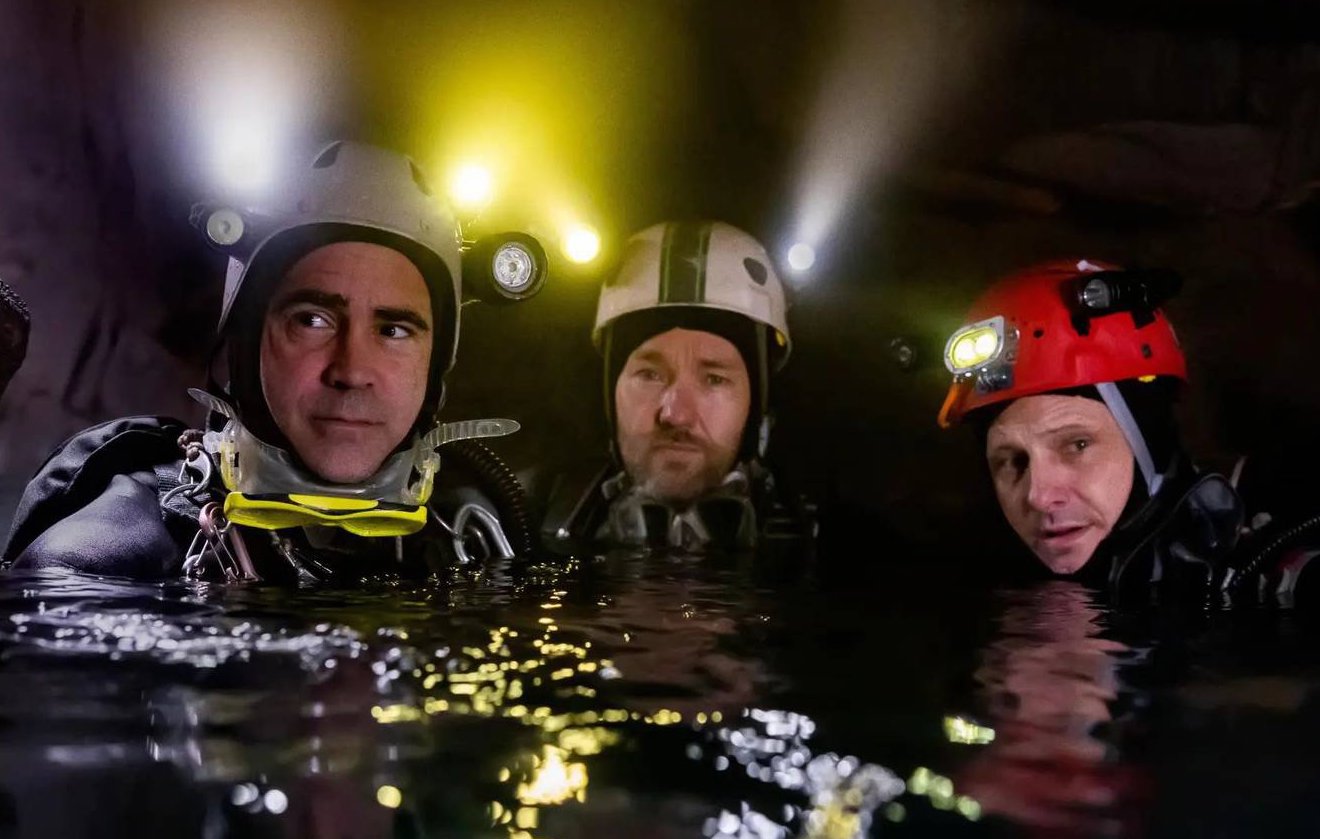
Colin Farrell, Joel Edgerton, Viggo Mortensen

“THIRTEEN LIVES” My rating: A (Amazon Prime)

147 minutes | MPAA rating: PG-13

“Thirteen Lives” may be the most engrossing, satisfying film of Ron Howard’s career.

It’s a virtual masterclass in dramatic construction and emotional massaging; moreover it is one of the few films I can think of that contains not one misstep, one wrong performance, one phony moment.

Howard’s recreation of the 2018 rescue of 12 Thai soccer players and their coach from a flooded cave (the screenplay is by William Nicholson and Don MacPherson) manages simultaneously to be a deeply emotional experience and a clear-eyed recreation of actual events. 

 It is modest to a fault, tempering overwhelmingly dramatic material through the lens of a measured docudrama style. Clearly, Howard’s recent forays into documentaries (“The Beatles: Eight Days a Week,” “Pavarotti,” “Rebuilding Paradise,” “We Feed People”) proved invaluable in finding just the right approach for this massive effort.

The payoff is nothing short of spectacular.

In many regards Howard’s 1995’s “Apollo 13” provided the model for this sort of fact-based historic recreation; “Thirteen Lives” is even more successful in capturing the tension between individual human drama and big, overwhelming events.

Though the film features Viggo Mortensen, Colin Farrell and Joel Edgerton as cave rescue specialists from the UK, there’s no actorly showboating, no obvious star turns.  Everyone seems to be foregoing their moment in the spotlight in favor of a group dynamic.

In this the performances reflect Howard’s overall message that while there certainly were heroes at work (including two Thai Navy Seals who died in the rescue efforts), this is  a tale of literally thousands of individuals who came together to accomplish the impossible.

Howard has never been a director who flexed his stylistic muscles; his approach here is straightforward, even impersonal. This allows us to concentrate on the story itself, which has been presented with marvelous economy and insight.

In the film’s opening minutes we meet the kids and their coach on the practice field.  They decide to treat themselves to a visit to the nearby Tham Luang, a spectacular cave nearly four miles long.  We see them park their bikes at the entrance and eagerly race into the darkness.

We won’t see them again for another hour, or 10 days in real time.  They go missing, their bikes are discovered, and immediately the authorities launch a rescue effort.

Tham Luang completely floods during the monsoon season, and the boys have been unlucky enough to enter the cavern just as an early storm is pouring millions of tons of water into the subterranean system.  It is presumed that they have been trapped by rising waters and forced to retreat ever deeper into the darkness.

While Thai military divers search for them in a labyrinth of submerged stalactites and passages so narrow they must remove their oxygen tanks, an army of volunteers descend on the mountain above the cave with shovels, pumps, pipes and chutes fashioned from split bamboo in an effort to divert water off the hillside and away from the cave.

on Howard

Local officials meet with local farmers to explain the process.  Will their crops be ruined when their fields flood? a woman asks.  Yes they will.  The farmers exchange glances and nod. Those 13 lives come first.

The cave rescue specialists played by Farrell and Mortensen arrive on the scene virtually without portfolio and by virtue of their independent status (they’re not part of the Thai military or government) have the freedom to take extraordinary risks. 

But discovering the boys alive doesn’t end the crisis.  The rain that trapped them was only a preview; within two weeks the full-fledged monsoon will fill every air pocket in the cave with water for several months.  They cannot wait out the weather; they must find a way out.

Several experienced divers have almost panicked and drowned in the treacherous waters.  There is virtually no safe way to guide the boys through several kilometers of cloudy runoff; none of the children have used scuba equipment and several cannot swim.  

That’s where Edgerton’s character comes in.  In addition to being a cave rescue diver, he’s an anesthesiologist; maybe they can suit the children up in scuba gear, knock them out with drugs and pull them to safety? 

“They’re packages,” one of the rescuers explains. “We’re just delivery guys.”

The second hour of “Thirteen Lives” is a step-by-step look at how the rescuers pulled it off. This is an exquisitely timed, bite-your-nails adventure that will have viewers shaking their heads in disbelief.

By film’s end audiences will feel nearly as battered and worn out as the kids and their saviors.  But it’s a good ache.

| Robert W. Butler

Read Full Post »

Patton Oswalt, James Morosini

“I LOVE MY DAD”  My rating: B- (Glenwood Arts) 

96 minutes | MPAA rating: R

Is “I Love My Dad” clever/charming or just plain creepy?

Reactions will run the gamut for filmmaker James Morosini’s second feature, an autobiographical slice of parent/child dysfunction that flits nervously between comedy and tragedy.

Middle aged Chuck (Patton Oswalt) has proven such a disappointment to his estranged teenage son Franklin (writer/director Morosini) that the kid has severed all lines of communication.

Chuck lives hundreds of miles from his son and ex-wife (Amy Landecker) and has missed most of Franklin’s adolescence, including the boy’s recent stint with a support group for high schoolers with suicidal tendencies.

Franklin, you see,  is an emotional mess and for this he blames good old Dad, a font of moral bankruptcy and selfishness.

But Chuck now finds himself desperately looking for connections with the child he’s pretty much ignored, and he comes up with a mind-bogglingly inappropriate scheme.

He’ll catfish Franklin by creating an online presence, disguising himself as a teenage girl who will exhibit a romantic interest in the lonely kid.  That way he can pry into Franklin’s life in the guise of another teen.

Remember, Franklin has been undergoing counseling for suicidal thoughts.  What could go wrong?

Chuck uses as his model the cute young waitress (Claudia Sulewski) who serves him breakfast at his local diner.  Without her permission he raids her online accounts, downloading her collection of selfies and building a fictional profile.

Morosini’s screenplay (it won the 2020 Screencraft competition) makes a big leap when it employs fantasy sequences to depict encounters between Franklin and his dream girl.  In reality they’re simply typing back and forth on their computer keyboards, but in Franklin’s mind this beautiful, funny, charming woman is right there in front of him, waiting to be kissed.

Claudia Sulewski, James Morosini

For his part, Chuck must keep scrambling to answer Franklin’s demands for a real honest-to-God telephone conversation with his long-distance paramour.  He recruits the help of his bed buddy and boss (Rachel Dratch) who immediately screws everything up by agreeing to a face-to-face meeting. 

Despite some overtly comic moments, the mood of “I Love My Dad” is one of every-growing anxiety. After all, Franklin is a fragile young man, and Morosini’s screenplay keeps digging an ever-deeper hole that will make his rude awakening to the truth all that more traumatic.

Saving the day (because I’m not sure I buy the “happy” ending Morosini supplies) are the performances.  

Oswalt is of course a great funnyman, but in recent years he’s successfully made the jump to dramatic roles; here he balances parental angst with an almost childlike eagerness to love and be loved.

Director Morosini radiates bruised soulfulness as Franklin and, despite being 31 years old when he shot the film, makes us believe he’s a teen.

And Sulewski — making her acting debut after a successful career as a YouTube and Instagram influencer — is dynamite in dual roles, both as the luscious “dream” girl and as the down-to-earth real-life waitress. 

| Robert W. Butler

Read Full Post »

Joanne Woodward, Paul Newman

“THE LAST MOVIE STARS” (HBO MAX)

As the title suggests, HBO MAx’s “The Last Movie Stars,” is about Hollywood.

But even more, it’s about marriage.

Actor Ethan Hawke, here donning his directing cap, fashioned this six-part documentary series at the request of the family of movie royalty Paul Newman and Joanne Woodward. 

The famous couple’s children revealed that some 30 years ago their father began interviewing just about everyone the Newmans knew: directors, fellow actors, housekeepers, family members, close friends.…even the first wife Newman left for Woodward.

 Those interviews were captured on audio tapes which Newman (who died in 2008) subsequently burned (no explanation of why). But transcriptions of the sessions still exist.

Would Hawke like to use that written material to create a doc on the couple?

Well, YEAH.

“The Last Movie Stars” may be unique among show-biz documentaries for its innovative narrative approach.

A good chunk of the series is Zoom footage of Hawke (like everyone else, stuck at home during the pandemic) talking with the actors who would provide the voices of the interview participants. 

Initially this struck me as self-indulgent…the whole thing carries the whiff of how-I-made-a-documentary.  But before long it became apparent that by having Newman and Woodward’s fellow actors comment on their lives and films, we were getting an invaluable look into the couple’s professional world…an insider’s look.

(For the record, George Clooney reads Newman’s words while Laura Linney voices Woodward’s.  Other participants include Sam Rockwell, Billy Crudup, Steve Zahn, LaTanya Richardson Jackson, Sally Field, Rose Byrne, Mark Ruffalo…and that’s just scratching the surface.)

There are, of course, a ton of clips from the actors’ films, with special emphasis on the ones in which they played opposite each other (their last such collaboration was the Kansas City-lensed “Mr. and Mrs. Bridge”). 

What you soon realize is that Woodward was a great actor, while Newman was a great star (indeed, in some of the old color footage the actor’s eyes are so stunningly blue that you find yourself looking for signs of digital enhancement.)

“Mr. and Mrs. Bridge”

Whereas Woodward appears to have arrived on screen fully formed and a master of the medium, Newman took a while to find his acting chops.  In the meantime his physical beauty and unforced sex appeal would keep the roles coming.

So, yes, we get a lot of clips from films like “Hud,” “Hombre,” “Cool Hand Luke,” “Paris Blues,” “The Stripper,” “The Long Hot Summer,” “Butch Cassidy and the Sundance Kid” — enough to make you want to seek out those treasures for fresh viewings.

But behind the glitz “The Last Movie Stars” is about a man and a woman who managed, against the odds, to stay married for half a century in a business notorious for chewing up and spitting out relationships.

How did they persevere?  As the doc shows, it wasn’t always the idyllic partnership the fan magazines depicted.

Although the series hints (so delicately that you might miss it if you step out for a glass of water) that Newman had an extramarital dalliance our two,  the man didn’t take seriously his sex symbol status.  He was ironic and self-effacing, thankful to be accepted by a woman whom he considered his superior professionally and personally. 

At one point Woodward banned him from the house for a period of weeks. He did penance by sleeping in his car in the driveway.

Meanwhile Woodward (who at age 93 is suffering from dementia) could be ruthlessly honest about putting her work on hold to raise the couple’s three children (and to be stepmother to Newman’s three kids from his first marriage).  She had to play the “little woman: while  her husband’s career — both as actor and race car driver — steamed ahead unchecked.

Woodward actually tells one TV interviewer that if she had it to do over again, she doesn’t know if she’d have children.

Even so, the testimony of her offspring and of family friends suggest that she was a terrific mother who never let those misgivings get in the way of her parental obligations.

In the end, “The Last Movie Stars” becomes an engrossing emotional experience.  One might question whether the series needed to be six hours long, but over time you find yourself sucked into the lives of these two.

In the last episode it is revealed that after he received a diagnosis of terminal cancer, Newman secretly crept into the attic and placed in his wife’s Christmas stocking the last present he would ever give her, a present she would not discover until months after his passing.

I’d call that love.

| Robert W. Butler

Read Full Post »

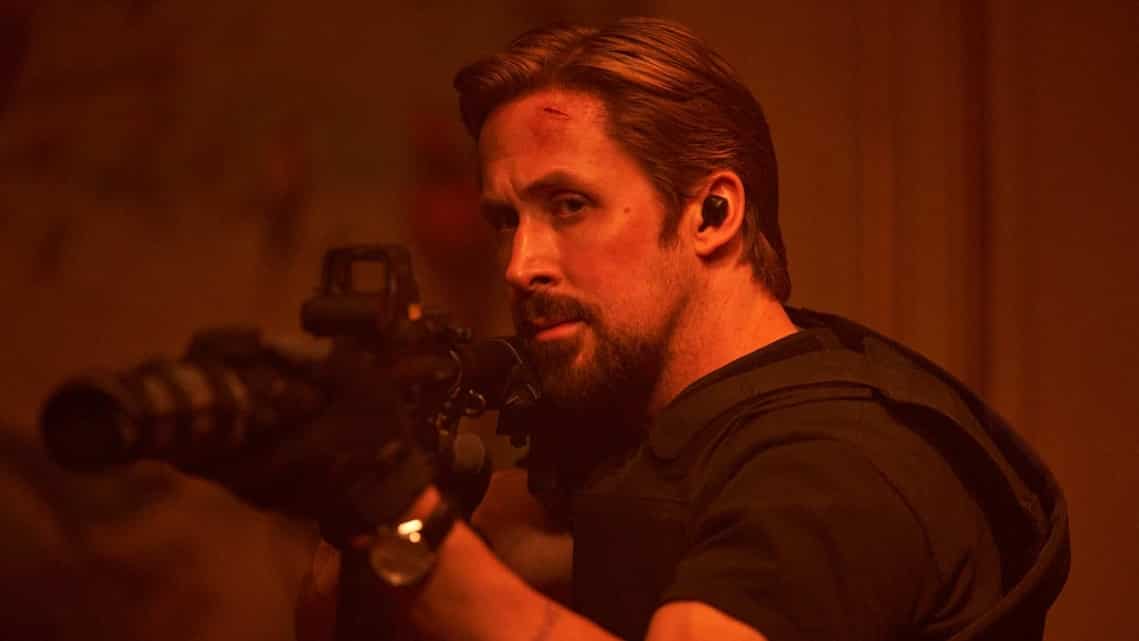
Ryan Gosling

“THE GRAY MAN” My rating: C (Netflix)

122 minutes | MPAA: PG-13

“The Gray Man” is so generic its makers could have forgone a title and opted instead for a universal product code.

It would be fitting for a movie whose hero is known only as Six.

The latest from directing siblings Anthony and Joe Russo (Marvel’s “Avengers” franchise) is an international spy thriller that aspires to “Bourne”/”Mission: Impossible”-level intensity but ends up looking like a wannabe.

Apparently mediocrity doesn’t come cheap. “The Gray Man” is allegedly the most expensive original film yet made by Netflix. Maybe they should have spent some of the pyrotechnic budget on a script.

In the first scene a prison inmate (Ryan Gosling) is recruited by CIA operative Fitzroy (Billy Bob Thornton), who offers to train him as a super secret agency assassin. He will become part of the shadowy Sierra program…in fact, we will know him only as Sierra Six.

Fifteen years later Six is in Bangkok on assignment. He’s been given an agency handler, Miranda (Ana de Armas) and instructions to attend a big New Year’s bash and eliminate a fellow who is peddling CIA secrets to the highest bidder.

Thing is, he discovers that the target is one of his fellow Sierra assassins.

The MacGuffin here is a memory stick crammed with evidence of wrongdoing by an agency bigwig (“Bridgerton’s” Regé-Jean Page), who sends the smarmy/ruthless Hansen (Chris Evans) to retrieve it. Hansen’s plan is to get to Six by kidnapping the now-retired Fitzroy and his 15-year-old niece (Julia Butters) — the only two people on earth with whom Six has any sort of relationship.

Chris Evans

Well, the story takes us all over Asia and Europe. Inevitably Hansen’s minions catch up with Six, who always slips away — but not without numerous casualties among the local cops and citizenry.

The action scenes come with preplanned regularity and are busy without really making much of an impression…perhaps because the filmmakers were aiming for a PG-13 rating and couldn’t get really lowdown and dirty.

Gosling — admittedly one of our best actors — really doesn’t have a character to play here. Six is pretty much a blank page.

Faring much better is Evans, who is a shamelessly gleeful villain. With a tight haircut and pencil mustache he looks like the leading man in a ’30s porn short. All that’s missing are the black socks and garters. It may be ham, but it’s the most flavorful thing on screen.

Thornton and de Armas don’t have to do much emoting, and reliable performers like Alfre Woodard and Shea Whigham barely make an impression in brief supporting roles.

Technically the film is OK, and it practically serves as a primer for the use of drone footage…the camera is always zooming through the air, bobbing along the sidewalks and floating over and under structures.

In retrospect “The Gray Man” is a natural for a streaming service…it isn’t good enough to warrant the price of a ticket at the cineplex.

| Robert W. Butler

Read Full Post »

Dakota Johnson, Cosmo Jarvis

“PERSUASION” My rating: C (Netflix)

107 minutes | MPAA rating: PG

The Jane Austen purists are hating the new Netflix adaption of Austen’s Persuasion. They object to the many rom-comish liberties screenwriters Ron Bass and Alice Victoria Winslow and director Carrie Cracknell have taken with the novel.

But then the Austen hardcores also hated the 2005 Kiera Knightley “Pride and Prejudice,” which I found quite swoonworthy.

Rather more shocking are the reactions of the mainstream British press: “A travesty.” “Torture.” “At no point do you ever get the sense that anyone’s actually read Persuasion.”

A critic for The Guardian declared it the worst movie ever made, and offered similar thoughts about American actress Dakota Johnson’s lead performance…which suggests to me that the reviewer has only recently come to the job.

Well, this “Persuasion” isn’t very good. It’s not that the filmmakers shouldn’t be free to toy with the source material…just that in almost every case they fail to make their case.

The plot centers on Anne Elliott (Johnson) who several years earlier rejected the love of the Naval officer Wentworth (Cosmo Jarvis); friends and family members argued persuasively that he was beneath her. Now officially a spinster, Anne rues that decision.

But wait…Wentworth has returned. He is now the wealthy is captain of his own ship and in the market for a bride. Torn between shame at her earlier behavior and a slow-simmering longing, Anne doesn’t know what to do. This is Regency England after all…individuals are not encouraged to break social norms by speaking their minds.

Then there’s Anne’s wealthy cousin, Elliott (Henry Golding), who comes a-courting but seems, well, disingenuous.

Those who have seen the 1995 “Persuasion,” which took Anne’s predicament as a source of near-tragedy, may be shocked to see how much the new film yuks up the material.

Dakota’s Anne may tell us she fears a life of solitude, but she sure as hell doesn’t act like it. She’s sassy and witty…it’s impossible to feel sorry for her, especially when she spends so much time chugging red wine and stroking her pet bunny. She’s like your fun auntie.

Moreover, Anne treats the camera as her confidante, talking directly to the audience and often rolling her eyes in our direction when members of her family act stupidly, which is always.

The surrounding cast members (in keeping with other post-“Bridgerton” period pieces, they represent a variety of races) offer little support. Most of the women are encouraged to overplay their comic roles (one commentator has suggested the whole thing might benefit from a TV laugh track) while the men are uninteresting stiffs. (The exception is Richard E. Grant, delightfully shallow as Anne’s pompous spendthrift Papa.)

Weirdly enough, after messing ruthlessly with the tone of the piece (surely this is the first time we’ve been treated to the sight of an Austen heroine squatting in the woods to pee), the filmmakers have taken pains to faithfully recreate the costuming and decor of the early 19th century. It’s all been nicely captured by cinematography Joe Anderson, who polishes every image as if it was meant to be framed.

I didn’t hate this Persuasion. I almost wish I did…that would be better than my utter indifference.

| Robert W. Butler

Read Full Post »

“Dreaming Walls: Inside the Chelsea Hotel” My rating: B ()

80 minutes | No MPAA rating

One can say with some confidence that virtually every important American of 20th century arts and letters has spent time in New York’s Chelsea Hotel, either as an overnight guest or as a long-term resident.

The roster of artists, writers and musicians who have slumbered (and sometimes partied) under its roof range from Brendan Behan, Salvador Dali and Virgil Thomson to the Sex Pistol’s Sid Vicious and the impossible-to-top young lovers Patti Smith and Robert Mapplethorpe.

Heck, Leonard Cohen wrote a song about the joint.

But do not go to “Dreaming Walls: Inside theChelsea Hotel” expecting a litany of the famous and depraved. Documentarists Maya Duverdier and Amelie van Elmbt have given us something more akin to a tone poem than your traditional nonfiction feature. The best approach is simply to let it wash over you.

Early on one of the Chelsea’s octogenarian inhabitants hobnobs in the hallway with a construction worker who has spent much of the last decade renovating the venerable structure for its new incarnation as a boutique hotel. The young laborer admits while on the job he has sensed the presence of ghosts.

In a sense, Duverdier and Elmbt’s camera becomes one of those ghosts, drifting silently through halls and apartments, some now stripped down to the studs. Periodically the faces of famous Chelsea residents of yore are projected onto the peeling walls…spectres from a colorful past.

Here’s where the Chelsea is right now…the renovations are half completed, but are being held up by long-time habitués who, embracing the New York City equivalent of squatter’s rights, are doing all they can to slow the march of progress. Some have been moved to newly redone (and much smaller) apartments. Others refuse to vacate their homes of longstanding.

The tenants’ association has undergone a bitter division between those who — despite the attendant noise, dust and chaos — welcome progress and those who stubbornly oppose it (one curmudgeon refers to the whole process as “a slow-motion rape”).

Clearly the management recognizes that only death will loosen the grip of some of these old-timers. Work crews have installed a new elevator that will take them and their walkers to an exit at the rear of the building, thus sparing the hotel’s new young, hip and moneyed clientele the trauma of seeing poorly dressed wraiths inching their ways through the lobby.

Lacking any narration or titles to tell us what’s going on, we must get the lay of the land by listening to the residents talk. Happily, they are an interesting bunch, ranging from dancer/choreographer Susan Kleinsinger to artist Skye Ferrante, who fashions exquisite three-dimensional portraits of his fellow Chelseans using only pliers and wire.

There’s a smattering of old films taken at the Chelsea, including an appearance by the late Stanley Bard, for decades the hotel’s manager and probably the person most responsible for nurturing the building’s bohemian atmosphere (he was that rarest of creatures, a businessman who put esthetics on an equal footing with income).

One resident refers to the Chelsea as being like “a grand old tree, chopped down but rooted deep…there’s still life in there.”

“Dreaming Walls” is not encyclopedic and doesn’t want to be. But it gives a tantalizing taste of a grand old institution and the inevitability of change.

| Robert W. Butler

Read Full Post »

Freida Pinto, Sope Dirisu

“MR. MALCOLM’S LIST” My rating: C (In theaters)

117 minutes | MPAA rating: PG

The borderline insufferable “Mr. Malcolm’s List” owes its existence almost exclusively to “Bridgerton,” the Netflix Regency-era bodice ripper that melded multi-racial casting with Jane Austen-ish sensibilities and a good dose of heavy breathing.

Screenwriter Suzanne Allain (adapting her novel) and director Emma Holly Jones (the two also collaborated on a 2019 short film drawn from the book) have given us one of those costume-heavy romances of manners so popular with fans of Anglo-centric entertainment.

The gimmick — not that it’s much of a gimmick in the wake of “Bridgerton” and the recent Dev Patel “David Copperfield” — is that the many characters, from snooty aristocrats to household retainers, are played by a diverse cast representing many races.

Thus our heroine — the sweet, sensible, honest and basically broke Selina — is played by Indian star Freida Pinto of “Slumdog Millionaire” fame; her comically scheming, nose-in-the-air cousins are portrayed by Zawe Ashton (whose mother is Ugandan) and Oliver Jackson-Cohen (generic white guy, natch).

The Mr. Malcolm of the title — a fabulously wealthy gent who keeps a list of all the qualities he demands from a potential wife — is played by Sope Dirisu, who is of Nigerian descent.

There’s considerable talent on display given the credits of the many cast members, but all have been undone by the simpering, artificial tone imposed by the writing and directing. The players assume a sort of comic exaggeration that reeks of high school theatrics. I didn’t believe a minute of it.

Moreover, the film never took me by surprise. The plot appears to be strictly by the numbers…I say “appears” because I could only take about 45 minutes of “Mr. Malcolm’s List.” In the unlikely chance that the film utterly redeems itself in the last three reels, I hereby offer my apologies.

Production values are okay, but most of us are past the point where we’ll happily leave the theater whistling the gowns.

| Robert W. Butler

Read Full Post »

« Newer Posts - Older Posts »