Feeds:
Posts
Comments
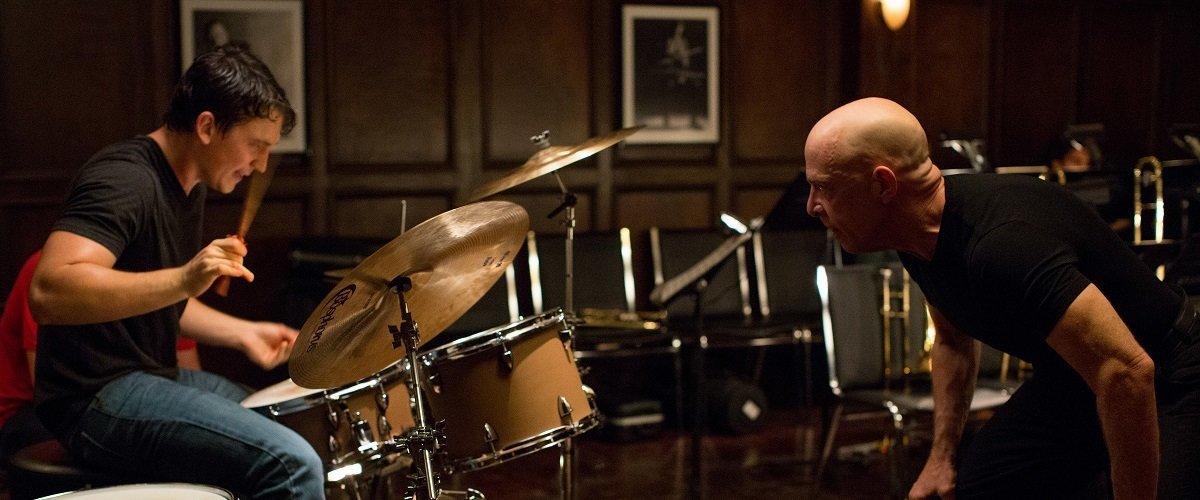
Jeremy Renner as journalist Gary Webb

Jeremy Renner as journalist Gary Webb

“KILL THE MESSENGER” My rating: B+ (Opens wide on Oct. 10)

112 minutes | MPAA rating: R

Apart from featuring Jeremy Renner’s best screen performance since “The Hurt Locker,” the new film “Kill the Messenger” is noteworthy as a throwback to the good old days before around-the-clock cable news.

We’re talking about a time when the ink-stained wretches of the newspapers were widely viewed as, well, as kind of heroic.

Badly paid, sure, and probably morally reprehensible in matters of alcohol and other forms of hedonism. But these journalists happily clung to the idealistic notion that their job was to comfort the afflicted and afflict the comfortable, and in films like “All the Presidents Men” newspaper reporters shined a light on corruption and criminality.

“Kill the Messenger” is based on the  career of Gary Webb, a reporter for the San Jose Mercury News who in the mid-1990’s, while covering the crack cocaine epidemic, stumbled upon a seemingly incredible story: To fund a rebel army battling the leftist Sandinista government in Nicaragua, the Contras had been smuggling countless tons of cocaine into the US.  The ensuing scandal became known as “drugs for guns.”

Webb never alleged that the CIA was behind the program, only that the CIA must have known about the drugs and tolerated it.

In other words, during the same years that Nancy Reagan was telling America’s kids to “just say no,” our government was allowing a flood of dangerous drugs to inundate the country’s inner cities. Most of the victims of this scourge were black.

Written by Peter Landesman and directed by Michael Cuesta (a veteran of Showtime’s “Homeland”), “Kill the Messenger” starts out as a sort of journalistic procedural.  Renner’s Webb stumbles across a secret government document that suggests a partnership between the government and a major drug trafficker.  Then, through dogged research, interviews, and travel to Central America and Washington D.C., Webb puts together a story that will rock the country and win him major journalism awards.

Continue Reading »

“THE JUDGE”  My rating: C+ (Opens wide on Oct. 10)

141 minutes | MPAA rating: R

The Judge” has a few good things going for it, particularly the promise of a high-octane acting duel between Robert Duvall and Robert Downey Jr.
What the film doesn’t have is faith that the audience can appreciate solid dramatic acting for more than, oh, three minutes at a stretch.
In this story of an estranged father and son thrown together by a big trial, every  scene that carries a bit of weight immediately goes for a comic coda — often a cheap comic coda. The effect is weirdly mechanical. But we can’t leave the paying customers thinking serious thoughts, right?
The result is an overlong, overstuffed movie at war with itself.Hank Palmer (Downey) is a top Chicago trial lawyer. A maddening mix of intelligence and arrogance, Hank knows how to bend the law to his will. He is not apologetic about this.“Everybody wants Atticus Finch,” he notes, “until there’s a dead hooker in the hot tub.”

It’s a case of perfect casting. Nobody tops Downey in portraying smarmy characters who undergo a redemptive transformation (see “Iron Man”).

The death of Hank’s mother brings him back to the small Indiana town he fled 20 years earlier. Though this idyllic burg seems to have fallen out of a Norman Rockwell painting, Hank  hates the place.

More accurately, he hates his old man, Judge Palmer (Duvall). The two haven’t spoken since forever, and the Judge has never met Hank’s young daughter.

Why these two are always at each other’s throats will be revealed in dribs and drabs over the next two hours.

The Judge is charged with manslaughter in the death by automobile of an ex-con with whom he has had a troubled past.

Being a monstrous egoist, Hank sticks around to represent his father — especially since the Judge’s local attorney (Dax Shepard) is borderline inept. The poor jerk upchucks on the courthouse steps every time he must face Billy Bob Thornton’s steely-eyed prosecutor.

Continue Reading »

The-Notebook-Hungary“THE NOTEBOOK”  My rating: B (Opening Oct. 10 at the Glenwood at Red Bridge)

112 minutes | MPAA rating: R

The varied parts of “The Notebook” don’t add up, but even taken individually some of those parts are amazing.

This Hungarian release from director Janos Szasz (it has absolutely nothing in common with the 2004 Ryan Gosling/Rachel McAdams weeper based on the Nicholas Sparks novel) falls into the children-warped-by-war genre. It is cousin to classics like the French “Forbidden Games” (1952) and the Soviet “Come and See” (1985).

The twist here is that instead of a single young protagonist through whom we experience war’s devastating effects, we are given a pair of identical twins, two young Hungarian boys who in the waning days of World War II are sent to live in the relative safety of the countryside.

In the opening moments we meet the unnamed youngsters (played by twins Laszlo Gyemant and Andras Gyemant) in their parents’ plush Budapest apartment.  Mother (Gyongyver Bognar) is beautiful and sophisticated and dotes terribly on her two little angels.  The father (Ulrich Matthes) is an officer whose access to military intelligence has convinced him that the Nazis with whom he has been collaborating for several years are on their way to defeat. When that happens he’ll be a marked man, as will his children.

Before sending his sons away, Father instructs them to keep a notebook of everything they encounter so that, when the family is finally reunited, he can see how they have educated themselves.

Mother takes the boys on a train ride to the sticks, where she deposits them at the farmhouse door of her mother (Piroska Molnar), a fat, bellicose, thoroughly unlikeable woman so antisocial she’s rumored to be a witch. We see no sign of occult activitiy, but just in her everyday life Grandmother is hell on wheels. She’s bitter have not having seen her daughter for years and contemptuously refers to the twins as “the bastards.”  She’s prepared to make them earn their keep by toiling around the farm. She parcels out food like it was gold. At night in the privacy of her room she obsesses over her small collection of jewelry and other valuables.

Continue Reading »

Rosamund Pike, Benn Affleck...in happier times

Rosamund Pike, Benn Affleck…in happier times

“GONE GIRL” My rating: A- (Opening wide on Oct. 3)

minutes | MPAA rating: R

The Affleck smirk — the way Ben Affleck, without even trying, looks like a high school halfback who has just initiated one of the new cheerleaders beneath the bleachers — is put to spectacular use in “Gone Girl.”

In David Fincher’s first-rate adaptation of Gillian Flynn’s dark suspense novel, Affleck plays a  handsome husband suspected of killing his beautiful wife, who has inexplicably gone missing. Here’s a poor jerk who — despite his best efforts to appear sympathetic in front of the cops, the cameras and the court of public opinion — can’t help coming off as insincere and smug.

Damn that Affleck smirk!

Or, rather, all hail the Affleck smirk, imbued as it is with ambivalence and leaving us uncertain about whether we should be cheering or booing the film’s protagonist.

That indecision could be problematical (moviegoers like being told what to think and feel), but “Gone Girl” nevertheless sucks us into the bitter (and bitterly funny) world fashioned by Fincher and Flynn (who adapted her own book for the screen — and in many respects actually improved upon the novel).

It’s a thoroughly satisfying mystery and suspense tale, sure, but “Gone Girl” also is one of the cinema’s most supremely cynical statements about the institution of marriage. It makes “The War of the Roses” seem warm and fuzzy.

And as if that wasn’t cake enough, we get for icing a hugely perceptive and bleakly comic depiction of the tabloid media, Internet opinion-making, and the astoundingly shallow fickleness of the American public.

There’s enough great stuff in here for three or four movies.  That Fincher (“The Social Network,” “Zodiac,” “Fight Club”) and Kansas City-reared Flynn keep it all in perfect balance is some sort of miracle.

Continue Reading »

Nick Cave...and sons

Nick Cave…and sons

“20,000 DAYS ON EARTH”  My rating: A- (Opening Oct. 3 at the Alamo Drafthouse)

97 minutes | No MPAAA MPAA rating

Aussie rocker Nick Cave is one fascinating cat:  the longtime frontman and songwriter of the Bad Seeds, a brilliant poet and personal essayist, a visual and multimedia artist.

He’s way too cutting edge for mass popularity (his only true hit record was “Where the Wild Roses Grow,” a duet with Kylie Minogue…and that was a skin-crawling ballad about obsession and murder), and it makes perfect sense that Iain Forsyth and Jane Pollard’s documentary about Cave is an unconventional, kaleidoscopic vision lacking anything like a straightforward biography.

And yet “20,000 Days on Earth”  (the title refers to the fact that Cave was 54 years old when it was made) is not just about one man but about the nature of artistic creation.  It is, in fact, one of the best films I’ve ever seen on that subject.

While the film captures Cave  performing several songs in rehearsal, the recording studio, and on stage, its primary focus is on a series of revealing conversations between Cave and others: his longtime bandmate Warren Ellis, Minogue, actor and friend Ray Winstone, psychologist Darian Leader (author of What is Madness?).

These verbal encounters have all the naturalness of  a spontaneous chat…yet that cannot be.  They have been filmed and edited with the sort of care lavished on big-budget fiction films, with beautiful lighting, stunning frame composition, multiple camera angles.

It’s almost as if Forsyth and Pollard had shot the film as conventional documentary — handheld cameras, natural lighting — and then re-staged each scene, employing the same dialogue (or actually improving it) but capturing it with all the gloss and polish of the best moivie studio resources.

The resulting movie is achingly sensuous. It’s just so damn beautiful.

Which is a bit ironic since Nick Cave is himself not physically beautiful.  He’s a skinny wraith usually clad in hipster black.  He’s got stringy black hair, no chin, a porcine nose, and much of the time wears out-sized yellow-tinted aviator glasses.

But if some find the wrapping offputting, what’s inside is mesmerizing.

Continue Reading »

"Lost Boys" discover electricity...(left to right) XXX

“Lost Boys” discover electricity…(left to right) Arnold Oceng, Emmanuel Jal, Ger Duany


“THE GOOD LIE”  My rating: B+  (Opening wide on Oct. 3)110 minutes | MPAA rating: PG-13

Look past the sex, violence and escapism, and you’ll find that Hollywood still is capable of telling genuinely moving and positive stories.

“The Good Lie,” a small epic about the generation of uprooted Sudanese children known as the Lost Boys, is one such humanistic triumph.

Covering more than 20 years and, while fictionalized, based on the true stories of these young refugees, the film is a low-keyed wonder, filled with moments likely to tighten the throat and unplug the tear ducts.

In hands less skilled than those of director Philippe Falardeau (of the French Canadian import “Monsieur Lazhar”) and screenwriter  Margaret Nagle it could have been a treacly affair of the movie-of-the-week variety. Instead it reminds me of Philip Noyce’s 2002 “Rabbit-Proof Fence,” a minor classic about Australian aborigine children on the run from a government bent on civilizing them.

Featuring a totally convincing cast of real Sudanese refugees and their American-born children (several from the KC area), the film gets a bit of star power in the form of Reese Witherspoon as a good-timing Kansas City woman who is sucked into their story.

But what nails the viewer to the wall is not just the knowledge that this astonishing saga is inspired  by real events, but that it has been repeated over and over in the lives of the 3,600 Lost Boys who barely escaped  from war-torn Sudan and found their ways to a new life in America.

In a sense this is two stories populated by different casts playing the same characters.

The film’s first half hour introduces us to village life in southern Sudan in the early 1980s and the civil war — fueled by religious and ethnic enmities — that leaves a handful of children orphaned and on an incredible 800-mile trek to safety in Kenya.

The oldest is only 13 or so, the youngest perhaps five. They endure heat and weather — it means drinking their own urine — dodge the soldiers scouring the countryside, cross a river dotted with bloating corpses, battle a pair of cheetahs for a chance to gnaw down on the big cats’ recent kill. Not all of them will make it. Their bodies will be left behind under the stunted brush in the midst of a vast, primordial landscape.

These opening scenes are both visually beautiful and dramatically harrowing. The oldest boy, Theo, by default the “chief” of the small band, saves the younger travelers by giving himself up to an enemy patrol. The smaller children trek on, until they finally reach a Kenyan camp packed with 100,000 refugees of the Sudanese diaspora.

Jump ahead 13 years.  After more than a decade of waiting some of the children, the lucky ones, are picked to be flown to the U.S. where they will begin their lives anew. Three young men — Mamere (Arnold Oceng), Jeremiah (Ger Duany) and Paul (Emmanuel Jal) — and Mamere’s sister Abital (Kuoth Wiel) find themselves aboard a jet liner for the first time.

Upon arriving in the US, though, they are told that while the boys will proceed to Kansas City, Abital has been taken in by a family in Boston. Nobody in KC was willing to adopt a Sudanese girl. The boys vow that they will find a way to be reunited with their “sister.”

Continue Reading »

John Lithgow, Alfred Molina

John Lithgow, Alfred Molina

“LOVE IS STRANGE” My rating: B (Opening Sept. 26 at the Tivoli and Glenwood at Red Bridge)

94 minutes | MPAA rating: R

Though its two central characters are men in a long-term relationship, it would be a mistake to categorize “Love is Strange” as a “gay” movie.

In fact, Ira Sachs’ melancholy drama is clearly inspired by the 1937 film “Make Way for Tomorrow,” in which an elderly couple run out of money and after a lifetime together must separate to be farmed out to their selfish children in different cities. “Make Way…” tops my list of the most downbeat (though brutally honest) films ever produced by a major studio during Hollywood’s Golden Age.

That Sachs updates the story to a contemporary setting and makes the couple same sex offers an interesting twist, but at its heart “Love is Strange” is less about sexual orientation than about the economics of living in NYC, the brittleness of familial ties, and the difficulties of having several generations living under one roof. (A century ago, of course, multi-generational households were the norm. Today we’re all a bit too self-centered for that.)

We meet Ben (John Lithgow) and George (Alfred Molina) on the day of their wedding ceremony. They’ve been together for four decades, and are now taking advantage of recent judicial rulings to make it legal.

Ben is the older by 10 years, a retiree who still dabbles in painting. He’s a bit fussy, the worrier of the pair.  George is the more expansive and upbeat partner.

Staying upbeat, though, is a challenge after George is fired from his longtime job as a music director at a Catholic high school. His sexuality and living situation were never a secret, but by getting married and announcing the news he has violated Church policy. In addition to losing a paycheck, he forfeits health insurance coverage for himself and Ben.

Continue Reading »

Ed Harris

Ed Harris

“FRONTERA” My rating: B- (Opening Sept. 26 at the Screenland Crown Center)

103 minutes | MPAA rating: PG-13

As first features go, “Frontera” is hugely ambitious.  Too ambitious.

Writer/director Michael Berry seems to want to do for illegal immigration what “Traffick” did for drug smuggling.  But he’s trying to touch so many sailiant features of the issue that his film feels frustratingly busy, as if it has been shoehorned into its 90-minut running time.

There’s no time for the film to breath, to take stock. If only “Frontera” had been produced as a three-night cable miniseries…it would have been a whole different — and much more satisfying — experience.

As it is it features some good acting, terrific cinematography of the rugged American Southwest, and a slowly tightening aura of suspense. It’s okay…it could have been so much better.

It starts south of the border with Miguel (Michael Pena), his pregnant wife Paulina (Eva Longoria in decidedly non-glam mode) and their young daughter traveling north.  They spend a night at the home of Paulina’s parents just a few miles south of the Arizona border. And then Miguel strikes out for the long walk into the U.S.A. The plan is for him to find work, send the dollars back to Paulina, and hopefully bring his family across the border.

On an Arizona ranch abutting Mexico, former lawman Roy (Ed Harris) and his wife Olivia (Amy Madigan) are having a happy retirement. Illegal immigrants regularly cross their land, but Olivia has come to an accomodation with the visitors, riding out with her horse to pass out bottled water and blankets to the trekkers in search of a better future.

Cut to a trio of bored teens who take their rifles out to the brush with the intention of taking potshots at any Mexicans they spot. Their prank goes bad, a death results, and the innocent Miguel finds himself facing a murder charge.

Continue Reading »

Kristen Wiig, Bill Hader

Kristen Wiig, Bill Hader

“THE SKELETON TWINS”  My rating: B (Opening Sept. 26 at the Tivoli and Leawood)

93 minutes | MPAA rating: R

The old adage about a tragedian lurking inside every comedian is perfectly illustrated by “The Skeleton Twins,” an achingly sad yet hugely amusing study of self-destructive siblings — played by “SNL” alums Bill Hader and Kristen Wiig — who can find comfort only in their shared misery.

In an early scene of Craig Johnson’s dramedy, Maggie (Wiig) is preparing to gulp a handful of sleeping pills when her grim ritual is interrupted by a phone call.  Across the country in LA, her twin brother Milo (Hader) has beaten her to the punch, slitting his wrists while sitting in the tub.  He’s in the hospital.  Can Maggie — who hasn’t seen her bro in a decade — come and fetch him?

Granted, this doesn’t sound like a laugh riot. Wiig and Hader — who a few years backed played husband and wife in the coming-of-age comedy “Adventureland” — initially approach their roles with dead-on seriousness, their performances imbued with a sense of weariness that makes simply rising from a chair a monumental effort.

But after Milo returns with Maggie to her home in upstate New York, the film (co-written by Mark Heyman) gently begins working its magic.

The twins have been cursed with self-awareness. They realize they are unhappy, they see themselves almost as psychological caricatures, and if they’re not actually going to kill themselves they need to make fun of themselves to get through it all.

Why do they gravitate toward self-destruction? The film offers no easy answers. In brief flashbacks we see their beloved father — himself an early suicide — giving life lessons and presenting the children with colorful plastic skeletons (the message: Get used to death, come to an accomodation with it.)  About halfway through the film they are visited by their absentee mother (Joanna Gleeson), a New Age groupie so bent on spiritual self-improvement that she’s never had time for her progeny.

With no pat psychological explanation of Maggie and Milo’s dilemma we’re left with the conclusion that maybe some people are just born miserable.

Continue Reading »

James McAvoy and Jessica Chastain...in happier times.

James McAvoy and Jessica Chastain…in happier times.

“THE DISAPPEARANCE OF ELEANOR RIGBY: THEM”  My rating: C  (Now showing at the Glenwood Arts)

121 minutes | MPAA rating: R

The hype over “The Disappearance of Eleanor Rigby” has been so pervasive that a letdown was pretty much inevitable.

It’s not a bad film — just a minor one. A forgettable one.

Actually, we’re talking about three movies. “The Disappearance of Eleanor Rigby: Them,” now playing in Kansas City, stars Jessica Chastain and James McAvoy. It’s about the breakup of a marriage in the wake of a tragedy.

But writer/director Ned Benson has created two other films using the same cast and basic plot that tell the story from the separate points of view of the wife, Eleanor, and the husband, Conor. One of these is “TDER: Her”; the other is “TDER: Him.” Presumeably theaters that are showing “TDER: Them” will also book the other two features.

Here’s the problem.  Based on “Them,” I’m not eager to follow these characters for another four hours.

In fact, I found this film irritating despite the solid performances. Benson is a parsimonious storyteller who rations out important information, keeping his cards hidden and giving us what we need to know in meager dribbles.

The film begins with Eleanor’s attempted suicide jump from NYC’s 59th Street Bridge.  Plucked from the East River she spends some time in a pysch ward and then ends up in the suburban home of her parents.  Dad (William Hurt) is a psychologist and educator; Mom (Isabelle Huppert) mostly survives on cigarettes and red wine.

There’s also a younger sister (Jess Wiexler) who with her young son have moved back home after the breakup of her marriage.

How do psychologists raise such psychologically messed-up kids? Just wondering.

Continue Reading »