“THIS IS 40” My rating: C- (Opens wide on Dec. 21)
134 minutes | MPAA rating: R
Being funny has never been a problem for Judd Apatow. And let’s be honest — there are some good laughs in his latest, “This is 40.”
The problem is Apatow’s increasing incompetence as an overall filmmaker. His movies are obscenely long, slowly paced, meandering, and poorly laid out. I won’t say they have no point, only that they so quickly run out of dramatic steam and narrative focus that they seem to have no point.
“This is 40” follows Pete (KC native Paul Rudd) and his wife Debbie (Leslie Mann, Apatow’s Missus), two supporting characters from “Knocked Up,”
They live in an upscale LA neighborhood with their two daughters (Iris and Maude Apatow, the director’s kids). Debbie runs a boutique. Pete has started his own independent record label.
And like a lot of folks who hit 40 years of age, they’re getting jumpy.
“JACK REACHER” My rating: C(Opens wide on Dec. 21)
130 minutes | MPAA rating: PG-13
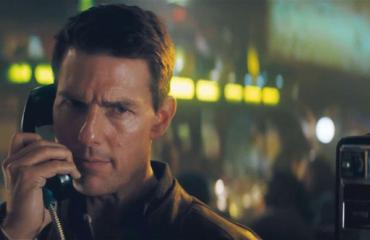
“Jack Reacher” introduces Tom Cruise as the title character of Lee Child’s hugely popular series of crime thrillers about a former military cop who drops off the grid, surfacing every once in a while to solve some particularly egregious crime, and then vanishing once more.
Already some fans of Child’s books are in an uproar, since the Reacher of the novels stands well over six feet and weighs in at the low 200s…and Cruise is notoriously short and trim.
Never having read any of the Reacher mysteries, I find that argument about as interesting as the question of how many angels can dance on the head of a pin. But having seen the film, I think there’s a real question of whether we’ll ever see another Jack Reacher movie.
It’s not that the picture — written and directed by Christopher McQuarrie (he wrote “Valkyrie” for Cruise and will direct him in the next “Mission: Impossible” entry) – is awful. It just isn’t much of anything at all.
“THE HOBBIT: AN UNEXPECTED JOURNEY” My rating: C(Opens wide on Dec. 14)
169 minutes | MPAA rating: PG-13
I can’t decide if the motivating force behind Peter Jackson’s “The Hobbit: An Unexpected Journey” is hubris or greed.
It’s hubris if Jackson assumed we’d buy anything he threw at us after the worldwide success of his three three-hour-long installments of “Lord of the Rings.”
It’s greed if he decided that there was way more money to be made by stretching J.R.R. Tolkien’s novel for children (just 300 pages, compared to “LOTR’s” 1,200) to an elephantine nine hours of screen time instead of a single three-hour (or even two-hour) movie. (“An Unexpected Journey” is only the first of three “Hobbit” films to arrive on successive Christmases.)
By now you may have gathered that I’m not particularly enamored of Jackson’s “Hobbit.” In fact, I consider it the year’s biggest letdown (largely because my expectations were so high).
Oh, you’ve got movie technology piled atop movie technology, plus the gimmick of 48-frames-per-second projection in select theaters. (More about that later on).
The costuming, f/x, props and cinematography are state of the art.
“THE BIG PICTURE” My rating: B(Opens Dec. 14 a the Tivoli)
114 minutes | MPAA rating: NR
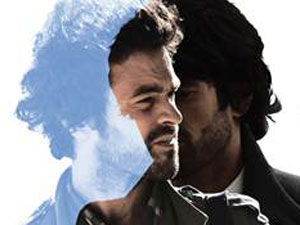
“The Big Picture” isn’t a crime movie, exactly, although someone is murdered in it.
Eric Lartigau’s film reminds me a lot of Patricia Highsmith’s brand of psychological thriller (the “Ripley” stories), where character study outweighs mayhem.
Our protagonist is Paul (Romain Duris), a Paris attorney with a wife, a couple of cute kids, and a house in the ‘burbs.
Paul once aspired to be a fine arts photographer, but marriage and fatherhood steered him toward the law, a gig lucrative enough that he now can afford his own state-of-the-art photo studio in the basement…not that he ever really does more than hang out down there.
Lately Paul’s been feeling lots of pressure. His law partner (Catherine Deneuve) announces she is dying of an unspecified illness. And his wife Sara (Marina Fois) seems to be slipping away as well. Their marriage is circling the drain.
The first 40 minutes of “The Big Picture” establishes the parameters of Paul’s unfulfilling existence.
His suspicion that Sara is having an affair leads to a confrontation with a mutual friend, Gregoire (Eric Ruf), a struggling photographer who unlike Paul chose to follow his muse even if there’s no payoff in sight.
Insults are hurled. Blows are exchanged. And suddenly Paul finds himself standing over Gregoire’s corpse.
At this point “The Big Picture” becomes almost an entirely different movie. After a few moments of panic, Paul gets to work. He puts the body in the trunk of Gregoire’s car and cleans up the blood. He uses the dead man’s email to send out news that Gregoire will be out of the country on assignment.
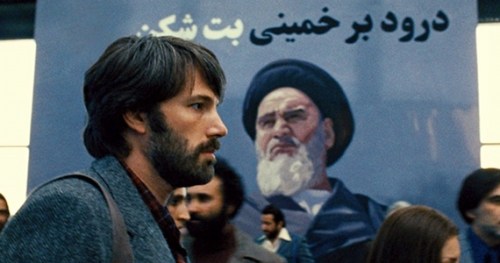
Here are my Top 10 movies of the year (meaning they opened in KC during 2013, even if they were considered for the 2011 Oscars). They are presented in no particular order. Alas, “Zero Dark Thirty” won’t open here until January. Otherwise it would definately be among the Top Ten.
PS Late addition: Holy crap, how could I forget about “SEARCHING FOR SUGARMAN”? That ought to be in the Top Ten, too. I’m beginning to think this was a very good year at the movies.
Filmmaker Arnon Goldfinger…pondering a perplexing past
“THE FLAT” My rating: B (Opening Dec. 9 at the Tivoli)
97 minutes | No MPAA rating
A real-life detective story with far-reaching implications, “The Flat” is a worthy addition to the genre of Holocaust-related cinema.
But Arnon Goldfinger’s celebrated documentary – it’s been playing in theaters in Israel for more than a year — isn’t about cattle cars and gas chambers. It’s about human curiosity and human denial.
Five years ago filmmaker Goldfinger’s grandmother, Gerta Tuchler, died at age 98 in Tel Aviv. Born in Germany, Gerta left behind in her apartment more than 70 years’ worth of clothing (lots of creepy fox wraps and dozens of pairs of fancy ladies’ gloves) and evidence of her early life that her children and grandchildren knew nothing about.
The first clue was a yellowing Nazi newspaper, Der Angriff (The Attack), with an article about a trip to Palestine in the mid-1930s taken by Goldfinger’s grandparents, accompanied by Baron Leopold von Mildenstein, a German “journalist,” and Mildenstein’s wife.
The trip, as described by Mildenstein in the article, was to evaluate the suitability of Palestine as a destination for German Jews. The idea, at that time anyway, was that Jews could be shipped out of the Reich and relocated to another part of the world.
“HITCHCOCK” My rating: B(Opening Dec. 7 at the Cinemark Plaza and Glenwood Arts)
98 minutes | MPAA rating: PG-13
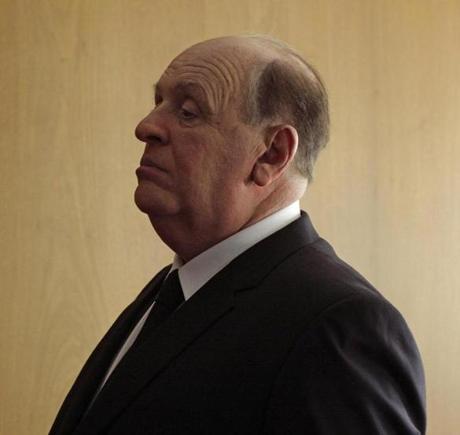
In the new film “Hitchcock” a pretty young thing addresses the famous “Master of Suspense” as “Mr. Hitchcock.”
Responds the great man (Anthony Hopkins): “You may call me Hitch. Hold the cock.”
Ah, the cheeky, naughty, proper-on-the-outside, twisted-on-the-inside Alfred Hitchcock.
“Hitchcock” isn’t your conventional biopic. Rather than attempting to capture a full life, the new film from Sacha Gervasi (whose only previous directing credit was the delightful rock documentary “Anvil: The Story of Anvil”) maintains a narrow focus. It centers on just one year: 1959.
At the time the British-born auteur was shattering tradition and precedent, taking some very big risks, and giving the world “Psycho,” a film that would revive his flagging finances, rejuvenate his reputation, and (for better or worse) redefine what was acceptable to put on a movie screen (for instance, toilets).
Oh, yeah, with its notorious shower scene “Psycho” also launched a new cinema genre, the slasher film.
Diane (Juno Temple…last seen as the trailer court white trash Lolita in “Killer Joe”) is a British teen spending the summer with her aunt in NYC.
We first encounter Diane wandering around Greenwich Village, begging strangers to let her use their cell phones. With her unkempt blond mane she looks like the waif on a poster for the Broadway musical “Les Miserables.” When she’s under pressure (which is often) her nose bleeds. She has a tendency to pass out in odd places – like on the floor of a bathroom in a noisy disco.
When she runs into the boyish Jack (Riley Keough, Elvis Presley’s granddaughter) it’s love at first sight. At least on Jack’s part (she has a mix tape she has long wanted to share with someone special). It takes Diane a bit longer to get on board (apparently she has had no prior sexual experience).
Bradley Rust Gray’s film follows the two young lovers as they come together, pull apart, party, and fight. There are confrontations with Diane’s disapproving aunt (Cara Seymour). On the rebound after a nasty spat, Jack has a fling with an older woman (Kylie Minogue).
And throughout Gray alternates the live action with disturbing stop-action animated sequences by the Brothers Quay. Here strands of hair, knots of viscera and rivulets of blood writhe sinuously and make squishy, slurping noises.
The girls watch an unsettling internet web site on which college girls are drugged and sexually abused.
At one point Diane transforms into a werewolf and eats Jack … but apparently that’s only a dream.
Never mind.
“Jack and Diane” (no relation to the John Mellencamp song with the same title) has a queasy Cronenberg-ish feel to it, with allegory, fantasy, eroticism, and adolescent angst colliding.
There’s a lot going on here and the acting is okay…but then why does it feel as banal as a teenage slumber party?
“ANNA KARENINA” My rating: B (Opens wide on Nov. 30 )
130 minutes | MPAA rating: R
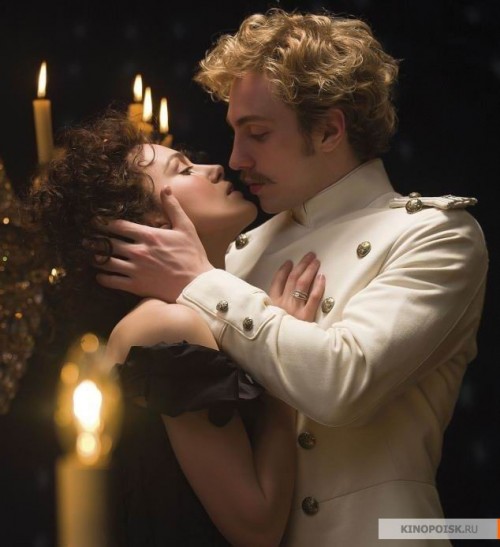
Georgeous to gaze upon but muted dramatically, Joe Wright’s “Anna Karenina” is an honorable adaptation of Leo Tolstoy’s great Russian novel.
But then I don’t expect ever to see a movie that captures all the aspects of this monumental piece of literature, which contains within its pages not only a story of doomed love but a practically encyclopedic portrait of upper-class tsarist society.
In a way Wright (his resume includes “Pride and Prejudice,” “Hanna,” “Atonement” and “The Soloist”) has given us a Cliff’s Notes version of the book that touches on most of the main themes without developing them with anywhere near the detail provided by Tolstoy.
Part of the problem is that most of us go to “Anna Karenina” expecting breathless, tragic romance. That was the main selling point of earlier movie versions with Greta Garbo and Vivien Leigh.
Tolstoy had no intention of writing a romance. In depicting the affair of the married Anna (Wright protégé Keira Knightley) and the handsome but shallow officer Vronsky (Aaron Taylor-Johnson), his goal was not to bathe in swooning emotion but to dissect – some would say clinically and cruelly – the flaws in human character and in society at large that will lead to his heroine’s eventual downfall.
To the extent that Wright’s approach to the material is also clinical, he emulates Tolstoy. The problem, of course, is that we want, nay, demand to be emotional voyeurs, and this film’s dour take doesn’t give us the kick we’re expecting.
 “THIS IS 40” My rating: C- (Opens wide on Dec. 21)
 “JACK REACHER” My rating: C (Opens wide on Dec. 21)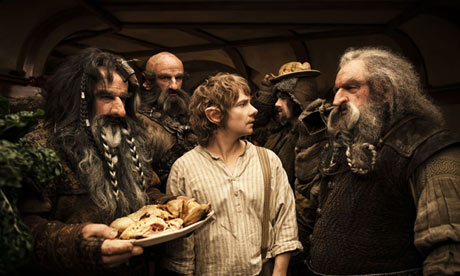
 “THE BIG PICTURE” My rating: B (Opens Dec. 14 a the Tivoli)
 “The Sessions”
 “Life of Pi”
 “Argo”
 “HITCHCOCK” My rating: B (Opening Dec. 7 at the Cinemark Plaza and Glenwood Arts)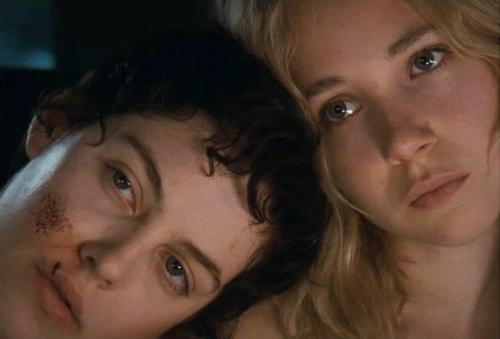
 “ANNA KARENINA” My rating: B (Opens wide on Nov. 30 )
 Butler's Cinema Scene