Feeds:
Posts
Comments

Riz Ahmed

“SOUND OF METAL” My rating: B

120 minutes | MPAA rating: R

Ruben (Riz Ahmed) lives for music.

He tours in a two-person heavy-metal band with his girlfriend Lou (Olivia Cooke); she sings and plays screeching guitar;  he pounds the drums.

They live in an RV that also serves as a recording studio. Life is good.

At least until the gig when, in the middle of setting up their CD sales table at a venue, the conversations around Ruben go muffled and indecipherable. He’s able to get through the gig on sense memory, but it’s clear that something is seriously wrong.

Darius Marder’s “Sound of Metal” is about coming to terms with a change so complete and final that it traumatically divides a person’s life into before and after segments. This film is  often painful to watch; it’s also deeply moving, thanks to a couple of killer performances.

A trip to the audiologist confirms that Ruben is rapidly losing his hearing. Whether the cause is his and Lou’s eardrum-shredding music or something more organic really doesn’t matter.  There’s not much that can be done.

Ruben’s crisis heightened by his being a recovering addict. Lou senses — probably rightly — that he’s likely to turn to drugs as a coping mechanism.  That’s why she gets online to find a rehab program aimed specifically at deaf people.

And so Ruben finds himself enrolled in a community operated by Joe (Paul Raci, absolutely incredible), a deaf man who offers a crash course in sign language while keeping his clients clean. Ruben is welcome…but like a G.I. in boot camp he must send Lou away and dump his cell phone. He has to learn a lot in a limited time.

Continue Reading »

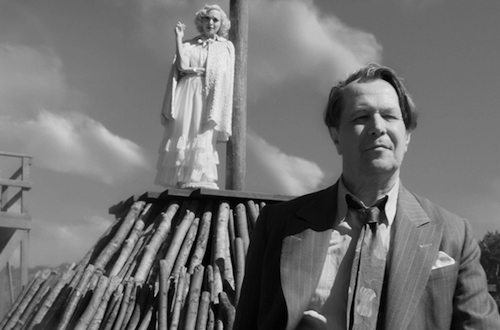
Amanda Seyfried as Marion Davies, Gary Oldman as Herman Mankiewicz

“MANK” My rating: A-

131 minutes | MPAA rating: R

David Fincher’s “Mank” is both a work of genius and a foolhardy gamble, a backstage-Hollywood epic that, for maximum effectiveness, requires its audience to be intimately familiar with Orson Welles’  “Citizen Kane.”

Great. I watch “Kane” a couple of times a year; I’ve even played it on slo-mo so as to appreciate every little nuance of its visual splendor (though one needs to set aside a full 12 hours for that act of devotion).

But I’m not sure how your average 2020 moviegoer is going to react to Fincher’s effort, since “Mank” is literally crammed to the gills with visual, aural and thematic references to “Kane.”

For this viewer, at least, it is two hours of cinematic heaven.

As presented in the screenplay by Fincher’s late father, Jack Fincher, “Mank” is not about the filming of “Citizen Kane” or about the controversy generated by the finished film. (In fact, I’m not sure the words “Citizen Kane” are even uttered here until the last five minutes.)

Rather it centers on the writing of the screenplay in 1940. Orson Welles, the boy wonder director of “Kane” (Tom Burke, who sounds like Welles even if he doesn’t much look like him), is here little more than a walk-on character.

The film’s “hero” is Herman Mankiewicz (Gary Oldman), a Hollywood screenwriter who has worn out his welcome at the studios thanks to his boozing and bitterly dismissive attitude toward Tinseltown’s power structure.

As played by Oldman, Mank is adept at wrapping his verbal poison pills in the soothing charm of a born  ranconteur. He’s just this short of being openly contemptuous of his studio bosses, but even they cannot hate him.

Although he is a miserable SOB, there’s something about Mank that inspires devotion and loyalty. His wife (Tuppence Middleton) — known universally as “Poor Sara” —  wearily cleans up after his boozing and insane gambling habit.

Now Mank’s been hired by Welles — the wiz kid’s been given carte blanche by RKO to make his first movie — to come up with a screenplay about a newspaper tycoon inspired by real-life media mogul William Randolph Hearst.  Mank, nursing a broken leg, has been installed in a bungalow in remote Victorville CA, far away from temptation.

He’s accompanied by producer John Houseman (Sam Troughton), who is to edit his daily pages, and by a somewhat stiff British lady (Lily Collins) who is expected to see to his physical care and keep him off the sauce…although before long he’s made her his collaborator in mischief.

Continue Reading »

Frances McDormand

“NOMADLAND” My rating: A-

108 minutes | MPAA rating: R

“I’m not homeless,” protests Fern (France McDormand) in a key moment from Chloe Zhao’s haunting “Nomadland.”

“Just houseless.”

There’s a significant difference, at least according to Fern and the countless other Americans spending their so-called Golden Years living out of their vans, RVs and cars.

Based on Jessica Bruder’s 2017 book about “the end of retirement,”  “Nomadland” straddles the line between fiction and documentary.

McDormand, of course, is one of our greatest actors; here she’s joined by the always-reliable  David Strathairn.

But most of the “players” in this film are real nomads, folk who follow the changing seasons (Texas in winter, the Dakotas in the summer) supporting themselves with seasonal gigs (working services jobs as cooks and cleaners, manning a sprawling Amazon fulfillment center during the Christmas rush).

By portraying themselves they give Zhao’s film a reality that seeps into the viewer’s bones. This film is less acted than lived in; as a result it is sad and beautiful and achingly human.

McDormand’s widowed Fern has been on the road for several years. She was more or less cast out into the desert when Empire NV,  the company burg in which she had lived her entire adult life — became an overnight ghost town with the closing of its gypsum mine.

Zhao’s unhurried screenplay follows Fern over the course of a year. There’s no plot to speak of; the film is a series of encounters with other wanderers. Fern attends a huge gathering of the houseless on BLM land out in the desert (the convenor, the bearded, barrell-chested Bob Wells — playing himself — holds seminars on nomad survival strategies).

She works in the kitchen of the famous Wall Drug Store tourist trap near the Black Hills. Her fellow nomad Dave (Strathairn) is a part-time ranger at the nearby Badlands National Park.

Continue Reading »

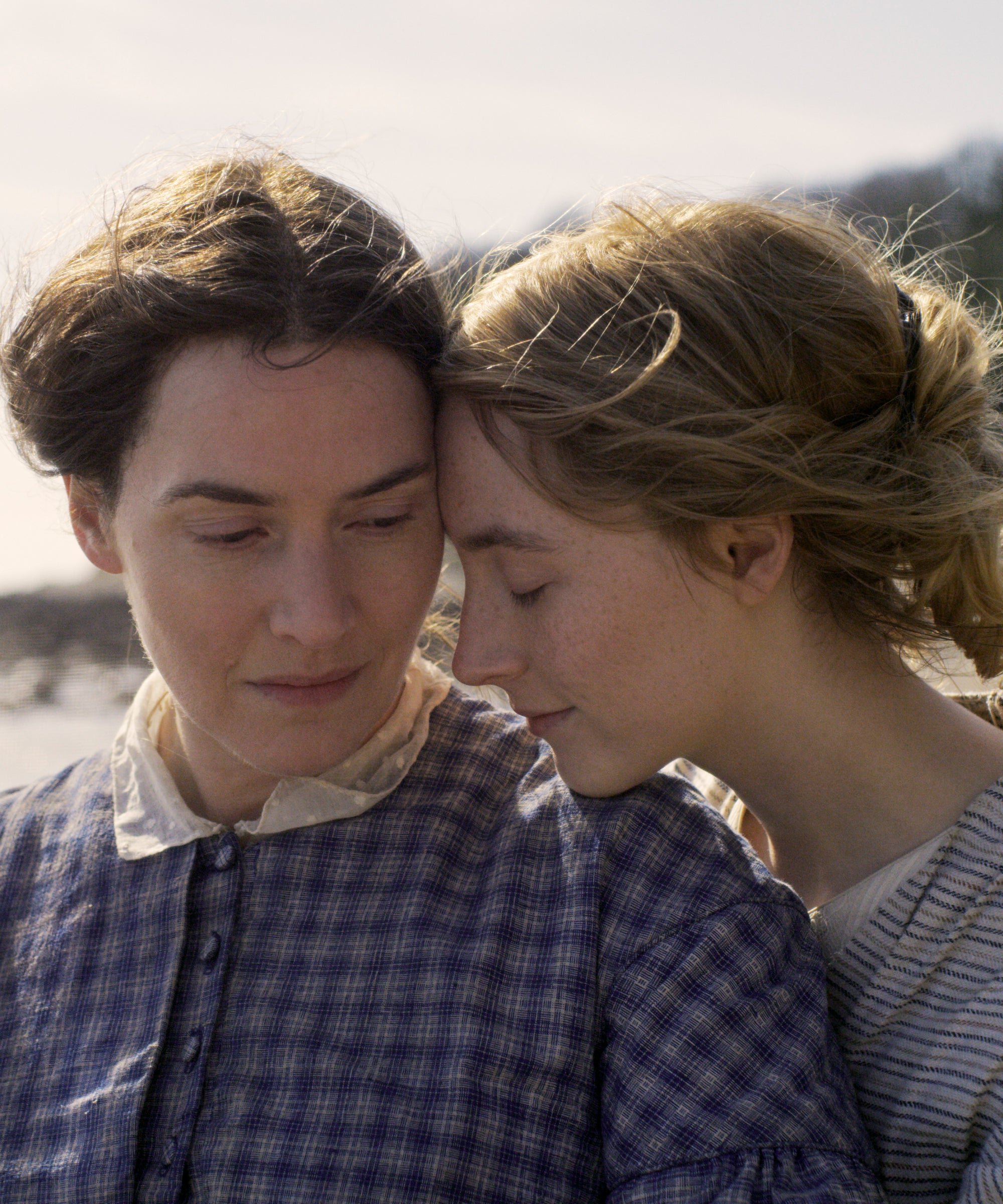
Kate Winslet,Saorise Ronan

“AMMONITE” My rating: C+

120 minutes | MPAA rating: R

Kate Winslet is a great actress. No argument.

And I would happily sit in awe as Saorise Ronan read translated-from-the-Korean assembly instructions.

But despite the presences of these two acting giants, “Ammonite” is a bore. Albeit a bore punctuated with a heavy-breathing woman-on-woman sex scene .

Francis Lee’s film is inspired by historic fact.

Paleontology, the study of the fossil record, was all the rage In the early Victorian era.  The science itself was still in an embryonic stage, but the dream of uncovering the remains of some prehistoric marvel motivated many a wealthy gentleman (the sort of chaps who had way too much money and time on their hands) to become amateur diggers.

Mary Anning (Kate Winslet) may be the best of them, a self-taught fossil sleuth who studies the eroded cliffs along the Lime coast where she lives and has a knack for big discoveries.

Not that she gets any credit for her genius.  A single woman who is the sole support of her elderly mother (Gemma Jones), Mary sells her finds to well-heeled men who then submit them — under their names, not Mary’s — to museums and scientific organizations.

So, yeah, Mary has a chip on her shoulder.

Continue Reading »

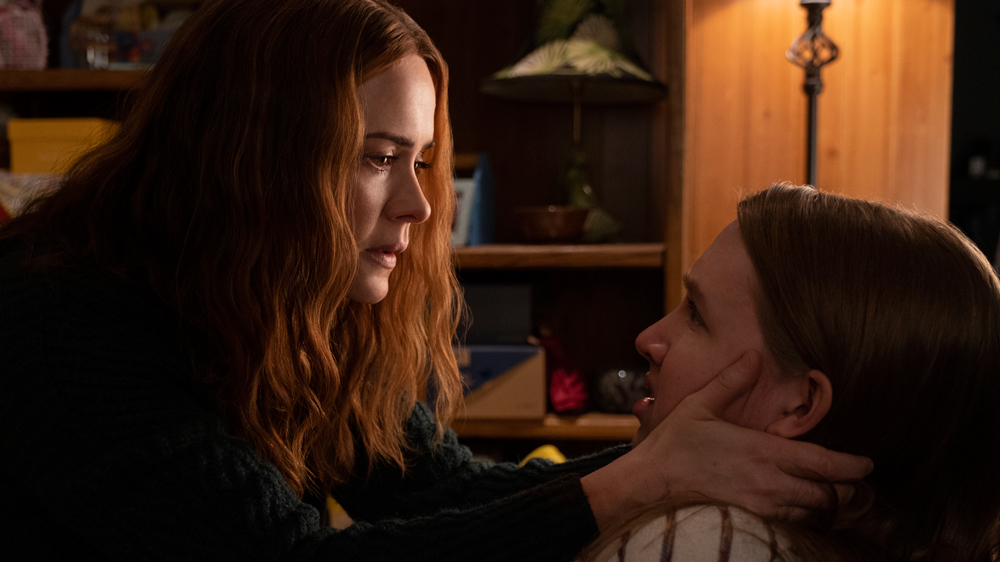
Sarah Paulsen, Keira Allen

“RUN” My rating: B-

90 minutes | MPAA rating: PG-13

Essentially “Run” is a two-hander about an overprotective mother and a disabled child.

But there’s considerable nastiness percolating just below the surface of Aneesh Chaganty’s new Hulu thriller.  Over the course of 90 minutes we — along with the film’s teenage protagonist — undergo a shocking education in the excesses of the human heart.

For as long as she can remember Chloe Sherman (Kiera Allen)  has been confined to a wheelchair. She’s home schooled by her doting mother Diane (Sarah Paulson) and while not precisely a shut-in (they’ll go shopping in their small town and spend an occasional night at the movies) Chloe’s first-hand experience of the world has been severely limited.

Which is why she’s pumped to be sending out college applications.  Finally, she’ll expand her horizons.

It becomes obvious pretty early on in the screenplay by Chaganty and Sev Ohanian that Mama Diane isn’t  thrilled to be losing her little girl. In fact, her maternal needs are leading to a full-fledged meltdown.

Actually, that train left years ago, as we’ll learn when a curious Chloe begins really examining  her life, the weird medications her mother keeps pushing on her and a locked drawer of papers leading back to her birth.

Continue Reading »

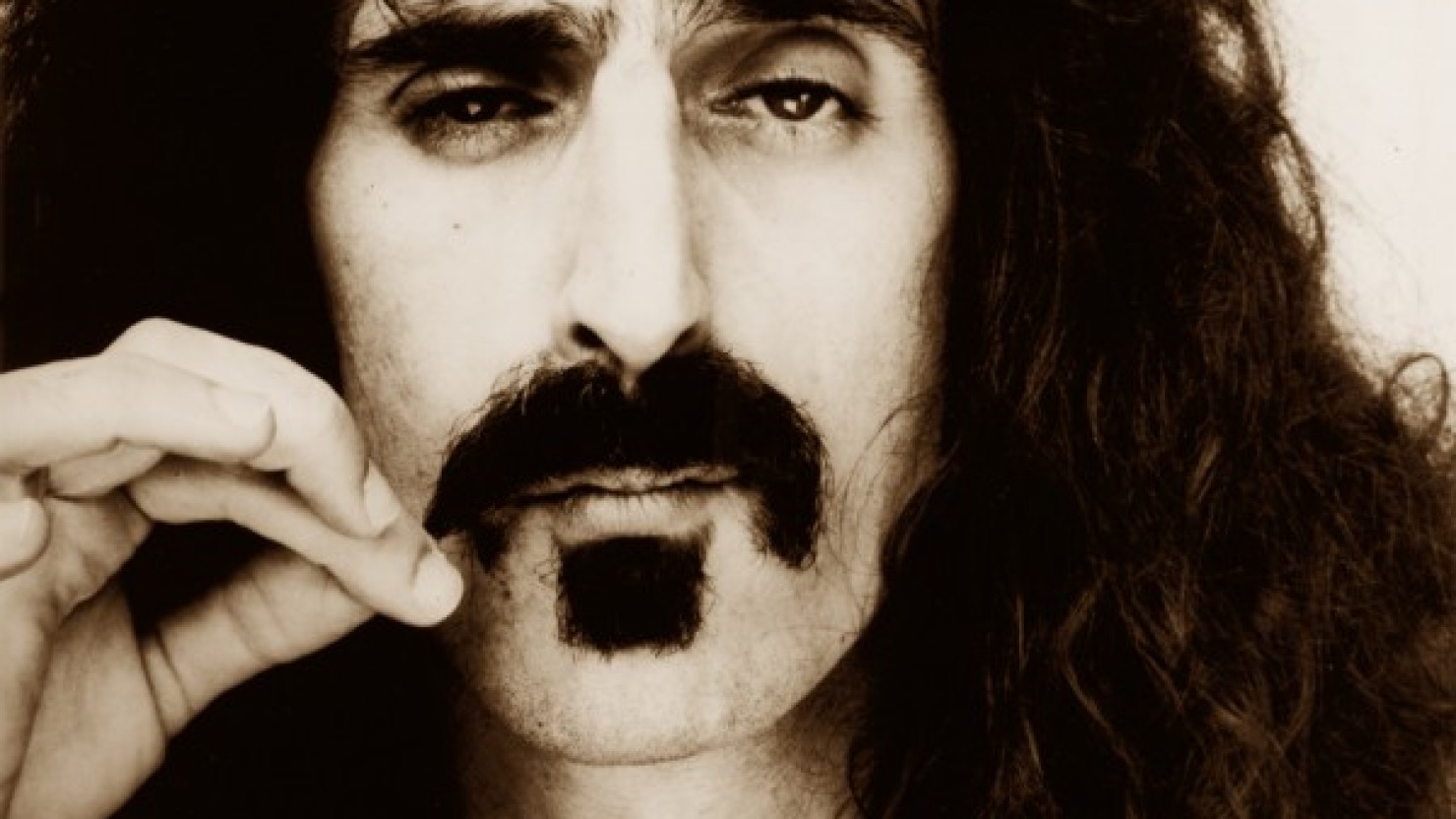
“ZAPPA”  My rating: B

129 minutes | No MPAA rating

Alex Winter’s “Zappa” is the first film about the iconoclastic musician to have access to its late subject’s vault of never-released tapes, performance videos, home movies and personal correspondence.

Fans of Frank Zappa and the Mothers of Invention (present company included) will have plenty to drool over here.

But “Zappa” left me only partially satisfied.  The film chronicles Zappa’s life from suburban teen to his death of prostate cancer in 1993 at age 52.  There are lots of juicy details I didn’t know about.

At the same time, “Zappa” is very much about the man, not his music. Sure, there are snippets of Zappa in performance, snatches of his songs on the soundtrack, but the overriding emphasis here is on the man’s personal story.

And — perhaps it’s because director Winter (yes, the guy who stars opposite Keanu Reeves in the “Bill & Ted” franchise) worked so closely with Zappa’s late widow and executor Gail Zappa in mining the treasure trove —  the film often borders on hagiography.

Would Frank have wanted that?

Whatever. “Zappa” makes the case that Francis Vincent Zappa was one of the 20th century’s most remarkable and accomplished musicians, a guy whose career spanned doo-wop, r&b, rock, jazz and classical idioms, all the while dishing vicious satire against the phoniness he saw all around him: politicians, Flower Power, censorship, consumerism, drug abuse.

Zappa’s father was a chemist who worked in a defense plant producing nerve gas; everyone in the neighborhood was required to have gas masks close at hand in case of a leak. Small wonder that gas masks crept into Zappa’s work as an adult.

The teenage Frank dabbled in homemade explosives. His life turned around when he was turned on to a recording by the atonal composer Edgard Varese. His first band took heat because it was racially integrated.

Frank’s first artistic love was film editing; the doc chronicles a bizarre passage in which young Frank was entrapped into making a “porn” movie (it was a total goof; there was nothing overtly sexual in it), resulting in a criminal conviction.

Continue Reading »

Michael Angelo Covino, Kyle Marvin


“THE CLIMB”  My rating: A-

94 minutes | MPAA rating: R

The gold standard for great first features is  Orson Welles’ “Citizen Kane.” No contest.

Among runners up, though, one might well consider Michael Angelo Covino’s “The Climb,” a droll dissection of a toxic friendship that, even when it’s traversing familiar territory, speaks in its own unique voice.

Written by Covino and Kyle Marvin — and starring the two as best friends Mike and Kyle — “The Climb” is a full-length film shot in fewer than a dozen takes.  Which means that the picture is virtually without cuts. D.p. Zach Kuperstein served as a one-man crew, personally carrying the camera through astoundingly complex tracking shots that sometimes involved dozens of actors.

Single-take movies are not unknown, but unlike the recent “Birdman” and “1917,” “The Climb” hasn’t the budget for a tech-intensive post-production polish. What you see here is what happened; in only one brief instance does it appear Covino and Kuperstein relied on CG to achieve a particularly difficult shot. And I’m not sure even of that.

The  bar is set high with the very first scene. Old buddies Mike and Kyle are pedaling their racing bikes up a mountain in France.  Mike, the more experienced rider, is pep-talking his out-of-shape pal  into meeting the challenges of the climb.

Kyle’s mind isn’t focused on the ride; he is looking forward to his impending marriage to Ava, a French woman.

“I don’t have to change for her,” he says between deep breathes. “She loves me for who I am.”

Seconds later Mike casually announces that he’s slept with Ava. In fact, he still is. And without missing a beat he advises Kyle:
“Switch gears. You need to pedal at a steady cadence.”

This nine-minute scene sets the tone for the rest of the film. First, it is shot in one take (I assume the camera was mounted on the rear of a truck). Second, it establishes Mike as a perennial screwup. Even when he’s trying to be honest — he feels obligated to warn Kyle of his fiancé’s faithlessness — it’s motivated by selfishness.

Over the next 90 minutes we will follow Mike and Kyle’s off-and-on friendship.  “Off” because in the wake of their bike ride Mike marries Ava (French film star Judith Godreche) and Kyle, understandably enough, wants nothing to do with him; “on” because when Ava dies the good-hearted Kyle shows up to support his grief-ravaged friend. ‘Cause that’s the kind of guy he is.

Continue Reading »

Guy Pearce

“THE LAST VERMEER”  My rating: B-

117 minutes | MPAA rating: R

In “The Last Vermeer” Aussie Guy Pearce delivers a hugely entertaining performance as Han van Meergren, a charmingly decadent artiste and all-round roue in post-war Copehagen.

Oozing hedonistic hubris, intellectual arrogance and casual amorality through his Einstein-level frizzy gray hair and mustache, Pearce’s van Meergren is the center of attention whenever he appears on screen.

Which, sad to say, isn’t nearly often enough. For though he is arguably the most important character in
Dan Friedkin’s “The Last Vermeer” he — like Orson Welles’ Harry Lime in “The Third Man” — gets relatively little screen time.

The screenplay (credited to John Orloff, James McGee, Mark Fegus and Hawk Ostby…very nearly a case of too many cooks) is based on real events.

The Nazis have been defeated and Jospeh Piller (Claes Bang), a Dane who fled the occupation to fight in the Canadian army, has been assigned the task of tracking down art masterpieces stolen by the Germans. His job is to return these priceless objects to their rightful owners (in may cases Jewish families) and prosecute the  collaborators who made the pillaging possible.

A previously unknown Vermeer painting — recovered from a Berlin-bound train and intended for Herman Goering’s personal collection — sets Pillar on a quest.  He’s accompanied by thuggish aide Esper (Roland Moller) who provides muscle when it’s needed and by the investigative genius Minna (Vicky Krieps).

Their sleuthing leads them to van Meergren, a failed painter who was known to have partied with the Germans and who somehow became fabulously rich during the war — presumably by selling pilfered masterpieces to the enemy.   If that is indeed the case, van Meergren faces the death penalty. Collaborators are daily being executed in Copenhagen’s public squares.

Continue Reading »

Ibrahima Gueye, Sophia Loren

“THE LIFE AHEAD” My rating: B-

93 minutes | MPAA rating: PG-13

The pleasure of watching Sophia Loren’s return to the screen (still charismatic at 86) is somewhat tempered by the so-so execution of “The Life Ahead.”

Written (with Ugo Chiti and Fabio Natale) and directed by Edoardo Ponti (Loren’s son), this effort offers all sorts of potential for heartstring tugging. The plot, after all, centers on an orphaned boy and an old lady who takes him in.

And yet I was left hoping for more.

Madam Rosa (Loren) is a former prostitute who now takes care of the children of other hookers in her Naples apartment. She dishes tough love when required, and is paid for her services, but clearly cares for the kids in her charge.

Enter Momo (newcomer Ibrahima Gueye), a Senegalese immigrant whose mother has died. Rosa reluctantly takes on the moody, defiant tweener at the behest of a doctor who serves their slum community.

Momo is rebellious and profane and tries to bully the other boy (Iosif Diego Privu) living with Rosa.  Before long the streetwise little punk has landed a gig peddling drugs.

Continue Reading »

Greta Thunberg

“I AM GRETA” My rating: B+

97 minutes | MPAA rating:

She’s only 15. She’s autistic.

Yet in just two years Sweden’s Greta Thunberg has become the inspiration for an international movement.

She has become a self-educated expert on climate change (or at any rate, she knows more about it than most elected leaders) and is not shy about kicking the collective asses of the grownups who, in her opinion, are selling out humanity’s future for a petroleum fix.

Documentarist Nathan Grossman picked Greta as his subject more than two years ago when she was waging a one-girl protest outside Sweden’s house of parliament.  Talk about good instincts!

This child — who admits to liking animals more than humans and has little tolerance for chitchat and socializing — had decided to go on strike from her school every Friday in order to sit on a sidewalk passing out home-made flyers.

In a telling exchange, a woman passerby asks why she isn’t in class. Greta’s answer: “Why get an education if there’s no future?”

Since then she has inspired other young people to protest their governments’ failure in dealing with climate change. She’s addressed UN diplomats, met with presidents and prime ministers.

Despite the occasional “down” day and nagging doubts that the human-fueled destruction of our planet can be reversed in time, Greta plugs away at her message. It’s equal parts inspirational and heartbreaking.

We learned that young Greta was so traumatized by a climate documentary that she stopped eating and talking for months.  This on top of abuse and/or indifference from schoolmates weirded out by her high-functioning Asperger’s.

Somehow she came out of her funk, driven by her inner spirit to draw attention to the plight of the planet. She started with her own suburban Stockholm family, pushing them to a vegan diet and an electric car.  With the help of a photographic memory (and an obviously high IQ…how many teens are fluent in Swedish and English, with a smattering  of French?), she crafted her arguments and began making her case.

As much as this is Greta’s story, “I A Greta” is also about her father, Svante Thunberg, who serves as her primary protector on their many travels (mom Malena and a little sister remain in Sweden). It’s his job to make sure his willful daughter eats (her mind is racing so fast simple sustenance is an afterthought), gets rest and has a shoulder to lean on when the weight of responsibility and isolation becomes too much.

Continue Reading »