Feeds:
Posts
Comments

Tomasin McKenzie

“LIFE AFTER LIFE”’  (Amazon Prime)

Tomasin McKenzie has been on the verge of first-class stardom for several years now. “Life After Life” should cement her reputation.

Now 24, this descendent of Down Under theatrical royalty has exhibited wisdom beyond her years in her choice of projects. 

Titles like “Leave No Trace,” “Jojo Rabbit,” “Lost Girls,” “The Power of the Dog,”  “Last Night in Soho” and “Joy” are not only good movies, they have  allowed McKenzie to display gob-smacking range.

She can play anything from childish innocence to middle-aged maturity.  “Life after Life” allows her to do it all in one four-hour miniseries. She’s unforgettable.

The thumbnail description of “Life…” (based on Kate Atkinson’s best-selling novel) is that it’s sort of a non-comedic “Groundhog Day”  with a protagonist who dies dozens of times only to be reborn back in 1910 to start the process all over again.

Our lead character, Ursula (played as a teen and adult by McKenzie), has vague deja vu-ish memories of her previous incarnations…just enough to avoid situations that in the past led to her demise.  Like Bill Murray’s weather man, she learns from her failures. 

Problem is, fate always catches up with her, throwing new dangers in her path. 

She dies. She is reborn. She dies. Reborn. Dies. Reborn.

Will she ever get off this karmic Ferris Wheel?

Created and scripted by Bathsheba Doran and directed by John Crowley (who has a way with young actresses…witness the perf he got from Saoirse Ronan in “Brooklyn”), “Life After Life” is crammed with fantasy elements.

Yet you can’t call it an escapist experience.  Life is cruel and though she finds moments of love, Ursula’s lives more closely resemble the trials of Job than a hopeful march toward Nirvana.

Born in 1910 to a well-off and loving Brit gentleman (James McArdle) and his brittle wife (Sian Clifford), little Ursula dies shortly after birth, strangled by her own umbilical cord.

Not to worry. She’s soon reborn; this time the country doctor overseeing the delivery acts decisively to save the baby.

Childhood in her parents’ green estate should be idyllic. But Ursula (played as a child and early adolescent by Eliza Riley and Isla Johnson) lives under a cloud of gloom.  Even as a youngster she sense that nothing is permanent.

Indeed, in less talented hands Ursula’s revolving door of disasters might seem ludicrous.

Death by drowning. A fall from an upstairs window. Fatal auto accident. Rape. Abortion.

Small wonder that adolescent Ursula is bitter, grouchy and even borderline homicidal. 

And that’s just the personal crises.  In the background we endure two world wars.  In one of her lifetimes Ursula marries a German and moves with her husband to the Third Reich, just in time to endure starvation with her three-year-old daughter. In another she and a lover are blown to smithereens during the London Blitz.

You cannot outrun fate.

The pitfalls inherent in this project were considerable.  It’s like playing a board game where you’re repeatedly sent back to the go position. Atkinson’s script and the editing (by Nick Emerson) deftly lay out just where we are in Ursula’s spiritual journey, with each succeeding life zipping through the scenes we’ve already witnessed to get on with her latest travails.

(For those of us who still don’t glom onto the film’s methodology, a voiceover narration by Leslie Manville pops up now and then to offer guidance.)

The performances of the huge cast are quietly spectacular.  There are so many catch-in-the-throat moments here that the four episodes become an acting marathon.

Holding it all together is McKenzie, whose ability to convincingly transform from freckled youngster to embattled adult and back again is positively superhuman.

For all its grim elements, “Life After Life” is weirdly poetic.  Each time Ursula dies she finds herself surrounded by gently dancing snowflakes, a recurring visual that suggests a kindness in death that is missing from our heroine’s lives. 

Prepare to be haunted.

| Robert W. Butler

Rep. Jim Jordan

“SURVIVING OHIO STATE” My rating: B (MAX)

 108 minutes | No MPAA rating: PG

For those who have followed the controversy over the years, “Surviving Ohio State” will drop no new bombshells.

But Eva Orner’s documentary, about the sexual abuse scandal that wracked a powerhouse Midwestern University, does an admirable job of telling a big story that most of us have received only in bits and pieces over the better part of three decades.

Orner (an Australian whose “Chasing Asylum” savages her country’s response to refugees) takes her cues from the script by Jon Wertham, the “60 Minutes” correspondent whose 2020  series in Sports Illustrated  painstakingly examined decades of predatory activities at OSU and many years of coverups.

Like a lot of rah-rah sports films, this one begins by describing the long culture of winning at Ohio State and the near-maniacal loyalty of its athletes and fans.  We’re introduced to legendary wrestling coach Russ Hellickson and his assistant and former collegiate wrestling champ Jim Jordan. (Yes, the same Jim Jordon who is now a rabidly MAGA member of Congress.)

We’ meet the late Dr. Richard Strauss through the testimony of students and student athletes who were his victims.  Strauss, a physician in the athletic department, had a reputation for fondling the genitals of athletes under the guise of a medical exam.  He didn’t come off as an overtly dirty old man….more like straight-faced professional engaging in business as usual. His handsy practices were tolerated because the young players were too naive to realize precisely what was happening to them.

And then there were the showers.  Strauss would take several a day, but only if there was an athlete in there with him.  At one point after a tournament a wrestling referee found himself in the showers with the masturbating M.D. 

Those who complained got knowing shrugs and answers like, “Well, that’s the Doc.”  Strauss’ behavior became a running joke.

Except that in interviews numerous athletes (mostly wrestlers but also members of the fencing and hockey squads) exhibit traumatic responses to even talking about Strauss. Tears. Trembling.  Big tough guys in their 40s and 50s going to pieces before our eyes. There was damage done.

The first hour of “Surviving Ohio State” chronicles the abuse in blushing and/or stomach-churning detail.  My main beef with the film is that we keep getting the same story from a variety of individuals…the movie makes its case, but only at the risk of becoming repetitive.

Just when you think you can’t take another twisted anecdote, the movie shifts to the effort by former OSU jocks to sue the university for what they endured.  Their  legal effort was almost derailed by the statute of limitations; it took the intercession of the U.S. Supreme Court to get it back on track.

The former students interviewed say it isn’t about the money.  They want the school to admit its complicity in tolerating Strauss’ behavior and then covering up the scandal.

In the film’s final chapter that we return to Jim Jordan.  The former wrestlers who appear on screen  invariably say that Coach Jordon was completely aware of Strauss’s transgressions.  Jordan has repeatedly denied that this is the case.

I’ve never been a fan of Jordan’s politics, but after this I can hardly watch or listen to the guy.

Perhaps even more disheartening is the behavior of the beloved Coach Hellickson, who after meeting with former students agreed to join them in their quest, then did a 180 and prertty much evaporated from sight.  

Throughout the all, the University refused to admit to any wrongdoing.

Daisy Ridley, Matthew Tuck

“CLEANER” My rating: B- (MAX)

97 minutes | MPAA rating: R

For an unapologetic ripoff of “Die Hard,” “Cleaner” is ridiculously diverting.

Terrorists take over a high-rise office building during a big celebration. They kill a few hostages.  They can only be stopped by one lone individual who’s in the wrong place at the right time.

The good news is that the script by Simon Uttley, Paul Andrew Williams and Matthew Orton throws some unexpected twists into the familiar mix.

For starters, the bad guys are ecoterrorists whose plan is to the reveal to the world the dark secrets of a polluting energy conglomerate and the government officials who facilitate its environmental depredations.

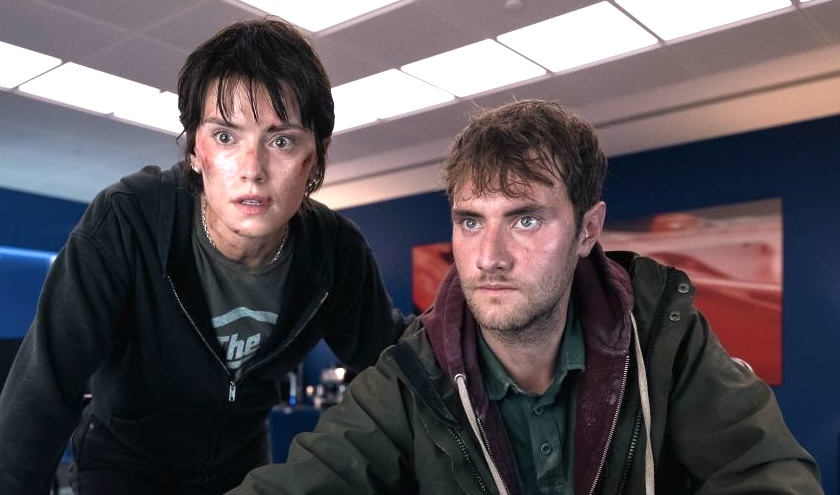
Our lone wolf  protagonist is a female window cleaner who is dangling outside the building 30 floors above the street when the invasion takes place.  Her name is Joey (Daisy Ridley of “Star Wars” fame) and as luck would have it she’s a former special forces operative with a lethal skill set.

Oh, yeah, she’s also babysitting her autistic brother (Matthew Tuck), a geeky guy who carries a replica of Thor’s hammer but is something of a savant when it comes to computer hacking.  His talents will come in handy.

“Cleaner “ gets off to a slow and rather desultory start.  I was almost ready to bail after five minutes. 

But then it kicks in and director Martin Campbell (a veteran of the Bond franchise) deftly juggles the growing suspense and carefully choreographed action.

| Robert W. Butler

Lou de Laâge, Luke Kirby

ÉTOILE”  (Amazon Prime)

Given that the hardasses at Amazon have already cancelled “Étoile,” one might question whether it’s worth investing time in a show for which there will apparently be but one season.

Well, yeah.

Let me put it this way…if you got off on the cultured people doing below-the-belt things in “Mozart in the Jungle” (a series about the backstage goings-on at a big-city symphony orchestra), you’re a perfect candidate for this show set in the rarified world of ballet.

The show was created by Daniel Palladino and Amy Sherman-Palladino, the big brains behind “The Marvelous Mrs. Maisel,” and like that long-running series “Étoile” (French for “star”) is a potent mix of comedy and social observation.

And there’s an astonishing cast.  More on that in a sec.

The premise is that to battle a post-COVID downturn in attendance, ballet companies in NYC and Paris hold a cultural exchange, sending key players across the Big Pond in the hope that fresh blood will revive public interest in dance.

Running the two companies are Jack McMillan (Luke Kirby, so terrific as Lenny Bruce in “Maisel”) and Charlotte Gainsbourg.  

Both are fine actors, and Gainsbourg brings with her a rep as the most desired French actress since Bardot.  She’s not a conventional beauty and almost never plays a seductress, yet I personally know several middle-aged men who think she’s sex on wheels. That audience base in itself should have been enough to keep the show around for a second season.

Stealing his every scene is Simon Callow as Crispin Shamblee, the ruthless mogul (we’re talking international arms dealing and heavily polluting industries) who uses his millions to rescue the two dance companies but in return demands a big say in their artistic and day-to-day decisions. He’s hateful in a Koch-ish way, but so puckishly erudite the screen lights up every time he’s on.

Tobias Bell is a font of insecurity and arrogance as the American choreographer shipped to France for the season; David Haig is loveably amusing as the New York company’s artistic director, nearing retirement and overflowing with sex-and-drug anecdotes from his dance career.

The breakout star, though, is Lou de Laâge as Cheyenne, the French prima ballerina who come to NYC with a chip on her shoulder and a bad attitude that could singe your bangs.  When we first see Cheyenne she’s on a Greenpeace ship confronting a fishing fleet…think Greta Thunberg on speed.

In my book the surly Cheyenne is one of the season’s great characters.  And the fact that de Laâge also appears to be a first-class dancer only seals the deal.

For that matter, all of the actors playing dancers seem to actually know their stuff.  I kept looking for evidence of post-production sweetening in the big production numbers, but couldn’t find any.  This appears to be the real thing — good actors who are also terrific ballet dancers.

Conleth Hill

“SUSPECT: THE SHOOTING OF JEAN CHARLES de MENEZES” (Hulu)

In 2005 the London transportation system was racked by a series of terrorist bombings that brought the metropolis to a standstill.  

This four-part Brit docudrama divides its time between the Jihadist perpetrators and the authorities engaged in a nationwide manhunt.

But as the show’s title suggests, there was collateral damage. A Brazilian worker named Jean Charles de Menezes was misidentified as a possible suspect and murdered by trigger-happy police as he innocently rode a subway.  This was followed by a massive coverup as the police tried to minimize their culpability in his death.

British viewers are no doubt already familiar with the incident, which may account for the satiric edge creators Kwadjo Dana and Jeff Pope give to the proceedings.

At least some of that attitude is warranted.  After a successful subway attack a second wave of suicide bombers were dispatched, but their homemade bombs were duds, succeeding mostly in scaring commuters and burning the would-be martyrs who triggered them. It was a sort of black comedy of incompetence and “Suspect” plays it that way.

But the real knives are sharpened for Sir Ian Blair, the head of the Metropolitcan Police and portrayed by Conleth Hill as the worst sort of pompous autocrat, always ready to burnish his resume or cover his ass.

Hill already had strong  credentials in unctuousness thanks to his turn as the conniving eunuch Lord Varys in “Game of Thrones.” 

But here he ups the ante, delivering a dissection upper class arsery so shamelessly self-serving that I found myself roaring with laughter.

Which is not what you expect from a show about real-life terrorism, but there you have it.

Actually, “Suspect” is the perfect title.  It’s not only about suspected perpetrators.  It’s also about officials whose motives are suspect.

| Robert W. Butler

Paddy Considine, Pierce Brosnan, Helen Mirren, Tom Hardy

“MOBLAND’’  (Paramount )

When it comes to reprehensible behavior and mindless violence, American criminals seem positively enlightened compared to the mayhem-dishing psychos inhabiting British series like “Gangs of London” and, now, “Mobland.”

In “Mobland” the seemingly omnipresent Tom Hardy plays Harry, the stoic but ruthlessly effective lieutenant to the Harrigans, one of London’s two major crime syndicates.

Hardy, who is watchable in even iffy material, here gets the most out of Harry’s slow-burn personality. This is a guy who seems calm even when spraying a machine gun in a war for supremacy in London’s illicit drug trade.

But the real acting meat goes to Pierce Brosnan as Conrad Harrigan, the arrogant, emotionally loose-canon boss of the clan, and especially Helen Mirren as his wife Maeve, a scheming Lady Macbeth with a gloriously foul mouth and a chess master’s talent for duplicitous scheming. Emmys seem obvious.

Toss in Paddy Considine as their tormented son, Anson Boon as  his homicidal spoiled-brat teenager and Joanne Froggatt as Harry’s kept-in-the-dark wife, and you’ve got a pedigreed supporting cast.

Keep your eyes open for brief but telling perfs from the likes of Janet McTeer and Toby Jones.

Wagner Moura, Brian Tyree Henry

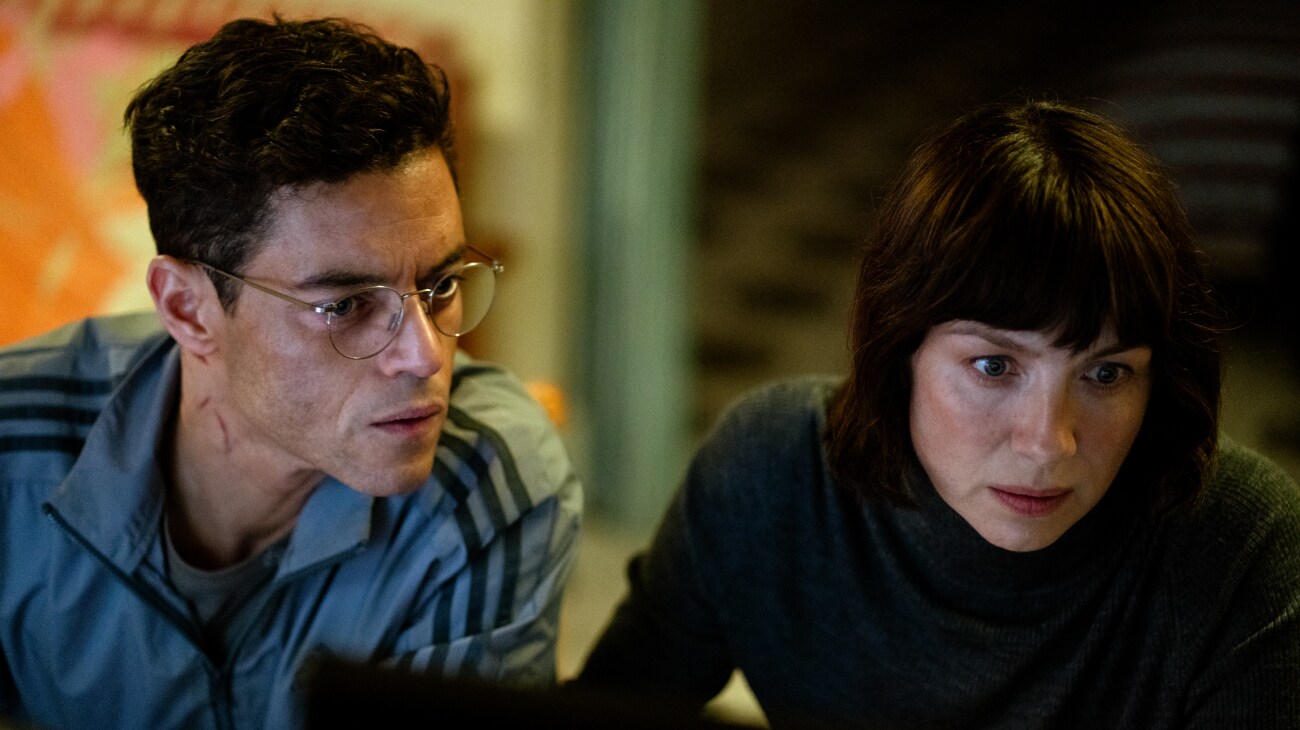
“DOPE THIEF”(Apple +)

Is there any role Brian Tyree Henry can’t play?

He’s impressed as a perplexed rapper in TV’s “Atlanta,”  been a heavy in actioners like “Bullet Train” and showed his humanistic side in “Causeway” and “The Fire Inside.”

He massages all those facets into his lead performance in “Dope Thief,” a crime drama that also serves as a touching bromance.

Ray Driscoll (Henry) and his buddy Manny (Wagner Moura) are ex cons who now earn a living by posing as DEA agents and ripping off drug houses.  It’s the perfect crime, since their victims aren’t about to go to the authorities for redress.

Perfect until, that is, their latest score results in a shootout. Turns out their target was actually part of a federal sting operation.  Among the dead is a government agent; surviving but badly wounded is DEA agent Mina (an excellent Marin Ireland), now determined to track down the guys responsible for killing her partner.

And that’s not even mentioning the white supremacist motorcycle gang who were the original target of the sting and now seeking to recover their cash.

“Dope Thief” alternates between high drama and some satiric comedy, not always making the transition gracefully.  But Henry and Moura are weirdly compelling as two guys in way over their heads, with Moura’s character burdened by a bad case of conscience.

And you’ve gotta love Kate Mulgrew as Ray’s chain-smoking, casino-crawling mother (or is it stepmother?)

Alexej Manvelov, Matthew Goode, Leah Byrne

“DEPT. Q” (Netflix)

Based on Danish author Carl Adler-Olsen’s series of crime novels, “Dept. Q” takes his yarn about a squad of police misfits and plops them down in Scotland.

Matthew Goode, whom I usually associate with fairy genteel roles, here is having almost too much fun as scuzzy, scraggly Carl Morck, a police detective with a Scroogish personality who, to keep him out of his colleagues’ hair, is given his own cold case unit operating from the dank basement of police headquarters.

Though a fierce loner, Carl finds himself saddled with other officers from the department’s roster of losers. 

Alexej Manvelov is borderline brilliant as Akram, a quiet, seemingly gentle refugee from Syria whose kindly exterior hides a disturbing knowledge of torture techniques.  Leah Byrne is Rose, a Kewpie doll of a cop out of the loop since accidentally killing a citizen during a high-speed chase. And Jamie Sives is Hardy, Carls’ old partner now paralyzed after a shooting but still able to man a computer.

This first season is dedicated to the search for a prosecuting attorney (Chloe Pirrie) who has been missing for four years.  Periodically the action shifts from Carl and  his crew to a remote location where the woman has been enduring a hellish imprisonment.

Though there are parts of the yarn that seem underdeveloped or even superfluous (I’m thinking Carl’s contentious relationship with his angry motherless stepson and his mandated sessions with a shrink played by Kelly Macdonald — who may in upcoming seasons turn into a love interest), the central crime and its slow unravelling makes for compulsory viewing.

Erika Henningsen, Steve Carell, Tina Fey, Colman Domingo, Will Forte, Marco Calvani

“THE FOUR SEASONS”(Netflix)

This spinoff from Alan Alda’s 1981 feature film is a quiet delight.

The movie followed a group of middle-aged friends through four vacations, each set in one of the four seasons (with musical accompaniment featuring Vivaldi’s ever-popular “Four Seasons”).

Tina Fey and Will Forte are Kate and Jack, long married but starting to see cracks in the relationship.  The flamboyant Italian Claude (Marco Calvani) and the workaholic Danny (Colman Domingo) are a gay couple going through their own issues.

And then there’s Nick and Anne (Steve Carell, Kerri Kinney), who shock their friends with a divorce.  Things get really uncomfortable when Nick starts showing  up for group gatherings with Ginny (Erika Henningsen), a dental hygienist half his age.

Like the film, this eight-part series is consistently funny while tackling some pretty serious themes about marriage, infidelity, the middle-aged blahs  and how the hell you’re supposed to support both members in a failed marriage.

| Robert W. Butler

Fernanda Torres

“I’M STILL HERE” My rating: A-(Netflix)

137 minutes | MPAA rating: PG-17

Audiences have the habit conflating big moments with great acting.  Indeed, the history of Oscar wins suggests that if you want a statuette, you’d best come up with a few barn burning peel-off-the-paint moments.

The Brazilian “I’m Still Here” (it was nominated for Best Picture and Best International Feature, winning in the latter category) takes another approach entirely.  

Walter Salles’ film (screenplay by Muriel Hauser, Heirtor Lorega and Marcelo Rubens Paiva) tells a hugely dramatic real-life story by concentrating not on the big moments but on the little ones. The results are quietly devastating.

This is the story of one family living through the two-decade reign of terror of a military junta that ruled Brazil from the early 1970s.  During that period more than 20,000 citizens were arrested and tortured; nearly 500 were executed without trial.

The film’s first 40 minutes are largely devoted to depicting the middle-class lives of Rubens Paiva, an architectural engineer and former member of Congress, his wife Eunice (Oscar-nominated Fernanda Torres) and their five children.

They live in a big house just yards from Rio’s fabulous beach in the shadow of Sugarloaf. The grownups are deeply in love and enjoy entertaining friends. The kids are a rowdy bunch who practically live in the ocean and adopt a lost dog.  It’s pretty damn idyllic.

But there are cracks in this blissful picture.  The Paivas’ family friends are nervous liberals; some plan to leave Brazil to avoid right-wing oppression.  And while driving with her friends the oldest daughter finds herself caught up in a military dragnet as authorities search for rebels who have kidnapped a foreign diplomat.

Papa Rubens periodically gets unexplained phone calls asking him to receive or deliver unidentified documents. We never will learn just what that was all about.

It all comes to a head with the arrival on the doorstep of armed men in civilian clothes who announced that Rubens is needed to give testimony.  He is taken away while several of the interlopers hang around the house, rifling through closets and drawers and generally terrifying the family.

Within a few days Eunice is herself dragged to a military prison where she spends nearly two weeks wallowing in filth and listening to the screams of the tortured; each day a quietly intimidating interrogator has her thumb through a thick book of mug shots, demanding to know if she recognizes any of the faces.

To her queries about the whereabouts of her husband, she is always told: “I do not have that information.”

If this story had been told by an American there would undoubtedly have been some dramatic  fireworks.  Eunice would go to court to demand the truth about her husband’s disappearance. There would be clashes between rebels and the authorities.

But if any of that happened, in this retelling it occurs offscreen. The fierce focus is on Eunice and how she deals with her confrontation with institutionalized evil. And Torres pulls it off not with big moments but with small ones, with a careful accumulation of details that are registered in the eyes, in subtle body language. This is a woman who must simultaneously nurse a terrible loss and somehow remain strong for her children.

“I’m Still Here,” which follows the Paiva family for nearly 40 years, has been impeccably acted on all fronts.  Each of the family’s offspring get a few telling moments, and one must reluctantly admire the chilling work of the actors portraying the blandly terrifying torturers. 

Finally, it’s impossible to watch the film without looking at the United States teetering on the brink of dictatorship and wondering if our own citizens will be disappeared. 

 Brenca Vaccaro, Susan Sarandon, Vince Vaughn, Lorraine Bracco and Talia Shire

“NONNAS” My rating: B- (Netflix)

111 minutes | MPAA rating: PG

Vince Vaughn, who in his three-decade career  has specialized in playing smarmy jokesters, takes a more low-keyed approach in “Nonnas.”

Basically he lets four veteran actresses do the heavy comedic lifting while he plays it straight.  It works.

“Nonnas” is inspired by the real life story of Joe Scaravella, an unnmarried NYC transit worker who, after the death of his beloved mother, decided to use his inheritance to open a restaurant…one in which real Italian grandmas (“nonnas”) cook their traditional family recipes.

Problem is, Joe knows virtually nothing about the restaurant biz and makes misstep after misstep, in the process that nearly alienated his best bud (Joe Manganiello) and his wife (Drea de Matteo), who have imprudently risked their life savings on Joe’s dream.

The nonnas Joe recruits are a colorful mixed bag.  The scratchy-voiced Roberta (Lorraine Bracco, almost unrecognizable) is a grump looking to spend a few hours outside her retirement community.  Teresa (Talia Shire) is a timorous former nun. Gia (Susan Sarandon) brings a bit of blowsy glamor as Gia, who runs her own beauty salon.  And chatty Antonella (Brenda Vaccaro) introduces Joe to his love interest, a law student (Linda Cardellini) who helps him over some legal hurdles.

The nonnas bitch and kvetch and engage in geographical rivalries (apparently Sicilians don’t get along with Mainlanders), but eventually all fall behind Joe on his march to success.

The resulting film is a pleasant blend of comedy and pathos, with writers Liz Macci and Jody Scaravella and director Stephen Chbosky  never going overboard on either.

At the very least you’ll leave the movie craving a big plate of lasagna.

Greta Garbo as Mata Hari

“GARBO: WHERE DID YOU GO?” My rating: C (Netflix)

90 minutes | No MPAA rating

As a fan of Old Hollywood I jumped at the chance to learn more about Greta Garbo, who throughout the 1930s was not only Hollywood’s best-paid actor but also widely regarded as the most famous woman on Earth.

But the Swedish-born star gave it all up after 15 intense years, retiring in 1941 and spending the rest of her life avoiding the limelight.

Why? That’s the question posed by Brit director Lorna Tucker’s documentary, and my appetite was whetted by the news that Tucker had managed to get her hands on Garbo’s private correspondence, home movies and other material never before seen by the public.

Alas, the answer Tucker comes up with his hardly revelatory.  Basically, Garbo got sick of being hounded by the press — this was before the term paparazzi had been coined — and decided to bail from the high-profile rat race.  She lived a long life, had a lover who protected her, and enjoyed a small coterie of extremely loyal friends who would be cut loose if they should spread info about her private life.

What really chaps my ass, though, are the artsy/fartsy flourishes Tucker has packed into the tale.

Periodically we are addressed by a young woman (uncredited) with a platinum blonde Monroe ‘do who dresses in tight black clothing (like a waitress at a beatnik coffee shop) and stares piercingly at a wall full of Garbo photos, post-it notes and newspaper clippings.  Apparently she’s attempting to sleuth out the story behind Garbo’s exile.  Mainly what she is is irritating.

Equally off-putting is another actress wearing a creepy Garbo mask who strikes thoughtful poses while offscree Noomi Rapace reads from the actress’s correspondence.

Okay…most folks don’t know anything about Greta Garbo, so they’ll learn a few things from this movie.  But only at the risk of getting really irritated.

| Robert W. Butler

 

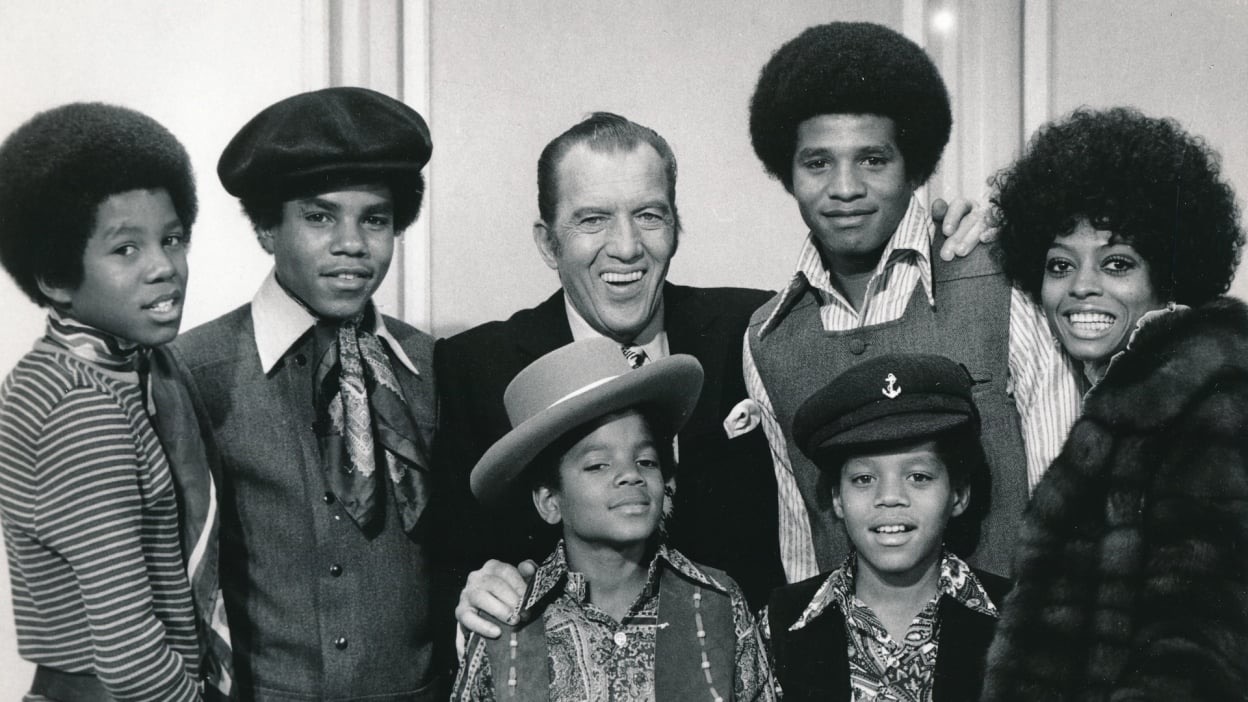
Sylvester Stone

“SLY LIVES!” My rating: B (Hulu)

112 minutes | No MPAA rating

Among the highlights of Questlove’s Oscar-winning documentary “Summer of Soul” was performance footage of Sly and the Family Stone in their prime.

Now he has given us a full-length appreciation of Sly Stone (born Sylvester Stewart) and it’s both exhilarating and deeply troubling.

Almost from the get-go Sly exhibited musical genius.  From his earliest years he  performed nightly at his church, playing any instrument that needed playing. As a teen he was a successful radio deejay.

He began producing records in the Bay Area (“Laugh Laugh” by the Beau Brummels, the first version of “Somebody to Love” by Grace Slick and the Great Society).

He formed his own interracial band. At first they played covers of popular songs.  Then Sly began writing his own funky tunes. 

When his first album tanked he roared back with a song nobody could resist: “Dance to the Music.”  (There’s astounding footage of Sly revving up the pasty white crowd on the Ed Sullivan show by wading into the audience and dancing in the aisle…the honkies couldn’t help but get swept up in the funk.)

Questlove has basically given us two movies here.  First there’s the exciting rise…followed by the achingly depressing fall marked by paranoia and drugs.

Sly himself only appears in archival footage, including a television interview from what appears to be the mid-1980s.  Mostly Questlove allows others — band members, producers, lovers — to tell the tale. 

Even when nursing a crippling drug habit Sly could put on a show.  One admirer recalls seeing the band in the late 70s: “I left thinking that he could run for President and win.”

But the decline was unmistakeable.  He was late for shows or didn’t show up at all.  His bandmates were slowly alienated and left one by one, especially as the heady collectivism of his early songs segued into self-referential navel gazing.

Many of the talking heads Questlove has interviewed see in Sly’s slow downfall an all-too-common story of self-inflicted wounds.  In fact, the film’s subtitle is “The Burden of Black Genius.”  The film is never angry, though — instead it seeks to understand.

Sly Stone, now 82. has mostly been out of the public spotlight for nearly 40 years. He seems to like it that way. One of his children describes  him as “a standard old black man.”

But one leaves this fine documentary wondering not only at Sly’s body of work, but at the ripples his career sent through the musical world, paving the way for Janet Jackson, Prince, Parliament/Funkadelic and many others.

Black genius? For sure.

“PANGOLIN: KULU’S JOURNEY”  My rating: B- (Netflix)

88 minutes | MPAA rating: PG

The shadow of the Oscar-winning “My Octopus Teacher” hangs heavily over “Pangolin: Kulu’s Journey.”

Both films have been directed by Pippa Ehrlich. Both unfold in South Africa and chronicle the relationship between a human and an exotic creature.  Both aim for a synthesis of documentary discipline and intense emotion.

Except that lightning rarely hits twice in the same spot.

Let’s start with our animal hero.  Little Kulu is an orphaned pangolin, a bizarre African mammal that seems more like a dino than a creature of our present world.  

Pangolins are a bit like anteaters…only weirder.  They are the only mammal covered in rigid protective scales.  They walk on their hind legs  holding their much smaller forelegs in front of them.  One pangolin expert describes them as miniature T-Rexes.

The creatures are utterly harmless, able to open their mouths only enough to stick out a foot-long tongue that scarfs  up termites, ants and their eggs.  When threatened their only defense is to curl up into an armored ball. Currently they are endangered, since their scales are essential to many traditional Chinese medicines.

In fact our central character, Kulu, is rescued as an infant from poachers and turned over to Gareth Thomas, a volunteer (or is he an employee?) of a Pangolin rescue organization.  His job is to spend months feeding and protecting Kulu until the creature is big enough to be released back into the wild.

Here’s the problem.  Thomas isn’t a terribly interesting fellow.  We really don’t learn much about him. His salient feature is his love of Kulu. And that is a one-way deal since Kulu expresses no emotions.  No purring. No wagging tail.

In fact, the pangolin spends most of its time trying to ditch Thomas, who can only retrieve the wandering creature at the end of the day with the help of a radio transmitter attached to Kulu’s back.

So the human/animal love affair— one of the most amazing things about “My Octopus Teacher,” is something of a bust this time around.

At nearly 90 minutes “PangolilnL Kulu’s Journey” feels padded.  Would have been much more effective as a 60-minute National Geographic entry.

Still. the artful photography of this otherworldly creature going about its business is  captivating.

| Robert W. Butler

Tilda Swinton, Julianne Moore

“THE ROOM NEXT DOOR” My rating: C+ (Netflix)

106 minutes | MPAA rating: PG-13

At a certain point in every artist’s life the old mortality bug starts nibbling away. Apparently filmmaker Pedro Almodovar has reached that stage.

“The Room Next Door” is typical Almodovar in that it concentrates on relationships among women.  But mostly it’s an atypical  contemplation of death.

Popular author Ingrid (Julianne Moore) learns that her old magazine colleague Martha (Tilda Swinton) has terminal cancer.  A visit to the hospital leads to much reminiscing (there are flashbacks to Martha’s early life and career as a war journalist) and a startling request.

Martha has obtained a “euthanasia drug” on the dark web.  She wants Ingrid to accompany her to a vacation rental in the Catskills where Martha plans to end her life. (“Cancer can’t get me if I get myself.”) She wants Ingrid simply to be on hand in an adjacent bedroom so she won’t feel she’s totally on her own.

Ingrid is reluctant (she hasn’t seen Martha in five years and, besides, her most recent book examines her own fear of death) but finally acquiesces when she learns that several other friends have already turned down Martha’s request.

The source material here is Sigrid Nunez’s 2020 novel What Are You Going Through, and there are times when the English dialogue (I believe this is the first all-English language movie in Almodovar’s resume) sounds like it has been strained through a translation app.

But the real issue here is one of tone. Almodovar is known for his wonderful wackiness (“Women on the Verge…,” “I’m So Excited”), his camp sensibilities and  his deep appreciation of over-the-top melodrama.

None of which is in evidence here.  Even Almodovar’s visual panache has been muted as if intimidated by the grim subject matter.  (Although the closer Martha comes to taking the pill, the more colorful the wardrobe she chooses.)

Clearly Almodovar wants to move us.  But I felt peculiarly unmoved.

It’s not the actresses’ fault.  Moore is solid as a reluctant participant in what is legally a crime, while Swinton, with her glacial pallor and skeletal physique certainly looks like she’s about to cash in.

Then, too, the screenplay has digressions that seem not to go anywhere.  John Turturro has a couple of scenes as the pessimistic writer both women have had relationships with.  Alessandro Nivola is a moralistic police detective who in an unnecessary coda grills Ingrid for her part in the death. 

And at the very end Martha’s estranged daughter briefly shows up. She also is played by Swinton, whose appearance has been subtly altered (either by makeup/prosthetics or CGI makeover).

Okay. Almodovar has gotten that out of his system. Let’s move on.

Edward Norton as Pete Seeger, Timothee Chalomet as Bob Dylan

A COMPLETE UNKOWN” My rating: B (Apple+)

141 minutes | MPAA rating: R

“A Complete Unknown” is about as good a Bob Dylan biopic as we’re likely to get.

First, it absolutely nails the where and when of the early 60s folk scene in New York City.

And second, it knows that no matter how hard it tries, its main character will remain an enigma.

I mean, I’ve been listening to Bob Dylan for more than half a century and I still couldn’t give you a reading on his personality.  Would I like him in person? Would he be a pain in the ass?  

Shut up and listen to the music.

Anyway, James Mangold’s film (the excellent screenplay is by Mangold, Jay Cocks and Elijah Wald) covers Dylan’s early years in the Big Apple, from his crashing the hospital room of the dying Woody Guthrie to his controversial (we’re talking “Rite of Spring” outrage) embrace of an electric guitar at the Newport Folk Festival.

Along the way Oscar-nominated Timothee Chalomet delivers a terrific central performance, capturing his subject’s physical and vocal quirks (the musical numbers were all recorded live on camera) while carefully concealing the innermost Bob. It shouldn’t work. It does.

Just as good is Edward Norton as folkie purist Pete Seeger, who takes Dylan under his wing, only to go ballistic when our man turns his attention to rock’n’roll.

Monica Barbaro is solid as folkie “it” girl and Dylan squeeze Joan Baez.  

You don’t need an excuse to drag out your old Dylan records, but don’t be surprised if after watching this  you do a deep dive into the catalogue.

Keanu Reeves

“JOHN WICK: CHAPTER 4” My rating: B (Roku) 

169 minutes | MPAA rating: R

So far there have been four John Wick movies…although actually they’re the same movie with slightly different fight scenes.

“John Wick: Chapter 4” has the same story line as all the others.  Good-guy assassin John Wick (Keanu Reeves) once again finds himself in a one-man war against the numberless minions of The Table, the all-powerful international crime syndicate.

“Wick” regulars Ian McShane, Donnie Yen and Laurence Fishburne reprise their supporting roles…the main baddie this time around is played by Bill Skarsgard as a sort of sinister fop.

The story doesn’t matter.  It’s the fights that count, and “Wick 4” is crammed with them.

In fact, there’s so much to it  that midway through this nearly 3-hour bloodiest I found myself zoning out from too much good fight choreography. (It’s like movie nudity.  One naked woman gets your attention; 100 of them leaves you kinda ho-hum.)

Happily the film concludes with a doozie, a nearly 40-minute battle in which our man Wick must kill his way up a long outdoor staircase leading to Paris’ Sacre Coeur Cathedral where he is to engage in a final duel with his main foe.  

What’s interesting here is that director Chad Stahelski and his writers (Shay Hatten, Michael Finch, Derek Kolstad) finally accept the ridiculousness of it all and inject some humorous elements into the mayhem.  

After killing dozens of bad guys and nearly reaching his goal, Wick is sent tumbling back to the bottom of the stairs to start the whole thing over again.  It’s like that old two-reeler in which Laurel and Hardy are deliverymen attempting to carry a piano up an endless flight of stairs.

Reeves even allows a bit of comic exasperation to creep into his performance. He doesn’t quite roll his eyes at the silliness, but he comes close.

| Robert W. Butler
“HOLLAND” My rating: C (Prime)

Nicole Kidman

“HOLLAND” My rating: C (Prime)

110 minutes | MPAA rating: R

Three very good actors obviously saw interesting possibilties in “Holland.”

I can’t.

Mimi Cave’s film flounders in a stylistic miasma.  Not quite comedy. Not quite thriller. No edge. No commitment.

Andrew Sodroski’s screenplay unfolds in Holland, Michigan, a burg whose identity is centered in its Dutch heritage.Think Colonial Williamsburg only with a full-scale windmill, a tulip festival and lots of Hans Brinker cosplay.

Nancy Vandergroot (Nicole Kidman) is a mentally and emotionally fragile housewife and high school home ec teacher. Hubby Fred (the ever excellent Matthew Macfadyen) is the very image of midwestern blandness —an optometrist by trade, a civic booster and a model train enthusiast with an entire Lionel-scale world constructed in the garage.

Early on Nancy begins to suspect the Fred’s out-of-town travel to medical conferences is cover for an affair.  Driven by bizarre dreams, she teams up with lonely fellow teacher Dave (Gael Garcia Bernal) to catch hubby in the act; along the way the bumbling educators/amateur gumshoes fall into each other’s arms.

For a good hour “Holland” treads water. Perhaps what’s intended here is a sort of satiric “Blue Velvet” atmosphere of cozy domesticity masking buried perversion…but Cave is no David Lynch.

Finally, in its last quarter, “Holland” delivers a head smacking revelation about Fred.  No, not extramarital sex.  Something way worse.

But by then I was beyond caring.  If only “Holland” had really gone for it, pushed the weird buttons with a vengeance. I might have gotten with the program.

Sour Vane Brean

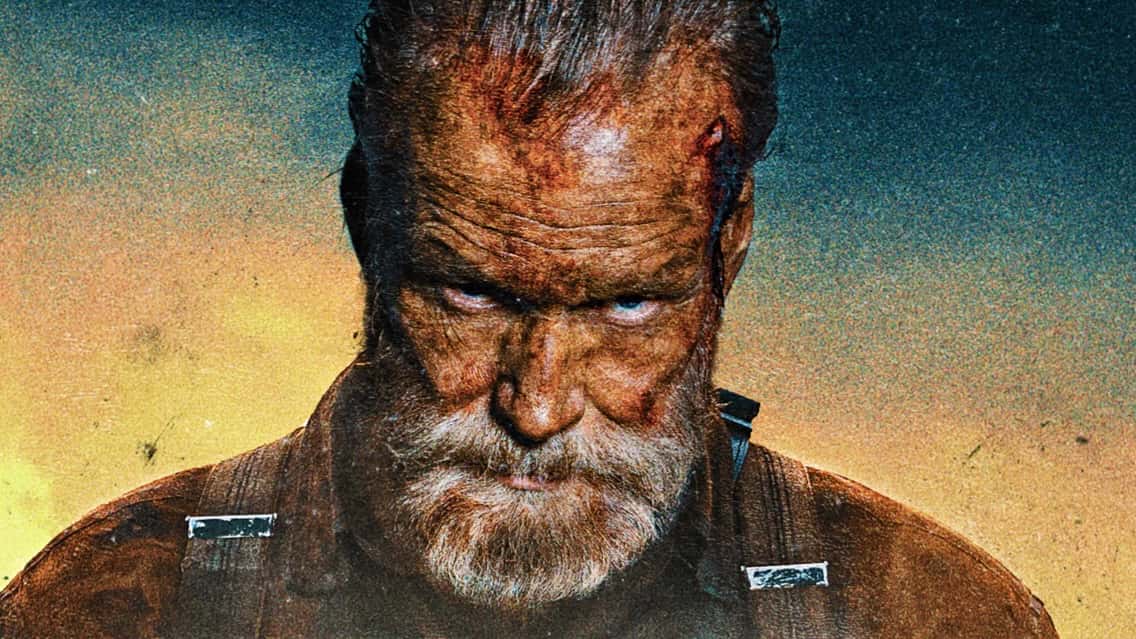
“NUMBER 24” My rating: B (Netflix)

111 minutes | No MPAA rating

Movies about the resistance to the Nazis during WW2 suddenly seem way too relevant.

“Number 24” chronicles the real-life adventures of Gunner Sonsteby, who while still a teen launched Norway’s most successful career of anti-German sabotage.

John Andreas Anderson’s film starts with the 90-year-old Sonsteby (Erik Hivju) addressing an assembly of high school students. 

The film then flashes back to the war years where young Gunnar (Sour Vane Brean), now idenfited as Number 24,  is recruited by the resistance. He helps publish an underground newspaper. He “borrows” plates from the federal mint with which to print currency. He assumes four separate identities and never spends more than two nights in any one place. He spies on German troop movements.

The secret to his success at least in part is due to his colorlessness.  Gunnar is bland, easy to overlook. Hard to imagine as a saboteur.  In fact, his longevity is so remarkable that at one point his handlers wonder if he isn’t a double agent.

Ultimately resistance work comes down to doing bad things for the right reasons. In this case Gunnar must plan the assassination of a childhood friend who has become a collaborator.

In the future he must justify his actions to the man’s great-granddaughter.

“Number 24” is a modest triumph, low-keyed but consistently effective.

“SATURDAY NIGHT” My rating: C+ (Netflix)

119 minutes } MPAA rating: R)

Furiously frantic but not particularly funny, “Saturday Night”appears on the 50th anniversary of NBC’s “Saturday Night Live” to depict the machinations surrounding the show’s first-ever broadcast.

Unfolding in two chaotic hours, Jason Reitman’s film is a veritable avalanche of familiar characters, situations, skits and backstage intrigue plucked from the show’s rich mythology.  For boomers who grew up on SNL it’s a cultural Where’s Waldo?

But even for them it quickly wears out its welcome. The film is populated not with characters but with caricatures. The only figure to hold center stage is Gabriel LaBelle’s Lorne Michaels, the young producer risking all on a new idea of TV comedy.

Some of the impersonations are dead on. Nicholas Braun is perfect as one of the first guests, wacko comic Andy Kaufman. J.K. Simmons chews scenery as Milton Berle (who I don’t think was there for the first broadcast but here shows up anyway to literally wave his dick). Jon Batiste has a nice turn as musical guest Billy Preston. Paul Rust is a dead ringer for Paul Shaffer.

Others are hit and miss. Matthew Rhys cannot channel opening night host George Carlin. The SNL regulars — Belushi, Aykroyd, Curtin, Newman, Chase, Morris, Radner —are adequate but none knocked me out (or got much of a chance to).

Given the slipshod way in which the first show came together it’s a miracle there was ever a second, but we all know how that worked out.

| Robert W. Butler

“FLOW” My rating: B+  (Apple TV +)

85 minutes | MPAA rating: PG

There is not one word of dialogue in the  Czech animation feature “Flow,” which is up for Oscars in both the Animated Film and International Feature categories.

Which means a viewer has to pay attention.  No looking out the window and expecting the soundtrack to carry you along.

Happily, concentrating on “Flow” is no problem, since creator Gints Zilbalodis packs his feature with so much intoxicating visual information and so many interesting characters and situations that our attention never wanders.

The film unfolds in a vaguely Asian landscape.  There are bamboo huts and Ankor Wat-style temples and even an exotic city.  These speak of human habitation, but we never do see an example of homo sapiens.

Instead we find ourselves on a grand adventure with a cat who initially survives a tsunami that floods the jungle, then hitches a ride on a drifting boat to be carried wherever the current takes him (or her).

Our feline protagonist is accompanied by a small menagerie of other animals seeking refuge from the waters. Among them a shuffling capybara (think large groundhog), a pack of dogs who put aside their cat-hunting proclivities for the sake of mutual survival, a magisterial crane, and a lemur obsessed with collecting items (he becomes frantic upon discovering one of his precious finds is missing…I call him Gollum).

We get to know them not from what they say (again, no dialogue) but by their actions, which have been brilliantly envisioned to be both sentient and animal.

“Flow” has no plot. It’s a series of episodes. There’s  no explanation of the disaster that befalls the characters, no clue as to where all the people have gone.  The movie doesn’t so much end as drift away.

So if you’re looking for a tidy package wrapped up with a bow, you’ll be frustrated.

If, however, you’re ready for something you’ve never seen before, dive into this brave new world.

Miles Teller, Anya Taylor-Joy

“THE GORGE” My rating: C+ (Apple TV +)

127 minutes | MPAA rating: PG-13)

“The Gorge” has a nifty premise and a really solid opening 40 minutes. 

After that it’s a bit of a mess.

Sniper Levi (Miles Teller) is tormented by the many people he has killed, both as a Marine and more recently as a paid mercenary.  Looking for a change, he’s intrigued by a offer proffered by an obviously high-ranking government mover and shaker (Sigourney Weaver).

How would Levi like to spend a year in isolation, getting his head together while employing  his skills as a marksman?  

It’s all very mysterious, and after a long plane ride during which he was drugged Levi ends up in a concrete sentry tower overlooking a vast fog-filled chasm.  His job is to use the resources he’s been given — long-range rifles,  explosive mines dangled over the precipice, automated machine guns — to keep whatever is making eerie noises down there from getting out.

Oh…and about a mile away on the other side of the canyon is another sentry tower, this one occupied by Drasa (Anya Taylor-Joy), who like Levi has enjoyed a career of long-distance assassinations…albeit her employers were Eastern Bloc types.

Despite orders not to fraternize, the two snipers begin communicating via binoculars and messages written on big sheets of paper.   It’s kind of a chaste courtship…at least until Levi uses a bazooka and metal cable to string a zip line above the roiling clouds.

So far so good.   But the meet-cute romance that develops doesn’t convince (these two are too hard core to get their kicks dancing to ‘80s pop) and the mystery of just what is happening down below is a whole lot of nothing.

We’re talking about a long-ago government experiment that went south, creating an environment filled with mutant creatures (kinda reminds of the Skull Island sequence in “King Kong”).

Teller and Taylor-Joy are both fine performers, but Zach Dean’s script and Scott Derrickson’s direction give them little to work with.

Production  values are solid, but “The Gorge” suffers from the great gaping hole that afflicts so many sci-fi/horror entries — a great buildup to a mediocre reveal.

| Robert W. Butler

Demi Moore

“THE SUBSTANCE” My rating: B (On Demand)

141 minutes | MPAA rating: R

Demi Moore’s much-deserved Oscar-nominated performance in “The Substance” is the film’s main selling point, but let’s not overlook the stunning (well, mostly) contribution from Coralie Fargeat, who has taken home noms in both the directing and original screenplay categories.

For its first hour, at least, “The Substance” is riveting stuff, a mashup of social commentary, a vicious satire of showbiz duplicity, an angry examination of feminine angst and a staggering truckload of Cronenberg-level body horror.

The premise is vaguely sci-fi — an aging actress (Moore) takes a new (and presumably illegal) drug that will allow her to “give birth” to a younger and more  beautiful version of herself.

Moore’s career-stymied character is Elisabeth; her drop-dead alter ego, whom she calls Sue, is played by Margaret Qualley.

Margaret Qualley

The “science” behind all this is hard to grasp…basically we have two female bodies, one old and one young.  Elisabeth can occupy Sue’s lithe body for seven days, then she must spend a week in her older form.  While one body is active, the other lies in a coma, feeding intravenously on liquid nourishment provided by The Substance’s unseen creators/distributors.

Despite the admonition “Remember, You Are One,” Sue is all about herself; she extends her active cycle beyond seven days.  Turns out abusing The Substance has grave (and alarmingly gross) consequences.

If “The Substance” relies on the familiar theme of a cure that isn’t all it seems (“Flowers for Algernon,” “Seconds,” “Awakenings”) it at least presents itself as a stylistic tour de force.  Fargeat effortlessly juggles the script’s various elements —  there’s horror, yes, but also some laugh-out-loud moments provided by Dennis Quaid as the most soulless producer in Hollywood.

The film’s look (though set in L.A. it was filmed in France and the U.K.) is dominated by chilly interiors, long claustrophobic corridors and Elizabeth’s white-tiled bathroom, which is the size of a small house.

“The Substance” demands considerable nudity from its two leading ladies, but there’s not a hint of eroticism.  Elisabeth apparently has no sex life, while Sue takes pleasure not from the act itself but from being an object of desire. As the Substance does its sinister body-warping work, you’ll find yourself hoping that the women keep their clothes on.

The downside is a running time of nearly 2 1/2 hours. The film scores most of its points early and then descends into a nightmare of ghastly visceral visuals. This might not matter if we actually cared about Elisabeth/Sue, but the film is as chilly as that white bathroom, observing with almost clinical detachment the older woman’s travails while never establishing her as a character worth caring about.

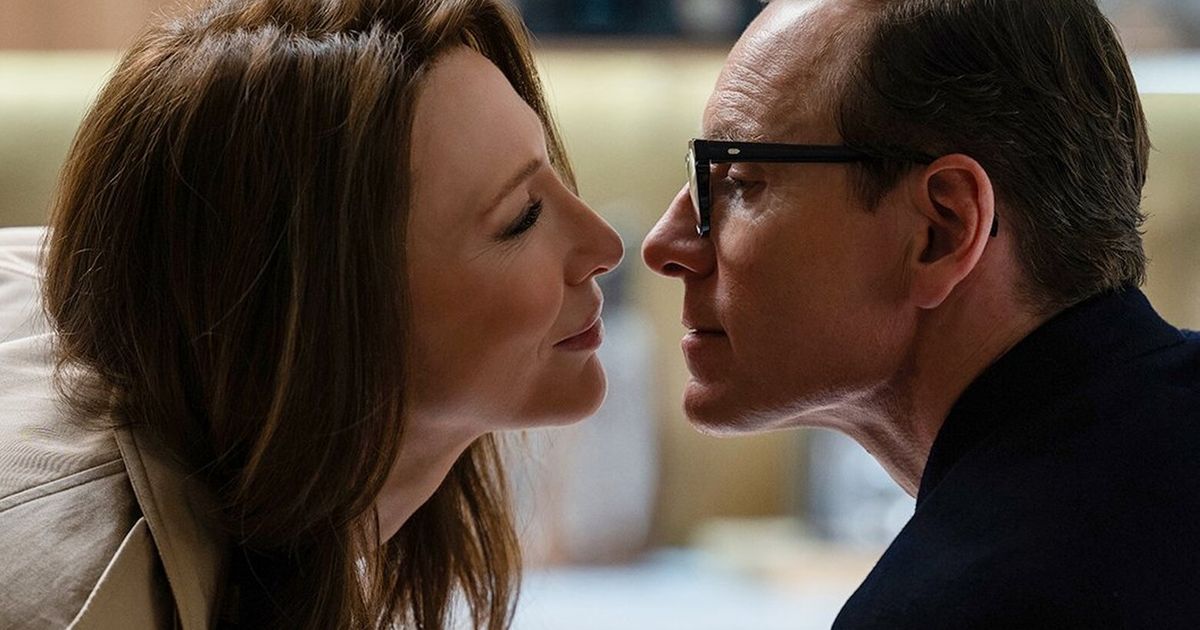
Sebastian Stan, Renate Reinsve and Adam Pearson

“A DIFFERENT MAN” My rating: B- (Max)

112 minutes | MPAA rating: R

A distaff version of “The Substance” is “A Different Man,” in which a deformed fellow is given a drug that dissolves his tumors and leaves him looking like a movie star…namely Sebastian Stan.

Stan’s character, Edward, suffers  from a Quasimodo/Elephant Man-level facial disfiguration. (The makeup is alarmingly convincing.) His condition has left him a social outcast who can only dream about befriending his new neighbor, the aspiring playwright Ingrid (Renate Reinsve).

Edward undergoes a new therapy that transforms him into a hunk. But his new situation also dramatically alters his personality; he changes his identity and dives into the happy (i.e. utterly selfish) life he has always dreamed of.

Writer/director Aaron Schimberg presents Edward’s story as a black comedy…although the laughs are few.  Irony is the dominant emotion.

After Edward’s disappearance, Ingrid writes a play about her misshapen neighbor. Now Edward (she doesn’t recognize him) lands the leading role, which requires him to don face-hiding prosthetics on stage.

Like I said…ironic.

Enter Oswald, a debonair, utterly charming Brit who has precisely the facial deformation the role requires. Oswald is portrayed by Adam Pearson, an actor who really has the character’s condition (he had a brief but memorable turn as one of the alien’s victims in “Under the Skin”).  

Before long the good-looking Edward is out, and his role taken over by Oswald. Is this just fate, or has Oswald been conniving to replace his fellow actor? Not just on stage, but in Ingrid’s bed as well?

The chilliness that kept me from wholeheartedly committing to “The Substance” affects “A Different Man” as well. Most films about misshapen outcasts ask us to empathize with those characters. Schimberg’s film suggests that Edward wasn’t a particularly likable individual before his transformation, and even less so after.

But you might very well consider going home with Oswald.

| Robert W. Butler