Feeds:
Posts
Comments

“28 YEARS LATER”  My rating: B (Netflix)

115 minutes |MPAA rating: R

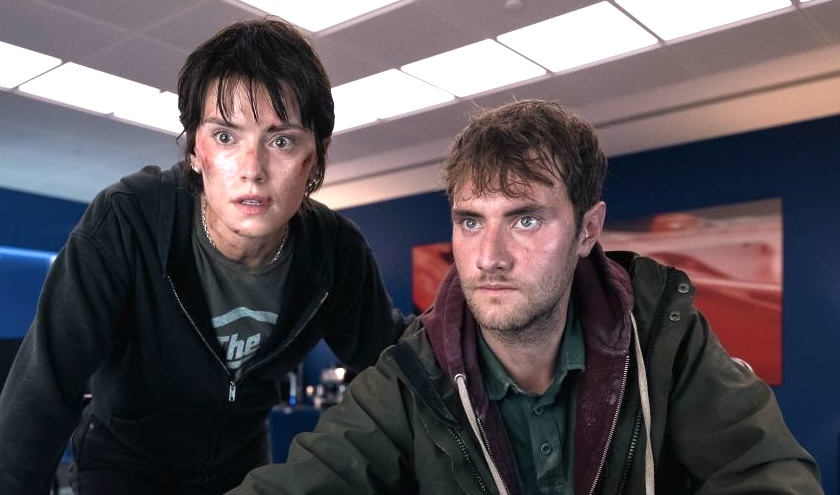
“28 Years Later” has plenty of gruesome action, a good chunk of suspense and even, in its final moments, a crushing emotional component.

And zombies, of course.

What it doesn’t have is a sense of completion.  This continuation of the series, directed by “28…” veteran Danny Boyle, ends with an abrupt cliffhanger that leaves characters and plot points dangling.  Obviously there will be a Part II.  In the meantime, the film feels incomplete.

Fans of post-apocalyptic nihilism will no doubt be transported; your hard-core zombie freak will find plenty of new revelations to discuss with the like-minded; and action junkies should get satisfaction. But let’s be honest…this is just another zombie movie.  Well made and with a deep pedigree, perhaps, but it’s going to appeal mostly to the already converted.

Basically Alex Garland’s screenplay delivers two stories and a snippet of a third that sets up the next film.

After a brief (and kinda pointless) prologue set back at the beginning of the “rage virus” infestation, Part One picks up 28 years later on an  island off the coast of England.  Here human survivors have established a zombie-free commune, a just-the-basics but nurturing environment where 14-year-old Spike (Alfie Williams) has grown up in. 

Not that everything is copacetic in this island refuge.  Spike’s mother Isla  (Jodie Comer) suffers from some debilitating condition, and his father Jamie (Aaron Taylor-Johnson) has sought solace in the arms of other women.

The bulk of this segment finds Jamie leading Spike off the island for a sort of coming-of-age initiation on the mainland.  Under his Dad’s firm but encouraging tutelage  Spike is expected to use his bow and arrow to dispatch  a zombie, thus cementing his manhood.

Their trek reveals to us the changes that have undergone Merrie Olde England after all three decades of being quarantined from the rest of civilization.  

On the neat side there are the huge herds of deer that race across the landscape like stampeding bison. 

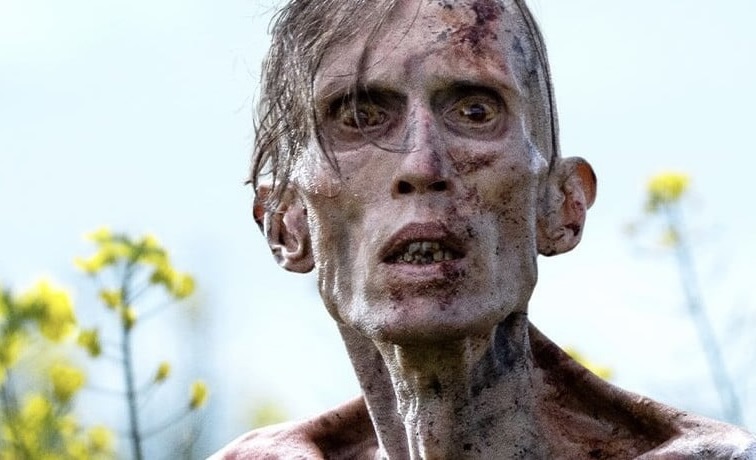
On the not-so-neat side are the zombies, which have evolved into two species. Easiest to deal with are the obese, sluggish, worm-eating “slow-and-lows.” More problematical are the more humanoid zombies — thin, naked wraiths that move with remarkable speed.  Worst of all are the zombie leaders, the “alphas,” who look like Jason Momoma after a long night of binge drinking and seem capable of at least minimal strategizing.

Alfie Williams, Jodie Comer, Ralph Fiennes

So that’s the movie’s first half.  Part Two offers a different sort of quest.  


Desperate to find a cure for his mother’s condition, young Spike hatches an audacious and dangerous plan. Leaving his father behind, he will sneak Isla to the mainland to find the physician reputed to be living there. Surely there is a cure for what ails her.

Along the way they team up briefly with a young Swedish soldier (Edwin Ryding) marooned while enforcing the quarantine. They witness a female  zombie giving birth (apparently the walking dead have active sex lives) and finally meet the fabled medico (a delightfully scenery-chewing Ralph Fiennes), who still retains his diagnostic skills after having spent 30 years building a massive pyramid of human skulls.

What’s remarkable about all this is that young Williams and Comer — despite all the mayhem surrounding them — are able to create a genuinely touching mother/child relationship. Which provides the film with a quietly heartbreaking pivotal moment.

Production values are strong, offering a thoroughly convincing view of what England might look like once people are gone. 

And the action scenes benefit from fiercely kinetic editing that allows us to see the zombies and splashes of gore mostly in staccato flashes.  It’s a lesson learned from “Jaws” — what you can’t clearly see is far more unsettling than what you can.

| Robert W. Butler
“SUNDAY BEST: THE UNTOLD STORY OF ED SULLIVAN” My rating: B+ (Netflix)

90 minutes | No MPAA rating

For millions of Americans in the 1950s and ‘60s, Sunday night meant gathering around the TV to watch Ed Sullivan’s variety show.

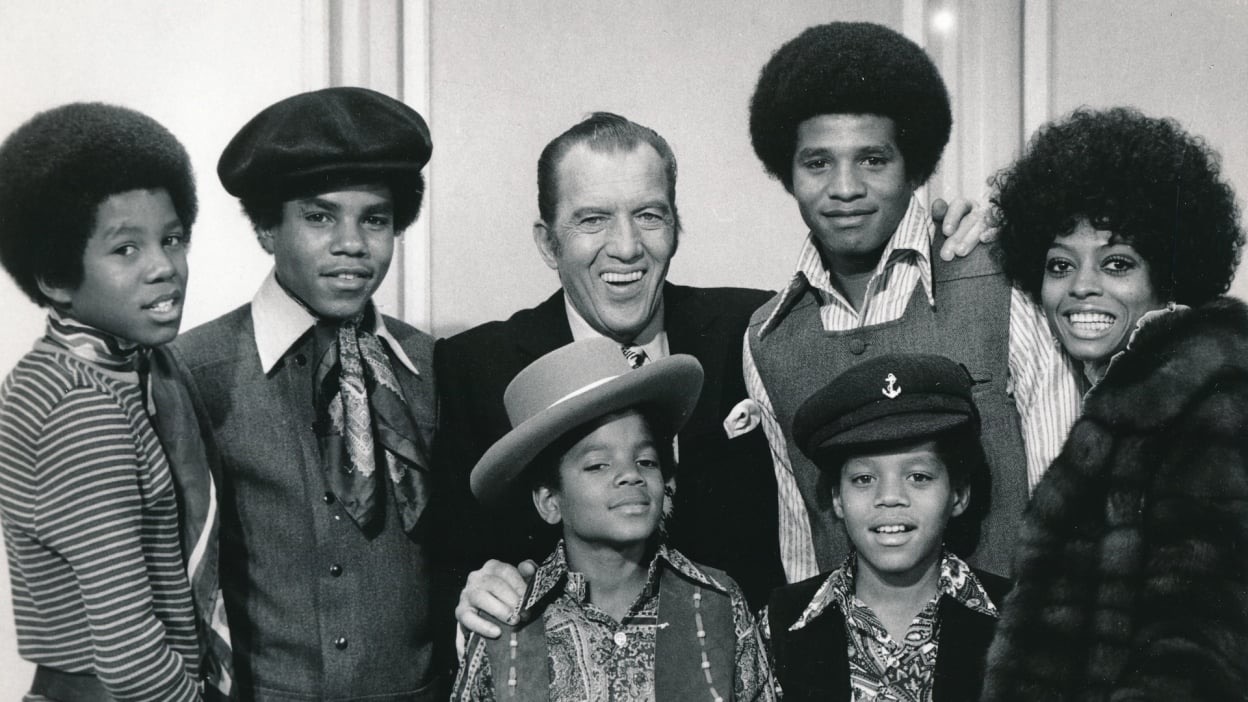
Sullivan was notoriously stiff on camera and dismissed by many a teenager as a hopeless square.  Nevertheless he gave us our first glimpses of Elvis and the Beatles, no small thing.

But his greatest achievement, according to the new documentary “Sunday Best,” was defying the societal norms of his times to promote black entertainers in the face of widespread racism.

Directed by Sacha Jenkins (he’s done docs on Louis Armstrong, Wu-Tang Clan and the roots of rap), this surprisingly moving and thoroughly entertaining effort charts Sullivan’s early career as a newspaper sportswriter and, later, Broadway editor of the NY Daily News. He ended up on television almost by accident and in fact Sullivan’s lack of charisma had critics howling for his replacement.

But audiences got on his unconventional wavelength and he settled in to write more than 20 years of broadcast history.

The doc features several vintage TV interviews of Sullivan and testimony from dozens of entertainment figures (Harry Belafonte, Berry Gordy, Smoky Robinson, Oprah Winfrey), but the film’s greatest selling point is its jaw-dropping collection of great on-air performances.

We’re talking a teenage Stevie Wonder, Ike and Tina Turner, The Supremes, Nina Simon, Gladys Knight, Mahalia Jackson, Sammy Davis Jr., Bo Diddley, the Jackson Five, Nat King Cole…and that’s just scratching the surface.

What comes through loud and clear here is that Ed Sullivan truly loved show people. Race didn’t matter. Talent did.

Turns out that wooden exterior masked a great heart and a very good soul.

Simon Baker, Jacob Junior Nayinggul

“HIGH GROUND” My rating: B (Prime)

104 minutes | No MPAA rating

Civilization, observes a character in the Australian-lensed “High Ground,” is the story of bad men doing bad things to pave the way for the rest of us.

Among those “bad things” is blatant racism, a trait the Aussies historically share with us Americans.  Here we enslaved black men and killed Native Americans; in Australia it was all about the destruction of Aboriginal culture.

Set in the decade after WWI, this visually devastating film from writer Chris Anastassiades and director Stephen Johnson  depicts one small outlier in a greater race war and how two men — one white, one black — find themselves caught in the middle.

The film begins in 1918 with the massacre of a clan of Aborigines by white police officers. Among them is Travis (Simon Baker), a former army sharpshooter dismayed when his fellows go on a killing spree.

Only two Aborigines survive the mayhem.  One is Gutjuk,  8 years old when he loses his family. More than a decade later we find Gutjuk (now played by an excellent Jacob Junior Nayinggul) living at a remote Outback mission where he has been renamed Tommy and reared in a more or less caring  environment.

The other survivor is his uncle Bawara (Sean Mununggurr), left for dead but now staging retaliatory raids on white-owned ranches.

Travis is assigned to kill or capture Bawara; Tommy/Gutjuk accompanies him as a guide and interpreter.  Neither man wants to be there.

Among the supporting players are Callan Mulvey as Travis’ old army buddy, now a squinty-eyed hater, and the great Jack Thompson as the local head of police; his mere presence provides a link to the glories of the Australian New Wave of the ‘70s.

This story could be plopped down in the American West (there are more than a few similarities to “Dancing with Wolves”). What makes it especially noteworthy is “High Ground’s” quiet respect for native culture and its awed admiration for the rugged yet beautiful topography, captured by cinematographer Andrew Commis in almost unbearably evocative images and not a few soaring drone shots that momentarily transform the viewer into a hawk floating above a “Lawrence of Arabia”-level landscape.

Several of the executive producers of the film are themselves Aborigine, and it shows. There’s no attempt to romanticize the tribe’s hunter/gatherer lifestyle; an almost documentary observation takes over certain scenes.

A pall of uncertainty and sadness hang over the yarn. We’re not sure who to root for; nor does there seem to be any easy answer to the long-simmering hatreds on display.

But I found myself unexpectedly moved by the film’s brutal yet inescapable conclusion.

“WARFARE” My rating: B (HBO Max)

95 minutes | MPAA rating: R

“Warfare” is an almost minute-by-minute depiction of an actual firefight that took place during the American occupation of Iraq.

It’s about as accurate a look at modern combat as we’re likely to see.

In fact, Ray Mendoza, who co-wrote and co-directed the picture with veteran Alex Garland, is a former Navy SEAL and was a participant in the action recreated here.

There’s no plot. No character development. Instead we spend a night with a group of SEALS who have taken over an Iraqi home to observe terrorist activity in the neighborhood.  

The clan that lives there have been sequestered in a bedroom. The Americans haven’t threatened them, but it’s easy to understand the family’s anxiety and, as time passes, their outrage.

Not a word is wasted here.  Most of the dialogue is radio chatter and ordered commands. The first half of the film displays the boring side of war…sitting around waiting for something to happen.

And when it does happen, the mayhem is anything but glorious.

The cast is peppered with familiar faces (Will Poulter, Joseph Quinn, Michael Gandolfini) but nothing here even remotely resembles a star turn.  

Under the stress of combat these are less individuals than extremely well-oiled cogs in a killing machine.

At the film’s conclusion we see the actors with the real-life SEALs they portray. There could hardly be a more resounding endorsement of the movie’s truthfulness.

| Robert W. Butler

Henriette Steenstrup

“PERNILLE” (Netflix)

I cannot say enough good things about “Pernille,” a funny/touching Norwegian series about a single mother, her two daughters and the people in their lives.

How good is this show?  So good that when I had watched all 30 episodes (five seasons of six half-hour episodes) I was bereft.  Felt like I’d lost good friends, or maybe a family member.  

The show was created and written by Henriette Steenstrup, who also plays the title character. What a performance!!!

Steenstrup’s Pernille is a 45-year-old divorce who works in child protective services (the source of the show’s most sobering moments).  Caring for others is Pernille’s thing — her two spoiled daughters shamelessly manipulate her and she’s also got her fingers in the life of her widowed father (Nils Ole Oftebro), who at age 75 announces he’s gay.

As the series begins the family is mourning the traffic accident death of her sister Anne.  Almost every night Pernille retreats to her garage to call her sibling’s number and leave confessional messages that will never be answered.

Pernille is aflood with conflicting emotions, all of which flicker across Steenstrup’s features like lightning dapplling a clouded sky. In the wrong hands this display of unfettered expression could seem gimmicky and off-putting. Overacting with a capital “O.”

Instead it is ingratiating.  Steenstrup’s Pernille has more than a little in common with Jason Sudiekis’ Ted Lasso; both are flawed characters whose humane cores confirm that with the right perspective this world can be a blessing.

So over the course of the series we find her engaged in an on-again off-again relationship with a municipal lawyer (Gunnar Eiriksson) more than a decade her junior.  The daughters (Vivild Falk Berg, Ebba Jacobsen Oberg) slowly discard their maddening petulance and entitlement and become good people. Grandpa finds love and in one of the show’s more amusing plot lines becomes a veritable bridezilla planning his same-sex marriage.

The show is nothing if not charitable when it comes to the human condition. Even the shows’s erstwhile heavy, Perille’s ex (Jan Gunnar Roise) is allowed to reveal the man-boy insecurities beneath his pompous intellectualism.

Give this show a chance and it will hook you with the first episode.

Cecilia Suarez, Alvaro Rico

“THE GARDENER” (Netflix)

The old gimmick  about a hit man who falls for the woman he’s supposed to kill gets buffed up and turned inside out in “The Gardener,” a six-part Spanish miniseries that is my current guilty pleasure.

Our killer is Elmer (Alvaro Rico), a bespectacled twenty something who runs a nursery/greenhouse operation with his mother China (Cecilia Suarez).  Elmer has a spectacular green thumb…his lush gardens are practically tourist attractions. 

His secret? All the decomposing human bodies beneath the beds.

But Elmer isn’t your typical movie tough guy or skin-crawling ghoul. After suffering head trauma in the same childhood auto accident that cost his mother her leg, Elmer lost his emotions.

No love. No joy. No fear. No envy. No guilt. No regret.  The kid’s an emotional blank slate, an innocent, really.  The ideal state for a killer.

China, once a minor movie star, now accepts murder contracts which are executed by her stoically efficient son. 

All goes well until Elmer is hired to eliminate Violeta (Catalina Sopelana), a young elementary school teacher. Wouldn’t you know…for the first time Elmer feels stirrings of romantic love. This complicates things.

Created and written by Miguel Baez Carral, “The Gardener” delivers its ridiculousness with a mostly-straight face. We’re talking telenovello-level melodrama, but instead of laughing it all off the screen we go along for the ride.

“The Gardener” is crammed with rcultural eferences and plot twists.  For starters, there’s the China/Elmer relationship, an Iberian permutation of “Bates Motel,” with a manipulative mother and her loving boy. 

And periodically we find ourselves hanging out with a couple of local cops (Francis Lorenzo and Maria Vazquez), middle-aged drones bored to tears with their gig on the missing persons desk and energized when they stumble onto their very own a serial killer. Their scenes are a hoot.

In fact, the acting here is way better than required.  Rico’s Elmer is a lost soul who gets our sympathy despite his high body count; we want desperately for him to find love.  Sopelana’s Violeta is dead on as an good-girl educator who, as it turns out, has a few secrets of her own.

But the star here is Suarez’s China.  Born in Mexico, educated in the States and a veteran of Chicago’s Steppenwolf Theatre, Suarez  oozes a hypnotic blend of sexy/crazy. With her black hair and penchant for long black capes she seems to be taking her cues from the Wicked Queen in Disney’s “Snow White.” It’s an eye-rolling perf without any actual eye-rolling. Very sly.

| Robert W. Butler

Jorma Tommila

“SISU” My rating: B (Peacock)

91 minutes | MPAA rating: R

The Finnish actioner “Sisu” feels like a Road Runner cartoon directed by Quentin Tarantino.

Not that it’s funny, exactly.  Jamari Helander’s film is crammed with gloriously gruesome mayhem meted out by a silent fellow who, like the beep-beeping star of those old Chuck Jones cartoons, survives every attempt on his life, absorbing punishment after punishment.  

The violence is utterly outlandish, but presented with such a straight face (and with so much stage blood) that we get caught up in the whole silly premise.

It also helps that the Wile E. Coyote of the piece is a platoon of goonish Nazis.  Nature’s perfect bad guys.

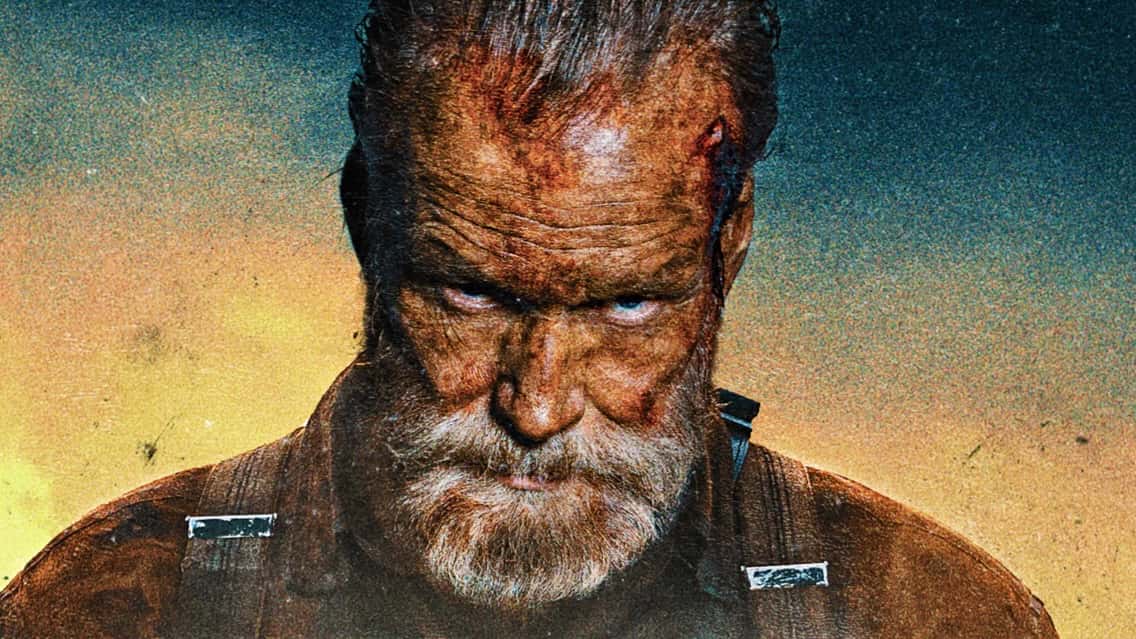
We first see Astami (Jorma Tommila) in the vast treeless plains of Lapland.  Accompanied only by his dog, this heavily scarred fellow with a white beard is prospecting.  One day he finds a vein of gold so rich that he soon has a couple of backpacks crammed with fist-sized nuggets.

Up to this point we don’t really know whether this is taking place in the present or the distant past.  Then we’re introduced to a unit of retreating Germans. Okay…so World War II.

Basically this is an elaborate chase.  The Nazi commander (Aksel Hennie) takes Astami’s gold and leaves him for dead. Figuring the war is lost, the German plans on using the treasure to build a new life.

But it turns out that Astami is a Finnish national hero, a sniper/survivalist who before leaving the war behind racked up hundreds of kills. 

Now he wants his gold back. He goes after the Germans like some sort of Scandinavian Terminator.

Along the way he will be shot, nearly blown apart, set on fire, hanged and drowned. He’ll even survive a plane crash.

 You can’t keep a good Finn down.

Oh…and with the Germans is a truckload of Finnish women being used as sex slaves.  Astami makes sure that before it’s all over the ladies will be well armed and ready for vengeance.

Among the film’s “huh?” elements is the dialogue, which drifts unexpectedly between English, German and Finnish for no obvious reason.

Then there are the many virtues of “Sisu” (a Finnish word that roughly translates as “unstoppable”):  drop-dead gorgeous cinematography, spectacular fight coordination and especially the slow-burn performance of Tommila, who doesn’t say a word until the final scene but commands the screen every time a camera (or gun) is pointed at him.

Cate Blanchett, Michael Fassbender

“BLACK BAG” My rating: B+ (Peacock)

93 minutes | MPAA rating: R

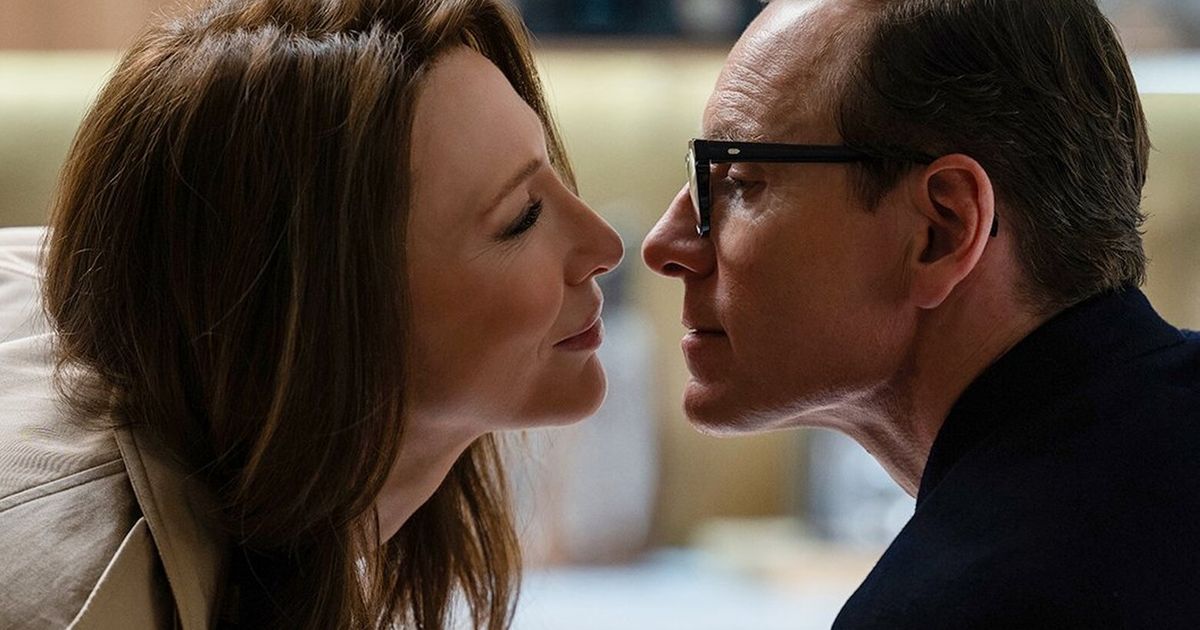
About the highest praise I can give Steven Soderbergh’s “Black Bag” is that it is of John le Carre quality, a spy thriller less about violence than about the toll the business of espionage takes on the human soul.

Michael Fassbender (who seems to be in every movie) is George Woodhouse, a Brit intelligence agent who after a legendary field career is now holding down a desk. His specialty is rooting out double agents.

David Koepp’s script is set in motion when George is given a list of five fellow agents suspected of selling secrets to Britain’s enemies.  

Just one problem: One of the suspects is George’s wife Kathryn (Cate Blanchett). The big question: If it turns out that Kathryn is a turncoat, will George serve  his country or his heart?

After much preliminary sleuthing, George decides to hold a dinner for the potential traitors (the others are played by Tom Burke, Regé-Jean Page, Naomie Harris and Marisa Abela). 

It’s borderline Agatha Christie (everyone assemble in the dining room where the killer will be revealed) but thanks to the intricacies of the screenplay and a fistful of great actors playing duplicity to the hilt, “Black Bag” becomes a hold-your-breath thriller.

And then there’s the title. “Black Bag” refers, of course, to black bag operations, meaning an assignment so secret that you must keep it from your friends and loved ones. While superficially about rooting out a mole, on a deeper level this film is about living in an environment where no one — not your boss, your best friend or your lover — can be trusted.

Amazingly, all this is there in Fassbender’s quietly contained performance.  Like Le Carre’s George Smiley, George is a bespectacled straight man with a volcano of suppressed and rarely-expressed emotion smoldering within. 

Now that’s some acting. 


Rami Malek, Caitriona Balfe

“THE AMATEUR” My rating: B-(Hulu)

122 minutes | MPAA: PG-13

The Rami Malek starrer “The Amateur” has little of the depth of “Black Bag,” but as a sort of underdog espionage yarn it’s diverting and generally satisfying.

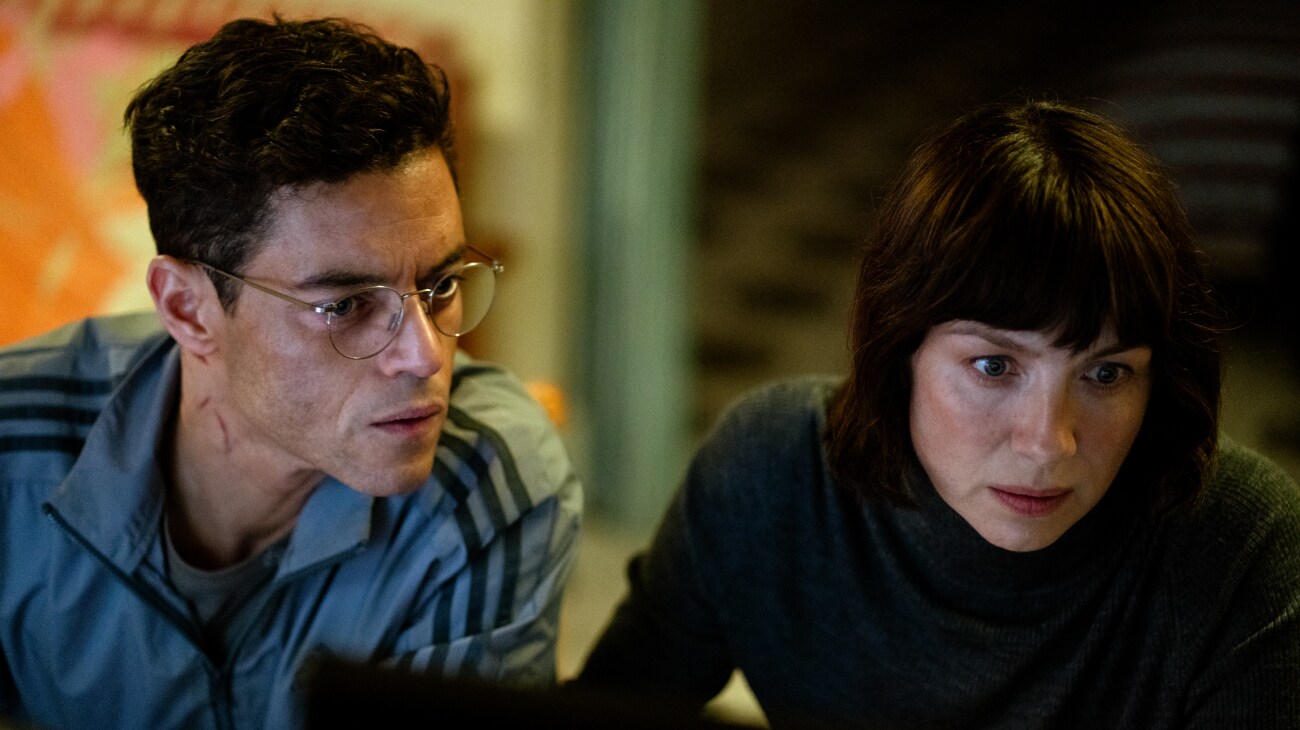
Malek is Heller, who writes top-secret computer code for the CIA.  He’s essentially a nerd, but he does have a deeply satisfying marriage to Sarah (Rachel Brosnahan), whose job requires her to travel internationally.

On one such trip Sarah becomes a hostage when terrorists take over a London hotel.  She is executed in front of the television cameras.

Heller is crushed. Then  he wants to get even, badgering his boss (Holt McCallany) to undergo field training so that he can track down the terrorists. The bigwigs figure this hopeless amateur will soon tire of the whole business.

Uh, no.

One of the virtues of Ken Nolan and Gary Spinelli’s screenplay (based on James Hawes’ novel)  is that it tricks the viewer in the same way Heller tricks his handlers.  Just when you think the jig is up and our man is going down, the film reveals that Heller has been way ahead of us all the time.

His bosses — who secretly organized the illegal terrorist action that took Sarah’s life — find they can’t keep track of Heller as he galavants around Europe because the computer programs designed for that purpose were written by Heller himself. He knows all the loopholes.

“The Amateur” has a deep supporting cast (Laurence Fishburne, Jon Bernthal, Julianne Nicholson, Caitriona Balfe, Michael Stuhlbarg) and the direction by James Hawes keeps the yarn chugging along.

As for the Oscar-winning Malek, this film will undoubtedly come to be regarded as a toss-off in a career of some depth. But as toss-offs go, it’s enjoyable enough.

| Robert W. Butler

Taron Egerton, Jurnee Smollett

“SMOKE” (Apple+)

Sociopaths and psychopaths  are the common currency of today’s streaming environment. 

The problem, of course, is that now we’re so inundated with psychotic characters that they’ve become a bit ho-hum. It really takes something special to grab our attention.

Enter “Smoke,” a miniseries from crime specialist Dennis Lehane that delivers not one but two world-class psychos, both of whom specialize in setting things on fire.

Loosely based on the real case of an arson investigator who spent his spare time starting the blazes he was allegedly trying to solve, this show stars the chameleonic Taron Egerton as Dave Gudsen, chief arson detective for a municipal fire department in the Pacific Northwest.

Davis is a fascinating study in two-faced fiendishness.  He’s got a huge ego which he tries to hide behind a facade of professional composure and good-guy cameraderie,  but his megalomania keeps oozing out around the edges. He loves to give presentations in which he shocks his audience by planting incendiary charges in wastepaper baskets, timing them to go off at key moments during his talk. 

At home Dave’s ass-hat smugness  is quickly alienating his wife and stepson.

And he’s writing a novel (a desperately bad one) about an arson investigator very much like himself, a brilliant fellow who can run circles around the bad guys while satisfying every erotic fantasy of his curvy female partner.

Dave’s real-life female partner, Michelle (Jurnee Smollett), can only roll her eyes at this fiction.  She rather quickly goes from admiring her new mentor to suspecting that Dave may himself be responsible for a series of fatal arson incidents.

The scripts take a slow burn approach (sorry about that) in revealing Dave’s double life and the reluctance of his long-time boss (Greg Kinnear) and other colleagues to grasp just what’s going on.

Ntare Guam Mbaho Mwine

Meanwhile, there’s that second psycho, a pathetically sad but genuinely scary fellow named Freddy Faso (Ntare Guam Mbaho Mwine). This friendless loner lives in a shabby apartment, mans a grill at a fast-food franchise and dreams of joining the mainstream.  Fat chance. Freddy is a loser in virtually every way. A man without a voice, he makes himself heard by setting fires to punish those individuals (other customers celebrating at the local bar, his bosses) who he blames for his own misery.

Freddy is such a weirdly compelling/repellant character that Mwine’s performance should be incorporated into college courses about mental health.

And the fact that “Smoke” gives us one arsonist tracking down another arsonist (kinda like Dexter stalking other serial killers) turns the show into a sort of moral yo-yo.

And  while we’re cataloguing the series’ assets, let’s not forget a late-in-the-proceedings appearance by John Leguizamo, nothing short of superb as Dave’s former partner, who has long suspected he was teamed with a firebug and has now come out of a boozy, drug-riddled retirement to lend his hand in the investigation.

That said, not everything about “Smoke” works.  There’s a rather unnecessary backstory about Smollett’s character, who as a child was almost burned to death by her crazy mom.  And in the next to the last episode the writers throw Michelle a wildly improbably curveball that the show almost can’t recover from.

At nine episodes “Smoke” feels a bit padded.   But the high points compensate in the end.

Owen Wilson, Peter Dager

“STICK”(Apple+)

I didn’t expect many surprises from “Stick,” and I didn’t get many.

But what I got was sufficient. The show is funny and diverting and occasionally even shows a little heart.

Owen Wilson plays Pryce Cahill, a former professional golfer now fallen on some very hard times. Then he discovers Santi (Peter Dager),  an unknown teenage golfer who might just be the lovechild of Lee Trevino and Tiger Woods.  

Pryce decides to go on a tour of golf tournaments with the kid, bringing along the boy’s mother (Mariana Trevino) and Pryce’s former caddy, the gloriously misanthropic Mitts (Marc Maron).The goal is to somehow recover his long-lost pride and, hopefully, humiliate his long-time rival Clark Ross (Timothy Olyphant), who now runs a world-class golf club. (Is this supposed to reference Trump? Not sure.)

Among the supporting players are Judy Greer as Price’s long-suffering but still supportive ex-wife, and Lilli Kay as the evocatively gender jumbled waitress who becomes Santi’s first love.

Anna Maria Mühe

“WOMAN OF THE DEAD”(Netflix)

A female undertaker becomes an angel of vengeance in “Woman of the Dead,” a German thriller that is more nuanced than it first sounds.

When her policeman husband is killed in a hit-and-run outside their mortuary in the Austrian  Alps, Blum (Anna Maria Mühe) goes looking for answers.  What she uncovers  over the course of two seasons is a conspiracy of very rich men who make snuff films starring illegal immigrants lured to Germany by the promise of good jobs.

Blum is a fascinating character, a doting mom of two who spends her days embalming corpses. Even weirder, the recently dead often talk to her from their perch on the slab.  Is this her imagination? Is Blum a bit bonkers?

She apparently has no qualms about personally eliminating the men she blames for her husband’s demise. So as viewers we’re torn between her need for answers and her shocking vigilantism. Will she get away with it?  Do we want her to?

It helps that Mühe isn’t movie-star glamorous.  We can definitely see her as a wife and mother.

And should your attention wander, there’s always the spectacular mountain scenery.

| Robert W. Butler

Steve Coogan and friend

“THE PENGUIN LESSONS” My rating: B(Netflix)

115 minutes | MPAA rating: PG-13

I’ve avoided watching “The Penguin Lessons” because, well, penguins and lessons. Sounded just a bit too emotionally pushy, you know?

Having finally watched this Peter Cattaneo-directed effort, I can report that my misgivings were misplaced.  The film is subtle, unsettling and about as unsentimental as a movie with a two-foot-tall feathered costar could be.

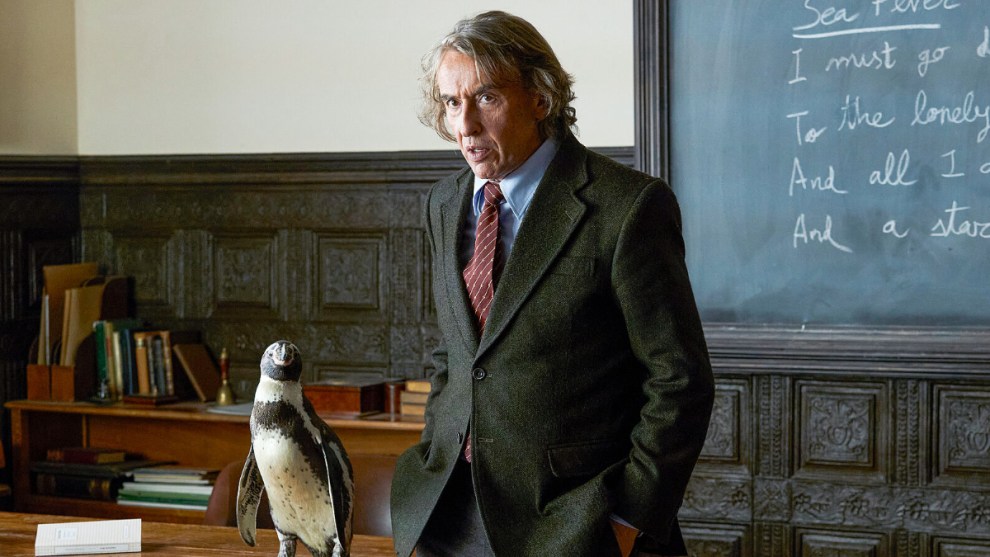
It helps that the film is based on the real-life story of Tom Michell, a British educator who in the 1970s found himself teaching English to the boys in a posh boarding school in Argentina.

When we first meet Michell (Steve Coogan), he’s a wryly caustic fellow oozing ennui.  We’ll learn much later that he’s attempting to outrun a personal tragedy.

On a seaside vacation to nearby Uruguay, Michell stumbles across a flock of penguins who have succumbed to a massive oil spill.  He retrieves the lone surviving bird and cleans it up in his hotel room (to be honest, his kindly display is intended to impress the woman he met that night at a dance club).

Anyway, once rescued the penguin refuses to leave. Michell is stuck with the fishy-smelling creature, reluctantly smuggling it back to Argentina in a backpack. He tries to pawn off the bird on anyone who’ll take it (a customs official, the local zoo) but ends up secreting it in his on-campus apartment.

The setup screams “cute,” but director Cattaneo and screenwriter Jeff Pope deftly sidestep all the pitfalls. For one thing, there’s no attempt to anthropomorphize the penguin.  He’s basically an eating machine that waddles. No personality to speak of — although just by being his cute, mute self he elicits confessional revelations from the humans who hang with him.

The eccentric creature — dubbed Juan Salvador by his savior — also proves a classroom asset, focusing the attention of the normally unruly rich twits who attend the school. Grades actually start improving, much to the delighted surprise of the stuffy headmaster (Jonathan Pryce).

Here’s where “The Penguin Lessons” turns the tables.  Michell was on hand for the military coup that for several years turned Argentina into a fascist camp where more than 30,000 citizens were “disappeared” for their political, intellectual and moral proclivities.

One of these unfortunates is Anna (Julia Fossi), a young cleaning lady at the school who is an outspoken liberal and always taunting Michell for his political indifference. Michell witnesses Anna being snatched off the street by a pack of government thugs. Appalled by his own cowardice for not interfering, he joins the girl’s grandmother (Vivian El Jaber) in a months-long search to discover Anna’s fate.

Now this is pretty dark stuff…and darker still because it mirrors recent images of masked ICE agents snatching dark-skinned people off America’s streets.

Coogan is a specialist at humanizing vaguely repellant characters, and here he quietly and efficiently limns Michell’s moral journey.  The supporting players are all fine, from the leads to the entitled adolescents who occupy Michell’s classroom (they could have called this “The Dead Penguin’s Society”).

Jenna Ortega

“DEATH OF A UNICORN” My rating: C (Netflix)

107 minutes | MPAA rating: R

Not even an A-list cast can do much with “Death of a Unicorn,” a hodgepodge of myth, father-daughter bonding, greedy rich folk and a big dose of gut-splattering violence.

Alex Scharfman’s film (he both wrote and directed) finds corporate attorney Elliott (Paul Rudd) and his surly daughter Ridley (Jenna Ortega) cruising down a mountain road en route to the alpine compound occupied by Elliott’s employers, a family of pharmaceutical robber barons.

At first Elliott thinks he’s hit and killed a deer.  Actually it’s a honest-to-God unicorn, a creature whose long horn is capable of delivering psychedelic experiences, healing diseases and even bringing the dead back to life.

Their moneyed hosts (Richard E. Grant, Will Poulter, Téa Leoni) quickly realize the creature’s powers could be a game-changer and launch plans to harvest whatever other unicorns may be frolicking in the woods.

What they don’t realize is that these creatures are malevolent, with the fangs of a carnivore, the speed of a charging rhino and the ability to crash through doors and walls.

The tone is all over the place.  “…Unicorn” wants to be a satire of corporate greed, but it’s hitting at a pretty obvious target. (Drug executives? Really?) Meanwhile it’s hard to root for the unicorns…they’re some mean mofos. 

And the violence is wildly gruesome…yet we’re supposed to laugh.  Those are some mixed messages.

Adolescent Ridley advocates a more humane approach to the whole situation; gradually bringing Dad Elliott into her corner.  Of course, you can’t exactly wave the flag of peace when these monsters are laying siege to your aerie.

| Robert W. Butler

Tom Basden, Tim Key, Carey Mulligan

“THE BALLAD OF WALLIS ISLAND” My rating: B (Peacock)

99 minutes | MPAA rating: PG-13

Like the character who sets its plot in motion, “The Ballad of Wallis Island” is sorta irritating at first but eventually pulls us in.

This individual in question is Charlie Heath (Tim Key), a burly, bearded denizen of Wallis, one of the more remote of the British Isles. Having come unexpectedly into a small fortune (we will learn that he has won the national lottery not once, but TWICE), Charlie has decided to spend a big chunk of it on a concert by his favorite musician.

That would be Herb McGwyer (Tom Basden), whom we meet bobbing miserably in the tiny boat that is Wallis Island’s principal link to the mainland.  Herb has been lured to the scenic but underpopulated isle by Charlie’s offer of 500,00 pounds for an hour-long concert.

He needs the money.  Herb used to be part of a moderately successful he/she folk duo, but that relationship went south a decade earlier.  Ever since Herb has been trying to get back his musical mojo. Currently he’s recording a rock album, and he desperately needs Charlie’s payday to cover expenses.

A bit of a sourpuss on even a good day, Herb is alarmed to learn that Charlie — a fanboy given to incredibly corny or inappropriate exclamations (”Wowzer in the trousers!”) — will be the the sole member of the audience. 

There’s no hotel on the island, so Herb must stay at Charlie’s quaint but slightly-gone-to-seed mansion.  Which means that there’s no escape from his host’s geeky adulation.

“Ballad…” only really kicks into gear with the arrival of Herb’s old singing partner and one-time paramour Nell (Carey Mulligan), who’s no longer playing professionally and, like Herb, needs the money. Charlie has booked her without consulting Herb.

Tensions mount.

There’s a sort of “Local Hero” vibe wafting around this effort (the screenplay is by stars Key and Basden, the direction by James Griffiths, all of whom collaborated on a “Willis Island” short film a few years back). The movie thrives on low-keyed, character-driven fish-out-of-water humor, but it’s also an affecting meditation on loss (Charlie reveals that Herb and Nell were the favorite recording artists of his late wife).

Don’t be surprised if you find yourself gulping back a few tears.

There’s not a ton of music in the film, but the few songs performed by Basden and Mulligan (all written by Basden) nail the same guy-girl sweet spot that made “Once” so memorable.

So…charming.

Simon Baker

“LIMBO” My rating: B (Amazon Prime)

108 minutes | No MPAA rating

As a minimalist mystery about a crime that will never be solved, the Australia-lensed “Limbo” starts out deep in the hole when it comes to attracting a mainstream audience.

Toss in a subplot about the casual abuse of Australia’s aboriginal population, stark black-and-white cinematography, and the usually-hunky Simon Baker looking like something the cat dragged in, and you’ve got a film that will appeal mostly to hardcore cineastes.

Which is OK with me.

“Limbo” (written and directed by Ivan Sen) got under my skin and refused to be shaken off. 

A good chunk of that has to do with the astonishingly beautiful cinematography (director Sen was his own d.p.). The film’s widescreen format and lack of color are just about the perfect way to capture  an outback burg so windblown and pocked with ugly craters (the area used to be a center for opal mining) that it really does seem like the waiting room to hell.

Our hero — no,  not hero.  Our protagonist is Travis Hurley, a big-city cop assigned to look into a very cold case, the two-decades-old disappearance of a young aborigine woman.

Travis isn’t exactly your gung-ho cop. Initially he seems only to be going through the motions.

Even fans of TV’s “The Mentalist” will require a reel or two to wrap themselves around Baker’s transformation here.  Sporting a buzz cut and month-old beard, his eyes shaded by aviator glasses and his arms covered in tattoos (the result, one surmises, of an undercover  stint with the drug squad that left him addicted to heroin), Travis is Simon Baker as we’ve never seen him.

He starts asking questions but gets few answers. The local cops have a history of racism and the aboriginal community doesn’t trust lawmen.  Eventually the missing girl’s now-grown brother (Rob Collins) and sister (Natasha Wanganeen) provide a bit of insight, but not enough for an arrest.

Everyone has heard the old saw that it’s not the destination but rather the journey that matters. That’s certainly the case with “Limbo,” which I found weirdly compelling despite its lack of resolution.

| Robert W. Butler

“PEE-WEE AS HIMSELF”  (HBO Max)

Streaming in two 90-minute episodes, “Pee-Wee as Himself” might seem a case of show-biz overkill.

Sure, funnyman Pee-Wee Herman was wildly entertaining, but can you really fill three documentary hours with him?

Uh,  yeah. Not only fill them, but leave you with a sob in your throat when it’s all over.

That silly/sly manchild Pee-Wee was the onstage alter ego of comic Paul Reubens, who had a pretty good resume even before creating his bow-tied, pink-cheeked character.  The big revelation of Matt Wolf’s doc is that for much of his lifetime (he died of cancer in 2023), Paul Reubens spent more time as Pee-Wee than as Paul.

It was a case of performance art carried to Kaufmann-esque extremes.

This doc was made with the cooperation (often grudgingly) of Reubens, who sat for endless on-camera interviews to talk about his Pee-Wee character, his career, and the scandals that threatened to sink it all. Throughout he frets that somebody else is telling his story. He can be kinda cranky.

There are contributions from friends and co-workers like Cassandra Peterson (better known as the spooky/sexy Elivra), “SNL” legend Laraine Newman, Natasha Lyonne (as a child she was a regular on TV’s “Pee-Wee’s Playhouse”), S. Epatha Merkerson and Lawrence Fishburne (also “Playhouse” veterans), director Tim Burton (who got his  start in features with “Pee-Wee’s Big Adventure”), filmmaker Judd Apatow and friends Debi Mazar and David Arquette, who got to know Reubens when he wasn’t Pee-Wee.

There’s all sorts of back story.  RE: Reuben’s work with the Groundlings improv group in Los Angeles (one of his best buds was the late Phill Hartman; also Kansas City actress Edie McClurg was part of the original Pee-Wee cast). His creation of dozens of recurring characters for that troupe. And the gradual development of the impish Pee-Wee, a character so beloved that not even a tawdry sex scandal could put much of a dent in his fan base.

We get insight into Reubens’ private life.  In those months when he wasn’t playing Pee-Wee he grew long hair and a beard, making him virtually unrecognizable.

He acknowledges that  he is gay and even had a live-in boyfriend, but once the Pee-Wee phenomenon took off he dived deep into the closet. (We tend to forget that in the ‘70s being outed could be a career killer.)

Paul Reubens in police mug shot

And of course there’s no escaping the scandals.  In one instance Reubens was arrested allegedly for masturbating in a porn theater.  In the other LA cops raided his home for child pornography. They found only vintage physical culture mags (Reubens had a massive collection of kitschy ‘50s homoeroticism).  In both cases Reubens plead guilty or nolo contendre to end the episodes, even though he here claims he’s innocent of those crimes and would have prevailed in court if he’d wasted the time and money on the effort.

But what makes “Pee-Wee As Himself” so damn wonderful is the cornucopia of clips of his work.  Was “Pee-Wee’s Playhouse” the greatest kid’s TV show of all time?  It’s got my vote.

Ultimately this is portrait of a man far more comfortable playing a role than living everyday life. It was tough on him…but good for the rest of us.

Jayne Mansfield and daughter Mariska Hargitay

“My Mom Jayne” My rating: B+ (HBO Max)

105 minutes / No MPAA rating

After her decades in the role of Det. Olivia Benson on TV’s “Law & Order: SVU,” fans of actress Mariska Hargitay by now are aware of her show-biz pedigree: She is the daughter of mid-century sex bomb Jayne Mansfield.

Not that she remembers her mother. Hargitay was only three in 1967 when she was pulled from the wreckage of the car in which her mother died. And as she tells us in this documentary (her feature directing debut), she has lived her life with no memory of Jayne Mansfield.

In fact, her widowed father, the late Hungarian-born athlete and bodybuilder Micky Hargitay, advised her to steer clear of the scandal-saturated Mansfield biographies and documentaries that have come out over the years. So in a weird way, Hargitay’s knowledge of Jayne Mansfield wasn’t much greater than that of your average pop culture fan.

“My Mom Jayne” operates on two levels. First, it is a daughter’s quest to understand her mother, to get a grasp on her own family history. Thus it is a very personal examination of her own life.

Hargitay interviews her older siblings, mining their childhood memories. She talks to her mother’s press secretary (who wrote a Mansfield biography filled with insider revelations).

Late in the film she visits a storage facility where for the first time she sorts through the detritus of her mother’s life (a Golden Globe statuette, movie posters, a publicity album overflowing with press clippings).

But even deeper, it is an appreciation of Mansfield, a woman whose reputation as the poor man’s Monroe didn’t begin to reflect her depths, desires and hardships.

Throughout the doc we get tons of photos, movie clips, TV appearances and interviews. The film makes the case for Mansfield being a talented actress whose ambitions were undermined by the pneumatic dumb blonde performance that got her foot in Hollywood’s door and then could not be extracted.

Pregnant at 16 and divorced by the time she was 20 and trying to gain traction in Tinsel Town, Jayne Mansfield found herself at 21 starring in a hit Broadway comedy and launching a movie career that today is regarded as forgettable but at the time was the talk of the industry.

She played piano and violin (there’s footage of her sawing the fiddle on Ed Sullivan’s show) and spoke several languages. But she was also a shameless publicity hound.

Apparently through all this she was a great mother, if her children are to be believed. Even when her marriage to Hargitay was breaking up and she was dating/marrying other men (most of them brutes, this film suggests), Jayne Mansfeld was devoted to the kids.

Just when you think you’ve got a handle on the whole situation, the filmmaker drops the big one. It turns out that Mariska Hargitay was not the natural daughter of Mickey Hargitay, the man who raised her. Her biological father, whom she did not meet until well into adulthood, is the Italian-born Vegas entertainer Norman Sardelli, who had a brief but torrid affair with Jayne Mansfield when she was separated from Hargitay. Late in the film we meet Sardelli (89 at the time) and the two half-sisters Mariska never knew she had in a kitchen table conference that is both achingly sad and hilariously funny.

Revelations like this might move some of us to bitterness. Mariska Hargitay seems happy to incorporate the Sardellis into her larger family.

She also shows her chops behind the camera. “My Mom Jayne” succeeds on just about every level.

| Robert W. Butler

Tomasin McKenzie

“LIFE AFTER LIFE”’  (Amazon Prime)

Tomasin McKenzie has been on the verge of first-class stardom for several years now. “Life After Life” should cement her reputation.

Now 24, this descendent of Down Under theatrical royalty has exhibited wisdom beyond her years in her choice of projects. 

Titles like “Leave No Trace,” “Jojo Rabbit,” “Lost Girls,” “The Power of the Dog,”  “Last Night in Soho” and “Joy” are not only good movies, they have  allowed McKenzie to display gob-smacking range.

She can play anything from childish innocence to middle-aged maturity.  “Life after Life” allows her to do it all in one four-hour miniseries. She’s unforgettable.

The thumbnail description of “Life…” (based on Kate Atkinson’s best-selling novel) is that it’s sort of a non-comedic “Groundhog Day”  with a protagonist who dies dozens of times only to be reborn back in 1910 to start the process all over again.

Our lead character, Ursula (played as a teen and adult by McKenzie), has vague deja vu-ish memories of her previous incarnations…just enough to avoid situations that in the past led to her demise.  Like Bill Murray’s weather man, she learns from her failures. 

Problem is, fate always catches up with her, throwing new dangers in her path. 

She dies. She is reborn. She dies. Reborn. Dies. Reborn.

Will she ever get off this karmic Ferris Wheel?

Created and scripted by Bathsheba Doran and directed by John Crowley (who has a way with young actresses…witness the perf he got from Saoirse Ronan in “Brooklyn”), “Life After Life” is crammed with fantasy elements.

Yet you can’t call it an escapist experience.  Life is cruel and though she finds moments of love, Ursula’s lives more closely resemble the trials of Job than a hopeful march toward Nirvana.

Born in 1910 to a well-off and loving Brit gentleman (James McArdle) and his brittle wife (Sian Clifford), little Ursula dies shortly after birth, strangled by her own umbilical cord.

Not to worry. She’s soon reborn; this time the country doctor overseeing the delivery acts decisively to save the baby.

Childhood in her parents’ green estate should be idyllic. But Ursula (played as a child and early adolescent by Eliza Riley and Isla Johnson) lives under a cloud of gloom.  Even as a youngster she sense that nothing is permanent.

Indeed, in less talented hands Ursula’s revolving door of disasters might seem ludicrous.

Death by drowning. A fall from an upstairs window. Fatal auto accident. Rape. Abortion.

Small wonder that adolescent Ursula is bitter, grouchy and even borderline homicidal. 

And that’s just the personal crises.  In the background we endure two world wars.  In one of her lifetimes Ursula marries a German and moves with her husband to the Third Reich, just in time to endure starvation with her three-year-old daughter. In another she and a lover are blown to smithereens during the London Blitz.

You cannot outrun fate.

The pitfalls inherent in this project were considerable.  It’s like playing a board game where you’re repeatedly sent back to the go position. Atkinson’s script and the editing (by Nick Emerson) deftly lay out just where we are in Ursula’s spiritual journey, with each succeeding life zipping through the scenes we’ve already witnessed to get on with her latest travails.

(For those of us who still don’t glom onto the film’s methodology, a voiceover narration by Leslie Manville pops up now and then to offer guidance.)

The performances of the huge cast are quietly spectacular.  There are so many catch-in-the-throat moments here that the four episodes become an acting marathon.

Holding it all together is McKenzie, whose ability to convincingly transform from freckled youngster to embattled adult and back again is positively superhuman.

For all its grim elements, “Life After Life” is weirdly poetic.  Each time Ursula dies she finds herself surrounded by gently dancing snowflakes, a recurring visual that suggests a kindness in death that is missing from our heroine’s lives. 

Prepare to be haunted.

| Robert W. Butler

Rep. Jim Jordan

“SURVIVING OHIO STATE” My rating: B (MAX)

 108 minutes | No MPAA rating: PG

For those who have followed the controversy over the years, “Surviving Ohio State” will drop no new bombshells.

But Eva Orner’s documentary, about the sexual abuse scandal that wracked a powerhouse Midwestern University, does an admirable job of telling a big story that most of us have received only in bits and pieces over the better part of three decades.

Orner (an Australian whose “Chasing Asylum” savages her country’s response to refugees) takes her cues from the script by Jon Wertham, the “60 Minutes” correspondent whose 2020  series in Sports Illustrated  painstakingly examined decades of predatory activities at OSU and many years of coverups.

Like a lot of rah-rah sports films, this one begins by describing the long culture of winning at Ohio State and the near-maniacal loyalty of its athletes and fans.  We’re introduced to legendary wrestling coach Russ Hellickson and his assistant and former collegiate wrestling champ Jim Jordan. (Yes, the same Jim Jordon who is now a rabidly MAGA member of Congress.)

We’ meet the late Dr. Richard Strauss through the testimony of students and student athletes who were his victims.  Strauss, a physician in the athletic department, had a reputation for fondling the genitals of athletes under the guise of a medical exam.  He didn’t come off as an overtly dirty old man….more like straight-faced professional engaging in business as usual. His handsy practices were tolerated because the young players were too naive to realize precisely what was happening to them.

And then there were the showers.  Strauss would take several a day, but only if there was an athlete in there with him.  At one point after a tournament a wrestling referee found himself in the showers with the masturbating M.D. 

Those who complained got knowing shrugs and answers like, “Well, that’s the Doc.”  Strauss’ behavior became a running joke.

Except that in interviews numerous athletes (mostly wrestlers but also members of the fencing and hockey squads) exhibit traumatic responses to even talking about Strauss. Tears. Trembling.  Big tough guys in their 40s and 50s going to pieces before our eyes. There was damage done.

The first hour of “Surviving Ohio State” chronicles the abuse in blushing and/or stomach-churning detail.  My main beef with the film is that we keep getting the same story from a variety of individuals…the movie makes its case, but only at the risk of becoming repetitive.

Just when you think you can’t take another twisted anecdote, the movie shifts to the effort by former OSU jocks to sue the university for what they endured.  Their  legal effort was almost derailed by the statute of limitations; it took the intercession of the U.S. Supreme Court to get it back on track.

The former students interviewed say it isn’t about the money.  They want the school to admit its complicity in tolerating Strauss’ behavior and then covering up the scandal.

In the film’s final chapter that we return to Jim Jordan.  The former wrestlers who appear on screen  invariably say that Coach Jordon was completely aware of Strauss’s transgressions.  Jordan has repeatedly denied that this is the case.

I’ve never been a fan of Jordan’s politics, but after this I can hardly watch or listen to the guy.

Perhaps even more disheartening is the behavior of the beloved Coach Hellickson, who after meeting with former students agreed to join them in their quest, then did a 180 and prertty much evaporated from sight.  

Throughout the all, the University refused to admit to any wrongdoing.

Daisy Ridley, Matthew Tuck

“CLEANER” My rating: B- (MAX)

97 minutes | MPAA rating: R

For an unapologetic ripoff of “Die Hard,” “Cleaner” is ridiculously diverting.

Terrorists take over a high-rise office building during a big celebration. They kill a few hostages.  They can only be stopped by one lone individual who’s in the wrong place at the right time.

The good news is that the script by Simon Uttley, Paul Andrew Williams and Matthew Orton throws some unexpected twists into the familiar mix.

For starters, the bad guys are ecoterrorists whose plan is to the reveal to the world the dark secrets of a polluting energy conglomerate and the government officials who facilitate its environmental depredations.

Our lone wolf  protagonist is a female window cleaner who is dangling outside the building 30 floors above the street when the invasion takes place.  Her name is Joey (Daisy Ridley of “Star Wars” fame) and as luck would have it she’s a former special forces operative with a lethal skill set.

Oh, yeah, she’s also babysitting her autistic brother (Matthew Tuck), a geeky guy who carries a replica of Thor’s hammer but is something of a savant when it comes to computer hacking.  His talents will come in handy.

“Cleaner “ gets off to a slow and rather desultory start.  I was almost ready to bail after five minutes. 

But then it kicks in and director Martin Campbell (a veteran of the Bond franchise) deftly juggles the growing suspense and carefully choreographed action.

| Robert W. Butler