Feeds:
Posts
Comments

“63 UP”  My rating: A- (Playing Jan. 17, 19 and 20 at the Tivoli at the Nelson-Atkins)

125 minutes | No MPAA rating

When Brit director Michael Apted first launched his “7 Up” documentary series back in 1963, among its major themes were politics and class.

The project’s big idea was to take a bunch of 7-year-olds from various social backgrounds and study them over time, returning every seven years with an update of how they’re doing (“21 Up,” “35 Up,” “56 Up”).  Originally much was made of the differences between the privileged kids and those who were struggling in the lower levels of the British beehive.

More than a half century later the world’s longest-lasting cinematic experiment continues, but the emotional tenor of the piece has mellowed. At age 63 Apted’s subjects have been seasoned by the death of parents and friends and the expectations of their own demises (in fact, we learn that one woman subject died just a couple of years ago).

So now it’s not so much about Tories vs. Labour or even Brexit (though the subject does come up) as about figuring out what to do with the time you’ve got left.

Apted’s methodology remains unchanged. He approaches his still-participating 12 subjects one at a time, alternating past footage with current interviews. It’s weird watching someone age instantaneously before our eyes; in the dad guts and double chins and graying (or missing) hair we are forced to confront the forces working on our own bodies.

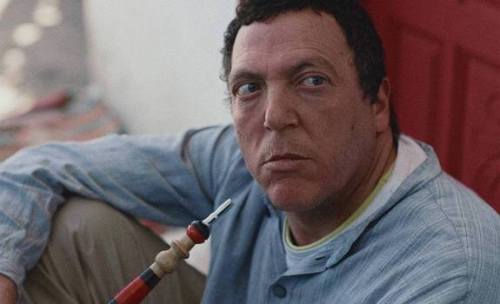
Tony, the once-aspiring jockey who became a London cabbie, now laments that Uber is putting him out of business. The self-described “Cheekie Chappie” augments his income with walk-on film roles and retains his working-class childhood belief that in class warfare “it’s us or them.”

Corporate lawyer Andrew at age 63 laments that he was so career driven he failed to make time for his family.

Continue Reading »

Guy Pearce

“DISTURBING THE PEACE” My rating: C- 

90 minutes | MPAA rating:

Apparently Aussie star Guy Pearce is the newest member of the don’t-send-the-script-send-the-check club. That’s the only explanation for his presence in the laughably inept “Disturbing the Peace.”

In York Alec Shackleton’s unintentionally goofy actioner, Pearce plays Jim Dillon, who left the Texas Rangers after accidentally shooting and paralyzing his partner in a hostage standoff. Now he’s the law in the tiny burg of Horse Cave. Apparently the place has a very low crime rate, because Jim has for years refused to carry a gun.

This proves problematical when a gang of rogue motorcyclists invade the place, robbing the local bank and hanging around so that they can rip off an armored car bringing big bucks from a nearby casino.

With many of his fellow residents being held captive, Jim must use his wits (we’re talking MacGyver-style booby traps) to foil the baddies; it’s just a matter of time, though, before he picks up a firearm and gets down to serious business.

Chuck Hustmyre’s screenplay is a mashup of ideas from “High Noon” (a more-or-less real-time narrative), Brando’s “The Wild One” (bad boys on bikes) and “Die Hard” (with a small town instead of a high-rise office building).

Hustmyre’s bio claims he’s a retired federal agent who has written several crime books, yet there’s nothing even remotely authentic about “Disturbing the Peace.”  Its depiction of small town life and law enforcement plays like the work of someone whose entire world view has been shaped by watching straight-to-video crime thrillers in his mother’s basement.

Continue Reading »

George MacKay

“1917”  My rating: B+

118 minutes | MPAA rating: R

Both epically sprawling and remarkably intimate, “1917” instantly establishes itself as one of the great war films.

Here’s the ugly truth of trench warfare during World War I: Rotting corpses, feasting rats, clouds of carrion-colonizing insects.

Yet along with these ghastly images, “1917” delivers a profoundly human story that taps into all sorts of emotions: terror, comradeship, compassion, bravery, hubris.

That the entire two-hour film is told entirely in what appears to be one uninterrupted shot makes it a technical tour de force (Roger Deakins is the d.p. and his work is jaw-dropping). But this is more than a cinematic gimmick. Without editing and alternating camera angles we’re forced to focus on the conflict in much the same way as its participants. There’s no way out.

The screenplay by Mendes and Krysty Wilson-Cairns (reportedly inspired by wartime tales related by Mendes’ grandfather) is straightforward enough.

Two lance corporals in the British army in northern France — Blake (Dean Charles Chapman) and Schofield (George MacKay) — are sent on foot across nine miles of no man’s land to deliver a message. Another British unit  is planning an attack on “retreating” German troops.  But aerial surveillance shows that the enemy withdrawl is merely a strategic realignment, and that the Tommies are walking into a trap that could mean death for 1,600 of them.

So it’s a race against time that takes the two young soldiers through a shell-pocked landscape, into abandoned enemy trenches, through rubble-strewn farms and villages and down swollen rivers.

Though their journey is marked by growing suspense and flashes of real danger, there’s relatively little in the way of conventional combat here — just one incident with a German sniper. Mendes and Wilson-Cairns find plenty of moments of relative calm in which to explore their characters.

Blake, who was picked for the mission because his older brother is an officer in the target battalion (evidently the brass figure that a chance to save his sibling will prove motivational), is gung ho to get moving.  Schofield, several years older and much more combat savvy, wants to wait for nightfall. He’s overruled and bitter that his fate is in the hands of an amateur.

The two marvel at the complexity of German engineering (the Huns’ trench network is made of concrete with subterranean barracks outfitted with bunk beds; the Brits basically squat in the mire). They talk about duty and valor. The still-idealistic Blake is shocked to learn that Schofield has traded his combat medal to a French officer for a bottle of wine (“I was thirsty”).

They witness an aerial battle between British and German planes; from the ground it’s a weirdly peaceful, balletic experience…at least until fate drops one of the plummeting aircraft into their laps.

Continue Reading »

Michael B. Jordan, Jamie Foxx

“JUST MERCY”  My rating: C+

136 minutes | MPAA rating: PG-13

In “Just Mercy” an A-list cast does its best with movie-of-the-week execution; the results are simultaneously inspiring and off-putting.

Destin Daniel Cretton’s film is based on the true story of attorney Bryan Stevenson and the founding in Alabama in the late 1980s of the Equal Justice Initiative, an organization devoted to re-examining the cases of Death Row inmates.  These were condemned men  — most of them black — whose convictions may have been based on perjured testimony, suppressed evidence and inadequate defenses.

In addition to its truth-to-power narrative and the obvious dramatic power of men awaiting death at the hands of the state, the film boasts a lead performance by Michael B. Jordan as Stevenson, a New Englander who came to the South to right wrongs.

Oscar winner Brie Larsen takes a supporting role as the local activist who becomes his assistant and guide to the workings of Southern justice.

Continue Reading »

“MAKING WAVES: THE ART OF CINEMATIC SOUND” My rating: B

94 minutes | No MPAA rating

The cinema has always been dominated by its visual elements and the moving image…there’s a reason we refer to them as “the movies,” after all.

But as powerful as visual images may be, they can be enhanced immeasurably by the judicious and creative use of sound. Some filmmakers, in fact, argue that what we hear in the theater is as important — perhaps more important — than what we see.

Midge Costin’s documentary “Making Waves: The Art of Cinematic Sound” — she’s a veteran sound and dialogue editor making her directing debut — is a little bit of everything: history, aesthetic exploration, technological geek out.

It is also, for the most part, a look at the careers of two of the still-living giants of movie sound: Walter Murch, whose sound designs have graced the films of Francis Coppola, and Ben Burtt, who brought his talents to George Lucas’ “Star Wars.”

The film opens with Murch, now 77, commenting on how even before birth we are accustomed to hearing our mother’s breathing and heartbeat, as well as voices and noises coming from outside her body. For that reason, Murch asserts, hearing is a much more profound experience than viewing.

The film picks out from cinema’s past special films that advanced movie sound. There’s “King Kong,” whose sound designer manipulated the roars of zoo animals.  There was the radio era, when entire worlds were fabricated from pure sound; artists like Orson Welles exploited the artistic possibilities of radio and then brought that some creativity to the soundtrack of his “Citizen Kane” (1941). Alfred Hitchcock was an advocate of pure sound, eschewing all music for his “The Birds” (1965) and relying heavily on electronically distorted avian noises.

But these adventurous souls were few and far between. Mostly the studios were run like an assembly line that avoided adventurous sound design; each studio had its own sound library of gunshots, trains, screeching tires, ricocheting bullets and other noises that were used over and over again.

Of course for most of the sound era — which began in the late ’20s — movie sound meant monaural sound, noises coming from one speaker directly behind the screen.  It wasn’t until Barbra Streisand demanded a full stereo presentation for her 1976 “A Star Is Born” that stereo soundtracks became the norm.

In films like “Nashville” Robert Altman got creative with dialogue, wiring up everyone in a crowded scene with their own microphones and recording each actor individually so that he could manipulate what his audience heard in the final print.

Continue Reading »

Emma Watson, Florence Pugh, Saoirse Ronan, Eliza Scanlen

“LITTLE WOMEN” My rating: B+

134 minutes | MPAA rating: PG

Each generation, apparently, gets its own cinematic “Little Women.” Count Greta Gerwig’s new version among the best.

Beautifully acted, classily mounted and delivering its emotional detonations with almost clocklike precision, this adaptation manages to do justice to Louisa May Alcott’s classic novel while viewing the tale through a protofeminist lens.

Gerwig lets us know what she’s up to in the opening scene, where aspiring writer Jo March (Saoirse Ronan) meets with a New York publisher to discuss her latest story.

“If the main character is a girl,” the bewhiskered editor (Tracy Letts) advises, “make sure she’s married by the end…or dead.  Doesn’t matter which.”

This is only the first of several moments in which the film takes aim at male privilege and arrogance in 19th century America (and, by implication, in today’s world).  Not that the film ever mounts a soapbox or goes strident.  Gerwig’s screenplay effortlessly incorporates a modern sensibility into the classic tale; it feels as if she discovered these  millennial attitudes  in the original story and merely amplifies them.

This “Women” is novel as well for its narrative juggling.  The film opens several years after the Civil War…the March sisters from Concord, Mass., are now young adults.

We’ve already seen Jo pursuing a career in the Big Apple.  We find sister Meg (Emma Watson) back in Concord; she’s married, a mother and struggling with money issues.  Little sister Amy (Florence Pugh) is in France studying painting under the watchful eye of their wealthy Aunt March (Meryl Streep, doing her best Maggie Smith).

There’s a fourth sister, Beth (Eliza Scanlen), whom we meet in the flashbacks that make up the bulk of the film.  (One of the great pleasures in Gerwig’s narrative sleight-of-hand is that we’re able to compare the mature women we first meet with their much more innocent selves seven years earlier.)

Continue Reading »

Adam Sandler

“UNCUT GEMS” My rating: C+

135  minutes | MPAA rating: R

Funnyman Adam Sandler undergoes a remarkable transformation in  “Uncut Gems.”  He’s really, really effective as a Diamond District hustler whose debts and sins are rapidly closing in on him.

That said, the latest from the writing/directing Safdie Brothers (Benny and Josh) is like having an irate New Yawk cabbie screaming nonstop in your ear for two-plus hours.

Sandler plays Howard Ratner, the middle-aged proprietor of a Manhattan jewelry store.  He calls himself a jeweler but he’s not so much an expert in gemology as he is a full-time con artist, always looking for his next (not necessarily legal) kill.

Howard is an inveterate gambler who always is nurturing a get-rich-quick scheme.  He’s got a furious wife (Idina Menzel) and kids in the ‘burbs,  a girl squeeze (Julia Fox) he keeps in an apartment in the city, and a crushing gambling debt that finds him being stalked by a pair of underworld enforcers  (Tommy Dominik, Keith William Richards).

Howard’s sure that his latest scheme will turn everything around. He has somehow gotten his hands on a “black opal,” a fist-sized gem smuggled out of Africa.  He’s already arranged to have this spectacular rock sold by a prestigious auction house; surely it will leave him set for life. Or at least alive.

Or maybe not.  His streetsmart associate Demany (LaKeith Stansfield) introduces Howard to basketball star Kevin Garnett (playing himself, and most convincingly), who so loves the big opal that he asks to carry it around with him for a few days. He comes to regard it as his good luck charm.

Always looking for an edge, Howard agrees, figuring that a generous gesture now will turn the sports millionaire into a long-term bling buyer. Continue Reading »

Jonathan Pryce, Anthony Hopkins

“THE TWO POPES” My rating: B+

125 minutes | MPAA rating: PG-13

At its best “The Two Popes” is a monumental acting duel that’ll leave viewers in open-mouthed amazement.

The subjects of Fernando Meirelles’ witty and ultimately heart-tugging drama are the German Joseph Ratzinger (Anthony Hopkins), who would become Pope Benedict XVI, and the Argentinian Jorge Bergoglio (Jonathan Pryce), our current Pope Francis.

Essentially the tale told by screenwriter Anthony McCarten is one of the passing of power from one pope to the next, and how that exchange heralds a possible new beginning for Roman Catholicism. The details are fictional — the spectacularly wrought conversations McCarten delivers are his own creation — but the overall portrait he paints of these two men and the church they represent feels utterly true.

The film begins in 2005 with a convocation of cardinals to vote on a new pope.  Ratzinger — a dogmatic conservative deeply suspicious of efforts to modernize the Church — actively campaigns for the job.  He views the reform-minded Bergoglio, the favorite of the liberal cardinals, with thinly-veiled contempt.

As the two stand side by side at a sink in a Vatican restroom, Bergoglio absent-mindedly whistles “Dancing Queen.”  Ratzinger asks: “What is that hymn you’re whistling?”  Turns out he’s never heard of Abba.

A small moment, but an illuminating one. Ratzinger is an intellectual, emotionally remote, authoritarian, with little or no interest in popular culture. Even some of the faithful dismiss him as a “Nazi.”

Bergoglio is his polar opposite, a beloved charmer with the common touch, a man whose hobbies include tango dancing and soccer (for an Argentinian they are practically compulsory, he notes).

Ratzinger, of course, becomes the next pope.
Continue Reading »

August Diehl, Valerie Pachner

“A HIDDEN LIFE” My rating: B+

173 minutes | MPAA rating: PG-13

Spirituality is not something the movies do particularly well.  After all, it’s a visual medium; the inner workings of the heart are not easily captured by the camera.

Leave it to Terrence Malick, the most idiosyncratic American filmmaker ever, to find a way to put a human soul on the movie screen.

In “A Hidden Life” Malick explores the true story of Franz Jaggerstatter, an Austrian farmer who at the height of World War II decided he could not take an oath of loyalty to Adolf Hitler and so spent the rest of his days in a series of grim Nazi prisons.

Jaggerstatter’s story is, unlike most recent Malick films (the magnificent “Tree of Life” and the irritating “To the Wonder”) a fairly linear one.  But the Texas-based auteur brings to the table his trademark eye-of-God perspective, so that while “A Hidden Life” unfolds in more or less chronological order, it’s filled with visual and aural digressions.

The results are heartbreaking, moving and inspiring.

Malick opens his film with footage of Adolf Hitler from Leni Riefenstahl’s propaganda documentary “Triumph of the Will.”

We then meet Franz (sublimely underplayed by August Diehl) and his wife Fani (Valerie Pachner) swinging scythes in a blindingly green field overseen by rugged alpine crags.  A towering church steeple is always in the background, a reminder not only that Franz is a volunteer sexton (he’s the village bell ringer) but that he takes his religion very seriously.

In a series of interlocking scenes, some only seconds long and dealt like cards from a Tarot deck, we get a sense of life in this tyrolean paradise, Franz and Fani’s courtship, and the life they have built together on a drop-dead beautiful mountainside with three daughters.

It’s a world centered on home, family, farm and village. And it’s almost too beautiful and peaceful for words.

But there are intimations of things going on in the larger world. Fani freezes as an unseen plane passes overhead. Franz has furtive conversations with fellow villagers who share his anti-Nazi sentiments. The mayor (Karl Markovics) when in his cups lets fly with rants about inferior races.

Franz takes his concerns to the local priest (Tobias Moratti), who is sympathetic but advises him to shut up and do what’s asked of him: “You’ll almost surely be shot. Your sacrifice will benefit no one.”

Not even a session with the area bishop (Michael Nyqvist) provides a satisfactory answer to Franz’ heartfelt query: “If our leaders are not good, if they’re evil, what does one do?”

Continue Reading »

Taylor Swift

“CATS” My rating:  C+

110  minutes | MPAA rating: PG

It’s taken the musical “Cats” nearly 40 years to make its way from the stage to the big screen. Now we know why.

Just as there are some novels that defy dramatization, so there are stage productions that derive their power from the interaction of audience and performer, that work precisely because the viewer realizes that all the magic unfolding in front of him/her is being created by real people in real time.

Tom Hooper’s movie version, on the other hand, has been so digitally diddled with that we can’t be sure that anything we’re seeing — from the settings to the performers’ faces — is even remotely real. Characters do impossible flips in the air,  cockroaches march in formation…it’s all so artificial that the film might as well have been done as pure animation (actually that was the plan, back in the ’90s).

That said, the movie “Cats” isn’t a total wipeout. The score (the tunes are by Andrew Lloyd Webber, the lyrics derived from T.S. Eliot’s book of poems Old Possum’s Book of Practical Cats) remains humworthy and at least a couple of the performers manage to transcend their hairy makeup (all too often they look like werewolves from a ’60s Hammer film) and establish an emotional connection with the audience.

A big problem is that “Cats” lacks a real story.  On stage this wasn’t a deal breaker…the show was a musical revue with different “cats” taking center stage to sing and dance their signature numbers.  What plot there was dealt with the approaching Jellicle Ball where one lucky feline will be chosen by the ancient Deuteronomy to be reincarnated into a new life (cats get nine of them, after all).

The screenplay by Lee Hall and Hooper  centers on Victoria (ballerina Francesca Hayward, who seems capable of expressing only a quizzical attitude), abandoned by her owner in a dirty alley and adopted into the Jellicle tribe.  Her guide and guardian is Munkstrap (Robbie Fairchild), who introduces her to various other characters and the rundown corner of London they call home.

Continue Reading »