Feeds:
Posts
Comments

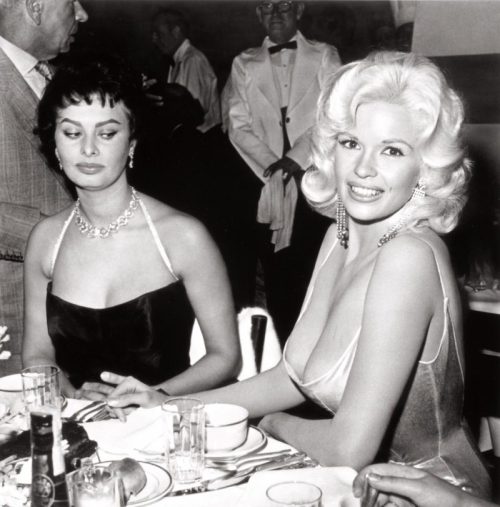
Jayne Mansfield (right) with pulchritudinous competitor Sophia Loren.

“MANSFIELD 66/67” My rating: C+ (Opens N ov. 3 at the Screenland Tapcade)

84 minutes | No MPAA rating

Given the aura of cheesy tackiness that still hangs over her life and career, perhaps it’s appropriate that the new documentary about sex bomb Jayne Mansfield is itself a triumph of cheesy tackiness.

P. David Ebersole and Todd Hughes’s films opens with the declaration that it is a “true story based on rumor and hearsay.”  Well, it certainly isn’t your History Channel approach to documentary biography.

For one thing, no cooperation was offered by any member of the Mansfield family (the most prominent being her actor daughter, “Law & Order’s” Mariska Hargitay).

The film clips, photos and other archival elements were taken from public sources. Mostly the filmmakers relied on talking-head interviews with Mansfield admirers (John Waters, Mary Waronov), fellow show-biz types (Mamie Van Doren), a slew of feminist and pop culture scholars, and Kenneth Anger, the great chronicler of Tinseltown tawdriness who put Mansfield’s picture on the cover of his great expose Hollywood Babylon.

The doc is also peppered with animated segments and “production numbers” in which a chorus of college-age performers in blonde wigs do garishly-lit  go-go routines or engage in artless “interpretive” dances.

It says something about the filmmakers’ intentions that the first thing they address is Mansfield’s 1967 death in a horrific car accident and the long-standing rumor that she was beheaded in the crash.  The man who embalmed the movie star says her scalp was torn off but that her noggin remained attached to that voluptuous body.
Continue Reading »

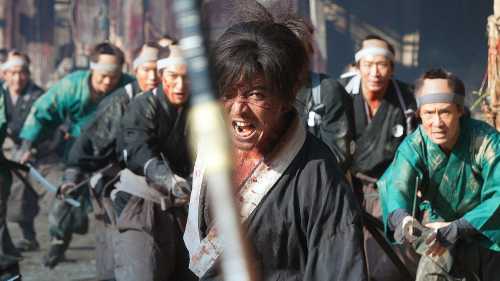
Takuya Kimura

“BLADE OF THE IMMORTAL” My rating: C+ (Opens Nov. 3 at the Screenland Tapcade)

140 minutes | MPAA rating: R

Beautifully mounted and crammed with enough head-spinning violence to lure moviegoers not already familiar with its manga origins, “Blade of the Immortal” is a samurai epic with edge.

Not only does Takashi Miike’s film (incredibly, his 61st feature in 13 years) mix the expected swordplay with a sort of mutated vampire tale, but its look blends feudal Japan with a punk sensibility — bizarre weapons, hairdos, tattoos and costuming (primitive sunglasses).

Not to  mention dialogue you’ll never hear in an Akira Kurosawa film: “Blow it out your ass!”

That said, it’s still a samurai movie, a genre we’ve see so many times that it takes something really special to grab the attention of jaded viewers.  “Blood of the Immortal” comes closer than most.

The premise finds a rogue samurai teaming up with a pre-pubescent girl (it’s like “Leon” with lots of sharp objects).

Manji (Takuya Kimura) is a wanted man after unwittingly engaging in a conspiracy against the current shogun. In the film’s opening scene he singlehandedly dispatches about a hundred soldiers who have been sent to kill him.

His face slashed, a hand severed and an eye gouged out, he’s dying when a mysterious crone appears to weave a magic spell. She inserts into his wounds “blood worms” which ensure immortality. Manji quickly heals, his hand reattaches, and like one of Bram Stoker’s undead he’s left to wander the earth in solitude, doomed to outlive anyone he cares about.

Fifty years later the never-aging Manji runs afoul of a renegade band of samurai — the Itto-ryu — who are bent on imposing their particular brand of martial arts on all of Japan.  Under their charismatic leader, Anotsu (Sota Fukushi), they are destroying the dojos of all competing fighting schools. Continue Reading »

Jane Goodall and friend

“JANE”  My rating: A-

90 minutes | No MPAA rating

It’s not like Jane Goodall’s story hasn’t been told before.

If you recognize her name you probably know that she was the untrained amateur assigned in 1957 by her boss, anthropologist Richard Leakey, to study chimpanzees living in Tanzania’s Gombe Stream National Park. Lacking higher education and all credentials, Goodall, 26, eventually was accepted by the animals and began collecting astounding data and observations; her program is now the longest-running study of animals in the wild.

Over the years there’s been no shortage of coverage of Goodall’s work.  But “Jane” — the new documentary from writer/diredtor Brett Morgan — tells her story from a personal point of view, drawing from 100 hours of never-before-seen footage of this remarkable woman from all stages of her career.

The film — narrated by the 83-year-old Goodall — is visually splendid. But even more striking is the emotional power of Goodall’s tale, of her love of these animals (her scientific detachment has often been called into question), of the amazing moments she has experienced, and of her long study’s revelations, especially the deep connections between simian and human behavior.

It’s also something of a feminist statement. Goodall reveals that in her childhood dreamlife she was always a man: “I wanted to do things men could and women couldn’t.”

She was chosen by Leakey (she was his secretary) to do the chimp study because she had no preconceptions about primate life and behavior. A longtime lover of animals, Goodall saw herself as a distaff Dr. Doolittle: “I wanted to come as close to talking to the animals as I could.”

Enduring rain, heat, poisonous snakes and her subjects’ frustrating fear of humans, Goodall became a sort of jungle girl, a long-legged blonde who bathed in mountain streams and climbed trees to get a better look at the chimps.  Later, she recalls, she was perfectly willing to entertain beauty-and-the-beast comparisons if they would publicize her study and attract funding.

Listening to Goodall speak, one is pinned to the nexus of the scientific and the near mystical. Looking into the eyes of a chimpanzee, she says, “I saw a thinking, reasoning personality looking back.” Continue Reading »

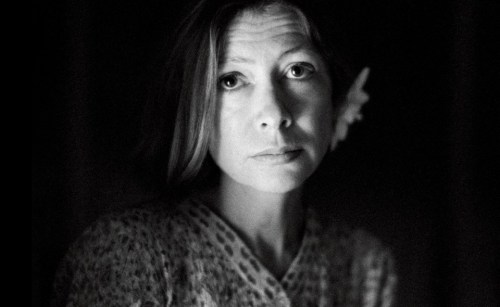
Joan Didion circa 1970

“JOAN DIDION: THE CENTER WILL NOT HOLD” My rating: B (Now on Netflix)

94 minutes | No MPAA rating

As an introduction to the life and work of one of our finest observers of contemporary American life, “Joan Didion: The Center Will Not Hold” fulfills one of the major obligations of a literary biography. It spurs the viewer to actually read the author’s books.

Whatever its shortcomings, this documentary from Didion’s nephew, actor/filmmaker Griffin Dunne, has the potential to create hundreds of thousands of new Didion geeks. And that’s a good thing.

We’re introduced to Dunne’s octogenarian subject through a recent interview.  Didion looks frail and withered, but her brain clicks along smoothly.

Her salient feature, she says, is a “predilection for the extreme.” In her life, her career, her choice of subject matter, that predilection holds steady.

A native Californian, she was encouraged to keep a journal by her mother. Winning a writing contest sponsored by Vogue, Didion went directly from college to that chronicle of New York fashion despite knowing next to nothing about clothing. Instead she wrote personal essays that spoke to millions of other young women.

These would become her calling cards…autobiographical essays that formed a history of our times.

During the upheaval of the Sixties she wrote rock ‘n’ roll profiles (the Doors) and a legendary piece on Haight Ashbury in its prime (“the horror of disorder”).  Branching out, she covered the civil war in Salvador (opposing a CIA-backed government), the Central Park Jogger incident (she never accepted the guilt of the young black men convicted in the crime and exonerated years later) and even turned to politics (she was the first major writer to recognize the soullessness of Dick Cheney). Continue Reading »

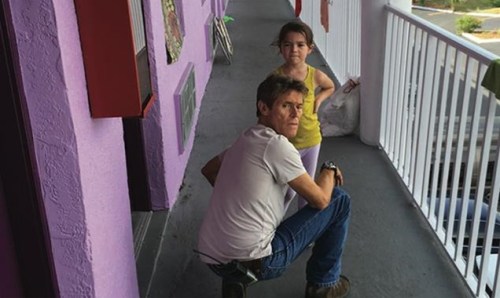
Willem Dafoe, Brooklynn Prince

“THE FLORIDA PROJECT” My rating: B+

115 minutes | MPAA rating: R

Six-year-old Moonee (Brooklynn Prince) lives in the shadow of Disney World.

Not that she’s ever visited the Magic Kingdom.  Moonee and her mom Halley (Bria Vinaite) are guests/inmates at the Magic Castle, a purple monstrosity of a motel where rooms go for $36 a night and the clientele consists mostly of homeless families struggling to survive in the tourist-oriented economy of central Florida.

It’s not like Moonee feels deprived at never having been up close and personal with Mickey and Donald and all the other Disney characters. She’s the kind of kid who creates her own adventures, and if she often runs afoul of grownups  (people don’t like brats who amuse themselves lobbing phlegm bombs onto other people’s cars), she’s sassy and defiant and seemingly untamable.

Moonee and her  playmates regard the motel complex as their own personal realm, and their pint-size depredations are the bane of the existence of Bobby (Willem Dafoe), the manager forever trying to walk the fine line between corporate dictates and those of his own conscience.

Bobby chastises Moonee and pals for cutting off power to the entire motel by throwing the master switch in the utility room — but even as he does so you can sense that on another level he admires the kids’ lippy defiance.  But he’s also a sort of guardian angel to these mini-Visigoths, quickly swooping down on a pathetically feeble-minded pedophile (Carl Bradford) who hangs around the motel’s swing sets and struggling mightily to cover up Gloria (Sandy Kane), an overpainted septunagerian who insists on sunbathing topless.

Continue Reading »

James Booth as Armand Roulin

“LOVING VINCENT” My rating: B

93 minutes | MPAA rating: PG-13

“Loving Vincent” is work of adoring fanaticism, an investigation into Vincent Van Gogh’s death through animation that mimics his dynamic and instantly recognizable style of painting.

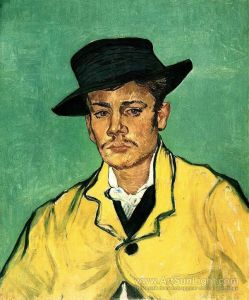
Van Gogh’s portrait of the real Armand Roulin

It is, we’re told, “the world’s first fully painted feature film” in which each  of the movie’s 60,000-plus frames have been rendered in oil by a crew of more than 100 artists.

What directors Dorota Kobiela and Hugh Welshman have accomplished here is, from a visual point of view, spectacularly mesmerizing.

As a narrative their film (co-scripted with Jack Dehnel) has some issues, but ultimately it works its way under the viewer’s skin.

Unfolding a year after Vincent’s death in the small French town of Auvers-sur-Oise, the story centers on Armand Roulin (James Booth).  Armand is a dedicated drinker and brawler living in Arles, where the artist often lived and painted during his last years. (Vincent actually did a portrait of Armand, and  throughout the movie the young man wears then bright yellow jacket in which he posed.)

This handsome ne’er-do-well is sent on a mission by his father, the local postmaster (Chris O’Dowd).  The elder Roulin has in his possession a letter written by Vincent to his brother Theo but never sent.  Now the old man dispatches Armand off to Paris to deliver the letter to its intended recipient.

Alas, he discovers that Theo died not long after his brother.  Hoping to locate Theo’s widow, Armand travels to Auvers, along the way collecting information about Vincent from those who crossed his path.  (Vincent, played by Robert Gulaczyk, is seen only in black-and-white flashbacks painted to resemble charcoal drawings.)

Continue Reading »

Daniel Radcliffe

“JUNGLE”  My rating: B

115 minutes | MPAA rating: R

If the movies have taught us anything it is that when privileged young people go carousing in the wilderness, bad shit happens.

“Jungle,” based on Yossi Ginsberg’s 2005 memoir, is jam packed with bad shit.

This grueling tale of survival finds Daniel Radcliffe once again going out on a limb (and distancing himself from his “Harry Potter” heritage) as Yossi, who has fled his native  Israel and grownup responsibilities for a year or so of backpacking around the globe.

Directed by Aussie auteur Greg McLean, best known for brutally violent horror films like “Wolf Creek” and “Rogue,” this real-life misadventure unfolds in Bolivia.

There Yossi (Radcliffe) falls in with a couple of fellow free spirits, the young American photographer Kevin Gayle (Alex Russell) and Marcus (Joel Jackson), a Swiss fellow described as having “the heart of a poet and the soul of a saint.”  These, of course, are qualities of absolutely no use in a South American rain forest.

Out of nowhere they are approached by Karl (Thomas Kretschnmann), an Austrian geologist who claims to know the jungle like the back of his hand. He has tales of lost Indian tribes and rivers peppered with gold nuggets. His semi-mystical rap is so convincing our trio agree to accompany Karl on a hike into the unknown.

Given that this takes place in 1981, well before cell phones, GPS or the Internet, it’s a given that when things go bad — and they soon do — there will be no easy way out.

There’s a sort of Lord of the  Flies element at work here.  Lovable Marcus is spooked by the jungle and soon suffers crippling physical distress. He’s slowing the progress of the other hikers, who hope to complete their trek before the arrival of the rainy season. Tempers flare. Things get nasty.

And then there’s Karl, who gleefully introduces the boys to the delights of monkey meat but seems curiously unschooled in other aspects of wilderness survival. He may not be able to swim, a real drawback once the decision is made to build a raft on which to float downstream.


Continue Reading »

“78 / 52”  My rating: B+

91 minutes | No MPAA rating

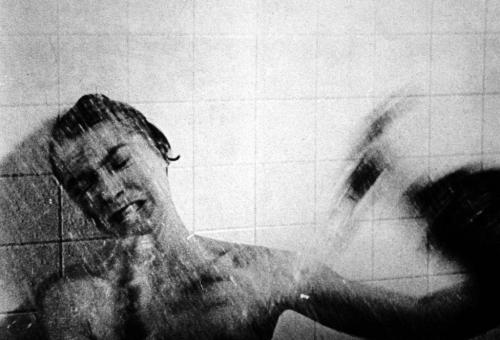
The shower scene in Alfred Hitchcock’s “Psycho” required 78 camera setups and 52 individual cuts.

The upshot: The most famous movie sequence ever, equalling and ultimately surpassing the “Odessa steps” montage in the silent classic “Battleship Potemkin.”

Now we have “78 / 52,” a nerdgasm posing as a feature-length documentary about that four-minute shower scene. It’s like a master class in geek cinema obsessiveness.

It’s also pretty great.

Directed by Alexandre O. Philippe, “78 / 52” brings together dozens of film types — directors (Guillermo del Toro, Peter Bogdonovich), composers (Danny Elfman) writers (Stephen Rubello, Bret Easton Ellis), film editors, sound artists (Walter Murch), actors (Elijah Wood, Jamie Lee Curtis) — and other “Pyscho” fanatics who analyze Hitchcock’s creepy masterpiece from every artistic, commercial, historic and social angle imaginable.

Philippe even tracked down Marli Refro, the 21-year-old model who spent days nude in the shower as star Janet Leigh’s body double. Continue Reading »

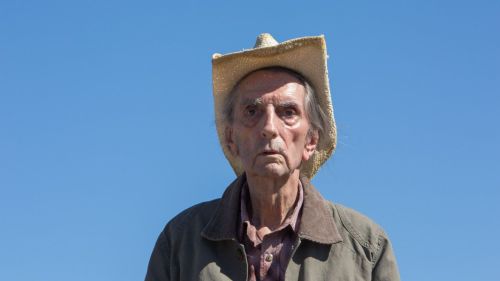
Harry Dean Stanton

“LUCKY” My rating: B+ 

88 minutes | No MPAA rating

Late in the sublime “Lucky” our title character, an ancient desert-dwelling reprobate played by Harry Dean Stanton, informs the customers of his favorite watering hole that, in his opinion, all we have waiting for us is nothingness.

“What do we do with that piece of news?” someone asks.

Exactly. What do you do, how do you live your life, knowing  your time on Earth is limited and that there are no guarantees of a hereafter?

If that sounds heavy…well, it is and it isn’t.

“Lucky” is a deadpan comedy about small town eccentricity that morphs into a meditation on mortality.  It’s a classic case of laugh-sob-laugh storytelling.

The screenplay by Logan Sparks and Drago Sumonja is so solid that it would be a terrific vehicle for any mature actor. That the role of Lucky went to Harry Dean Stanton, who died in September at the age of 91, is one of those made-in-heaven movie miracles.

The script plays perfectly to Stanton’s physicality (sunken eyes, hopeless hair, wraith-like figure) and his tough-crusty demeanor.  How lovely… in an acting career that goes back a half century with films like “Alien,” “Repo Man” and “Paris, Texas,” Stanton’s last big role features what may be his greatest performance.

Add to this the wondrous directing debut of John Carroll Lynch, a much-in-demand character actor (he played Frances McDormand’s stamp-designing husband in “Fargo”), and you have a low-keyed, rib-tickling, heart-tugging wonder.

Lucky — who never married — lives alone on the outskirts of a small town (the setting looks like New Mexico or Arizona). He is a creature of habit.

That means getting up and doing yoga exercises in his underwear, pausing to take a few long drag on a cigarette.  Lucky’s closet contains  blue jeans and identical well-worn red plaid shirts. His diet appears limited to milk, caffeine and Bloody Marys (though he never eats the celery).

He’s got no car, so he walks into town, making the rounds of the diner, Post Office and shops before settling onto his stool at a bar where everybody knows everybody else’s name. He makes a point of baiting the chatty owner (the great Beth Grant), her pretty-boy squeeze (James Darren) and the philosophical bartender (Hugo Armstrong).

Continue Reading »

“EX LIBRIS” My rating: B (Opens Oct. 27 at the Tivoli)

197 minutes | No MPAA rating

Less a conventional doc than a sort of kaleidoscopic love letter to the New York Public Library — and by extension, to all libraries — Frederick Wiseman’s “Ex Libris” initially may strike some viewers as a lazy piece of work.

Wiseman’s format is steady and unvarying and, for some, painfully straightforward.

Basically his camera sits in on all sorts of library gatherings, from public forums and lectures to behind-the-scene policy sessions.   Apparently these sequences unfold in real, unedited time, although Wiseman occasionally cuts to a shot of an audience reacting to a speaker.

Typically each sequence runs for three to five minutes. There’s no official beginning or end — we find ourselves plunged into the middle of a discussion about Islam and the 18th century slave trade, then arbitrarily jump to rocker Elvis Costello showing a ’50s performance video of his father, also a pop music entertainer.

We get bits of a talk about Jewish food and its cultural influences, a class where sighted students are learning to read Braille, a book review group discussion of Marquez’ Love in the Year of Cholera, and a disco dance class for senior citizens.

There are well known authors sprinkled here and there — Richard Dawkins and Ta-Nehisi Coates, for example — though Wiseman never identifies them (no narration, no introductory titles).

There’s footage at the library’s telephone information desk where astonishingly well-informed operators steer curious callers to the resources they require (one library employee regretfully informs a patron with a question about unicorns that unicorns are, in fact, imaginary animals). There’s “backstage” footage of conveyor belts delivering thousands of books to the appropriate wheeled carts for delivery.

Nothing tremendously dramatic happens here. But over time — we’re talking three-plus hours — “Ex Libris” delivers one astounding revelation after another. Did you know that the NYPL has the world’s largest circulating free picture file,  folders of photos and artwork that have provided vital research for virtually every major artist to come out of the Big Apple?

We drop by on a library-sponsored job fair, a free piano recital of the compositions of Ned Rorem, and a reading program for grade-schoolers.

Granted, “Ex Libris” may be the year’s least commercial movie, which is not to say that it’s pointless. Just the opposite…in an era of proud numbskulls, it makes the case that a public library — whether as a passive repository of books or as an active disseminator of ideas — is one of the pillars of a democratic way of life.

| Robert W. Butler