Even viewers who have a hard time with Japanese anime (I can’t be the only one) will be blown away by the Oscar-nominated “The Red Turtle,” an achingly beautiful fable about a shipwrecked man that without one word of dialogue creates a fully credible world.
Produced by Japan’s famed Studio Ghibli and written and directed by Dutch animator Michaël Dudok de Wit, “Turtle” opens spectacularly with a storm at sea — it’s like a Hokusai woodblock print come to life. Almost lost among the foam and towering waves is a human form, a man struggling to stay afloat.
Like Robinson Crusoe, our unnamed, unspeaking hero finds himself stranded on an uninhabited island. Little by little he learns the tricks of survival, eating fish and fruit, clothing himself in sealskin, drinking fresh water from an inland pool surrounded by a lush bamboo forest.
De Wit places much emphasis on small but exquisitely rendered details: A soundtrack filled with natural noises. Studies of the creatures who share the island with the man (curious crabs, birds, millipedes, insects).
Almost immediately our hero begins thinking about escape. He constructs a series of rafts which are inexplicably destroyed by some unseen sea creature apparently bent on keeping him on the island.
Finally the culprit is revealed … a huge red sea turtle.
“I Am Not Your Negro” is among the most powerful documentaries ever made about race in America.
Much of that power is to be found in the eloquent voice of the late James Baldwin. When the author died in 1987, he had completed only 30 pages of a proposed book about his relationships with three martyred civil rights icons: Medgar Evers, Malcolm X and Martin Luther King Jr.
Haitian filmmaker Raoul Peck has taken those 30 pages and fleshed them out with archival photos and footage, vintage and contemporary music, clips of Baldwin’s many TV appearances, scenes from Hollywood movies and visually stunning original footage employed for transitional passages.
Samuel L. Jackson reads Baldwin’s words.
The results are transformative.
Early on there’s an old clip from the Dick Cavett TV show. Baldwin is asked if he has much hope for the Negro’s future in America. Not much, he replies. Then the screen fills with still photos of the recent Ferguson protests.
Despite that, he seems to have been a pessimist who could not entirely tamp down his sense of hope.
Baldwin writes (and Jackson reads) of being in France and seeing photographs of a black teenage girl, surrounded by screaming whites, as she walked to her first day of class at a formerly segregated high school in the American South.
“Everybody was paying their dues,” he recalled. “It was time I went home and paid mine.”
His years in tolerant France, though, had lulled Baldwin into a comfortable place. Back in the USA he experienced a rude awakening. Racism was everywhere, no less in the North than in the South.
This is very much a personal story. Baldwin describes a childhood in which he simply assumed that all heroes were white, and then extrapolates what that meant for an entire race of people.
Never a joiner, he saw his role as that of a witness, bringing to the world the thoughts and emotions triggered by what he had seen and heard. Happily, he had the mournful/incendiary prose to get the job done.
“There are days when you wonder what your role is in this country and your future in it…I’m terrified of the moral apathy, at the death of the heart that is happening in my country.”
By refusing to face up to racial injustice, America was becoming “a nation of moral monsters.”
And in limning his friendships with Evers, King and Malcolm, Baldwin reveals how despite their initial antagonism (Malcolm found King’s nonviolence to be contemptible), these men all slowly mutated in the same direction.
Buoyed by masterful editing and brilliant sound design, “I Am Not Your Negro” unfolds less as a history lesson than as one man’s fiercely-felt ruminations.
It’s hard to imagine anyone — right, left, whatever — walking away unchanged by this Oscar-nominated triumph.
The Holy Grail for the makers of cult films is to come up with an original twist on the zombie thriller.
Netflix has a real contender with its new comedy “The Santa Clarita Diet.” Another, much more serious candidate is “The Girl with All the Gifts,” which provides a big dose of in-the-moment chills and splatter, but even more importantly builds its own satisfying mythology.
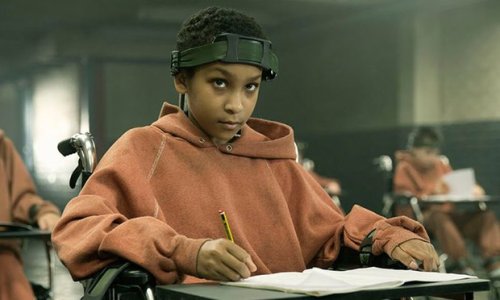
Colm McCarthy’s film (the unexpectedly thoughtful script is by Mike Carey, based on his novel) begins in an underground prison somewhere in Britain. Here unfailingly polite 10-year-olds are kept in cells, fed live worms and guarded by armed soldiers who each day cart them off to their classroom strapped into wheelchairs like mini Hannibal Lecters.
We’re introduced to this world through the experiences of Melanie (Sennia Nanua), a bright, thoughtful and eager-to-please child despite her status as a prisoner.
Each day the kids are taught by Helen (Gemma Arteton), whose curriculum leans heavily on science, though as a reward for hard work she reads to her captive students from the Greek legends.
Melanie really relates to those fables. Especial the one about Pandora. And she likes to think of Helen as the mother she never knew.
Not everybody in this prison is so nice to the children. Sergeant Parks (Paddy Considine) loudly refers to them as “freakin’ abortions” and warns his soldiers to never get too close. Meanwhile Dr. Caldwell (Glenn Close) is vivisecting the youngsters one by one.
You see these kids, in the womb when the zombie apocalypse hit, are half human and half “hungry” (that’s what the flesh-gnawing resurrected are called in this rendition). They may represent mankind’s only chance for a vaccine to fight the fungoid disease that brought civilization to its knees a decade earlier.
Dr. Jessica Nutik Zitter works in the ICU of Highland Hospital in Oakland CA. Her job is to help people die.
Dan Krauss’ “Extremis” provides almost unbearably intimate access to patients facing their final hours, their families, and the physicians who care for them.
At its heart is the agonizing decision to prolong a life with extraordinary and often painful extreme measures. The patients must make that decision; if they can’t, it’s up to family members.
It’s a gut-wrenching situation. And this doc explores profound questions with fly-on-the-wall immediacy.
Pleasant? No. But most of us one day will deal with this precise situation.
“4.1 MILES” (USA, 22 minutes) 4 stars
Today the words “humanitarian crisis” are so frequently invoked that they’ve almost ceased to have any power.
Daphne Matziaraki’s brutally powerful “4.1 Miles” reminds us of just what they mean.
Her film follows a Greek coast guard crew led by Kyriakos Papadopoulos. They patrol 4.1 miles of open sea between Turkey and the island of Lesbos.
The doc begins with the rescue of a boatload of Middle Eastern refugees swamped by high waves. Surrounded by wailing women and sobbing children who cover almost every inch of his deck, Papadopoulos works frantically to perform CPR on two children found floating with their mother.
(Do they survive? We don’t know…and neither does the coastguardsman. As soon as he delivers them to an ambulance on the pier Papadopoulos turns his boat seaward where more refugees are floundering.)
Basically he’s on 24-hour call. The Turkish smugglers who traffic in human misery don’t care about weather reports; they’ll take refugees out in the worst storms knowing that the Greek coast guard will be there risking their own lives to effect rescues.
Papadopoulos is a man of action. But in reflective moments he’s a study in sorrow.
“When I look in their eyes,” he says of the refugees, “I see their memories of war.”
“This is a nightmare. This is agony.”
“JOE’S VIOLIN” (USA, 24 minutes) 4 stars
Get out your hankies. “Joe’s Violin” will have you in tears…but that’s a good thing.
Kahane Cooperman’s doc is about the violin owned by Joseph Feingold, a Polish Holocaust survivor who bought it at a German flea market after the war (he traded a carton of cigarettes for it).
Pablo Larrain’s “Neruda” might be viewed as a chase movie.
It’s inspired the story of Chilean poet and Communist lawmaker Pablo Neruda, who for several months in 1948 eluded a nationwide manhunt before crossing the Andes and eventually escaping to Europe.
But “Neruda” is more than a slice of suspense. It’s a nifty character study of a talented, exuberant and deeply flawed man as seen through the eyes of the policeman who is chasing him.
As the film begins Neruda (Luis Gnecco) is running out of political rope. His far left politics and savage commentaries on Chile’s president have made him an outsider. Now the government has outlawed the Communist Party and is rounding up its members.
As perhaps the world’s most famous Communist (he’s right up there with Stalin and Mao), Neruda is a prime target. An underground organization of leftists are working overtime to hide Neruda and his wife, always keeping them just a few steps ahead of the authorities.
That part of Guillermo Calderon’s screenplay is based on fact.
Total fiction, though, is the character of Oscar Peluchonneau (Gael Garcia Bernal), the Javert-like police inspector in charge of the search.
Oscar serves as our narrator, and his fascistic view of Neruda is far less idealized than we’ve come to expect (remember the hit film “Il Postino”?). In fact, the film drips with sarcastic dialogue at the expense of the “movement.”
Oscar has little tolerance for well-off intellectuals who claim to be concerned for the plight of the working poor.
“Communists hate to work. They’d rather burn churches. It makes them feel more alive.”
“If we had a Bolshevik revolution they [ party intellectuals ] would be the first to run away.”
Not that Oscar has many illusions about the flaws of the government he serves: “My president has a boss…the president of the United States.” Continue Reading »
Tim Sutton’s “Dark Night” is about a mass shooting at a shopping mall cinemaplex.
Sort of.
Unlike Gus van Sant’s 2003 “Elephant,” about a Columbine-style high school massacre, “Dark Night” never shows us the mayhem.
In fact, the bulk of the picture’s 85-minute running time is devoted to depicting the activities of a handful of Floridians, most of them teens, as an average day wends its way toward night.
A young man walks his pit bull. A girl takes selfies of herself in her undies. People watch TV. Skateboard. We follow one gaunt, tattooed young man as he attends a support group for war vets with adjustment issues.
The acting from the cast of unknowns is so low-keyed and naturalistic that often “Dark Night” feels like a documentary.
There’s very little dialogue, most of it coming from a mother and twentysomething son who are giving a talking head interview to an unseen filmmaker. Why are they being interviewed? Sutton’s screenplay never explains.
Where is all this going? There are hints, beginning with the film’s title.
“Dark Night” is a play on “The Dark Knight Rises,” the movie that was on the screen during the 2012 Aurora, Colorado multiplex massacre. And early in this film a TV news show features a report on Aurora shooter James Holmes.
Scattered throughout are unspecific intimations of violence to come. A trip to a shooting range. A young man cleans his collection of firearms. Kids play first-person shooter video games. A young man dyes his hair the same day-glo orange as Holmes did. Teen girls race past the camera screaming…and then dissolve in laughter.
One of these characters is going to go on a shooting spree. Which one? Sutton gives us several candidates. (In modern America, he seems to be saying, potential murderers are everywhere.)
Peter Simonischek (in Toni Erdman guise) and Sandra Huller
“TONI ERDMANN” My rating: B
162 minutes | MPAA rating: R
The key to comedy is snappy timing.
But Maren Ade, the writer and director of the Oscar-nominated (for foreign language film) “Toni Erdmann,” has given us a languid comedy with a running time of nearly 3 hours.
This is either genius or suicidal.
Turns out it’s a little of both.
The title character doesn’t even exist. He’s the goofy alter ego of Winifried (Peter Simonischek), a white-haired, bearded German piano teacher with a bizarre sense of humor displayed in the first scene, when he meets a deliveryman at his door.
Winifried notes that the package is addressed to Toni Erdmann, whom he tells the delivery guy is his brother, a mad bomber just out of prison. He wonders aloud if the package contains explosives or porn, then vanishes to consult with his brother Toni. Yelling is heard from deep in the house.
Seconds later he’s back, this time in his Toni persona, a key element of which is a ragged set of humongous false teeth.
There’s a method to Winifried’s deadpan tomfoolery, a therapeutic way of mocking an increasingly joyless modern world.
For evidence of that joylessness he need look no farther than his own daughter, Ines (Sandra Hüller), a thirtysomething petroleum industry consultant now living in Romania.
Ines is a committed career woman and desperately unhappy, although she won’t admit it. She sweats bullets over the demands of her job, daily negotiating the shark tank of corporate politics. She wants to be a major player, yet finds herself organizing shopping excursions for a client’s wife.
Her best friend is her smart phone. She’s engaged in a perfunctory affair with a co-worker. She can’t even relax with a massage, because it’s not brutal enough: “I’m not paying 100 Euros to be petted,” she fumes.
As much a sociological study as a conventional melodrama, “Trespass Against Us” unfolds among a band of “travelers.” That’s how the Brits refer to the nomadic gypsies who have lived for centuries on the fringes of society.
Our unconventional hero is Chad Cutler (Michael Fassbender), a fearless master thief and taunter of police who, with the approach of middle age, is feeling the uncomfortable pull of responsibility.
Though Chad, his wife Kelly (Lindsey Marshal) and their children Tyson (Georgie Smith) and Mini (Kacie Anderson) live a traditional gypsy life in a caravan (i.e., a trailer or mobile home), he’s beginning to want more than a nonstop diet of carousing and crime interrupted by the periodic spells in stir.
The problem is Chad’s father Colby (Brendan Gleeson), the head of this particular band, who has no use for such posh niceties as literacy, conventional careers or societal approval. Colby is more than just patriarchal — he’s practically Old Testament.
So even as Chad is laying secret plans to break away from the clan and set up a new life in an actual house, he still finds himself a reluctant participant in Colby’s criminal enterprises, including the burgling of a rural estate that nets a fortune in antiquities.
Despite some action sequences, “Trespass Against Us” is essentially a character study of two headstrong men positioning themselves for a colossal confrontation. And Fassbender and Gleeson, two of best actors in U.K. cinema, are clearly up to the challenge.
There’s nothing particularly wrong with the film (the direction is by Adam Smith, the screenplay by Alastair Siddons). But in the end it’s somewhat underwhelming.
And Old West lawman revisits the site of a traumatic incident from his youth and recalls his part in the death of a colleague.
Andrew Coats and Lou Hamou-Lhadj’s all-but-wordless film has a few moments of spectacular action (a high-speed stagecoach wreck) but mostly it is a quiet, evocative meditation on grief, told through spectacular three-dimensional computer animation.
“PEARL” (USA, 6 minutes) B+
Remember the opening sequence of Pixar’s “Up” depicting the romance and marriage of the main character? Patrick Osborne’s “Pearl” does something like that to depict the title character’s coming of age.
Pearl is a little girl traveling the country with her hippie/troubadour father, living out of a car. We see snatches from her childhood. Her father gives up his guitar dreams and settles down. There are father-daughter fights. Eventually a teenaged Pearl breaks away and launches her own rock band. In a sense her father’s dream has come full circle.
Again, with almost no spoken dialogue, “Pearl” is a sweet and sad yarn of generational aspiration told in a wildly original visual style.
“PIPER” (USA, 6 minutes) B
This Disney/Pixar effort — it played in theaters last summer with “Finding Dory — is a wordless (naturally) story of a young sandpiper learning to fend for itself along a seashore.
In many regards it it classic Disney, a tale of an impossibly fuzzy young animal learning survival techniques through often comedic trial and error. The film’s depiction of out hero’s environment — sand, waves, sky — is astonishing realistic.
“Piper” often teeters on the edge of terminal cuteness, but the brilliant animation keeps it on track.
“BLIND VAYSHA”(Canada, 8 minutes) 3 stars
Theodore Ushev’s “Blind Vaysha” is a Slavic folk tale about a girl with an unusual condition. Her left eye shows her the past while her right eye displays the future.
Because she cannot see the here and now, Vaysha is for practical purposes blind. She finds herself wondering which is better…living in the comfort of the past or the dangers of the future.
Here’s what makes “Vaysha” special: The entire film has been rendered in what appear to be animated woodblock prints. The effect is haunting.
“PEAR CIDER AND CIGARETTES” (Canada and UK, 35 minutes) 3 stars
Robert Valley’s animated first-person memoir about the life and death of an old friend is filled with so much specific detail that it must have been based on a real-life relationship.
The deadpan narrator describes his high school buddy Techno, a superb athlete and risk-taking daredevil who descends into debilitating alcoholism.
Cures, relapses, a stint in a Japanese hospital for a liver transplant…Techno’s downward spiral is depicted through artwork that looks like it was pulled from an innovative graphic novel. Much of the film is in black and white, but splashes of color highlight important moments.
“Pear Brandy…” is about the links that hold old friends together even when common sense tells us it’s time to break away.
The film is 35 minutes long, but packs so much information it feels like a feature. (Note: “Pear Brandy and Cigarettes” contains adult language and situations and is not recommended for children.)
The animation program has been rounded out with three non-competing short films. They are:
“The Head Vanishes” (9 minutes), about a woman with dementia who is determined to make her annual train trip to the seaside.
“Asteria” (5 minutes), follows two astronauts who make an unexpected discovery on a barren planet.
“Happy End” (6 minutes) is described as “a black comedy about death…with a happy ending.”
is about the links that hold old friends together even when common sense tells us it’s time to break away.
The film is 35 minutes long, but packs so much information it feels like a feature. (Note: “Pear Brandy and Cigarettes” contains adult language and situations and is not recommended for children.)
The animation program has been rounded out with three non-competing short films. They are:
“The Head Vanishes” (9 minutes), about a woman with dementia who is determined to make her annual train trip to the seaside.
“Asteria” (5 minutes), follows two astronauts who make an unexpected discovery on a barren planet.
“Happy End” (6 minutes) is described as “a black comedy about death…with a happy ending.”
OSCAR-NOMINATED LIVE ACTION SHORTS Overall rating: B+
130 minutes | No MPAA rating
“Sing”
“SING” (Hungary, 25 minutes) B+
You’re never too young to fight for what you believe is right.
That’s the upshot of Kristof Deak’s “Sing,” a touching tale of a mini revolution in a Hungarian elementary school.
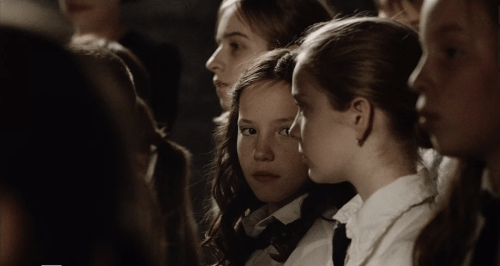
Zsofi (Dorka Gasparfalvi) is the new girl at a school famous for its award-winning children’s choir. Since it is school policy that any student can participate, she signs on.
But after the first rehearsal Zsofi is approached by the choirmaster, Miss Erika (Zsofia Szamosi), who advises her, ever so sweetly but firmly, that in the future she should only mouth the words.
Zsofi is crushed, so her new best friend, Lisa (Dorka Hais), one of the choir’s soloists, comes up with a sneaky plan to sabotage Miss Erika’s system and give everyone a chance to sing.
Terrific acting by the three principal players and an insightful screenplay add up to one deeply satisfying experience.
“Silent Nights”
“SILENT NIGHTS” (Denmark, 30 minutes) B+
Set in frigid Copenhagen at Christmastime, Aske Bang’s “Silent Nights” is a heartbreaker about a brief love affair between a young woman volunteer at a soup kitchen and a homeless African immigrant.
Both of these flawed individuals has his and her own problems. Kwame (Prince Yaw Appiah) left Ghana to make money for his impoverished family. He finds that for all the liberality of Danish society, racism and prejudice are facts of life. Survival may mean stealing.
Inger (Malene Beltoft Olsen) is a quiet, unremarkable woman with an open heart and an alcoholic, racist mother.
Their relationship is simultaneously tragic and inspiring. Life changes, love comes and goes. Take it while you can.
“TIMECODE” (Spain, 15 minutes) B+
Filmmaker Juanjo Gimenez Pena sure knows how to breath life into a dead-end, life-sucking job.
Luna (Lali Ayguade) is a uniformed security guard working the 12-hour day shift in a Madrid parking garage. Hers is a boring gig. No wonder she never shows any emotion.
But then on video surveillance recordings she finds footage of her nighttime counterpart, Diego (Nicolas Ricchini), using the garage as his own private dance studio.
Leaving notes for each other indicating specific cameras and times, Luna and Diego initiate a romance that consists only of solo dances, recorded when nobody else is around, and meant only for each other.
It’s a delightful idea, done almost wordlessly, and the results are intoxicating.
“ENEMIES WITHIN” (France, 28 minutes) 3 1/2 stars
The calm surface of Selim Aazzazi’s film cannot hide an almost volcanic anger and angst.
The Petitioner (Hassam Ghancy), an Algerian teacher who has lived all his life in France, has come to a drab government office to apply for citizenship. The film consists almost entirely of his tense conversation with the Interrogator (Najib Oudghiri), a young man who will study his case and make a recommendation.
What at first seems like standard procedure soon turns dark as the utterly unemotional Interrogator asks ever more intrusive questions about the Petitioner: his religion, his family history, and any links to terrorism. He demands the names of the Petitioner’s friends from a mosque, threatening to reject the application and start deportation proceedings if they aren’t forthcoming.
“Enemies Within” delves deep into the Petitioner’s crisis of conscience. Should he inform on friends he believes are innocent? At the same time Aazzazi’s film lays bare the brute coercive power of the state.
Talk about timely.
“LA FEMME ET LA TGV” – (Switzerland, 30 minutes) 4 stars
Timo von Gunten’s late-in-life romance is a bittersweet triumph about a lonely woman, Elise (Jane Birkin, once one of the iconic faces of ‘60s “Swingin’ London”) who lives along a railway near a provincial Swiss town.
Elise runs a once-famous bakery that is now down to one customer. Her only friend is her parakeet. And her greatest joy is waving a Swiss flag at the TGV train that every morning zips past her house at nearly 200 miles per hour.
This gentle film chronicles a long-distance/high speed romance between Elise and the unseen driver of the TGV train, a fellow named Bruno who tosses notes and gifts (usually homemade cheese) onto Elise’s lawn as he passes.
At a time when her son wants to put her in a retirement home, her correspondence with Bruno gives Elise a new enthusiasm for life.
 “THE RED TURTLE” My rating: B+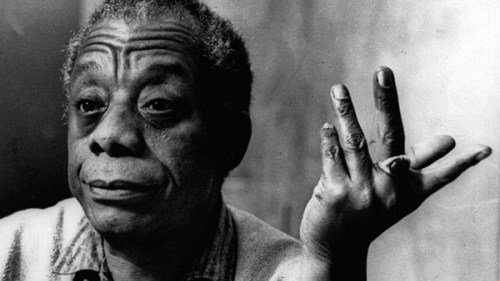





 Butler's Cinema Scene