Feeds:
Posts
Comments

Posts Tagged ‘Alex Garland’

“28 YEARS LATER”  My rating: B (Netflix)

115 minutes |MPAA rating: R

“28 Years Later” has plenty of gruesome action, a good chunk of suspense and even, in its final moments, a crushing emotional component.

And zombies, of course.

What it doesn’t have is a sense of completion.  This continuation of the series, directed by “28…” veteran Danny Boyle, ends with an abrupt cliffhanger that leaves characters and plot points dangling.  Obviously there will be a Part II.  In the meantime, the film feels incomplete.

Fans of post-apocalyptic nihilism will no doubt be transported; your hard-core zombie freak will find plenty of new revelations to discuss with the like-minded; and action junkies should get satisfaction. But let’s be honest…this is just another zombie movie.  Well made and with a deep pedigree, perhaps, but it’s going to appeal mostly to the already converted.

Basically Alex Garland’s screenplay delivers two stories and a snippet of a third that sets up the next film.

After a brief (and kinda pointless) prologue set back at the beginning of the “rage virus” infestation, Part One picks up 28 years later on an  island off the coast of England.  Here human survivors have established a zombie-free commune, a just-the-basics but nurturing environment where 14-year-old Spike (Alfie Williams) has grown up in. 

Not that everything is copacetic in this island refuge.  Spike’s mother Isla  (Jodie Comer) suffers from some debilitating condition, and his father Jamie (Aaron Taylor-Johnson) has sought solace in the arms of other women.

The bulk of this segment finds Jamie leading Spike off the island for a sort of coming-of-age initiation on the mainland.  Under his Dad’s firm but encouraging tutelage  Spike is expected to use his bow and arrow to dispatch  a zombie, thus cementing his manhood.

Their trek reveals to us the changes that have undergone Merrie Olde England after all three decades of being quarantined from the rest of civilization.  

On the neat side there are the huge herds of deer that race across the landscape like stampeding bison. 

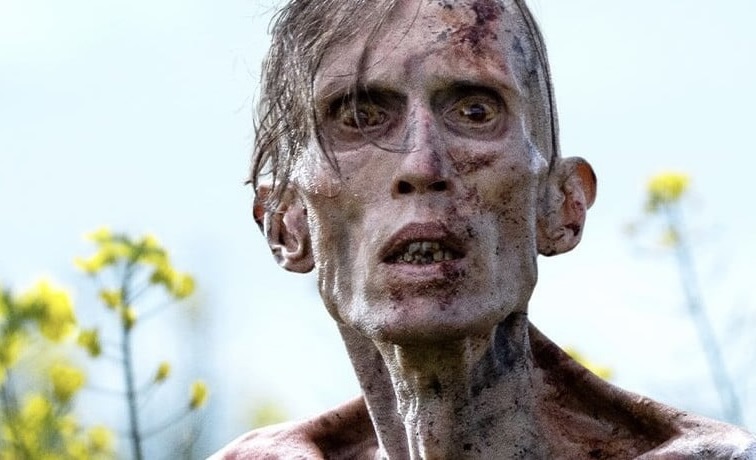
On the not-so-neat side are the zombies, which have evolved into two species. Easiest to deal with are the obese, sluggish, worm-eating “slow-and-lows.” More problematical are the more humanoid zombies — thin, naked wraiths that move with remarkable speed.  Worst of all are the zombie leaders, the “alphas,” who look like Jason Momoma after a long night of binge drinking and seem capable of at least minimal strategizing.

Alfie Williams, Jodie Comer, Ralph Fiennes

So that’s the movie’s first half.  Part Two offers a different sort of quest.  


Desperate to find a cure for his mother’s condition, young Spike hatches an audacious and dangerous plan. Leaving his father behind, he will sneak Isla to the mainland to find the physician reputed to be living there. Surely there is a cure for what ails her.

Along the way they team up briefly with a young Swedish soldier (Edwin Ryding) marooned while enforcing the quarantine. They witness a female  zombie giving birth (apparently the walking dead have active sex lives) and finally meet the fabled medico (a delightfully scenery-chewing Ralph Fiennes), who still retains his diagnostic skills after having spent 30 years building a massive pyramid of human skulls.

What’s remarkable about all this is that young Williams and Comer — despite all the mayhem surrounding them — are able to create a genuinely touching mother/child relationship. Which provides the film with a quietly heartbreaking pivotal moment.

Production values are strong, offering a thoroughly convincing view of what England might look like once people are gone. 

And the action scenes benefit from fiercely kinetic editing that allows us to see the zombies and splashes of gore mostly in staccato flashes.  It’s a lesson learned from “Jaws” — what you can’t clearly see is far more unsettling than what you can.

| Robert W. Butler
Read Full Post »

“SUNDAY BEST: THE UNTOLD STORY OF ED SULLIVAN” My rating: B+ (Netflix)

90 minutes | No MPAA rating

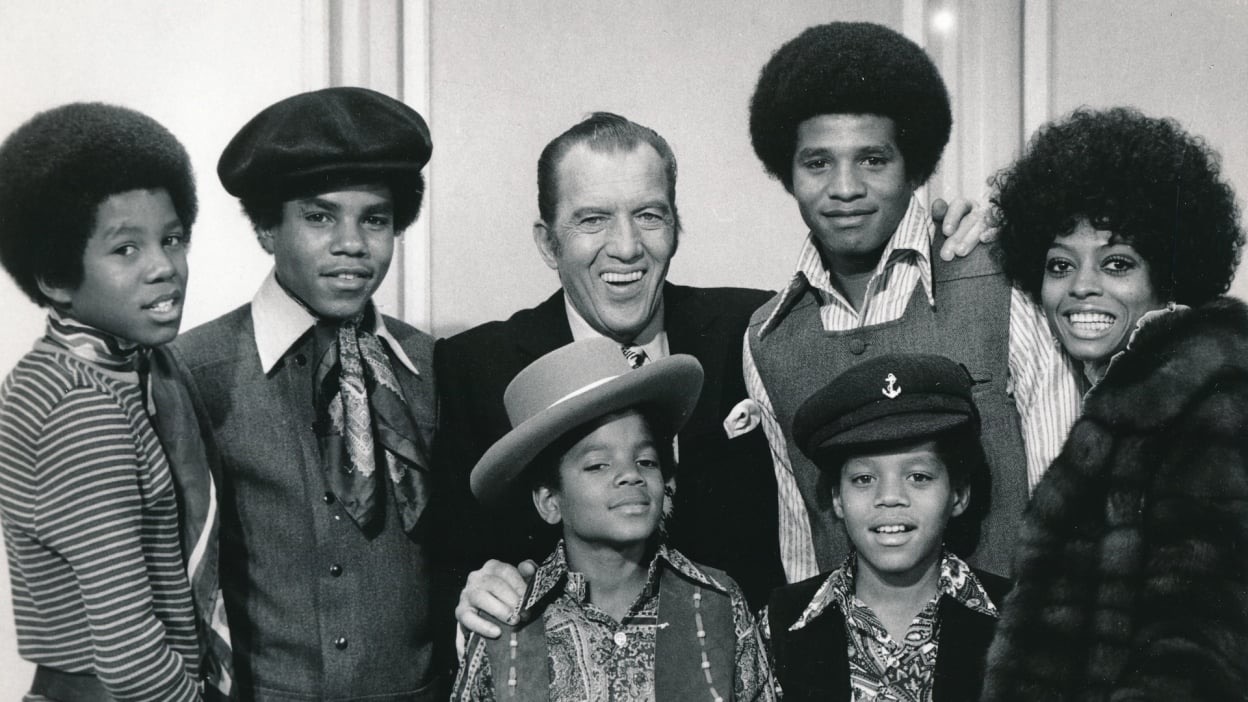
For millions of Americans in the 1950s and ‘60s, Sunday night meant gathering around the TV to watch Ed Sullivan’s variety show.

Sullivan was notoriously stiff on camera and dismissed by many a teenager as a hopeless square.  Nevertheless he gave us our first glimpses of Elvis and the Beatles, no small thing.

But his greatest achievement, according to the new documentary “Sunday Best,” was defying the societal norms of his times to promote black entertainers in the face of widespread racism.

Directed by Sacha Jenkins (he’s done docs on Louis Armstrong, Wu-Tang Clan and the roots of rap), this surprisingly moving and thoroughly entertaining effort charts Sullivan’s early career as a newspaper sportswriter and, later, Broadway editor of the NY Daily News. He ended up on television almost by accident and in fact Sullivan’s lack of charisma had critics howling for his replacement.

But audiences got on his unconventional wavelength and he settled in to write more than 20 years of broadcast history.

The doc features several vintage TV interviews of Sullivan and testimony from dozens of entertainment figures (Harry Belafonte, Berry Gordy, Smoky Robinson, Oprah Winfrey), but the film’s greatest selling point is its jaw-dropping collection of great on-air performances.

We’re talking a teenage Stevie Wonder, Ike and Tina Turner, The Supremes, Nina Simon, Gladys Knight, Mahalia Jackson, Sammy Davis Jr., Bo Diddley, the Jackson Five, Nat King Cole…and that’s just scratching the surface.

What comes through loud and clear here is that Ed Sullivan truly loved show people. Race didn’t matter. Talent did.

Turns out that wooden exterior masked a great heart and a very good soul.

Simon Baker, Jacob Junior Nayinggul

“HIGH GROUND” My rating: B (Prime)

104 minutes | No MPAA rating

Civilization, observes a character in the Australian-lensed “High Ground,” is the story of bad men doing bad things to pave the way for the rest of us.

Among those “bad things” is blatant racism, a trait the Aussies historically share with us Americans.  Here we enslaved black men and killed Native Americans; in Australia it was all about the destruction of Aboriginal culture.

Set in the decade after WWI, this visually devastating film from writer Chris Anastassiades and director Stephen Johnson  depicts one small outlier in a greater race war and how two men — one white, one black — find themselves caught in the middle.

The film begins in 1918 with the massacre of a clan of Aborigines by white police officers. Among them is Travis (Simon Baker), a former army sharpshooter dismayed when his fellows go on a killing spree.

Only two Aborigines survive the mayhem.  One is Gutjuk,  8 years old when he loses his family. More than a decade later we find Gutjuk (now played by an excellent Jacob Junior Nayinggul) living at a remote Outback mission where he has been renamed Tommy and reared in a more or less caring  environment.

The other survivor is his uncle Bawara (Sean Mununggurr), left for dead but now staging retaliatory raids on white-owned ranches.

Travis is assigned to kill or capture Bawara; Tommy/Gutjuk accompanies him as a guide and interpreter.  Neither man wants to be there.

Among the supporting players are Callan Mulvey as Travis’ old army buddy, now a squinty-eyed hater, and the great Jack Thompson as the local head of police; his mere presence provides a link to the glories of the Australian New Wave of the ‘70s.

This story could be plopped down in the American West (there are more than a few similarities to “Dancing with Wolves”). What makes it especially noteworthy is “High Ground’s” quiet respect for native culture and its awed admiration for the rugged yet beautiful topography, captured by cinematographer Andrew Commis in almost unbearably evocative images and not a few soaring drone shots that momentarily transform the viewer into a hawk floating above a “Lawrence of Arabia”-level landscape.

Several of the executive producers of the film are themselves Aborigine, and it shows. There’s no attempt to romanticize the tribe’s hunter/gatherer lifestyle; an almost documentary observation takes over certain scenes.

A pall of uncertainty and sadness hang over the yarn. We’re not sure who to root for; nor does there seem to be any easy answer to the long-simmering hatreds on display.

But I found myself unexpectedly moved by the film’s brutal yet inescapable conclusion.

“WARFARE” My rating: B (HBO Max)

95 minutes | MPAA rating: R

“Warfare” is an almost minute-by-minute depiction of an actual firefight that took place during the American occupation of Iraq.

It’s about as accurate a look at modern combat as we’re likely to see.

In fact, Ray Mendoza, who co-wrote and co-directed the picture with veteran Alex Garland, is a former Navy SEAL and was a participant in the action recreated here.

There’s no plot. No character development. Instead we spend a night with a group of SEALS who have taken over an Iraqi home to observe terrorist activity in the neighborhood.  

The clan that lives there have been sequestered in a bedroom. The Americans haven’t threatened them, but it’s easy to understand the family’s anxiety and, as time passes, their outrage.

Not a word is wasted here.  Most of the dialogue is radio chatter and ordered commands. The first half of the film displays the boring side of war…sitting around waiting for something to happen.

And when it does happen, the mayhem is anything but glorious.

The cast is peppered with familiar faces (Will Poulter, Joseph Quinn, Michael Gandolfini) but nothing here even remotely resembles a star turn.  

Under the stress of combat these are less individuals than extremely well-oiled cogs in a killing machine.

At the film’s conclusion we see the actors with the real-life SEALs they portray. There could hardly be a more resounding endorsement of the movie’s truthfulness.

| Robert W. Butler

Read Full Post »

Natalie Portman

“ANNIHILATION” My rating: B- (Opens wide on Feb. 23)

115 minutes | MPAA rating: R

Given the runaway artistic and commercial success of his 2014 debut, “Ex Machina,” it’s hard not to see Alex Garland’s “Annihilation” as a case of sophomore slump.

“Ex Machina” was an almost flawless blend of performance, tension and social inquiry (Garland’s subject was artificial intelligence) that transcended the usual sci-fi parameters.

By comparison “Annihilation,” based on Jeff VanderMeer’s bestseller, feels less original and more conventional.

Plus, it has the built-in issue of being based on the first book of a trilogy — which no doubt is why at the end of nearly two hours the yarn seems unfinished.

And yet “Annihilation” has real strengths, including a mostly-woman cast dealing with a pressure cooker situation, a couple of fine action sequences and enough creeping tension to generate mucho spinal tingles.

Biologist  Lena (Natalie Portman) is in mourning. A year earlier her soldier husband Kane left for one of his black ops missions and hasn’t been heard from since. The authorities aren’t cooperative.

And then, miraculously, Kane appears in their home. He’s an emotional blank, with no memories of where he’s been.

Oscar Isaac

Before long the couple are snatched by commandos in black and taken to a top secret military base outside “the shimmer,” an area along the Carolina coast subject to bizarre anomalies.

As psychologist Dr. Ventress (Jennifer Jason Leigh) explains, a few years earlier a meteor (or something) struck the area creating a “bubble” that is slowly expanding.  Numerous military teams, drones, even trained animals have been sent beyond the shimmer, but so far only Kane has returned.  And now he’s in a coma and on life support.

(How the authorities have kept the shimmer a secret for several years is one of those mysteries possible only in movieland.) (more…)

Read Full Post »