
Harris Dickinson, Nicole Kidman
“BABYGIRL” My rating: B (In theaters)
114 minutes | MPAA rating: R
Films have for so long catered to male ideals of eroticism that“Babygirl” feels almost revolutionary.
Writer/director Halina Reijn’s examination of female frustration and desire offers a situation that we’ve seen many times before: A person in a position of authority gets sexually involved with a person in their employ.
Except this time around the individual in power is a woman and her lover a young man working as an intern at her robotics company.
When we first see Romy (Kidman) she’s having very noisy sex with her husband Jacob (Antonio Banderas). Looks like an ideal relationship — hot action in the bedroom, plenty of money, two teenage daughters, a posh NYC address.
As we’ll learn, Romy has been faking it. She’s never had an orgasm, at least not one that wasn’t self-administered.
Enter Samuel (Harris Dickinson), an intern whose weird blend of assertive cockiness and laid back coolness Romy first finds maddening, then intriguing. She reluctantly agrees to mentor Samuel during his stay at the firm…and things start to heat up.
Reijn pulls off the near impossible here by delivering a huge blast of eroticism while avoiding the whole male gaze thing. It’s the most overtly sexual performance of Kidman’s career, but it never veers into exploitation.
Samuel initially brings Romy to a noisy orgasm just with his hands (she’s lying on the floor, fully clothed); when he’s not playing the dominant lover he’s actually quite sweet and attentive.
The problem, of course, is that Romy’s infatuation — her growing recognition that she’s a sexual submissive — threatens her job (h.r. departments frown on this sort of thing) and her marriage.
And when another intern (Sophie Wilde) attempts to blackmail Romy over the affair, her life is turned upside down.
“Babygirl” (that’s Samuel’s nickname for his boss) ends on an upbeat note I’m not sure I buy. And the film’s first 30 or so minutes felt brittle and off-putting.
But eventually the plot, the performances and the aura of guilty pleasure click into focus.

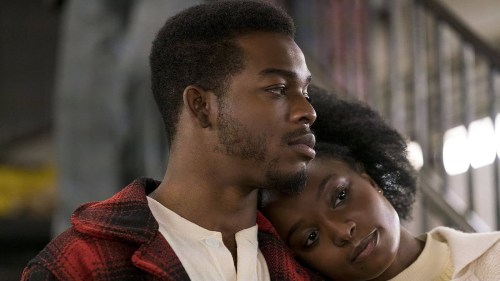
Ryan Destiny, Brian Tyree Henry
“THE FIRE INSIDE” My rating: B- (In theaters)
109 minutes | MPAA rating: PG-13
“The Fire Inside” follows the usual arc of a sports movie, tracing the career of an athlete from childhood to triumph on the world stage.
But it throws a couple of changeups.
First, this is the true story of Claressa “T-Rex” Shields, the first woman to win an Olympic gold medal in boxing — at the tender age of 17. Guys who want to fight are a dime a dozen, but a girl? And one that young?
Second, the film views the fights themselves as an afterthought. They’re brief and not particularly violent; mostly they provide the background for a couple of solid character studies and for the emerging theme of female empowerment.
Claressa is played by Ryan Destiny, who nicely captures the drive and determination of a young woman determined to pull herself out of an oppressive domestic situation.
And she’s paired here with Brian Tyree Henry as Jason Crutchfield, the volunteer boxing coach who initially was reluctant to have a girl training in his Flint, Mich., gym, but went on to become Claressa’s mentor and de facto father.
Henry can play just about anything (he was memorable as a oft-perplexed rapper in “Atlanta”), but his ace in the hole is his ability (we saw it opposite Jennifer Lawrence in “Causeway”) to express basic human decency without a trace of self-consciousness. A character like this one makes you want to be a better person.
“The Fire Inside” was written by Barry Jenkins (“Moonlight”) and directed by Rachel Morrison, and in addition to exploring a character’s physical and psychological development over several years, it also takes on the struggle of female athletes to achieve economic parity with their male counterparts.
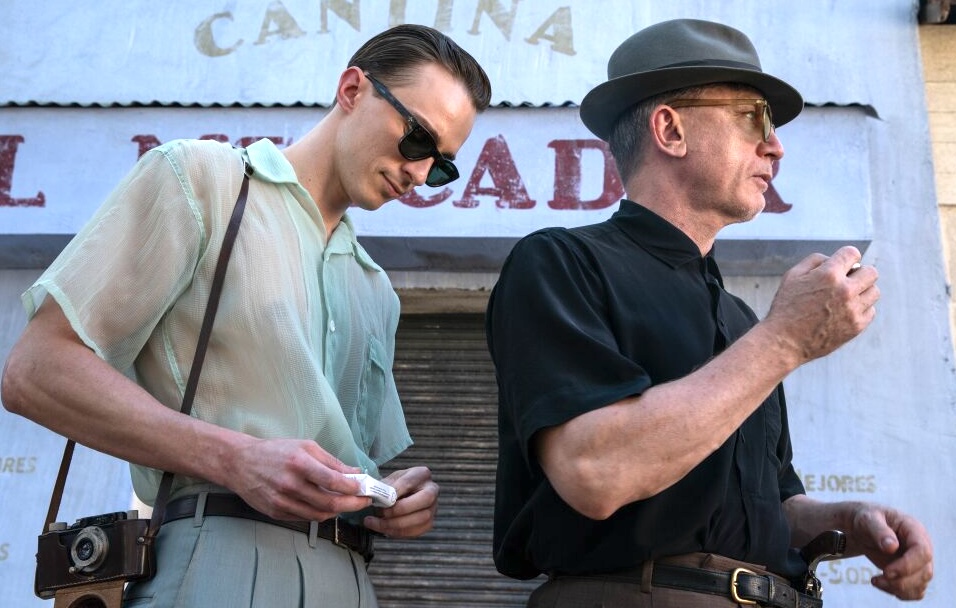
Drew Starkey, Daniel Craig
“QUEER” My rating: B- (In theaters)
136 minutes | MPAA rating: R
The novels of William S. Burroughs have rarely been made into movies. In part it’s the unapologetic subject matter. Also, there’s rarely anything like a conventional plot.
In tackling “Queer” director Luca Guadagnino (“Call Me By Your Name,” “Challengers,” “Bones and All” ) works hard to find a cinematic equivalent for Burroughs’ distinctive literary style. And for the first hour or so he pulls it off.
The protagonist (and Burroughs’ alter ego) is William Lee, an American living in Mexico in the 1950s. Apparently Lee has family money. He doesn’t work. Mostly he cruises for young men.
Lee is portrayed by Daniel Craig, an unlikely choice since Craig is one of the sexiest men in movies and William Lee is an embarrassingly transparent letch on the downside of desirability. But Craig pulls it off, mining the pathetic yearning of an aging man for some sort of physical and emotional transcendence.
He finds it (he thinks) in Eugene Allerton (Drew Starkey), a curiously non-committal American (is he gay? straight?) only recently discharged from the military. The guy oozes indifference, which only makes Lee’s clumsy attempts at seduction all the more wince-worthy.
But talk about creating an environment! As sumptuously photographed by Sayombhu Mukdeeprom, “Queer” is simultaneously dreamlike and grittily down to earth. Moreover, it radiates “Under the Volcano”-level decadent dissolution.
There’s also an amazingly good supporting performance by Jason Schwartzman as Joe Guidry, a character clearly based on Alan Ginsberg. Overweight and astonishingly hairy, Schwartzman utterly loses himself. It’s some of his finest work.
The film’s second half finds Lee and Allerton trekking to South America to dabble in psychedelic plants. There they hang at the jungle research station of a renegade scientist (Lesley Manville, all but unrecognizable), getting ripped on ayahuasca.
By this time the film’s lack of anything like a real plot becomes a drawback. As does Starkey’s one-note performance. At well over two hours, “Queer” begs for some tightening.
Still, at various moments it’s a genuinely hallucinogenic experience.
| Robert W. Butler
 Butler's Cinema Scene