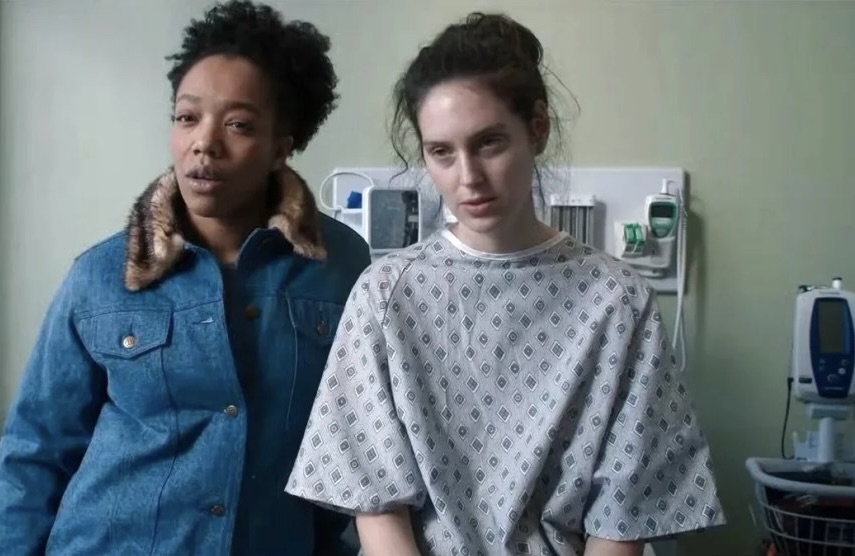
Naomi Ackie, Eva Victor
“SORRY, BABY” My rating: A- (HBO Max)
103 minutes | MPAA rating: R
Every once in a while you encounter a film so achingly on target that you instinctively realize that it had to be torn from someone’s personal experience.
So it is with “Sorry, Baby,” Eva Victor’s hauntingly beautiful film about the aftermath of a sexual assault.
The words “sexual assault” will be enough to scare off many viewers. But while Victor’s semi-autobiographical film (she wrote, directed and stars in it) addresses trauma, it’s more about the healing aftermath.
It starts unremarkably enough with our protagonist, Agnes (Victor), being visited by her old college roommate, Lydia (Naomi Ackie). They’re several years out of school, but while Lydia has moved to the big city and settled down (she’s gay, not that it’s a big deal) Agnes has hung around their New England college town. In fact, she’s now a bigwig in the English Department.
These opening scenes radiate the easy familiarity of old friends reconnecting. But soon the talk drifts back to their senior year and an unpleasant incident. In a flashback we view Agnes’ interaction with Decker (Louis Cancelmi), one of her professors. He seems like a standup guy…until he isn’t.
Victor wisely refrains from showing the assault. Instead we get a long shot of the teacher’s home, where the two are meeting to discuss her thesis. Agnes goes inside, and the unmoving camera records the home’s facade as the sun dims, night falls, and lights go on inside. Apparently several hours have passed before Agnes stumbles out, walks to her car and drives away in a fog of humiliation and disbelief.
In a balancing act for the ages, Victor seasons this traumatic incident with satiric flashes. When she meets with school officials to discuss the incident, she’s told that it’s not their problem. Decker turned in his resignation just before the assault. This news is delivered by a couple of women administrators whose clumsy efforts at sympathy are undermined by their panicked sense of institutional preservation.
“Sorry, Baby” rises and falls with Victor’s performance. Her Agnes is tall, gawky and unremarkable (though, weirdly enough, by film’s end I saw her as beautiful). She’s intellectually solid but emotionally tentative. She often masks her feelings with oddball comments and an ironic aura.
Not that she doesn’t get some solid help from the other players. Ackie is the best friend everyone wishes they had. Lucas Hedges shines as the vaguely nerdy neighbor with whom the post-assault Agnes has a sweetly goofy love affair. And veteran actor John Carroll Lynch nearly steals the film as a sandwich shop operator who takes a grieving Agnes (whom he has never met before) under his caring wing.
The world can be cruel. But simple decency goes a long way.
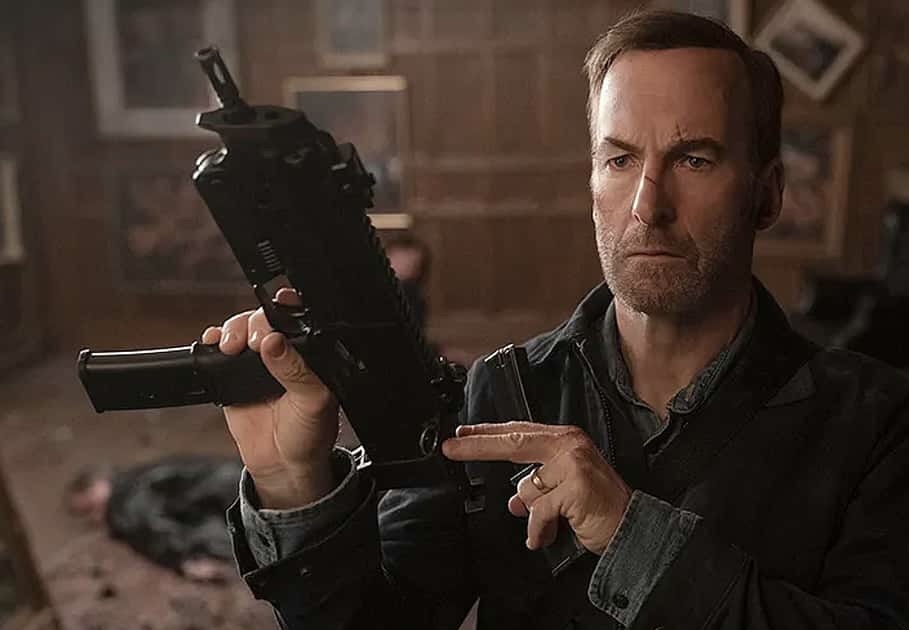
Bob Odenkirk
“NOBODY 2” My rating: C+(Peacock)
89 minutes | MPAA rating: R
“Nobody” (2021) was an unexpected sleeper, a hyperviolent, darkly funny yarn about a nondescript family man (Bob Odenkirk) whose secret job is that of assassin.
Now we’ve got a second installment and it’s pretty much the same thing all over again…minus the sense of discovery that made the first film so enjoyable.
Imagine “National Lampoon’s Vacation” mated with “Pulp Fiction.” Odenkirk’s Hutch Mansell takes the family (Connie Nielsen is the Missus) to the cheesy amusement park he enjoyed as a boy.
Except he finds the place now is a front for a drug operation run by a sociopathic grand dame (Sharon Stone) and administered by a corrupt local sheriff (John Ortiz).
Much mayhem ensues.
Except this time the brew of comedy and over-the-top violence falls to the law of diminishing returns. (Although I did enjoy the addition of Christopher Lloyd as Hutch’s father, himself a retired black ops type.)

Colin Farrell
“BALLAD OF A SMALL PLAYER” My rating: B (Netflix)
101 minutes | MPAA rating
“The Banshees of Inisherin.” “Sugar.” “The Penguin.”
Yeah, Colin Farrell has been on a roll. And it continues (sort of) with “Ballad of a Small Player,” which works a bit too hard to breathe new life into the gambler-at-the-end-of-his-luck yarn.
Farrell is Lord Doyle, a polished gent who floats through the casinos of neon-lit Macau as if he owns the joints. He sophisticated, generous, impeccably dressed.
It’s all a sham. In truth he’s a common hustler who’s developed an impressive fictional character. Lord Doyle (he’s not a lord and Doyle is not his actual name) is so good at role playing that he has credit at all the tables.
That is, until his losses get so big that they can no longer be ignored.
Scripted by Rowan Joffe and Lawrence Osborne and directed by Edward Berger (“All Quiet on the Western Front,” “Conclave”), “Ballad…” attempts to make up for a lack of originality (really, it’s just another movie about a desperate gambling addict searching for a big score) with a heightened visual sense and an almost operatic sense of melodrama.
But it’s worth sticking with to watch Farrell navigate Lord Doyle’s existential dilemma. Toss in Tilda Swinton as a comically stuffy investigator hot on his trail and Fala Chen as the casino hostess who provides a love interest, and you’ve got a good-looking if not terribly deep outing.
| Robert W. Butler
 Butler's Cinema Scene