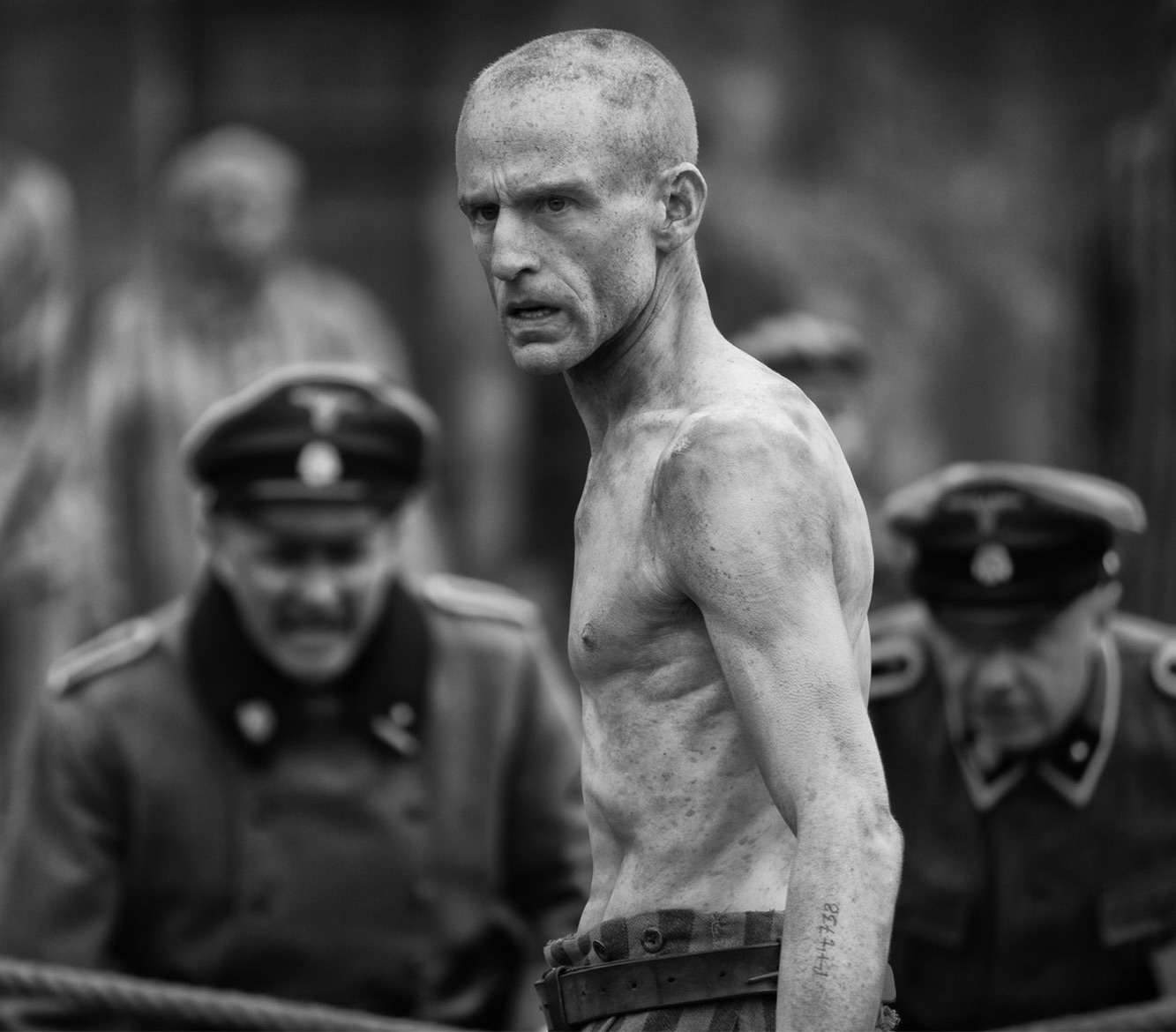
Ben Foster
“THE SURVIVOR” My rating: B+(HBO Max)
105 minutes | MPAA rating: R
How have I not discovered “The Survivor” before now?
This 2021 feature has so much going for it: A famous director (Barry Levinson), a gut-wrenching real-life story and a lead performance by Ben Foster that made me rethink just about everything I’ve ever felt about this actor.
Hertzko “Harry” Haft was a Polish Jew who survived a series of Nazi death camps because of his boxing skills. Haft fought more than 60 bloody bare-knuckle matches for the entertainment of S.S. officers who placed bets on the outcome. Haft was betting, too…with his life. The loser of each match was summarily executed.
Relocated to the States after the war Haft did the only thing he was good at. For a couple of years he was a professional boxer; he even fought Rocky Marciano.
The script (by Justine Juel Kilmer, based on a nonfiction book by Haft’s son, Alan) alternates between Haft’s post-war life (these scenes are in color) and the horrors of his camp experiences (brilliantly captured by cinematographer George Steel in black-and-white images that uncannily evoke newsreels from the period).
“The Survivor” isn’t a sports movie; nor is it exclusively a Holocaust chronicle. It’s a character study of a man whose psyche was shredded by what he saw and by guilt over what he was forced to do.
Ben Foster is simply shattering in the role. He appears to have lost 50 pounds for the concentration camp flashbacks; in the present (the film follows him through the 1960s) he has the beefy look of a boxing pro. In the latter scenes he’s absolutely believable as a man in a soft-stomached middle age. It’s a transformation right up there with DeNiro’s in “Raging Bull.”
This is a haunting performance capable of moving the viewer to tears. (Comparisons to Rod Steiger’s great performance in “The Pawnbroker” are apt.)
I’ve not always been a Foster fan. Following his solid feature debut (as a suburban Jewish teen in love with a black girl) in Levinson’s “Liberty Heights” he started landing roles as eye-rolling crazies (”3:10 to Yuma,” “30 Days of Night”). But in recent years he’s shown both range and restraint (“Hell or High Water,” “Leave No Trace”). How his work in “The Survivor” failed to register with the presenters of the various acting awards is a puzzler.
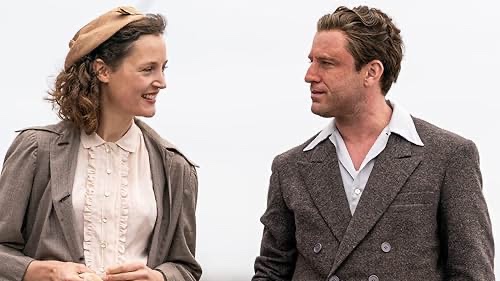
Vicky Krieps, Ben Foster
Other players include Danny DeVito and John Leguizamo as boxing coaches, Peter Sarsgaard as a sports journalist, and Vicky Krieps as the Holocaust survivor aid worker who marries Haft.
Sonya Cullingford has a brief but unforgettable scene as Haft’s long-lost first love, with whom he was reunited just weeks before her death from cancer.
The film’s main flaw is what it leaves out. We see in flashback how Haft escaped from a Nazi work party, but not how he survived on his own until the end of the war. That’s a deliberate choice. According to his son’s book, the fugitive Haft killed three civilians he feared would turn him over to the Germans. The filmmakers obviously feared that showing those murders could turn an audience against their protagonist.
The good news is that this choice doesn’t significantly dilute the film’s power.

Margaret Qualley
“HONEY DON’T” My rating: C+(Netflix)
89 minutes | MPAA rating: R
Since splitting (temporarily, apparently) from his filmmaking sibling Joel, Ethan Coen has created two films centering on lesbian characters. Margaret Qualley stars in both.
In 2004 ’s “Drive-Away Dolls” Qualley’s character goes on a road trip with luggage that includes a briefcase full of dildos and a severed human head.
In “Honey Don’t” she plays Honey O’Donahue, a lesbian private eye in sun-baked Bakersfield who wears high heels and hosiery with seams down the back. The entire project (like “…Dolls” it was co-written with Tricia Cooke) plays like a Jim Thompson potboiler directed by a lesbian version of Russ Meyer.
It’s rude, it’s crude, it’s gleefully exploitative.
The cast includes Chris Evans (as the sexually voracious leader of a religious cult), Aubrey Plaza (as a gay cop), Charlie Day (as a horny police detective) and Lera Abova (as a mysterious Vespa-riding assassin).
It’s fun…until it wears out its welcome.
| Robert W. Butler




 Butler's Cinema Scene