Feeds:
Posts
Comments

Posts Tagged ‘Timothy Spall’

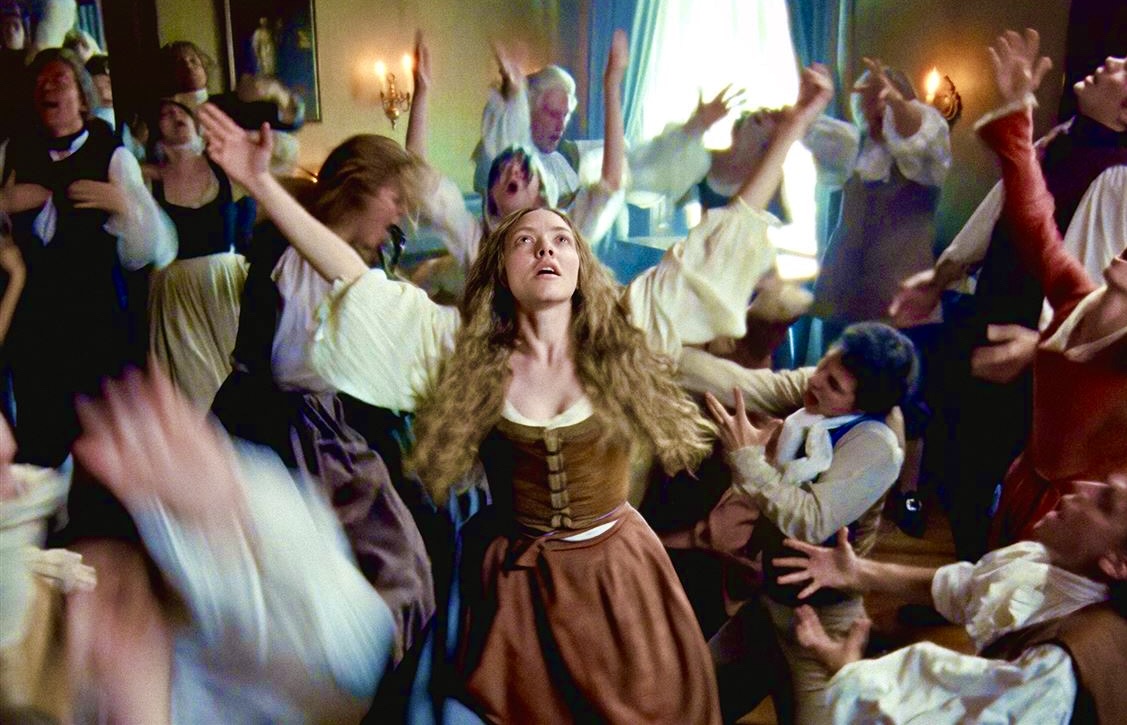
Amanda Seyfried as Shaker saint Ann Lee

“THE TESTAMENT OF ANN LEE” My rating: B (Hulu)

136 minutes | MPAA rating: R

Mainstream Hollywood rarely knows what to do with religion…unless it’s some sword-and-sandal silliness.

But Mona Fastvold’s “The Testament of Ann Lee” provides a sometimes brilliant evocation of ecstatic states while never commenting editorially on the truth (or falsehood) of its subject’s beliefs.

In the process it gives Amanda Seyfried the role for which she may some day be best known.

Ann Lee (Seyfried) was a British woman whose search for religious certainty led her to the Shaker movement, an offshoot of the Quakers in which dance and movement were essential to the spiritual quest. She left England for America in the years just before the Revolution, bringing with her a small band of followers who regarded her as an incarnation of Jesus. Over  years they established several communal settlements in New England, farming and manufacturing utilitarian but beautiful items of furniture that are still popular.

At one point the Shakers had nearly 5,000 members…a remarkable number given that total avoidance of sex was central to Lee’s ministry.  The church fed its ranks by adopting orphaned children who, upon reaching maturity, were allowed to decide whether to stay or seek a life in the larger world.

As scripted by director Fastvold and her husband Brady Corbet (their last outing was the spectacular “The Brutalist”), this is in many ways a straightforward historic biography.  

We follow Ann’s early life, her marriage to a blacksmith (Christopher Abbott) and the tragic deaths of their four children (a huge factor in creating her views on abstinence), her gradual rise to become a spiritual leader, her preaching partnership with her brother William (Lewis Pullman) and her determination to find a respite from persecution in the New World (only to discover that thuggish assholes are to be found just about everywhere).

It’s all been mounted with an almost documentary sense of time and place.

But here’s the twist:  in the many scenes of Shaker worship the film can only be described as a musical.

The congregants dance and sing in a reverential frenzy.  Like the whirling dervishes of Islam’s Sufi sect, the Shakers in this film seek transcendence through sound and movement, and just by observing we  can get a contact high from their shared exctasy. This is an astounding thing to say of an American feature film…simply watching it is a semi-spiritual experience.

Director Fastvold has said in interviews that while the songs and dance movements are based on real Shaker worship practices, they’ve been sweetened for this cinematic retelling. So while they may not be 100 percent authentic, they do achieve a heightened awareness in the viewer…heck, this looks like a worship service that might actually be fun.

At the core of it all is Seyfried’s performance, which makes Ann fully human even as she says and does things that many of us find, well, hugely eccentric. Apparently Ann Lee had no room for doubt, and there’s none in Seyfried’s work here. She exudes sincerity, reverence and a calm benevolence.  It’s remarkable.

Keeping “The Testament of Ann Lee” from being a near masterpiece are pacing problems.  The last third of the film drags a bit…to the point that viewers not naturally inclined to spiritual rumination may lose interest.

For the rest of us though, it’s a thought- and emotion-provoking experience.
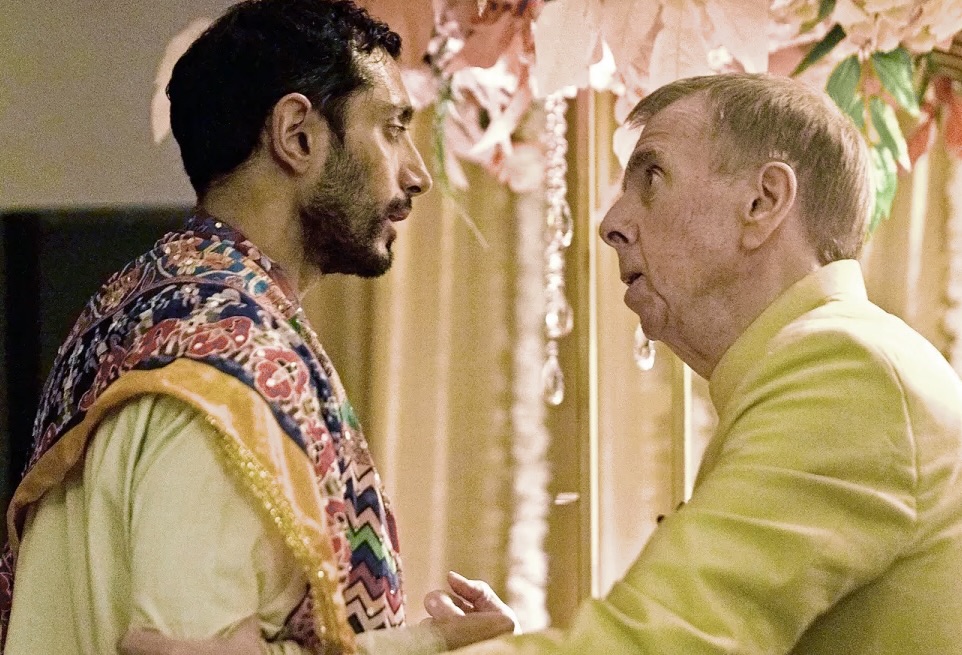
Liz Ahmed, Timothy Spall

“HAMLET” My rating: B (In theaters)

114 minutes | MPAA rating: R

“Hamlet” can survive just about any amount of directorial tinkering.  What you can’t screw with are Shakespeare’s words and the necessity of having a charismatic leading man as your Hamlet.

The new version of the tragedy from Brit director Aneil Karia works most of the time.  All the familiar monologues are intact (if sometimes arranged in a different chronology) and in Riz Ahmed we have a fiercely emotional Hamlet who may very well be sliding into madness.

This “Hamlet” is a modern dress interpretation (Ehthan Hawke starred  in another modern version in 2000) and set in London’s South Asian community.  Elsinore in this retelling is not a royal palace but the name of a massive real estate development company founded by Hamlet’s papa.

As the film begins a crew of male friends and family are preparing the magnate’s body for a traditional Hindi cremation.  Hamlet (Ahmed) has been studying abroad and is appalled to learn that not only is his uncle Claudius (Art Malik) taking over the company, but he intends to wed Hamlet’s mother Gertrude (Sheeba Chaddha).

Michael Lesslie’s adapted screenplay puts Hamlet’s precarious mental state front and center…even to the point of reducing the roles of other characters.  This is particularly true in the case of Polonius (Timothy Spall), who in this version is not an amusing pedant but rather a grimly ruthless enforcer for the company. His daughter, the fragile Ophelia (Morfydd Clark, most recently seen as Galadriel in the “Rings of Power” miniseries) and son Laertes (Joe Alwyn) haven’t quite been boiled down to walk-on perfs, but it’s a near thing.
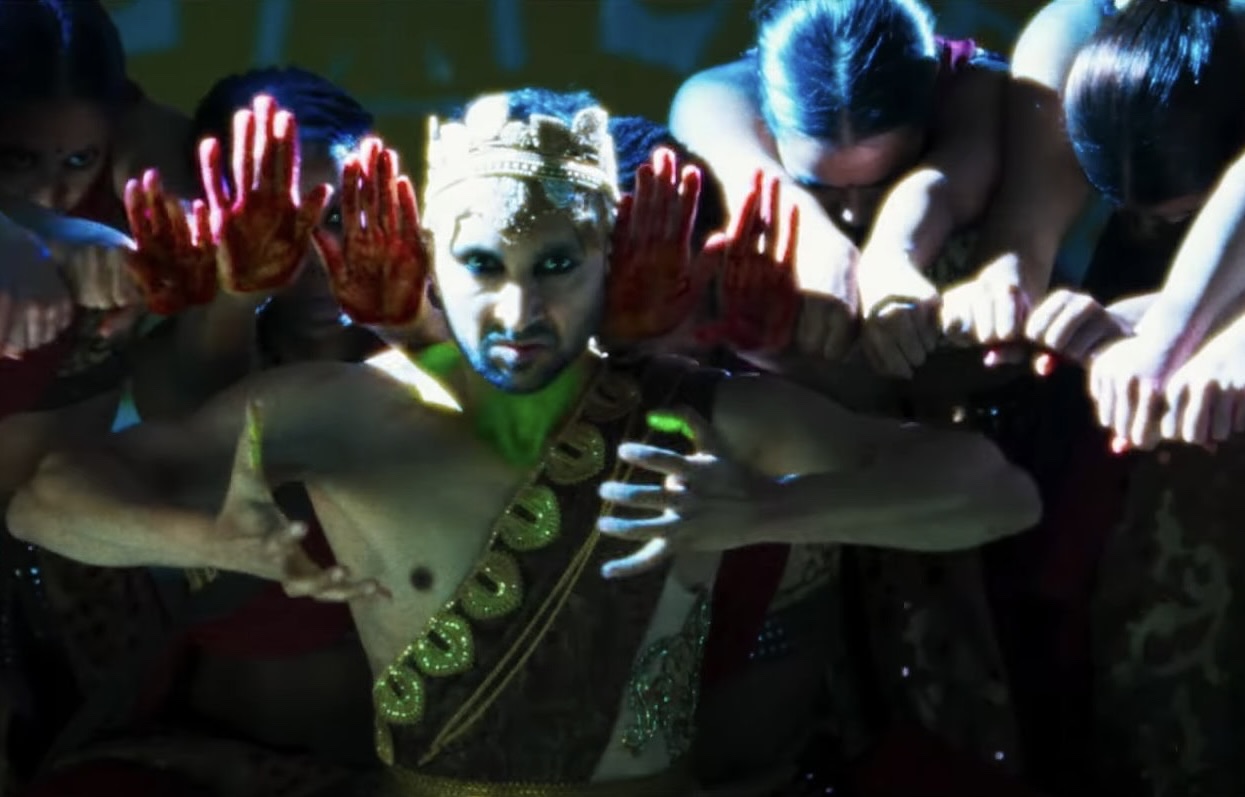
Hindu dancers perform the play-within-the-play

The good news is that director Karia uses the unique setting to good advantage.  For instance, in his encounter with his father’s ghost Hamlet and his father converse in Hindi (with English subtitles). And in a small masterstroke, the famous play-within-a-play ploy which Hamlet uses to expose his uncle’s crimes is now performed by a troupe of Indian dancers whose half-trad, half-Bollywood showcase is one of the film’s highlights.

Ultimately, though, it all boils down to our Hamlet, and Ahmed more than holds his own.  This actor oozes intensity and physical presence (remember his Oscar-nominated turn turn as a deaf drummer in “The Sound of Metal”?) and here he channels it into one of drama’s seminal roles.

| Robert W. Butler
Read Full Post »

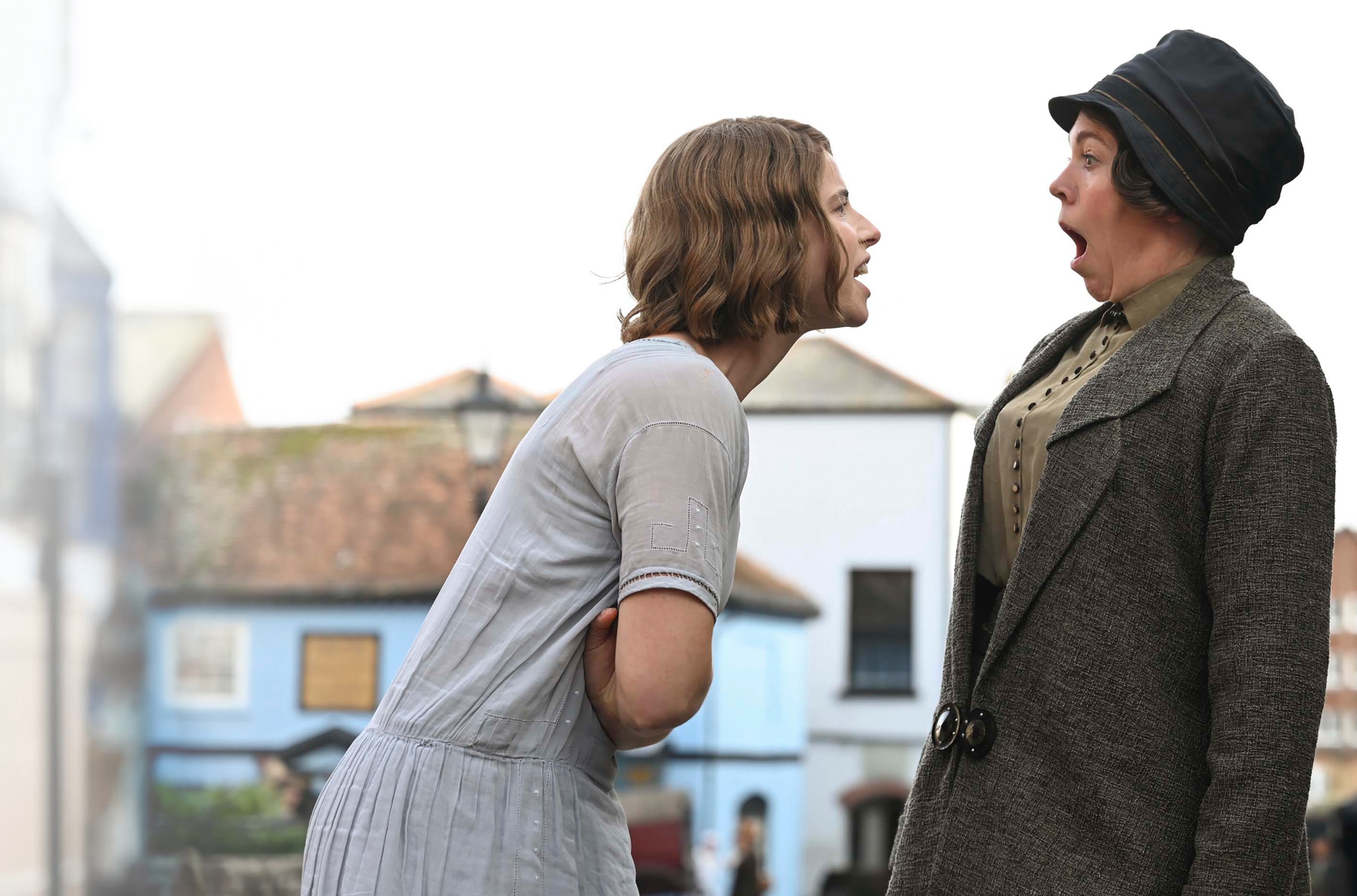
Jessie Buckley, Olivia Colman

“WICKED LITTLE LETTERS” My rating: B- (Netflix)

100 minutes | MPAA rating: R

“Wicked Little Letters” is so crammed with familiar faces from Brit film and television that it’s a bit like reading the Equity membership list.

As it turns out, all that U.K. talent is what keeps the film from sliding into a morass of uneasily shifting tones. Or more accurately, the film suffers from neck-twisting tonal shifts but the great acting keeps us hanging in there.

Purportedly based on a real incident (I have my doubts) this effort from writer Jonny Sweet and director Thea Sharrock unfolds in the picturesque oceanside burg of Littlehampton in the years after World War I.

The first familiar face to greet us is the great Olivia Colman, here portraying the middle-aged spinster Edith Swan.

Edith lives with her parents, the domineering Edward (Timothy Spall!!!)  and his long-suffering wife Victoria (Gemma Jones).  She is shy, pious, unworldly, cowed by her father and oozes a goodie-two-shoes attitude that makes you want to slap her up the side of the head.

Here’s the problem.  Edith has been receiving filthy notes from an anonymous persecutor.  This mystery creep dishes sexual crudeness and personal insults in language that could make a longshoreman blush.  

Mother Victoria is quite undone by this onslaught of vileness; father Edward demands that the local police find the perpetrator.

Suspicion almost immediately falls on the family’s next door neighbor, Rose Gooding (Jessie Buckley), a foul-mouthed, hard-drinking Irish war widow (or so she says) with a young daughter (Alisha Weir) and a live-in boyfriend (Malachi Kirby).  

Until recently Rose and Edith had a sort of friendship (Edith sees it as her Christian duty to reach out to her hell-raising neighbor), but they’ve drifted apart.  And then the wicked little letters began arriving.

The screenplay covers a lot of ground.  There is, of course, Rose’s legal predicament.  Charged with libel, she faces a year in prison and the loss of her child.

Then there’s the rampant chauvinism in which the film’s menfolk are steeped.  Papa Edward is only the most obvious example.  The police are sexist swine — we get an eye- and earful through the experiences of Gladys  (Anjana Vasan), the town’s sole female officer, who slowly becomes convinced of Rose’s innocence.

When the officials decline even to look for other suspects, Gladys teams up with a couple of local ladies (Joanna Scanlan, Eileen Atkins) to secretly sleuth out the situation.

What they find…well, no sense giving too much away (even though most viewers will see it coming).  Let’s just say that beneath the thin veneer of stiff-upper-lip propriety that dominates all aspects of British life there bubbles a cauldron of repressed sexuality and wanton rebellion that just has to assert itself.

Categorizing “Wicked Little Lies” is problematic.  At times it’s broadly satiric, even silly…and then it dips into gut-wrenching melodrama as it examines the plight of the wrongly-accused Rose.  The two attitudes are never reconciled — director Sharrock does a terrific job of creating a believable setting, but can’t find a way to pull all the pieces gracefully together.

| Robert W. Butler

Read Full Post »

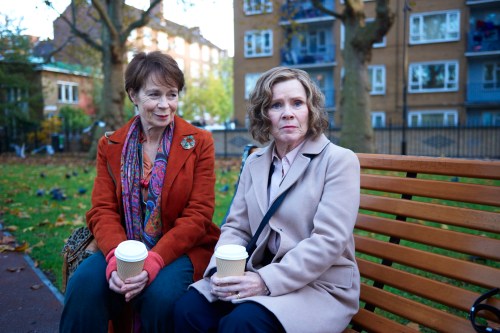
Celia Imrie, Imelda Staunton

“FINDING YOUR FEET” My rating: C 

111 minutes | MPAA rating: PG-13

I won’t say I hated “Finding Your Feet,”  the most recent in a string of films (“The Best Exotic Marigold Hotel,” “I’ll See You in My Dreams,” “The Hero”) depicting love amongst the geriatric set.

But I just barely tolerated it.

Despite a solid cast of veteran British thesps — Imelda Staunton, Timothy Spall, Celia Imrie, Joanna Lumley, David Hayman, John  Sessions — the latest film from director Richard Loncraine (“Brimstone & Treacle,” “Richard III,” “My House in Umbria”) shamelessly panders to its blue-haired target audience. In its own way it’s as derivative and contrived as a Frankie and Annette beach party movie — except you don’t want to see this cast in bikinis.

Sandra (Staunton) is stunned to discover that Mike, her titled husband of 40 years, has been having an affair for nearly that entire time. So it’s splitsville, not only from Mike but from Sandra’s privileged, cash-intensive (and politically conservative) lifestyle.

On the rebound she washes up at the door of her estranged sister, Bif (Imrie), a septuagenarian hippie whose life of adventure and close friendships are diametrically opposed to Sandra’s stunted outlook.

(more…)

Read Full Post »

Kristin Scott Thomas, Patricia Clarkson, Bruno Ganz

“THE PARTY” My rating: B

71 minutes | MPAA rating: R

With a running of time just over an hour, Sally Potter’s “The Party” plays like a classic one-act play, filled with slamming door exits, fiercely funny wordplay and wonderfully brittle, self-delusional characters.

Potter,  the British creator of films like “Orlando” and “The Tango Lesson,” specializes in gender issues and anti-establishment politics.  “The Party” embraces all that while remaining bitterly hilarious.

In the film’s first shot a frantic looking woman (Kristin Scott Thomas) yanks open her front door, stares momentarily at the visitor on her stoop (the camera takes the vantage point of the guest) and points a pistol at us.

We then flash back 70 minutes.  That same woman, Janet, is busily futzing around the kitchen, preparing to entertain some old friends. Her husband Bill (Timothy Spall) sits in the living room, wine glass in hand, deejaying old blues and experimental jazz LPs. He has the look of a  shell-shocked combat vet.

One by one the visitors arrive and we gradually learn what the celebration is about.  After years of struggle as a party faithful, Janet has been named head of the country’s Ministry of Health. She is constantly interrupted by congratulatory phone calls, including several heavy-breathing text messages from an unidentified lover.

The deliciously catty April (Patricia Clarkson) is allegedly Janet’s best bud. As an American she takes a withering outsider’s view of Brit politics…but then she’s withering on just about every subject. Asked to evaluate if Janet’s new job has transformed her in any way, April observes that her friend now is “slightly ministerial in a post-modernist, post-feminist sort of way.”

She’s even harder on her boyfriend, a blissed-out, New Age-y German life coach named Gottfried (Bruno Ganz) who so adores her that he puts up with a constant stream of abuse. April announces that she intends to dump Gottfried that very night: “Tickle an aroma therapist and you find a fascist.”


(more…)

Read Full Post »

Rachel Weisz as historian Deborah Lipstadt

Rachel Weisz as historian Deborah Lipstadt

“DENIAL”  My rating: B

110 minutes | MPAA rating: PG-13

The arrival of “Denial” could hardly be more timely, given the increased white nationalism encouraged — or at least not denounced — by Donald Trump’s presidential campaign.

Based on historian’s Deborah Lipstadt’s 2005  memoir History on Trial: My Day in Court with a Holocaust Denier, Mick Jackson’s film  is a legal drama with repercussions far beyond the courtroom.

In 1997 Holocaust-denying historian David Irving  sued Lipstadt (of Emory University) and her publisher, Penguin Books,  for defaming him  and his theories in  her book Denying the Holocaust.

Irving opted to sue in a British court, choosing that venue rather than one in America at least in part because under British law persons accused of libel must prove their innocence  (in theU.S. it’s the plaintiff who must prove wrongdoing).

Timothy Spall

Timothy Spall

The resulting film is well acted, informative, and emotional for the quiet contempt it heaps upon anti-Semitism with a scholarly face.

Rachel Weisz portrays Lipstadt with a tightly-wound, steely exterior that periodically bursts into fierce flame.

She first encounters Irving (Timothy Spall) face to face when he shows up at her college lecture and waves $1000 which he’ll give anyone who can prove that any Jew was ever killed in a Nazi gas chamber.

The bulk of the film centers on Lipstadt’s interactions with her British solicitor (the lawyer who will prepare her case) and her barrister (who will argue it in court).  These figures of probity and quiet dignity are portrayed, respectively, by Anthony Scott (best known as Moriarty on the PBS “Sherlock”) and the ever-wonderful Tom Wilkinson.

Part of the team’s preparations involves a trip to Auschwitz (on a eerily beautiful foggy winter’s day), where Lipstadt is moved by the echoes of dead souls but also somewhat perplexed…before the war ended the Germans blew up the gas chambers in an effort to destroy evidence of their crimes.

(more…)

Read Full Post »

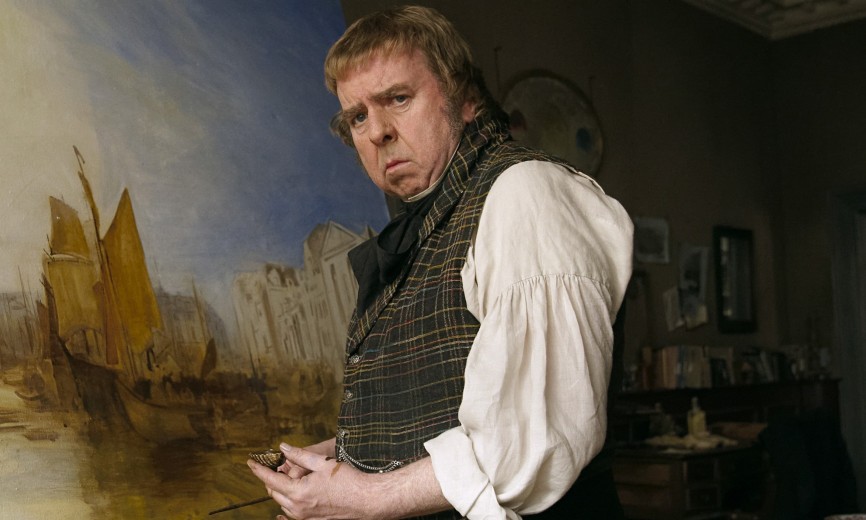
Timothy Spall in "Mr. Turner"

Timothy Spall in “Mr. Turner”

“MR. TURNER”  My rating: B+

150 minutes | MPAA rating: R

Though Mike Leigh’s “Mr. Turner” centers on the great English painter J.M.W. Turner, it isn’t really a conventional biography of an artist.

Nor does it offer much insight into the process of painting. Only rarely do we see Turner — brilliantly portrayed by Timothy Spall — with a brush in his hand.

And there’s no plot to speak of…not all that unusual when you consider that Leigh makes his movies after months of collaborative improvisation with his players.

Best to think of “Mr. Turner” as a time machine, a vehicle for transporting us to another era and so completely capturing the feel of the place that you’d swear you can smell the oil paint and the sea air.

The film concentrates on the last years in Turner’s life.  By this time (from the late 1840s to his death in 1851), Turner has been widely recognized as one of the great artists of the day. He specializes in seascapes, but his style is so radically impressionistic as to border on the abstract. His work alienates many (there’s a scene of Queen Victoria and Prince Albert viewing a Turner canvas and concluding that the artist must be going blind or mad), yet among his fellow artists he is regarded as a genius.

Genius he may be.  As a human being, this Turner leaves something to be desired.

mr turner-count_2911094c (more…)

Read Full Post »