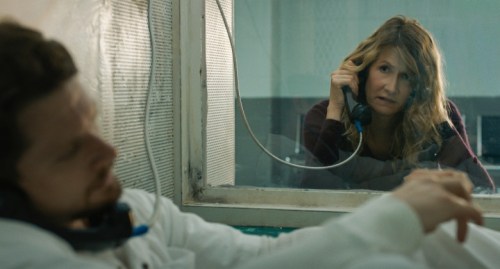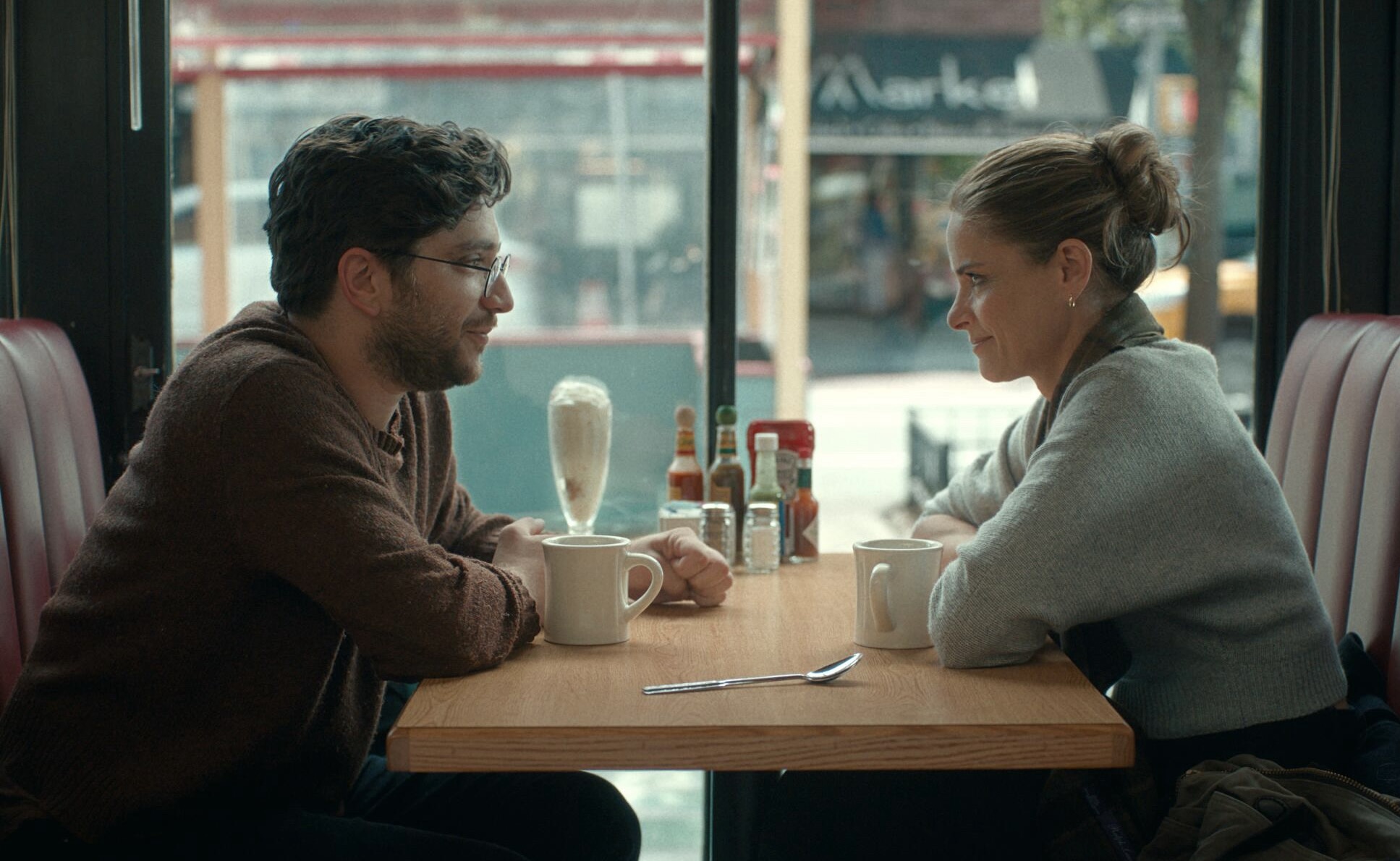
Matthew Shear, Amanda Peet
“FANTASY LIFE” My rating: B (At the Glenwood Arts)
91 minutes | MPAA rating: R
With the serio-comedic “Fantasy Life” actor Matthew Shear makes a way-more-than-adequate writing/directing debut…and along with it he gives Amanda Peet what may be the best role of her career.
We first meet law clerk Sam (Shear) on the day he’s fired from his job.
Sam is a somewhat chubby, bearded, bespectacled thirtysomethibng with a deer-in-the headlights stare. If you look up the word “schlub” in the dictionary, it’s probably illustrated with his picture.
Anyway the newly unemployed Sam promptly melts down in a massive public panic attack. Visiting his psychiatrist (Judd Hirsch…God, I’ve missed him) and the shrink’s wife/receptionist (Andrea Martin), Sam learns that their son and his wife desperately need a babysitter — a manny — for their three young daughters.
A less ambitious film would amuse us with Mrs. Doubtfire-ish situations involving the male sitter and the fiercely manipulative little girls. Shear has bigger things in mind.
“Fantasy Life” is a couple of things at once. It’s an insightful study of a troubled marriage…Dianne (Peet) and her husband David (Alessandro Nivola) are well-to-do Manhattanites (there’s family money involved) who look pretty normal from the outside but are essentially living separate lives.
David isn’t home much since he got a gig performing with a touring musical group (sort of a mid-life crisis deal).
Dianne is a once-promising actress who hasn’t landed a role in a decade and some mornings can barely drag herself out of bed. By assuming many mothering chores the owlish Sam takes some of the pressure off of her.
Except that he finds himself falling for his fragile but often funny employer. Who cares if she’s 20 years his senior? (Certainly not the men in the audience. This is where the fantasy comes in… there’s terrific comfort in the thought of Peet responding to a bumbling but sincere dweeb.)
One of the marvels of Shear’s screenplay is that it never takes the expected route; instead it is always pirouetting in different directions. Another is the charity with which it approaches all of the characters…played by a murderer’s row lineup of thespian talent: Peat, Hirsh, Martin, Bob Balaban, Zoysia Mamet, Jessica Harper, Holland Taylor.
But ultimately this is Peet’s movie. Her depiction of a woman lost in late middle age is reminiscent of the great roles John Cassettes wrote for his wife, Gena Rowlands. Dianne’s constant battle to hide her anxiety and depression beneath an outward show of hip sardonicism is riveting and not a little heroic. Late in the film she has a breakdown in her therapist’s office that in a more just world would earn her an Oscar nomination.
Also remarkable is Shear’s ability to balance the film’s moments of poignancy and wry humor. It’s the sort of thing that takes some directors an entire career to nail. He gets it right out of the gate.
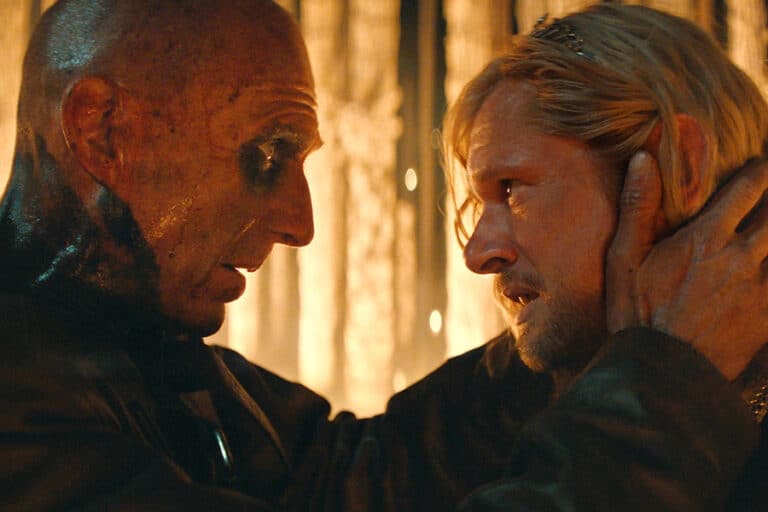
Ralph Fiennes, Jack O’Connell
“28 YEARS LATER: THE BONE TEMPLE” My rating: C (Netflix)
119 minutes | MPAA rating: R
Sometimes it’s best to leave well-enough alone.
I was really looking forward to the second installment of “28 Years Later,” but “The Bone Temple” left me with a bad taste in my mouth.
It’s not like I can’t enjoy a good zombie apocalypse. But “The Bone Temple” is so unrelentingly sadistic that you’ll need a shower afterward.
Basically we have two stories that meet at the end. In one story, young Spike (Alfie Wiliams), the adolescent protagonist of the first film, becomes a reluctant member of the nomadic religious cult lead by the manipulative Sir Jimmy Crystal (Jack O’Connell, who was so effective as the head bloodsucker in “Sinners”).
The clearly bonkers Sir Jimmy (think Charles Manson) calls the shots for a band of parent-less teens, all clad in filthy running suits and sporting raggedy blond wigs. Claiming to be the son of Satan, Jimmy has his minions torture unfortunate survivors they encounter…and poor Spike is expected to participate.
The second plot centers on Dr. Kelson (Ralph Fiennes), the half-mad proprietor of the Bone Temple, a sprawling graveyard whose towering monuments are constructed of human remains. (Hats off to art director Karansinh Pratapsinh Chanda and crew…the Bone Temple is a visual tour de force.)
Though undeniably eccentric, Kelson (we met him briefly in the first film) still has a scientist’s curiosity, and a good chunk of the film is devoted to his efforts to drug and “civilize” the alpha zombie (Chi Lewis-Parry) who stalked Spike and his father in the first film.
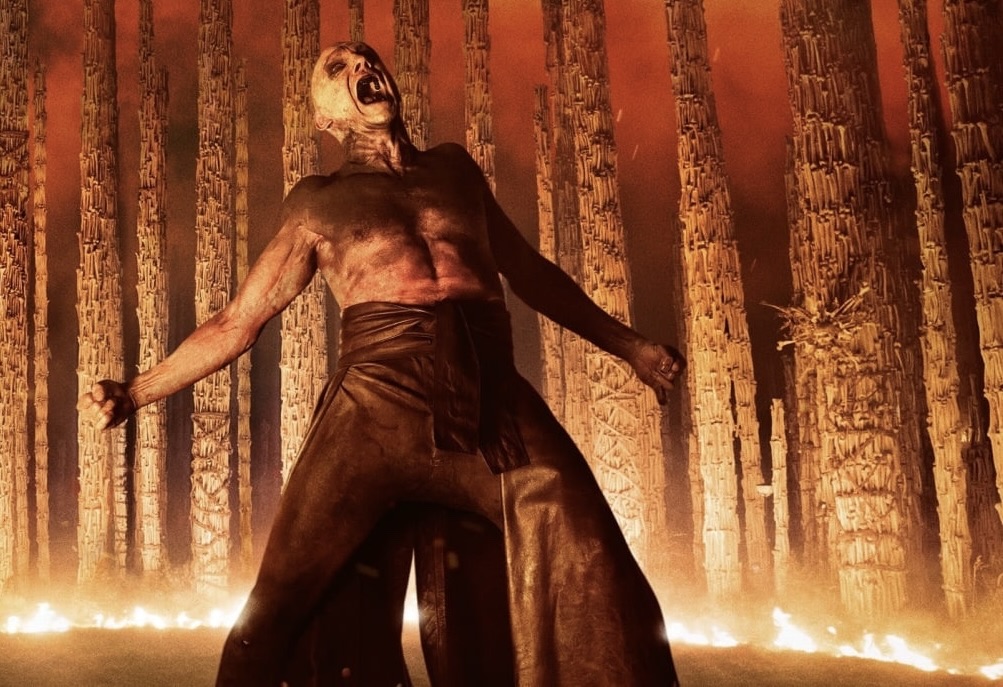
Ralph Fiennes delivers a demonic floor show
Eventually the two plots collide in a moment of sublime lunacy. Kelson agrees to pretend to be Sir Jimmy’s father — yes, the Devil — so as to impress the kids. He does so by slipping an ancient Iron Maiden LP on the turntable and lip-syncing his way through the tune, proving suitably demonic choreography along the way.
The kids are impressed. Hell, I was impressed.
Like the first film, this one was scripted by Alex Garland. But “Bone Temple” reeks of desperation. It’s as if Garland was heaving ideas against a big bloody wall hoping some would stick.
Perhaps if Danny Boyle was back as director he could shape this material into something meaningful. But this effort was helmed by Nia DaCosta, who made a splash last year with “Hedda” but here can’t find a compelling theme save unrelenting cruelty.
| Robert W. Butler