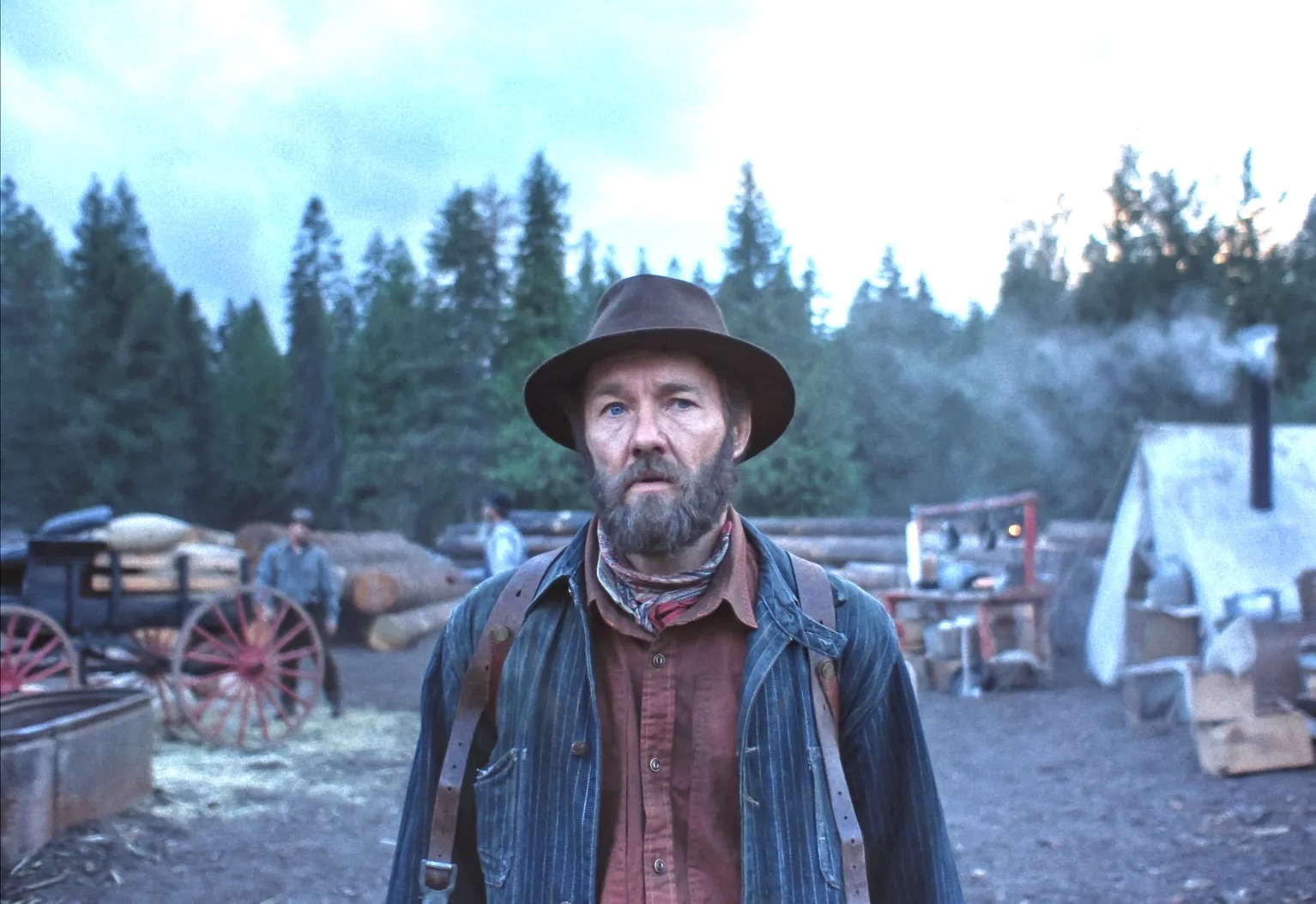
Joel Edgerton
“TRAIN DREAMS” My rating: A- (Netflix)
102 minutes | MPAA rating: PG-13
If Terrence Malick and Kelly Reichart had a baby it would be “Train Dreams,” a visually ravishing examination of one human life.
This is only the second directing credit from Clint Bentley (he wrote the Oscar-nominated screenplay for “Sing Sing”), but it displays an astounding depth of maturity and sensitivity.
In adapting Denis Johnson’s novella (he co-wrote the piece with Greg Kwedar) Bentley has approached this sprawling tale as a sort of visual folk song. There’s only limited dialogue, but since his leading player is the breathtakingly empathetic Joel Edgerton, little is required.
Will Patton’s voiceover narration (a device I generally despise; here it is delivered like a poetry reading) tells us of the origins of Robert Grainier, a foundling who grows up in a small burg in the Pacific Northwest. He comes to maturity in the early 1900s, when the mechanized modern world has not yet intruded on the wilderness.
Poorly educated, Robert excels at manual labor. He helps build a wooden railroad bridge across a forested gulch, and witnesses the murder of a co-worker, a Chinese man (Alfred Hsing) whose ghostly visage will haunt him throughout his long life.
Mostly Robert works for logging crews; his huge axe is practically an extension of his own arm.
He meets and falls for Gladys (Felicity Jones) and together they build a cabin and have a daughter, though Robert’s work requires him to be away for months at a time.
The loggers are a hard-working bunch, a collection of loners who can go all day without saying a word. There is one exception. William H. Macy is terrific as Arn Peeples, a grizzled old codger whose main job seems to be serenading his fellows with nonstop running commentary on anything that comes into his head.
There are on-the-job accidents, some fatal. Robert soldiers on. His goal is to make money, return to his beloved wife and child, and start the process all over again.
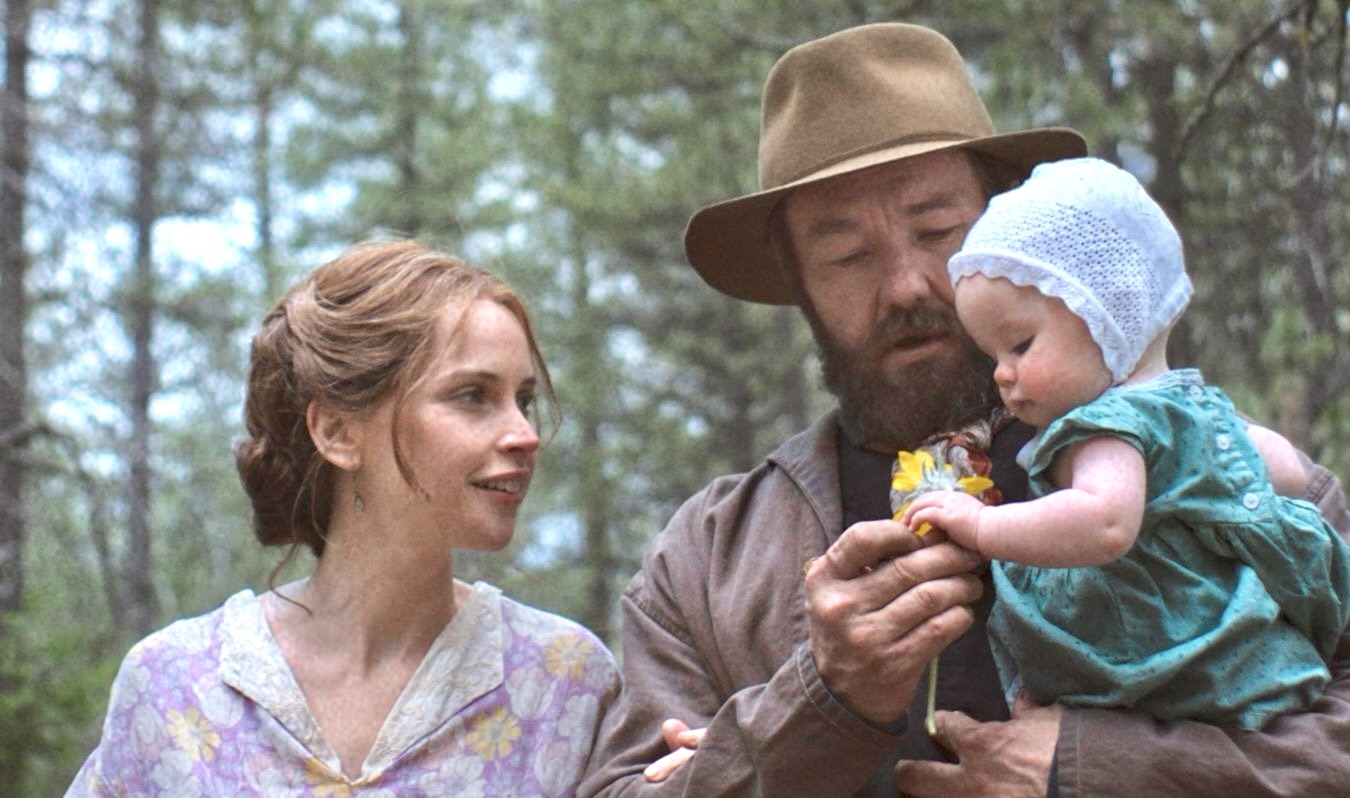
Felicity Jones, Joel Edgerton
The scenes of the Grainier’s domestic life are so achingly beautiful that one is tempted to give up on civilization and take up residence in the woods. Adolpho Veloso’s camera seems to caress its subjects; frequently we’re distracted by the waving tufted tips of wild grass, or the grain of a tree trunk. Man and nature in harmony.
These scenes arebolstered by the presence of the uncredited young child who plays Robert and Gladys’ daughter. The kid steals every scene without even trying. We’re as delighted in her as are her parents.
Then cruel fate intervenes. Robert is away on a job when tragedy strikes back home. His cabin lies in ashes; the fate of his wife and daughter unknown.
Ever faithful, Robert is determined to rebuild on his smoldering acreage so that when his family returns, he’ll be ready.
Edgerton is devastatingly effective as the stoic yet forlorn Robert. The sadness in his eyes, the gentleness in his movements, the way his posture changes over more than 60 years of physical labor…all these add up to an unforgettable portrait of a man who, by most standards, is unremarkable.
But then that’s the whole point. “Train Dreams” finds the unexpected nobility in everyday humanity.
| Robert W. Butler











 Butler's Cinema Scene