Feeds:
Posts
Comments

Posts Tagged ‘movies’

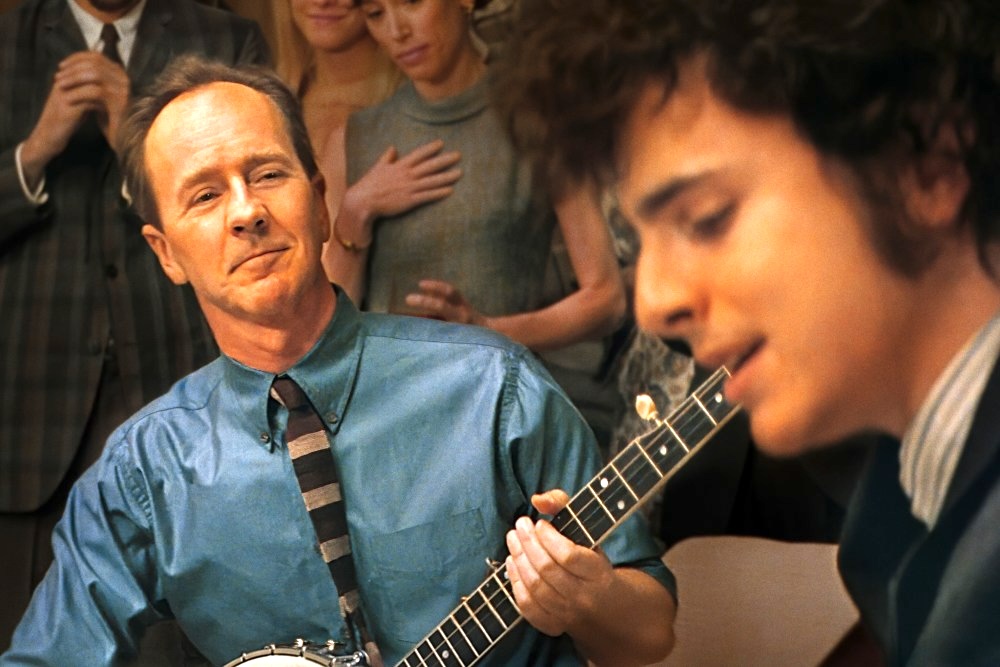
Harper Steele, Will Ferrell

“WILL & HARPER”  My rating: B+ (Netflix)

114 minutes | MPAA rating: R

“Will & Harper” is both a hugely emotional paen to friendship and a sobering/reassuring look at grassroots America.

It’ll have you sobbing one minute, furious the next.

The Will of the title is Will Ferrell, famous comic actor.  Harper is the former Andrew Steele, a long-time writer for “Saturday Night Live” who at age 61 decided to transition.

At the outset of Josh Greenbaum’s documentary, Ferrell recalls getting an email from Steele announcing her new status as a woman.  Farrell never saw it coming.

But Will Ferrell is a very good friend.  Knowing that as a man Harper had often driven across America, hanging out in seedy motels and nefarious watering holes, Ferrell suggested the two buds take a road trip. 

It would give them plenty of time to explore their new relationship while seeing how, if at all, Harper would be accepted  by the everyday folk being bombarded with anti-trans propaganda.

There’s good news and bad news. At an Oklahoma road house Harper is serenaded by a group of Native American men who employ a plastic tub as a tom tom to chant a welcoming song.  Awwww.

The next day, in Texas, the two travelers take center stage at a crowded highway restaurant.  Clearly, the local folk are impressed at having a celeb in their midst, but many fire off a slew of cruel anti-trans tweets aimed at the comic’s companion.

But perhaps the most devastating part of the journey is hearing Harper speak of the many years in which she fought against recognizing her true sexual identity. It’s sad and inspiring.

Which is not to say that “Will & Harper” is a downer.  Ferrell and Steele have earned their livings by making other people laugh, and their banter has plenty of drollery sprinkled among the truth nuggets.

I believe I’m a better person for having watched it.

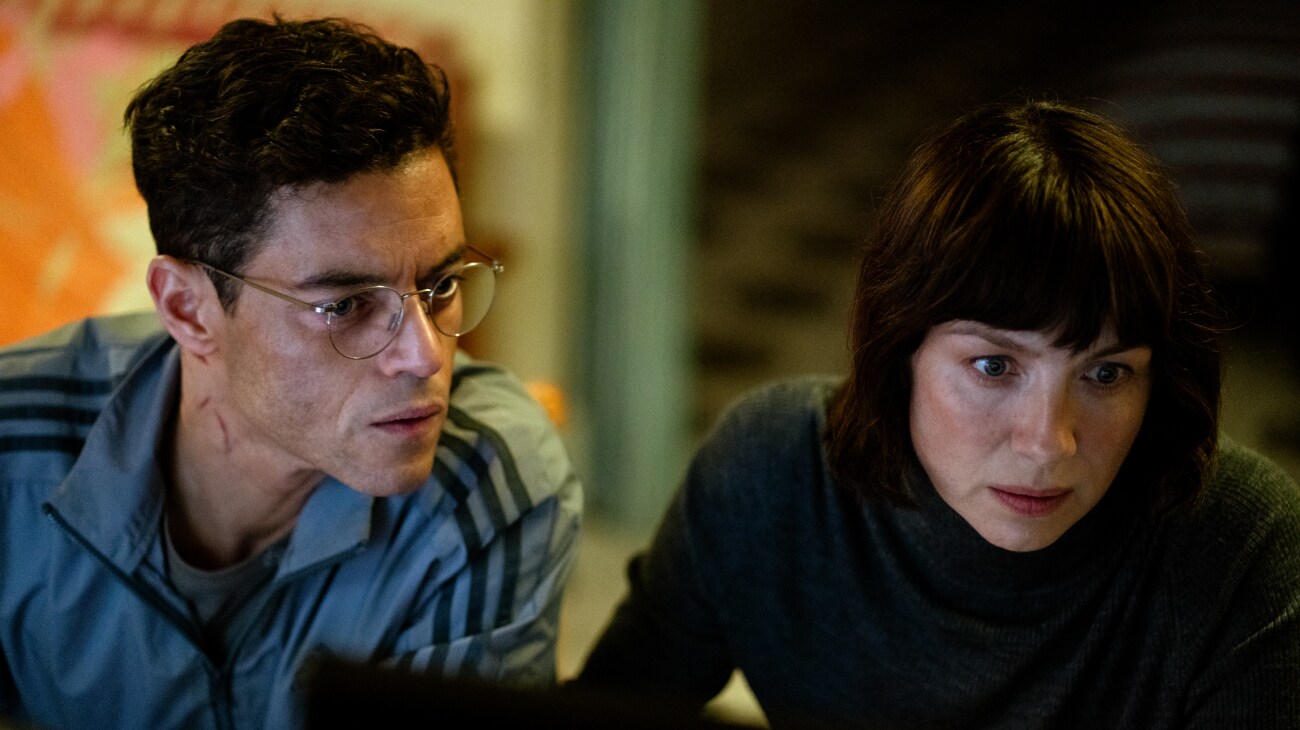
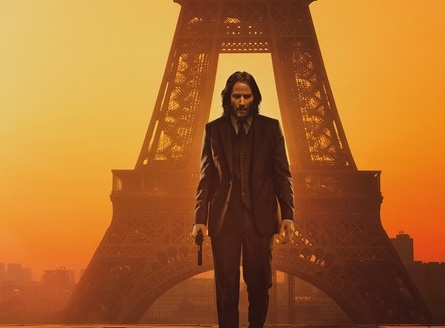
Brad Pitt, George Clooney

“WOLFS” My rating: B (Apple+)

108 minutes | MPAA rating: R

It really doesn’t go anywhere, but you’ve gotta enjoy the ride provided by “Wolfs,” a lean, funny crime dramedy fueled by Tarantino-esque banter.

The premise of writer/director Jon Watts’ film:  Two mob cleaners (they are hired to discreetly remove evidence — like dead  bodies — after violent encounters) find themselves working on the same assignment.

It must be a mistake because these unnamed dudes (played by George Clooney and Brad Pitt) always work alone and are fiercely protective of their trade secrets. (They’re “lone wolfs.”)

Nevertheless, here they both are in an expensive hotel room to remove the body of a young man who, while cavorting with an older woman (Amy Ryan), bounced off the bed and into a glass coffee table.

These wolfs don’t play well with each other.  The older one (Clooney) is a brooding grump. The younger (Pitt) is a cocky wise ass.  

Oil and water.

And then there’s the vinegar. (Here comes a spoiler but I don’t know how to avoid it.)

That would be “the kid” (Austin Abrams), the supposedly dead body that returns to life mid-disposal.  He’s a goofy college student who got picked up by the cougar while running an errand for a friend…an errand that involves a backpack full of drugs.

Now the two fixers and the kid are trying to return the illegal pharmaceuticals to their criminal owners without getting killed.

But not before an awesome chase through NYC with the two wolfs pursuing the whacked-out kid, who is racing gazelle-like through a snowstorm in his tidy whities. 

Remember Nicolas Cage’s quest for baby diapers in “Raising Arizona”?  It’s that good.

The thorny plot twists of “Wolfs” may not stand up to close scrutiny, but viewer doubts probably won’t kick in until after the final credits.  For the most part the flick is just plain fun.

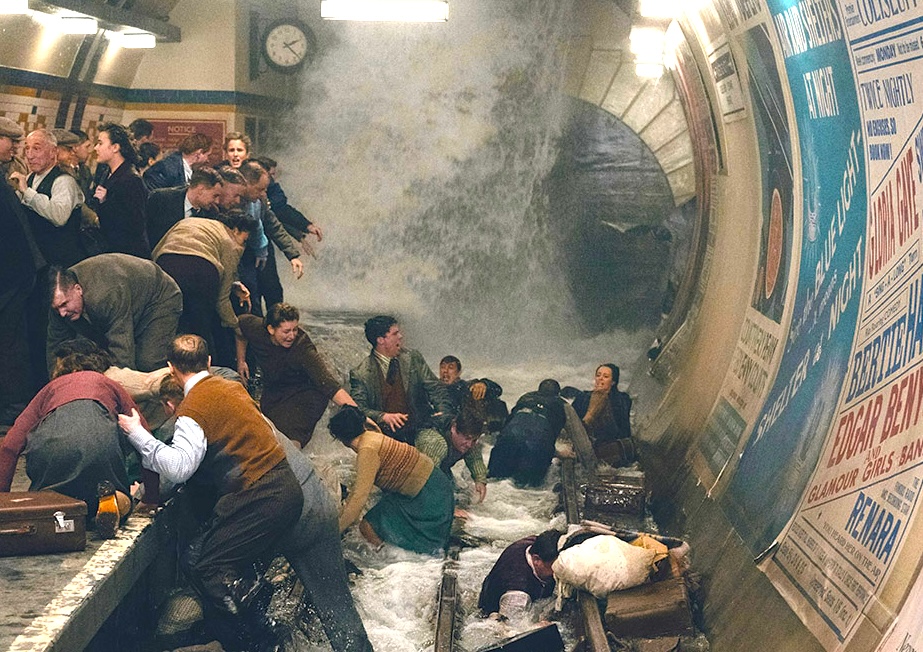
Natasha Lyonne, Elizabeth Olsen, Carrie Coon

“HIS THREE DAUGHTERS” My rating: B+ (Netflix)

101 minutes | MPAA rating: R

Getting married. Having a kid. Losing a parent.

These are three of the most impactful experiences in a human life. Azazel Jacobs’ “His Three Daughters” examines the third event through a pressure-cooker environment and three astonishing performances.

The daughters are Katie (Carrie Coon), Rachel (Natasha Lyonne) and Christina (Elizabeth Olsen). The siblings have gathered in the New York apartment of their father, who lies dying in his bedroom (we won’t actually see him until the final moments of the film).

Though all were raised by the same single dad, the women have radically different personalities.

Katie, the oldest, is a brittle, opinionated woman who tries to come off as helpful but actually is merely bossy. Katie has rarely visited her father in recent months but now wants to dictate how this whole business of dying will unfold. The problem, of course, is that death doesn’t operate on a convenient schedule.

Christina has a husband and young daughter back in Ohio. She’s painfully insecure, always sharing appallingly sappy phone calls with her kid and shying away from argument and controversy.

Rachel is the family bohemian. She’s been living with her father for years, taking care of him in his decline. She appears not to have a real job and frequently lets off steam with a joint or two, both life choices that infuriate the judgmental Katie.

“…Sisters” unfolds almost entirely in the living room and kitchen of the apartment, creating a claustrophobic intensity that magnifies the points of conflict among the women.

Every few hours a hospice worker (Rudy Galvan) checks in; at one point Rachel’s boyfriend (Jovan Adepo) shows up to give her a bit of moral support and to unload on Katie and Christina, whom he (rightly) believes have shirked their familial responsibilities while Rachel got stuck with the role of caregiver.

“His Three Daughters” could quite easily have been conceived as a stage play rather than a film. The dialogue is tight and polished and wastes little time in exposing the character’s conflicted essences. Sometimes it sounds a bit artificial and forced, but any misgivings are quiickly dispersed by the power and subtlety of the performances.

Most of the film is brutally realistic. But in the final moments, when we finally meet the women’s father (Jay O. Sanders), it becomes borderline metaphysical. I can’t say more without ruining the effect…let’s just say that despite often rubbing our noses in dysfunction, “His Three Daughters” leaves us with a whiff of hope.

| Robert W. Butler

Read Full Post »

Andrew Scott

“RIPLEY” (Netflix):   

Patricia Highsmith’s charming/creepy con man Tom Ripley has been a favorite of filmmakers ever since the character first saw the light of print in 1955.

Over the years he’s been portrayed by Matt Damon, Barry Pepper, John Malkovich, Alain Delon and Dennis Hopper, among others. 

So I approached writer/director Steve Zaillian’s new adaption on Netflix with a few misgivings. What could this 8-part series possibly bring to the table that I hadn’t already encountered in all those other movies?

Silly me. 

This is now officially my favorite Ripley of all.  Andrew “Hot Priest” Scott is both seductive and repellant in the title role, deftly sliding between charm and creepiness, between superficial warmth and a near-reptilian indifference.

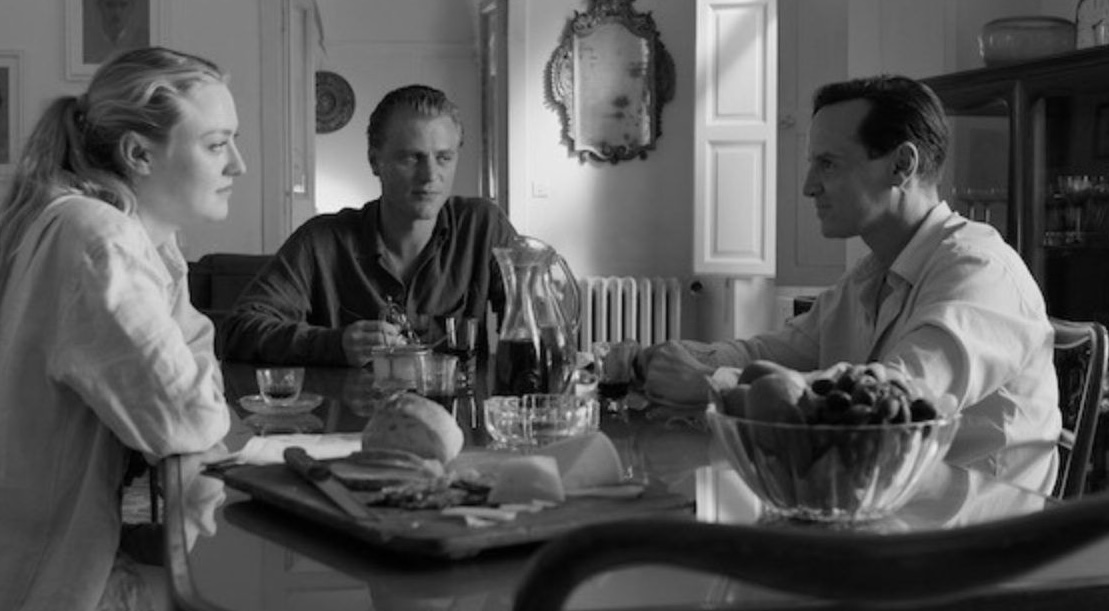
But sharing star billing is the series’ use of Italian backdrops, captured in black-and-white footage so jaw-droopingly rich that you want to linger on every frame, soaking up the unerringly “right” compositions and mesmerizing interplay between light and dark.

In fact, cinematographer Robert Elswit just might singlehandedly make b&w a thing again.  The format has the almost mystical ability to capture and magnify textures ranging from worn marble to fabrics. This “Ripley” is more than a crime story or a personality study…it’s a freakin’ sensory adventure.

(Elswit uses only a brief moment of color…it’s at the end of Episode 6. Look for it.)

The plot is pretty much as you remember it.  In the late 1950s New York scammer Tom Ripley is recruited by a rich man to seek out the  wayward son who has decamped to Italy.

Ripley barely knows the young fellow he’s supposed to bring back to the States, but at the very least he can spend a couple of months living high on the old man’s money.

His target, Dickie Greenleaf (Johnny Flynn), is a wannabe writer and painter who has a taste for the expensive things — like the  original Picasso on his villa wall — that a plebe like Ripley can only dream of. 

In fact, our man soon realizes he isn’t satisfied with being Dickie’s drinking buddy and traveling companion…Ripley wants to take over Dickie’s life, to actually become Dickie.  Which will of course necessitate the real Dickie disappearing.

Dakota Fanning, Johnny Flynn, Andrew Scott

Two of the series’ episodes are devoted to depicting separate murders and Ripley’s coverup efforts. Zaillian has filmed these with virtually no dialogue, studying Ripley’s efforts to clean his messes and hide the evidence in practically microscopic detail.

Along the way he ratchets up the tension to painful levels…time after time it looks as though Ripley is going to be found out…and like a cat he somehow always lands on his feet. Whether by luck or strategic thinking, he always turns the odds in his favor.

“Ripley” is pretty much a one-man show, and Scott is nothing short of hypnotic.  You find yourself rooting for Ripley against your good judgment; there’s perverse pleasure (and in several instances sardonic humor) in watching him run circles around everybody…including us viewers.

It’s not entirely a one-man show. Dakota Fanning is effective as Dickie’s girlfriend, whose almost instant dislike of Ripley may put her in his cross hairs. Eliot Sumner has some fine moments as Freddie, Dickie’s fey friend, and Maurizio Lombardi is quite wonderful as the Roman police inspector wrapped up in Ripley’s wild goose chase.

| Robert W. Butler

Read Full Post »

Carol Doda

“CAROL DODA TOPLESS AT THE CONDOR”  My rating: B- (At the Glenwood Arts)

100 minutes | MPAA rating: R

One of the more obscure outliers of modern American social history gets examined in “Carol Doda Topless at the Condor,” a documentary that succeeds more in recreating a bygone era than in coming to any definitive conclusions about its central figure.

Carol Doda (she died in 2015 at age 78) was, for a decade or so beginning in the mid-1960s.  a household name. She was famous/notorious for dancing topless at the Condor Club in San Francisco’s North Beach neighborhood.

Doda was not a stripper. Or even an exotic dancer.  She did a standard go-go routine with the difference that she was nude from the waist up.

This was in an era when even burlesque stars wore pasties; by freeing the nipple one might claim that Doda opened the door to a whole new approach to public nudity.

Whether she intended to do so or was just in the right place at the right time is one of many questions Marlo McKenzie and Jonathan Parker’s film leave unanswered.

The film does a nice job of establishing how San Francisco became “the off-season Vegas,” a nightlife center offering tourists a plethora of jazz and comedy clubs that earned the town the nickname “Baghdad by the Bay.”

Carol Doda was a waitress at the Condor Club.  But she delivered drinks with a wiggle and exuberant dance movies while wearing a white leotard.  Eventually the club’s owners suggested that she might do her dance from atop the grand piano on the bandstand.

At the same time fashion designer Rudy Gernreich was introducing his topless swimsuit (or monokini);  Doda and her bosses decided to up the ante by having her dance in the breast-baring outfit. Result: standing-room crowds and queues around the block.

Ere long Doda was making her entrance on a specially rigged piano that lowered from a hole in the ceiling with the star performer already on top and gyrating.  And she began beefing up her modest bosom with silicon injections.

Overnight virtually every club in town went topless.  The cops responded with a city-wide raid; Doda and her fellow topless dancers prevailed in court and as a result San Francisco became the  first city to recognize the legality of topless performance.

“Carol Doda Topless…” eschews narration and instead relies on dozens of talking-head snippets featuring Doda’s old bosses, fellow dancers, even bartenders at clubs where she worked.  

There are also a handful of female scholars attempting to establish Doda’s place in the feminist continuum, and they are wildly contradictory.  Was Doda exploited or was she a canny exploiter?  Was she a photo-feminist?  And if so, deliberately or accidentally?  

The film employs lots of footage of Doda being interviewed, but it’s just about impossible to pin down her personality. For a woman who nightly bared it all, she was remarkably shy.

“I want to be in show business and I don’t know any other way than showing my bosoms,” she says at one point.  In another interview she calls her act “another form of art, like a nude painting or statue.”

So who was this woman?  There are hints that she came to San Francisco after a failed marriage, leaving behind one or two children.  The movie raises the idea that Doda developed serious health problems as the result of her regular use of silicon  injections to maintain her breasts, but never comes to any conclusions.

In interviews she could be self-effacing, but there’s no evidence that irony played a role in her act.  She was a naked lady dancing. Period.

Doda never discussed her personal life; even women who worked with her for years knew little about her.  She is alleged to have had a liaison with Frank Sinatra; thereafter she preferred young men…one commentator suggests that guys barely out of their teens were more malleable and less troublesome.

In later life, when the topless bookings dropped off, Doda sang with a heavy metal band, did  phone porn, developed her own  line of face creams  and opened a boutique specializing in  intimate wear (apparently she would look at a female customer and know immediately what design and size of bra would be appropriate).

Ultimately we’re left with the sense that Carol Doda wanted desperately to be a star despite her lack of conventional talent, and had the insight or blind luck to find the one way to get there.

| Robert W. Butler

Read Full Post »

« Newer Posts